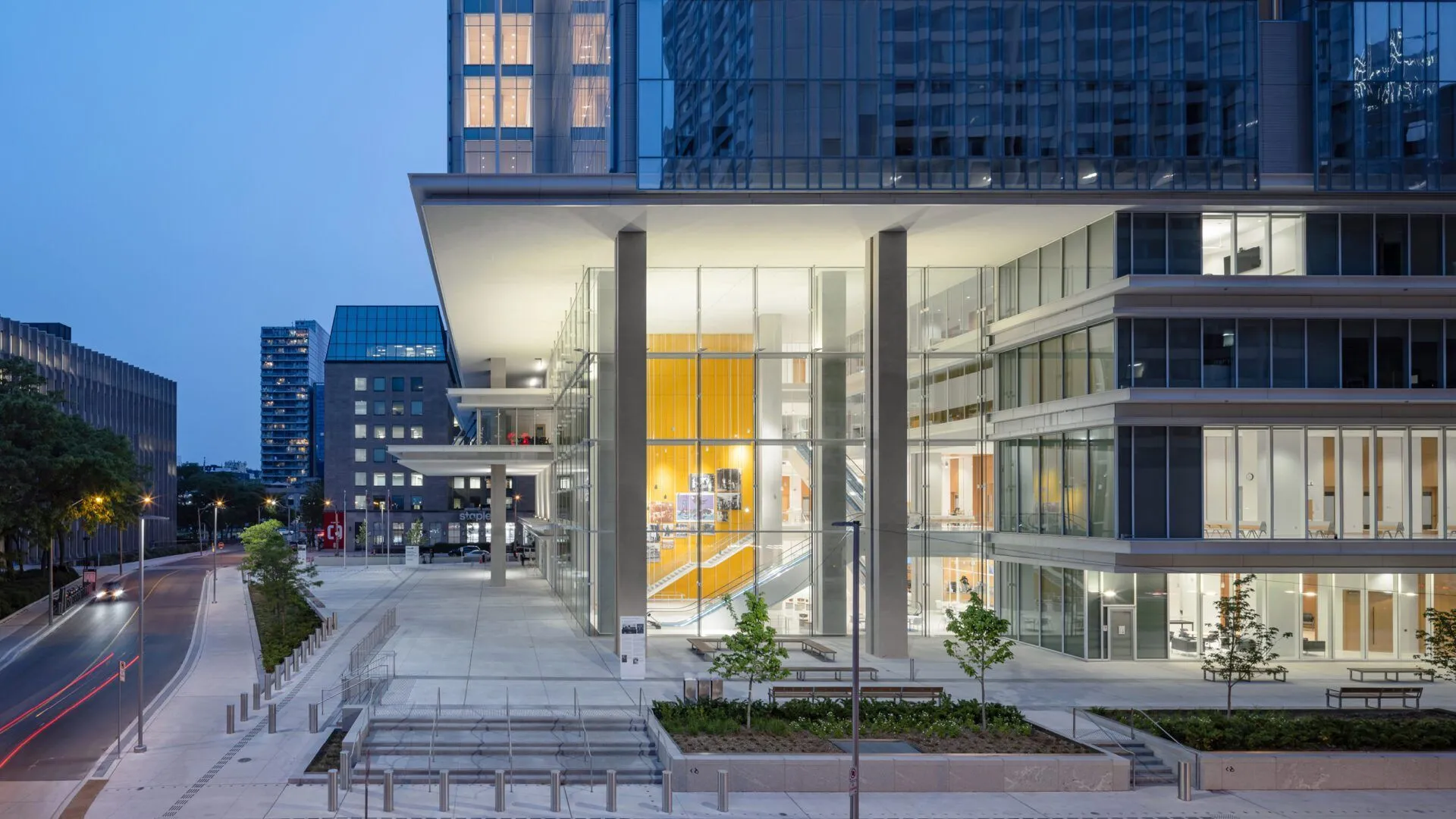
Opening its doors in early 2023 after a meticulous, decade-long planning and construction process, the new Ontario Court of Justice – Toronto stands as a monumental achievement in civic architecture.
Project Details
Size: 775,000 sq. ft. (72,000 sq. m.) spanning 17 above-grade storeys.
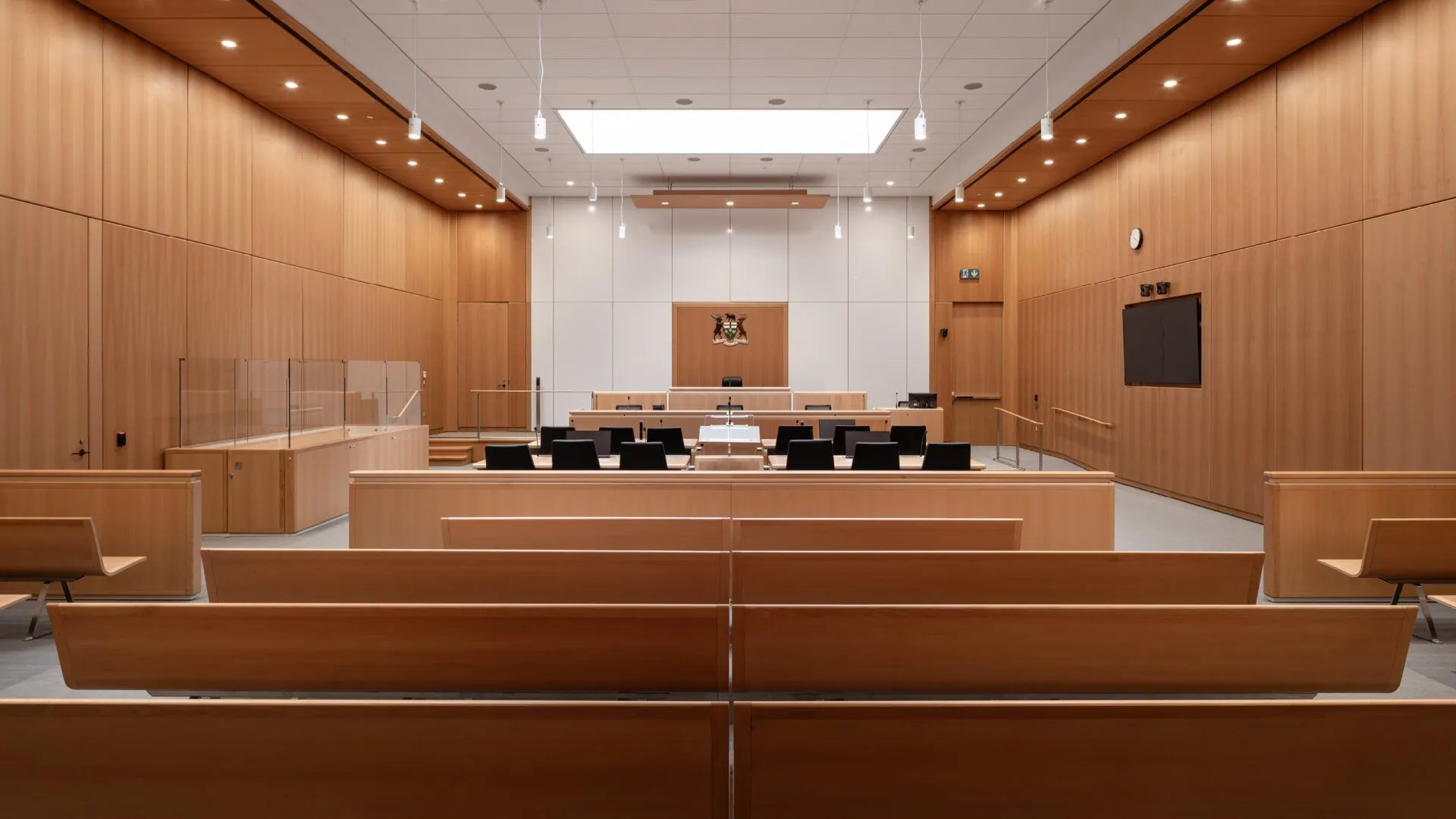
Facilities: 63 courtrooms, 10 conference settlement rooms, and 90 judicial chambers.
Sustainability: LEED Gold certified, achieving a highly efficient Total Energy Use Intensity (TEUI) of 99.17 kWh/m².
Accessibility: Gold Accessibility Certification from the Rick Hansen Foundation.
Designed by the internationally renowned Renzo Piano Building Workshop (RPBW) in partnership with Toronto-based NORR Architects, and delivered by EllisDon as part of a $1 billion public-private partnership, this state-of-the-art facility consolidates several existing courts into a single, highly efficient judicial precinct.
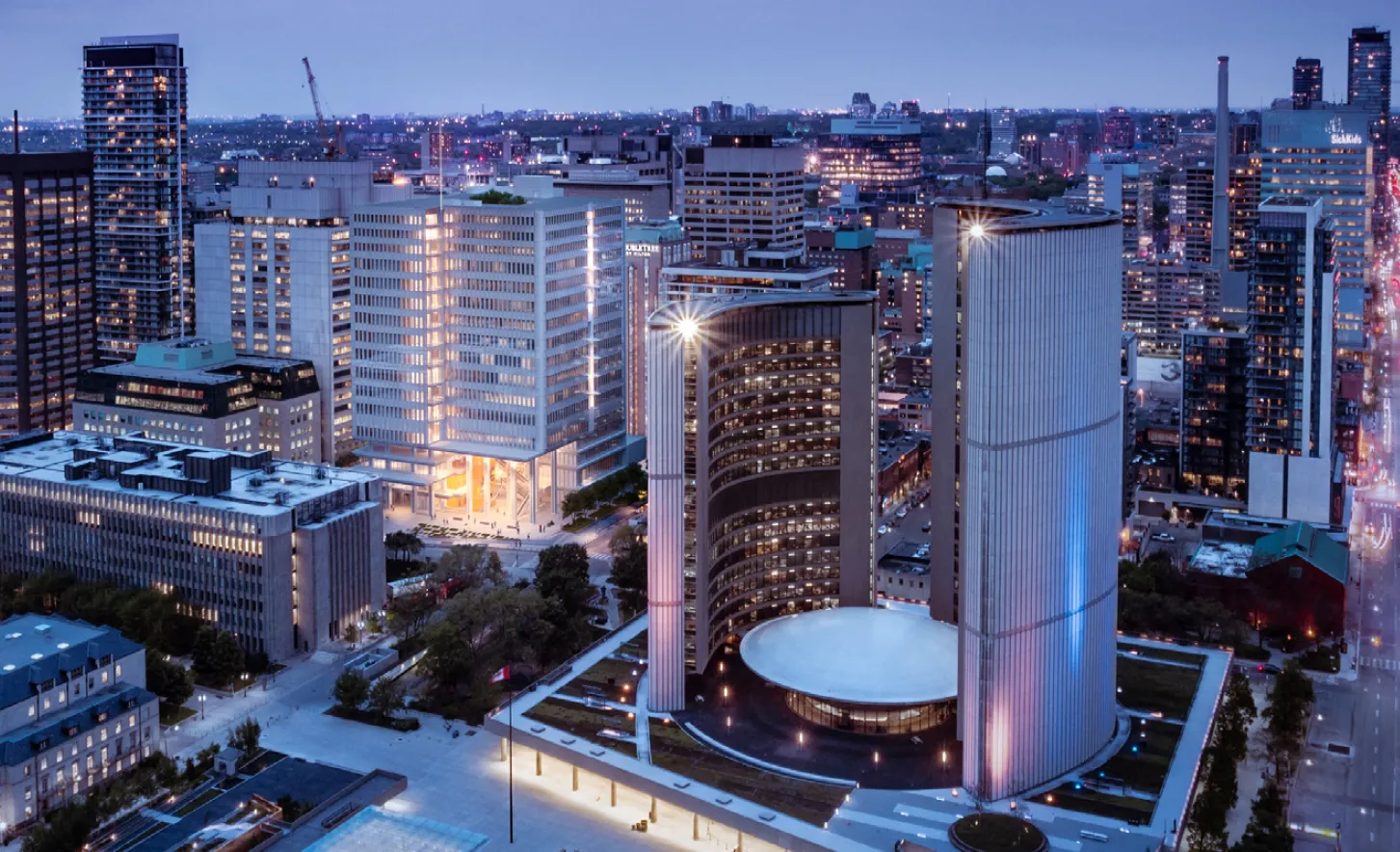
Located in the downtown core, steps from Nathan Phillips Square and Toronto City Hall, the new OCJ (Ontario Court of Justice) successfully balances the gravitas of the justice system with the democratic ideals of openness, transparency, and accessibility.
A Vision of Transparency and Light
Traditionally, North American courthouses have relied on heavy, monumental, and opaque neoclassical designs to project authority. The new OCJ flips this paradigm, solving the challenge of the high-rise courthouse by creating a light-filled, welcoming environment.
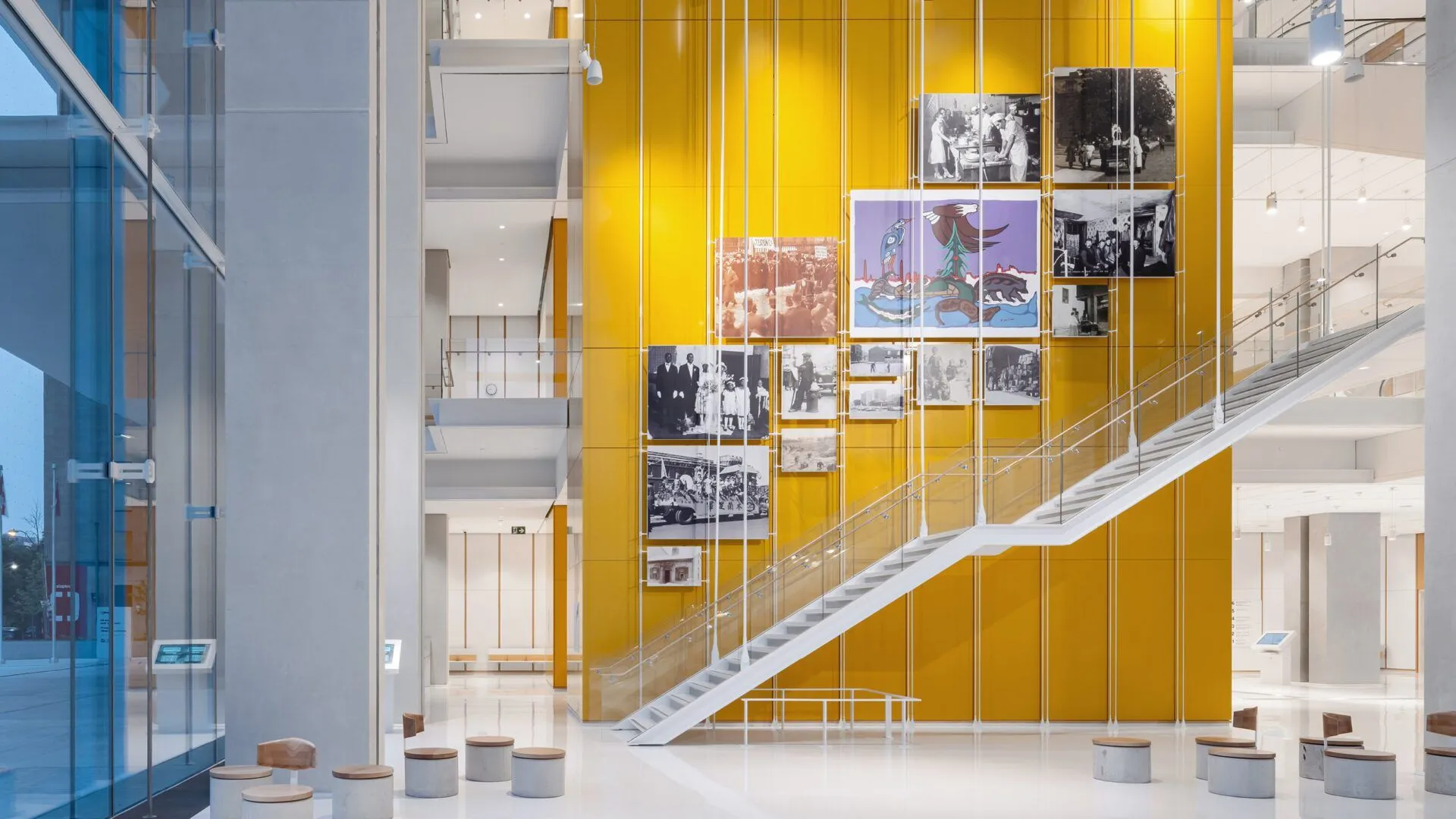
The 20-Meter Atrium: The public is welcomed into a breathtaking 20-meter-tall, 20-meter-wide atrium. Enclosed by a minimal, highly transparent cable-tensioned glass facade, this space effortlessly extends the public realm into the building, serving as a bright, airy "city room" that immediately communicates the open nature of the court.
The Floating Tower: Above the four-story podium, a clearly legible cubic tower houses the courtrooms and services. To prevent the massive 775,000 sq. ft. building from feeling overwhelming, the architects designed a bespoke facade. It features layers of low-iron glass over embossed metallic back pans. This creates a "shadow box" effect that is 40% transparent but constantly oscillates between reflective and transparent depending on the weather and daylight, giving the tower an incredible sense of lightness.
The Historic Mast: In the center of the south facade, a slender 90-meter architectural mast quietly marks the building's place within the historic urban fabric. It perfectly aligns with the East portico of the mid-19th-century Osgoode Hall, giving form to the judicial precinct and terminating the northward vista on York Street that was first defined in 1832.
An Architecture of Dignity, Diversity, and Reconciliation
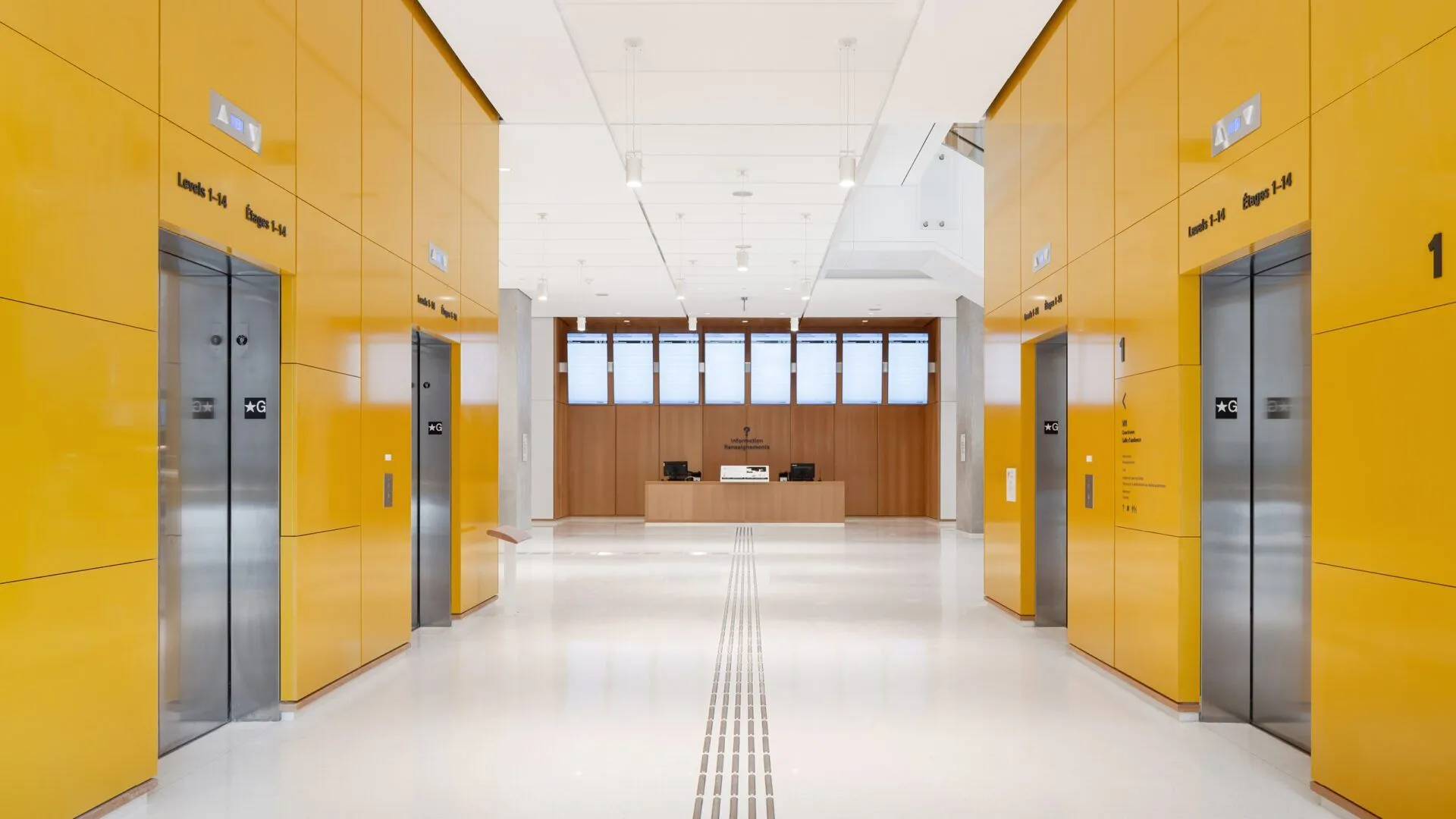
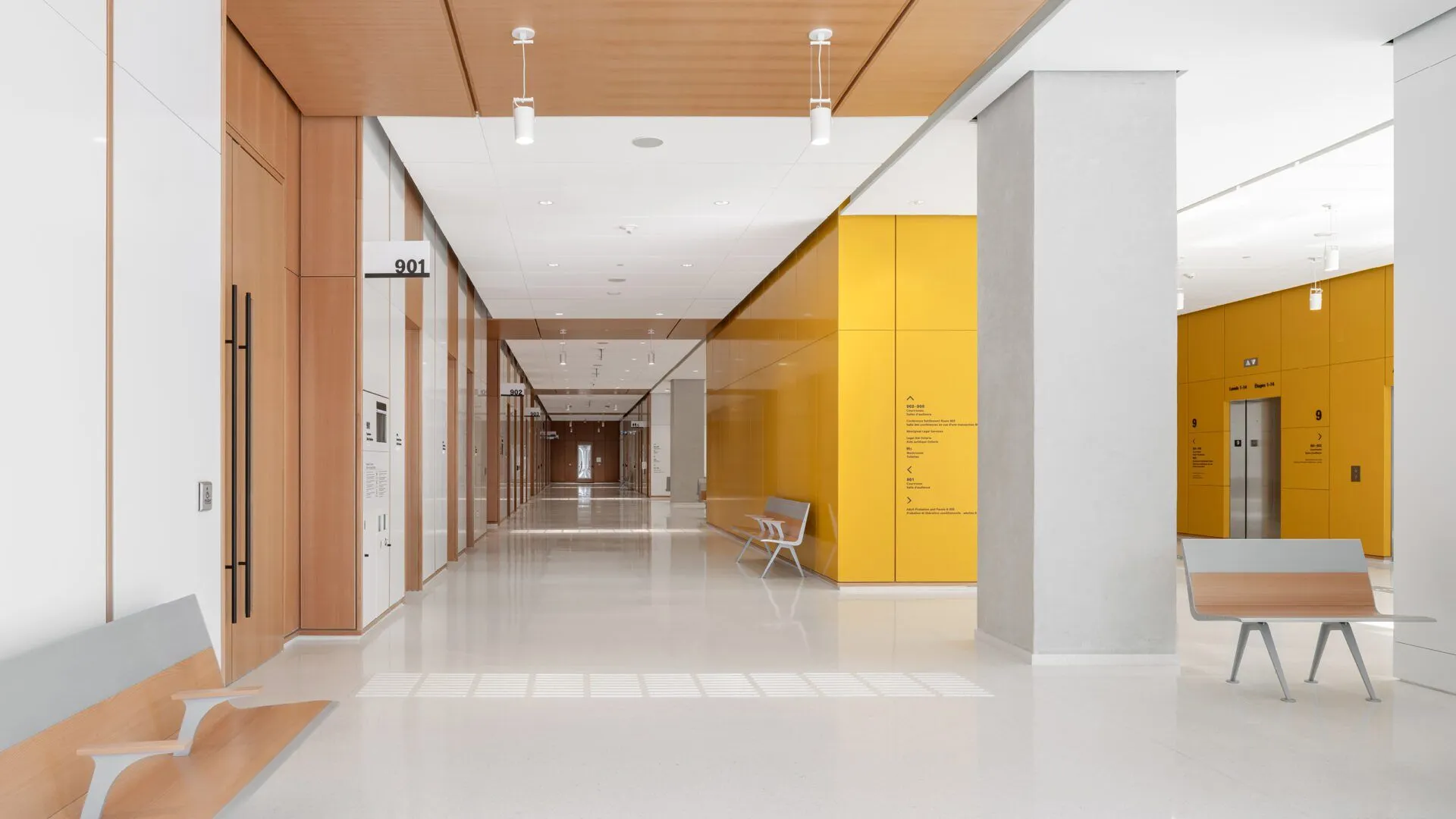
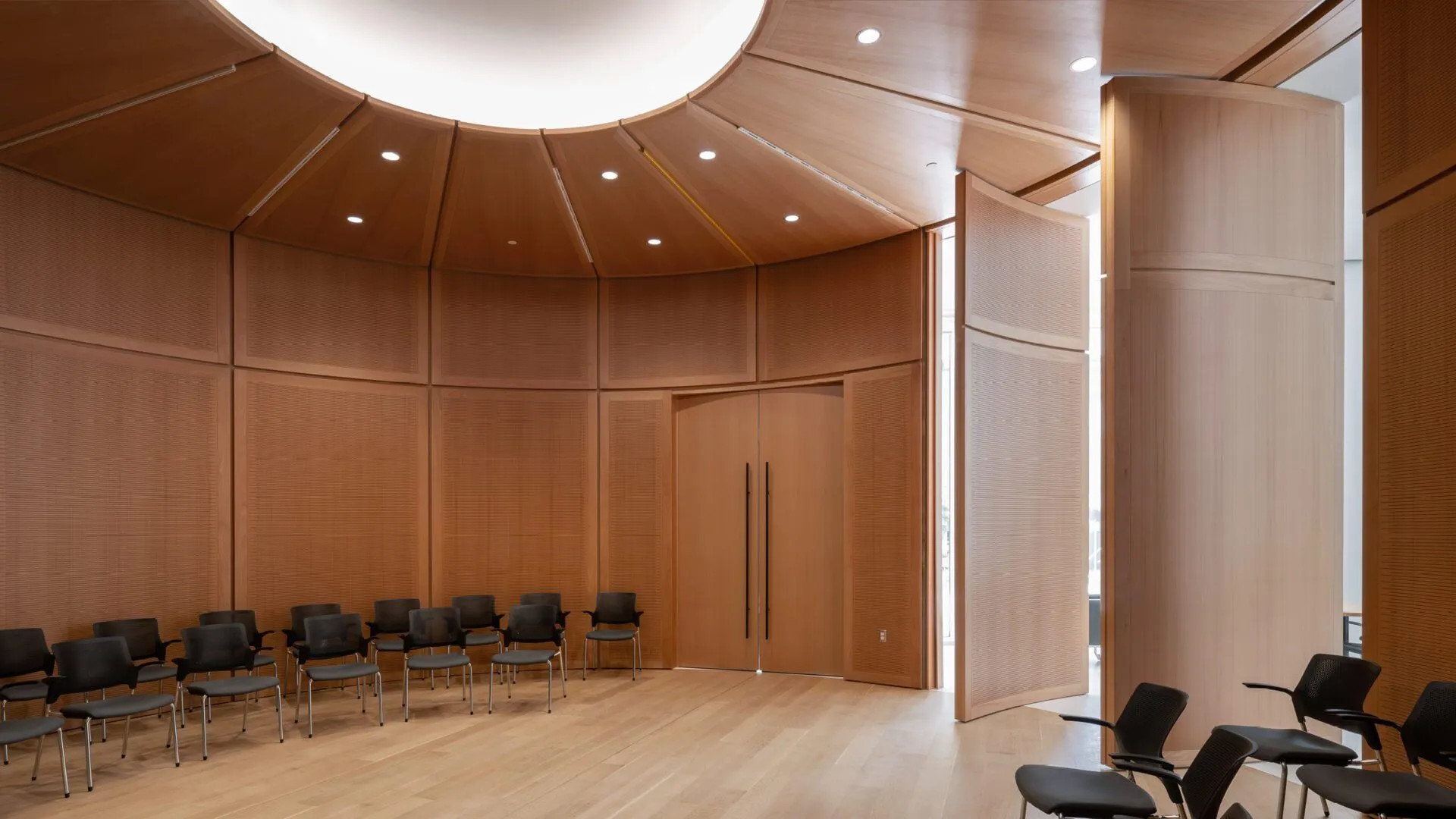
The OCJ is not just a triumph of engineering; it is a reflection of the diverse society it serves. The pale-toned colour palette and abundant use of interior wood provide a calming, neutral, and warm environment, designed to lower the high stakes and tensions inherent in a courthouse.
Specialized Justice: The building includes dedicated spaces for specialty courts, including drug treatment, mental health, youth, high-security, and Gladue (Indigenous) courts.
Indigenous Learning Centre: Located on the ground floor adjacent to the main atrium, this space is the first of its kind in Canada. Developed with input from Two Row Architect and responding directly to the Truth and Reconciliation Commission's Calls to Action, it serves to educate the public and foster the relationship between Indigenous Peoples and the justice system.
The Judicial Cloister: Out of sight to the public, the top levels feature a two-story landscaped courtyard carved out of the roof plan under a canopy of photovoltaic panels. This provides judges with a secure, natural space for reflection—an invaluable amenity for those charged with making difficult decisions daily.
Award-Winning Excellence
The collaborative has set a new high bar for institutional architecture, garnering extensive industry recognition.
2025: Award of Excellence Best Tall Building (Americas) – Council on Tall Buildings and Urban Habitat (CTBUH)
2025: Best in Category of Best Tall Building (Americas) – Council on Tall Buildings and Urban Habitat (CTBUH)
2024: Design Excellence Award – Ontario Association of Architects (OAA)
2024: Award of Merit, Environmental, Social and Governance (ESG) – National Awards for Innovation & Excellence in P3s
2024: Institutional Building, Ready Mix – Ontario Concrete Award
2023: Justice Facilities Review Award – American Institute of Architects (AIA)
2020: Justice Facilities Review Award – American Institute of Architects (AIA)
2019: Silver – CCPPP National Awards for Innovation and Excellence in Public-Private Partnerships
By seamlessly blending cutting-edge security with an open, barrier-free, and culturally responsive design, the Ontario Court of Justice – Toronto stands as a profound physical manifestation of modern justice.