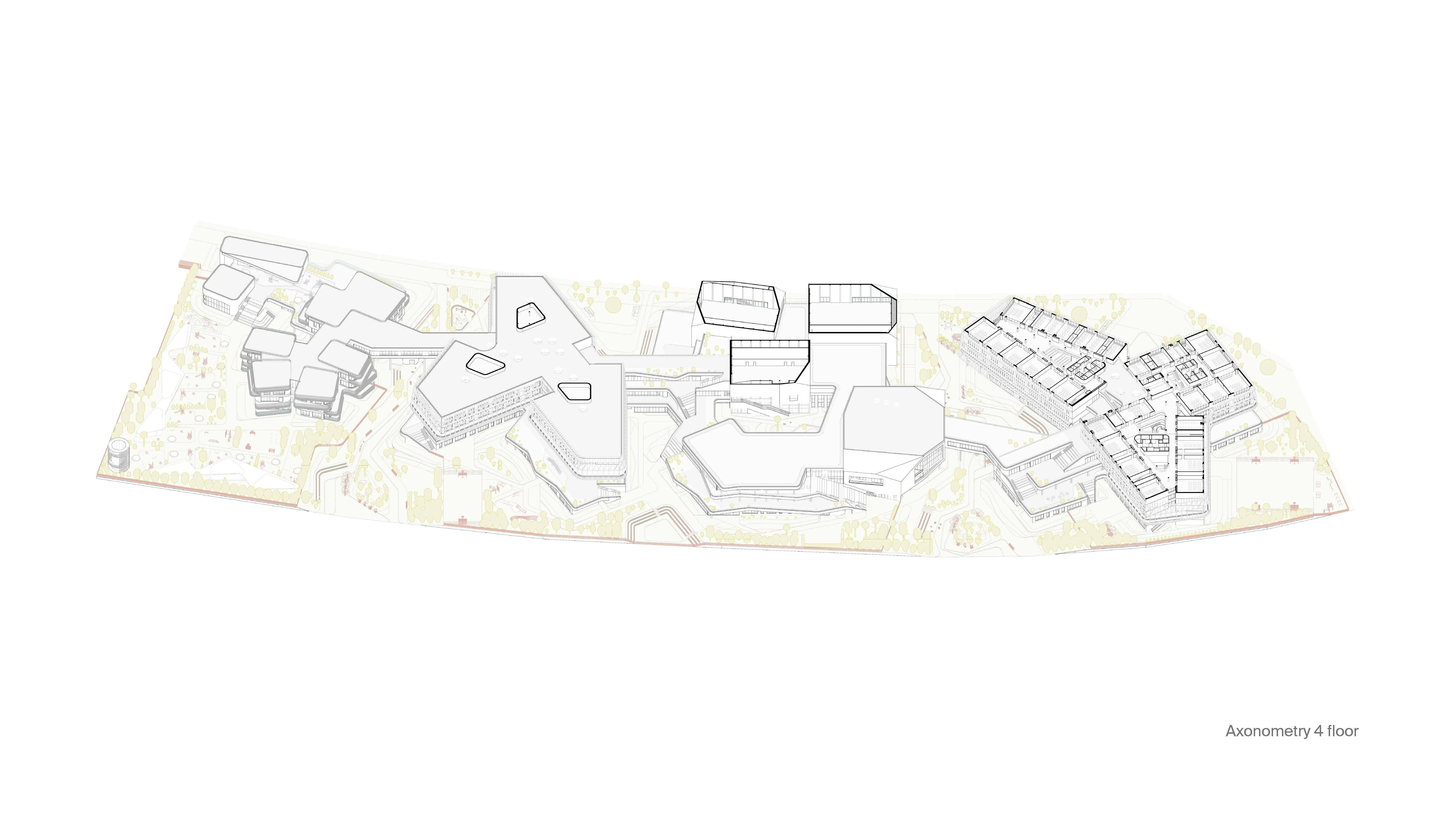
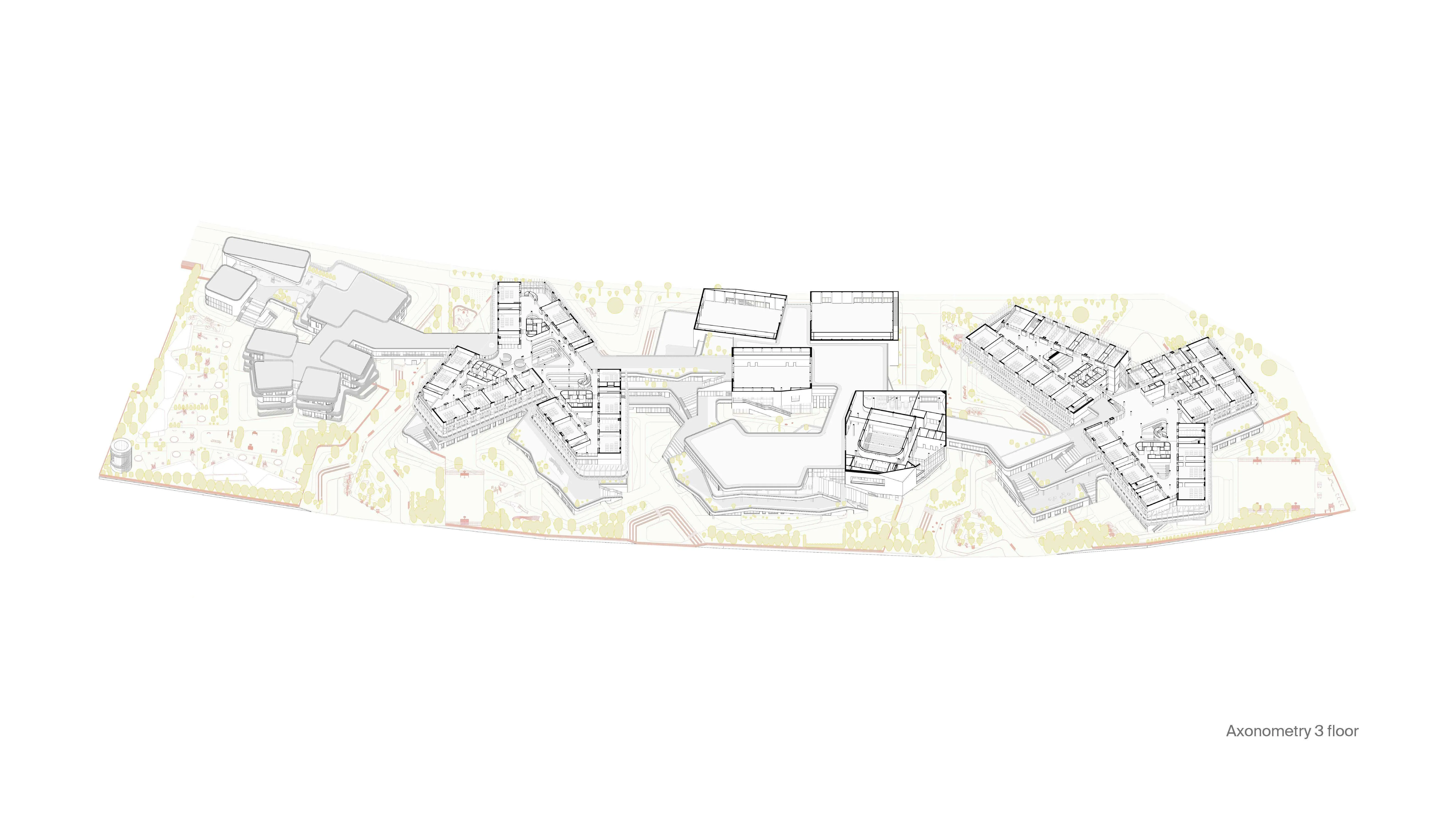
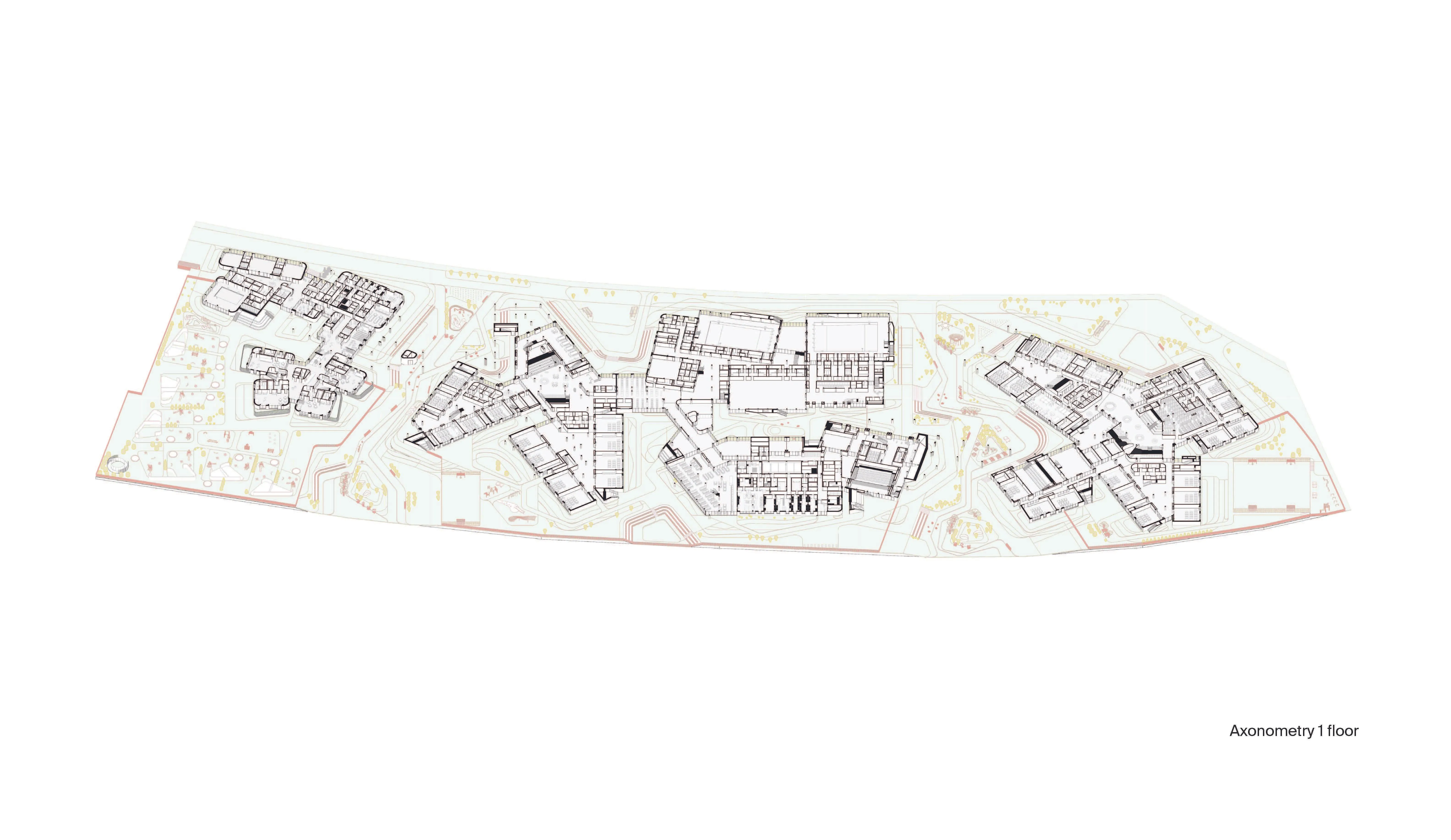
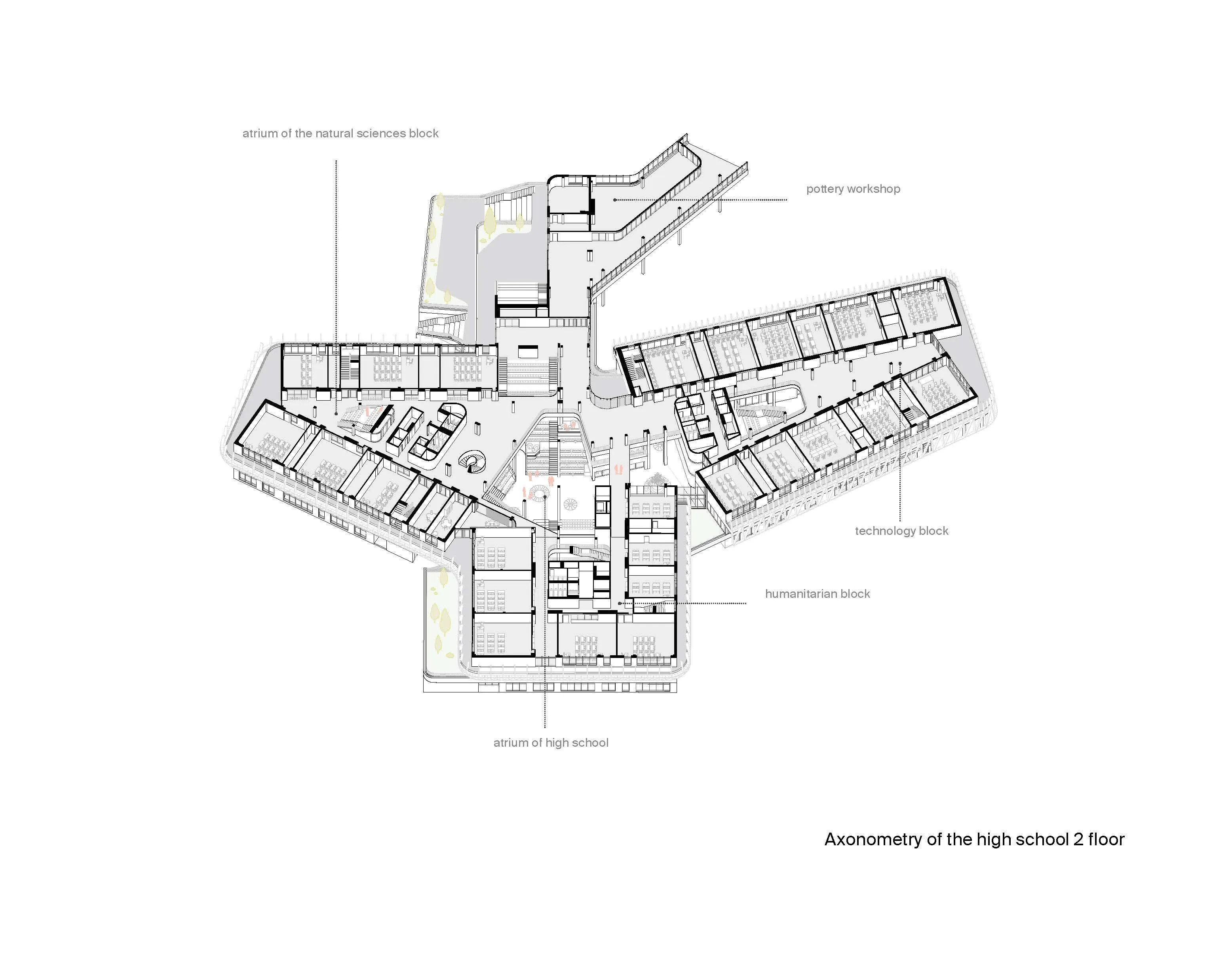
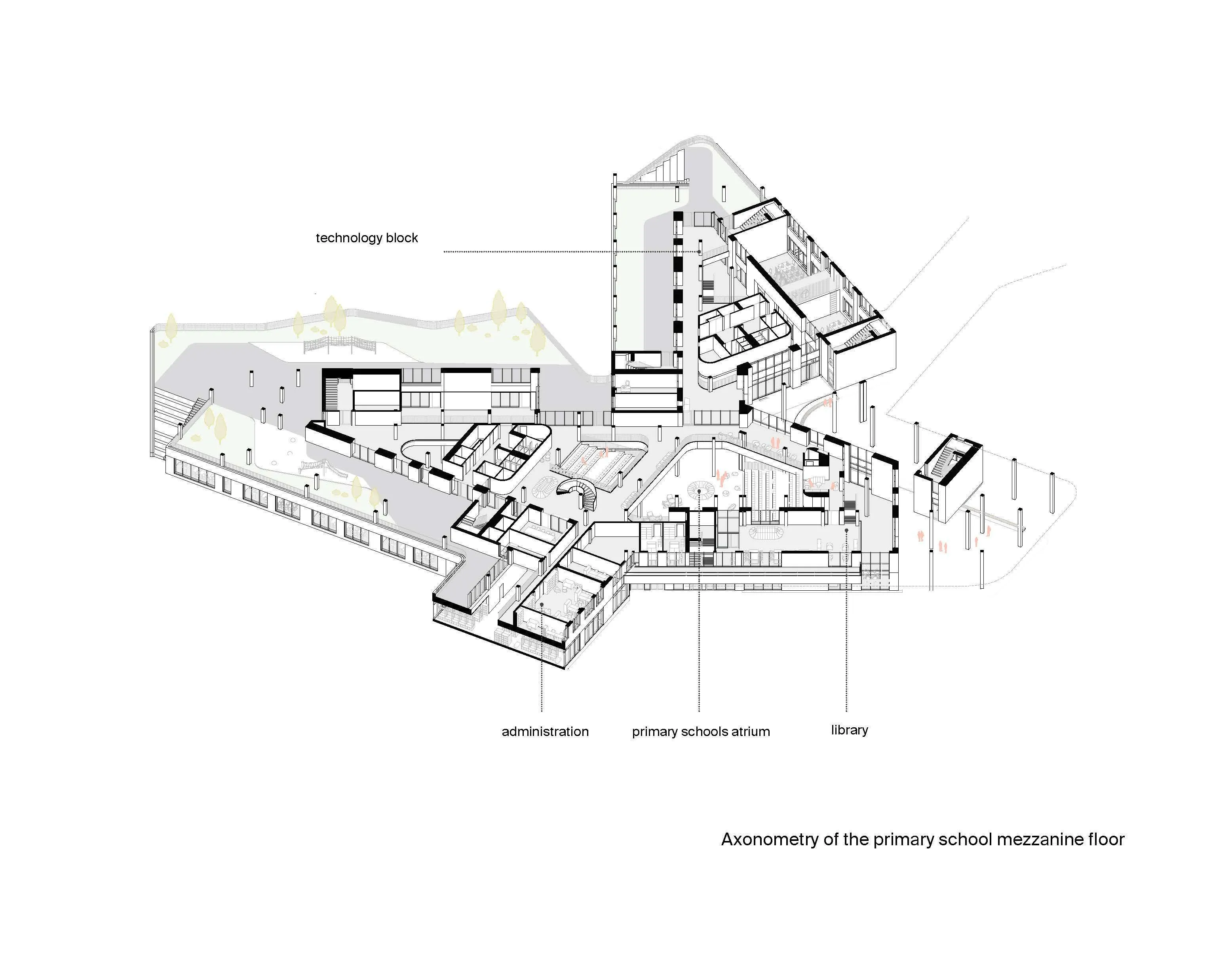
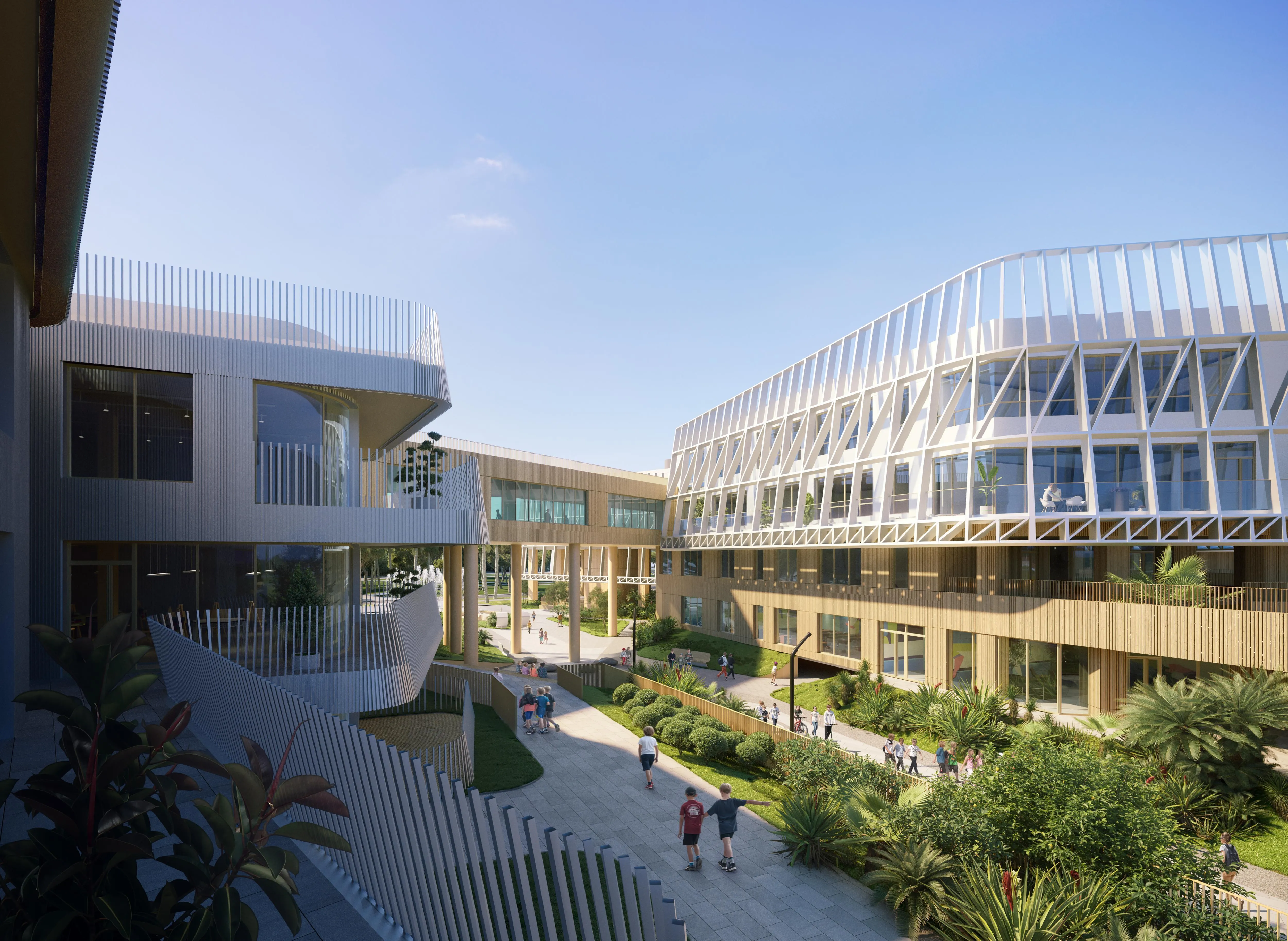
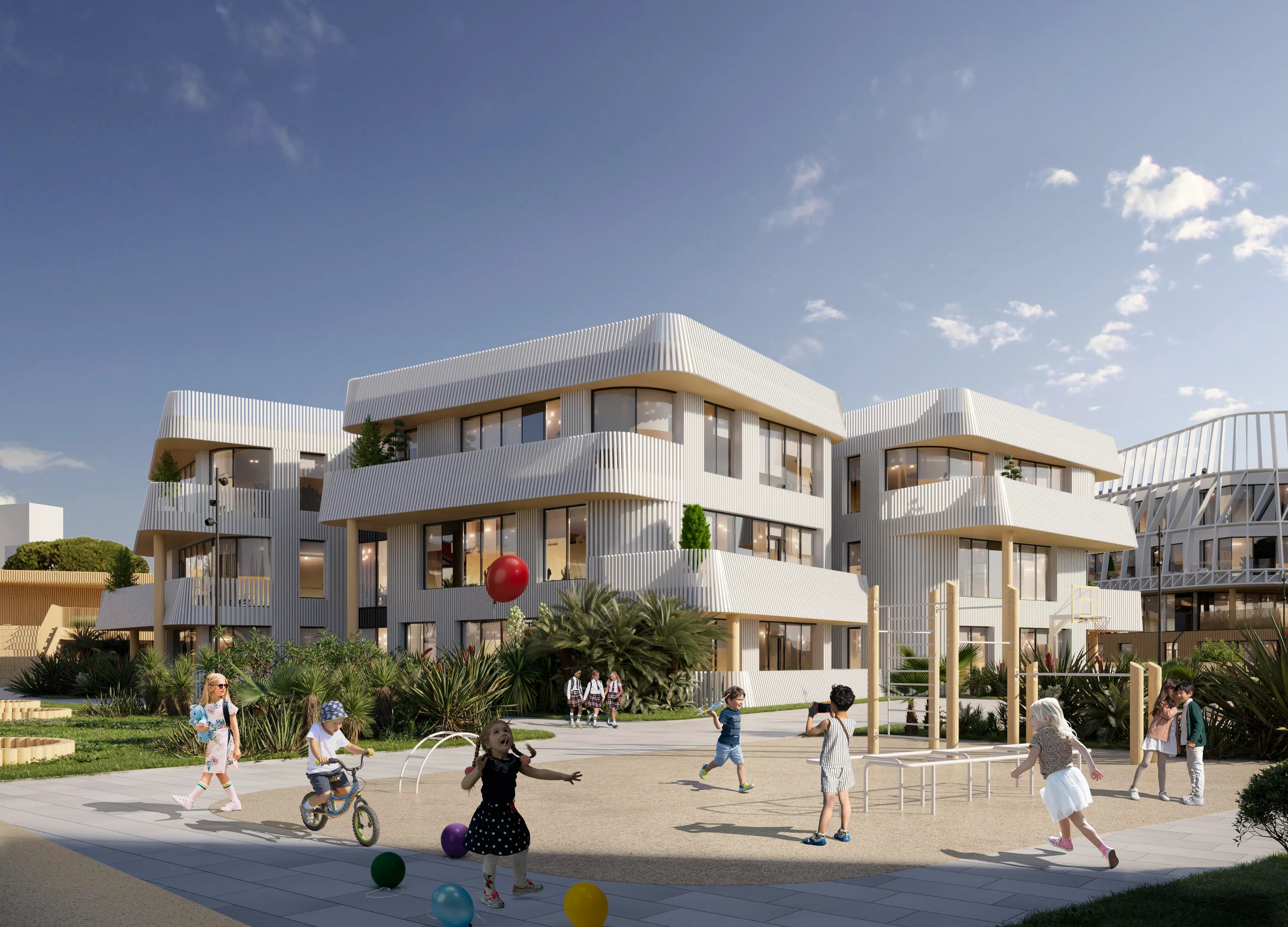
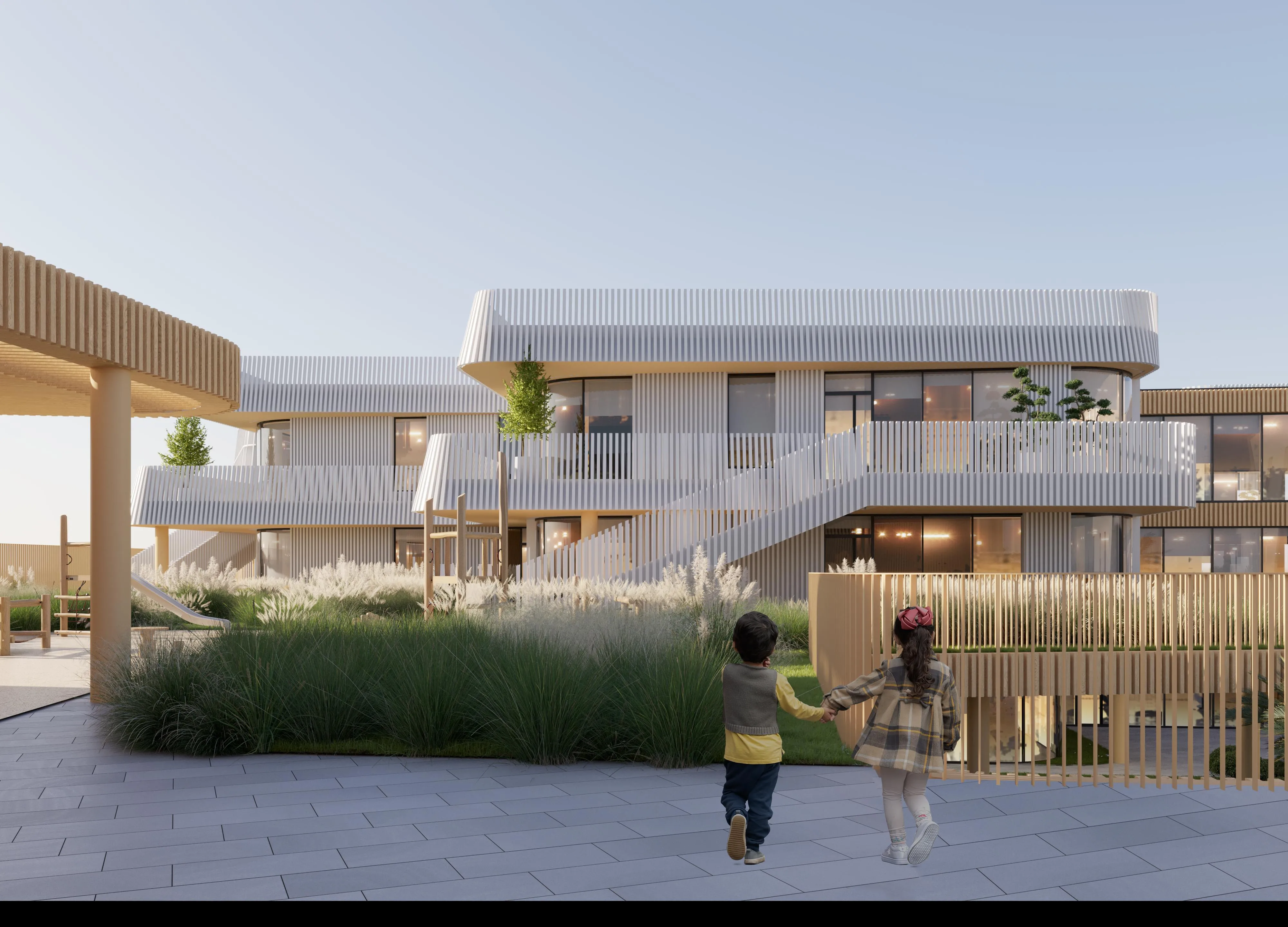
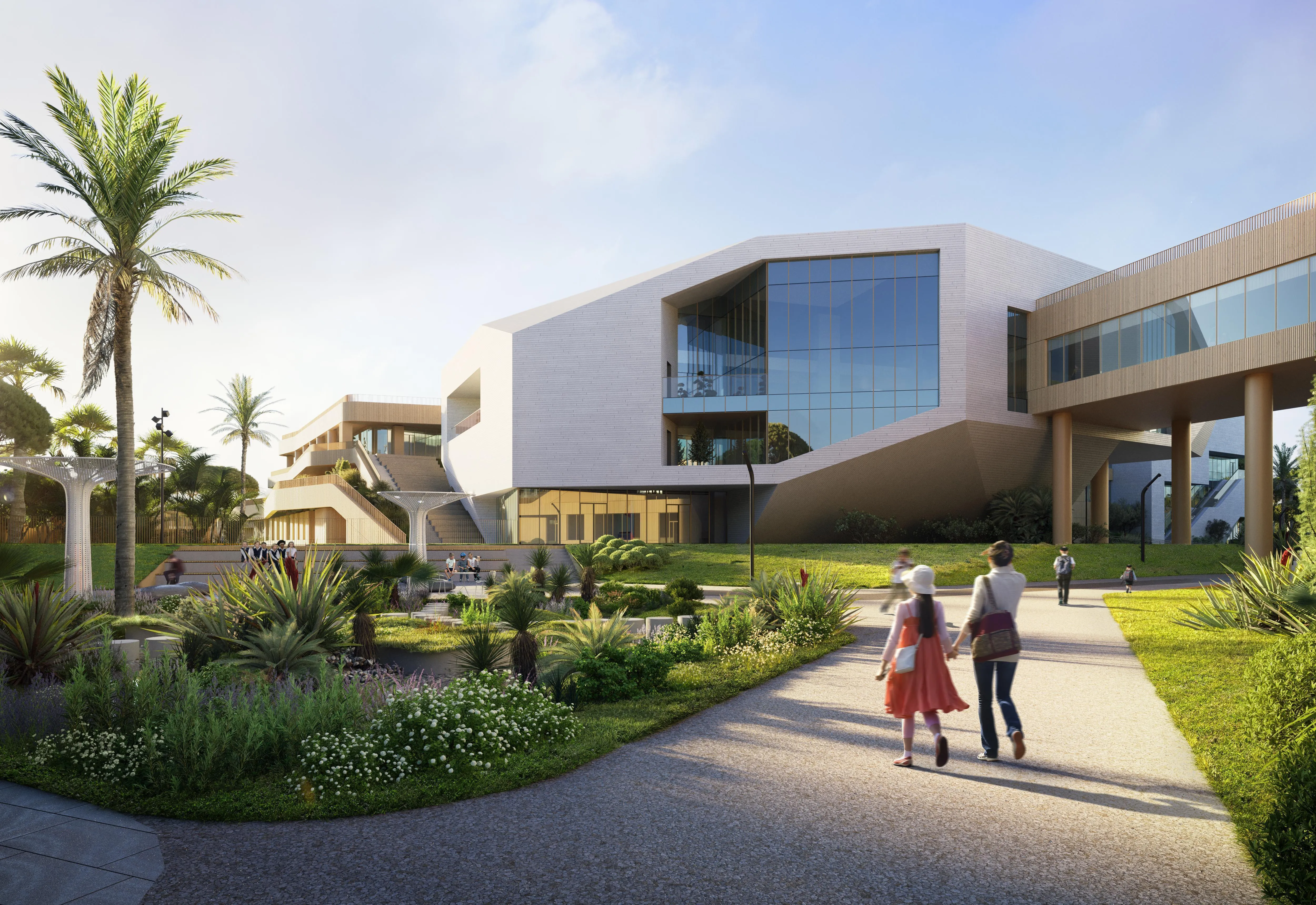
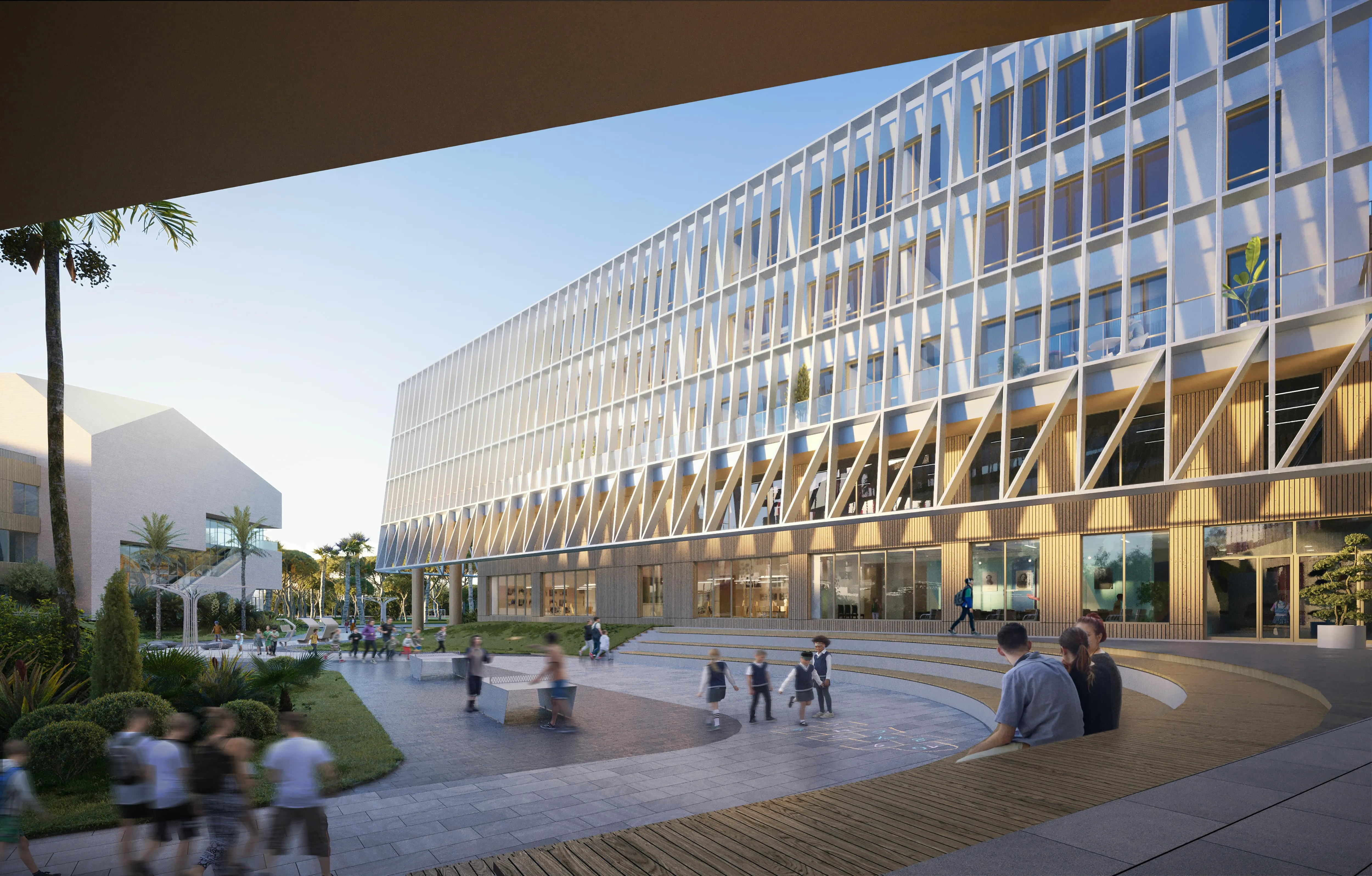
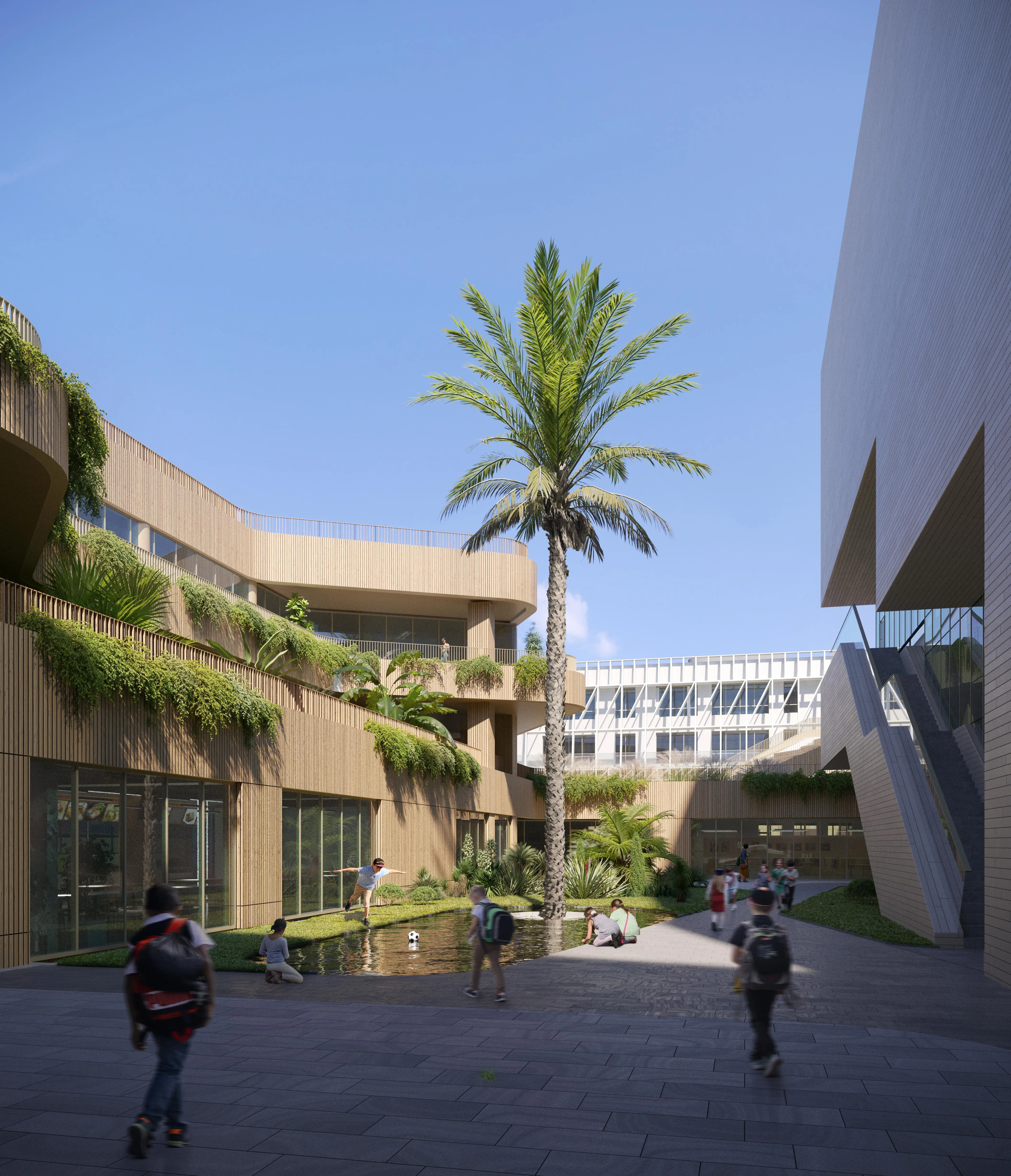
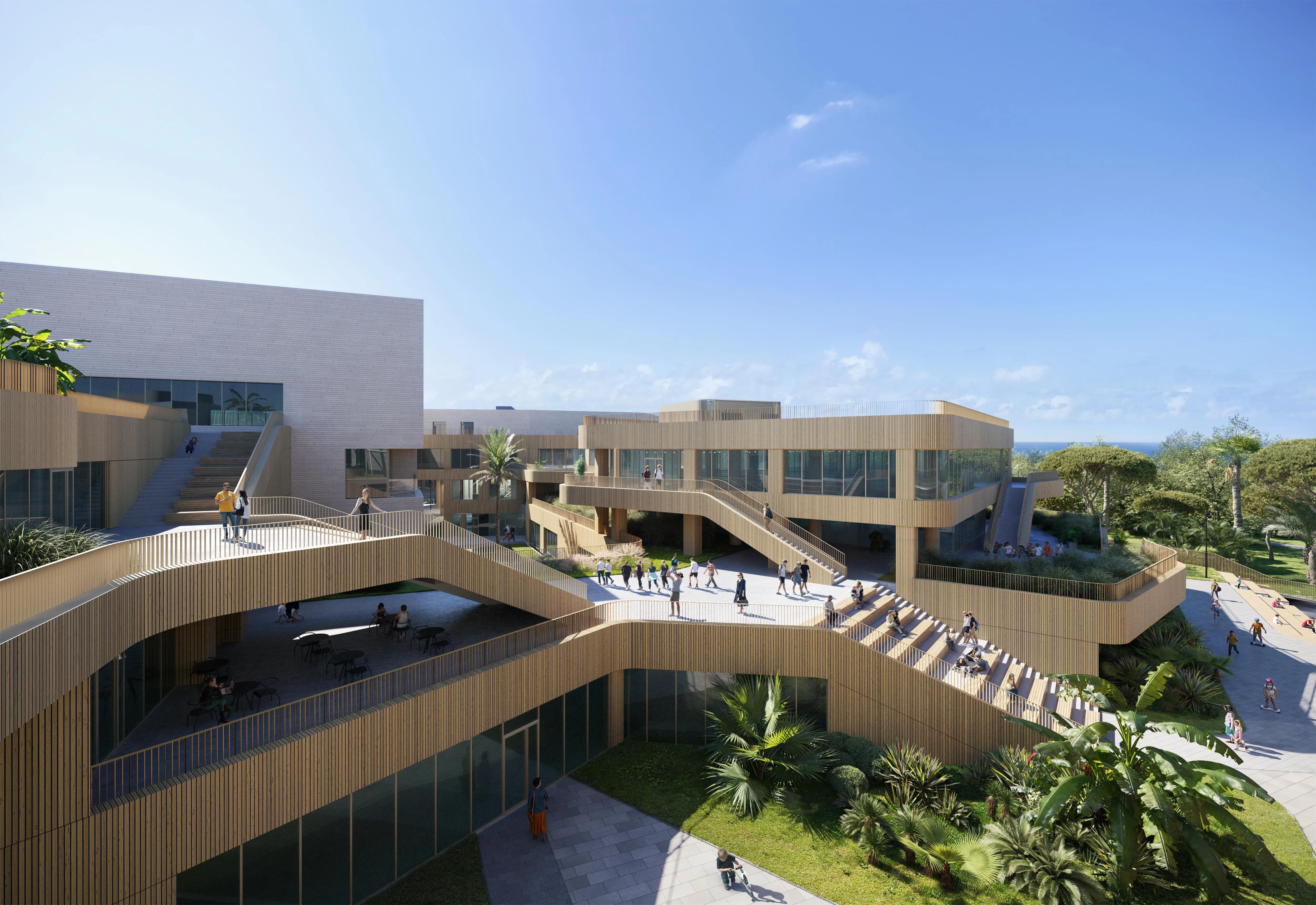
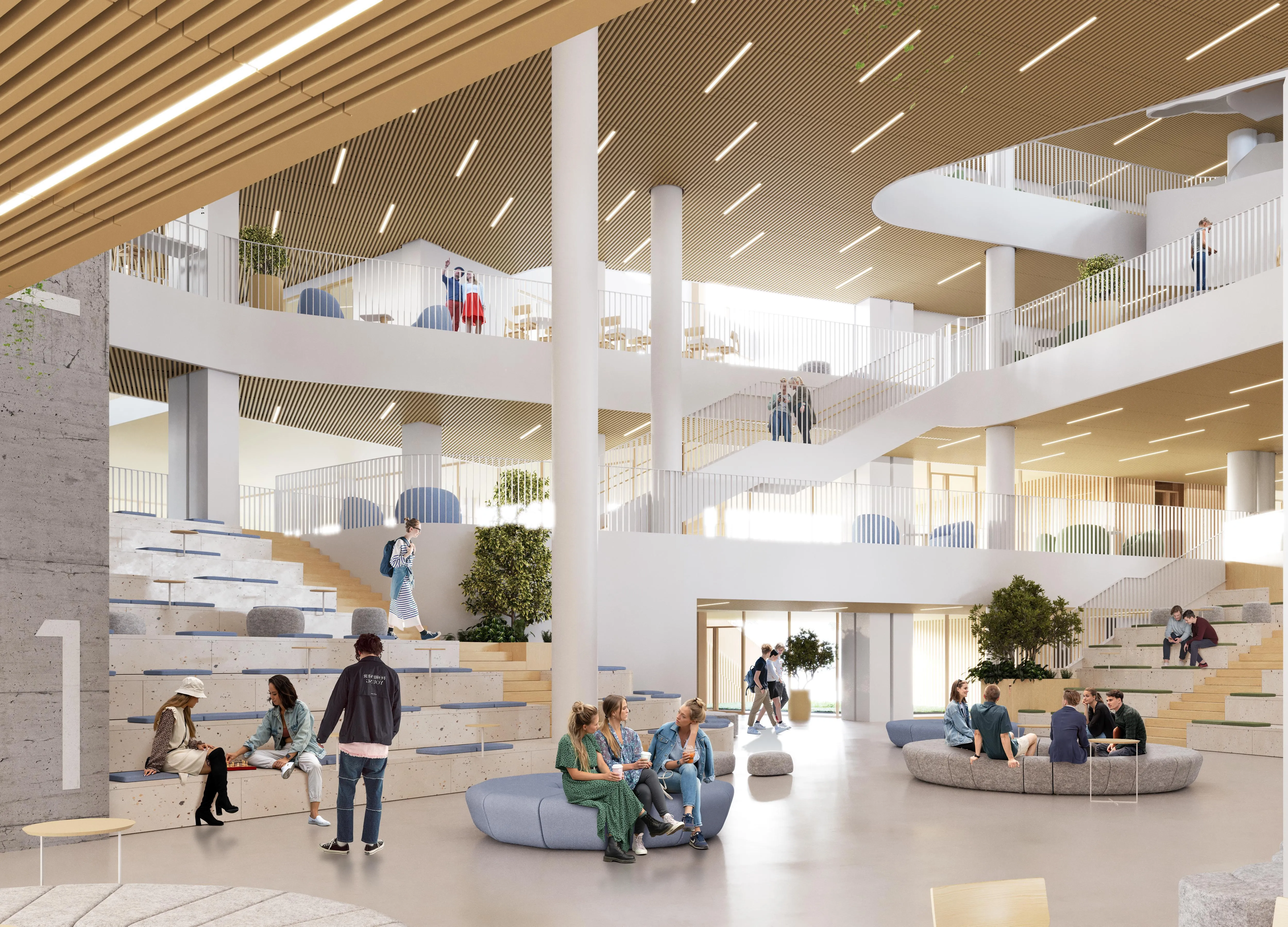
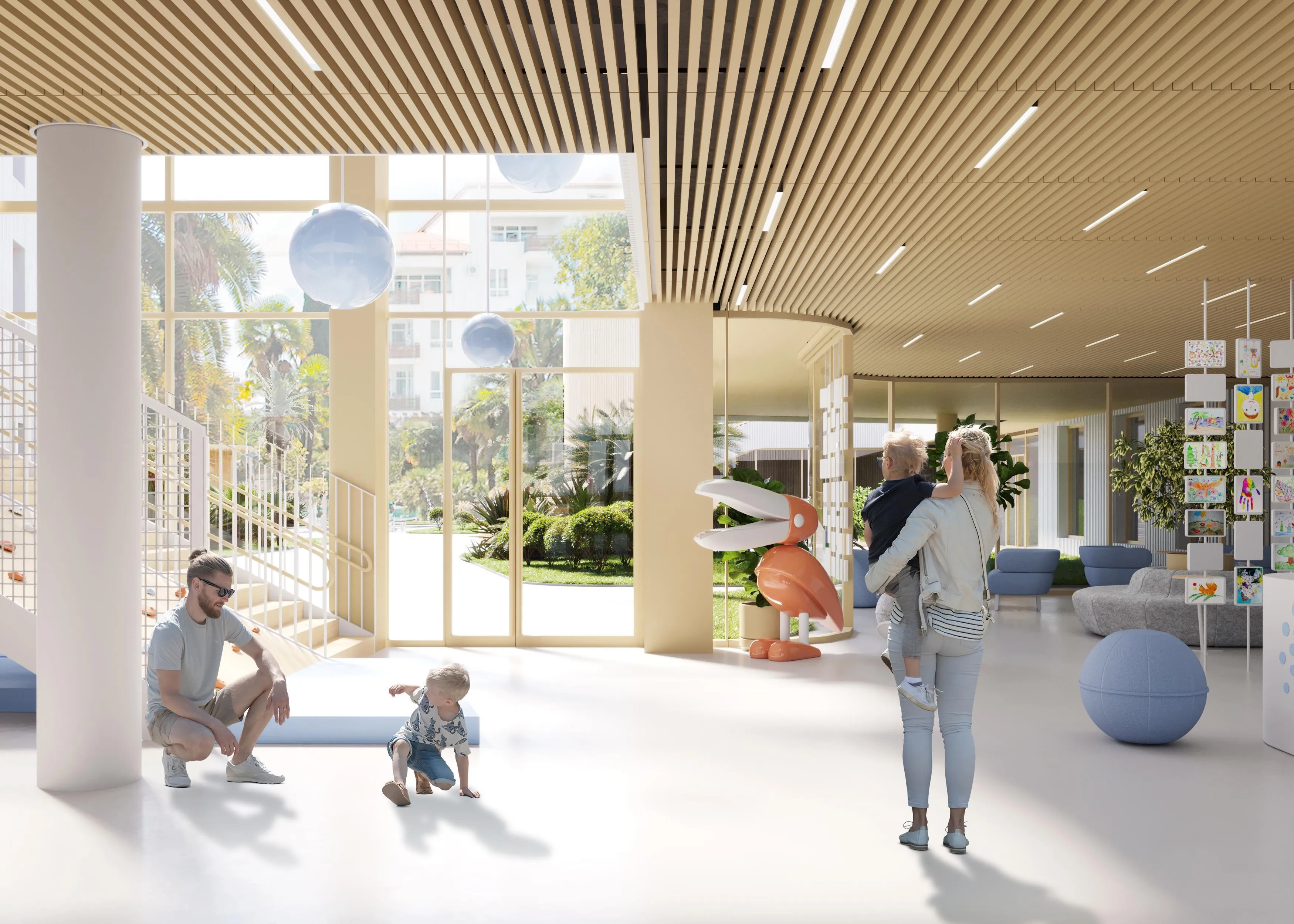
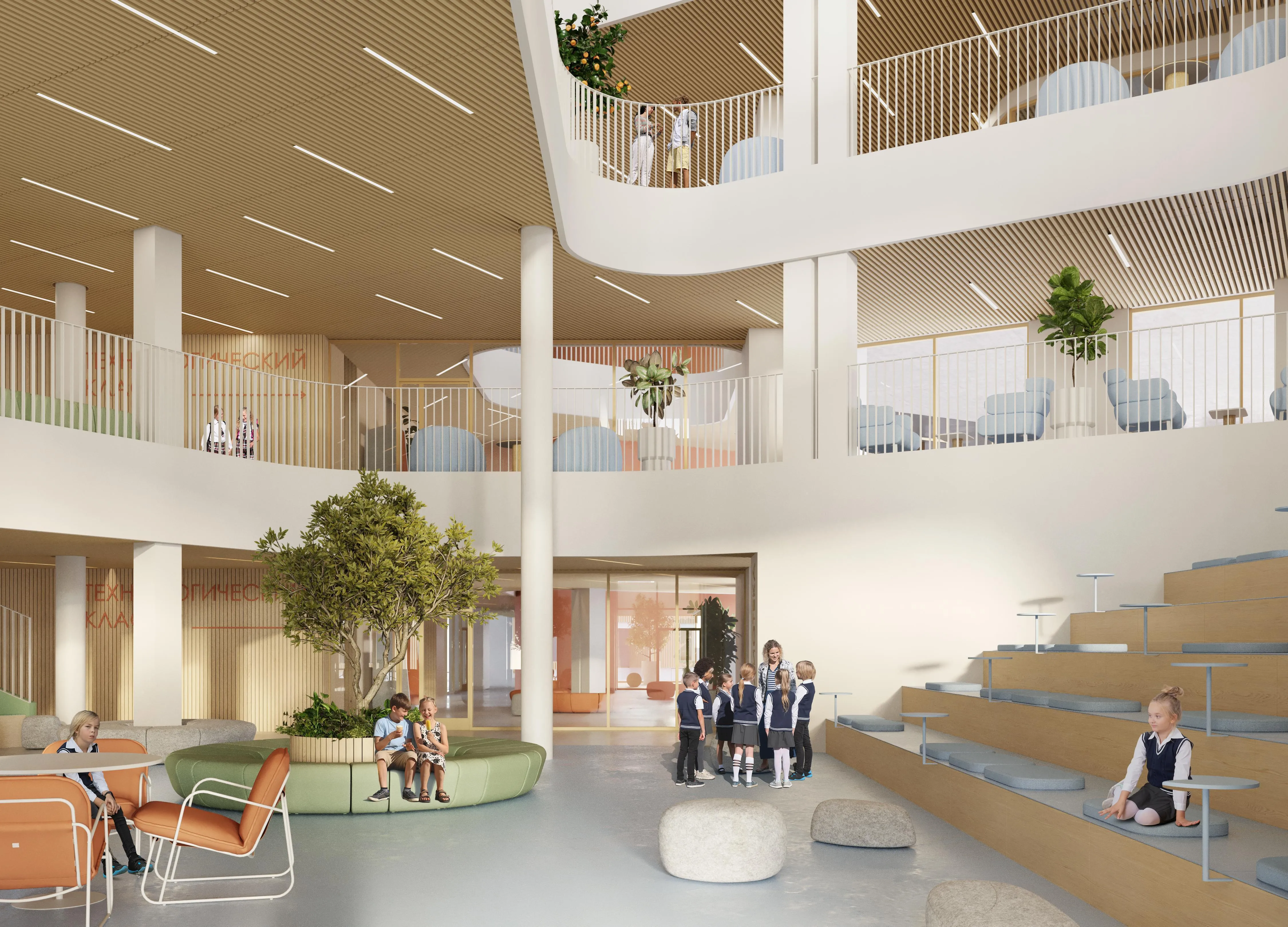
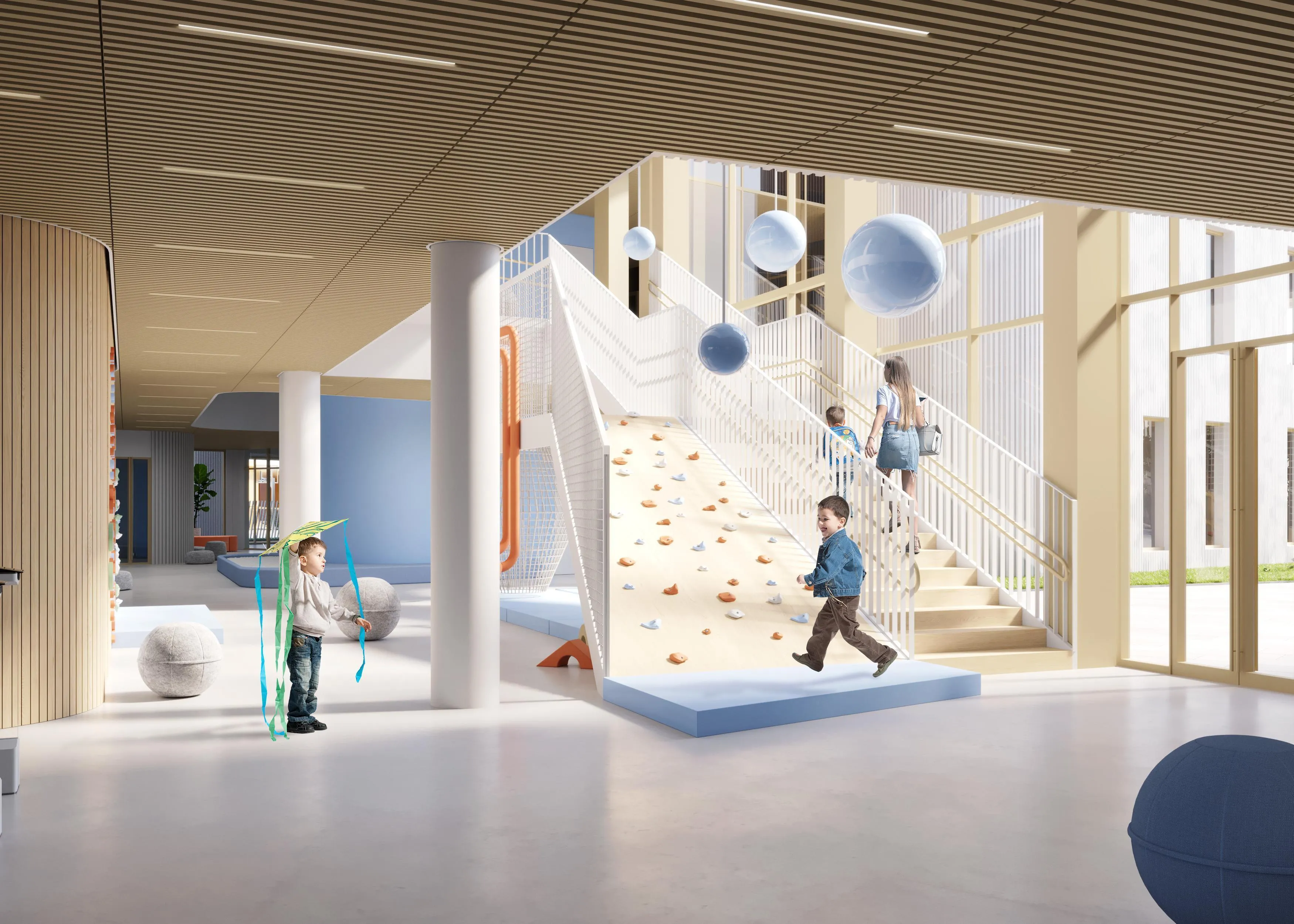
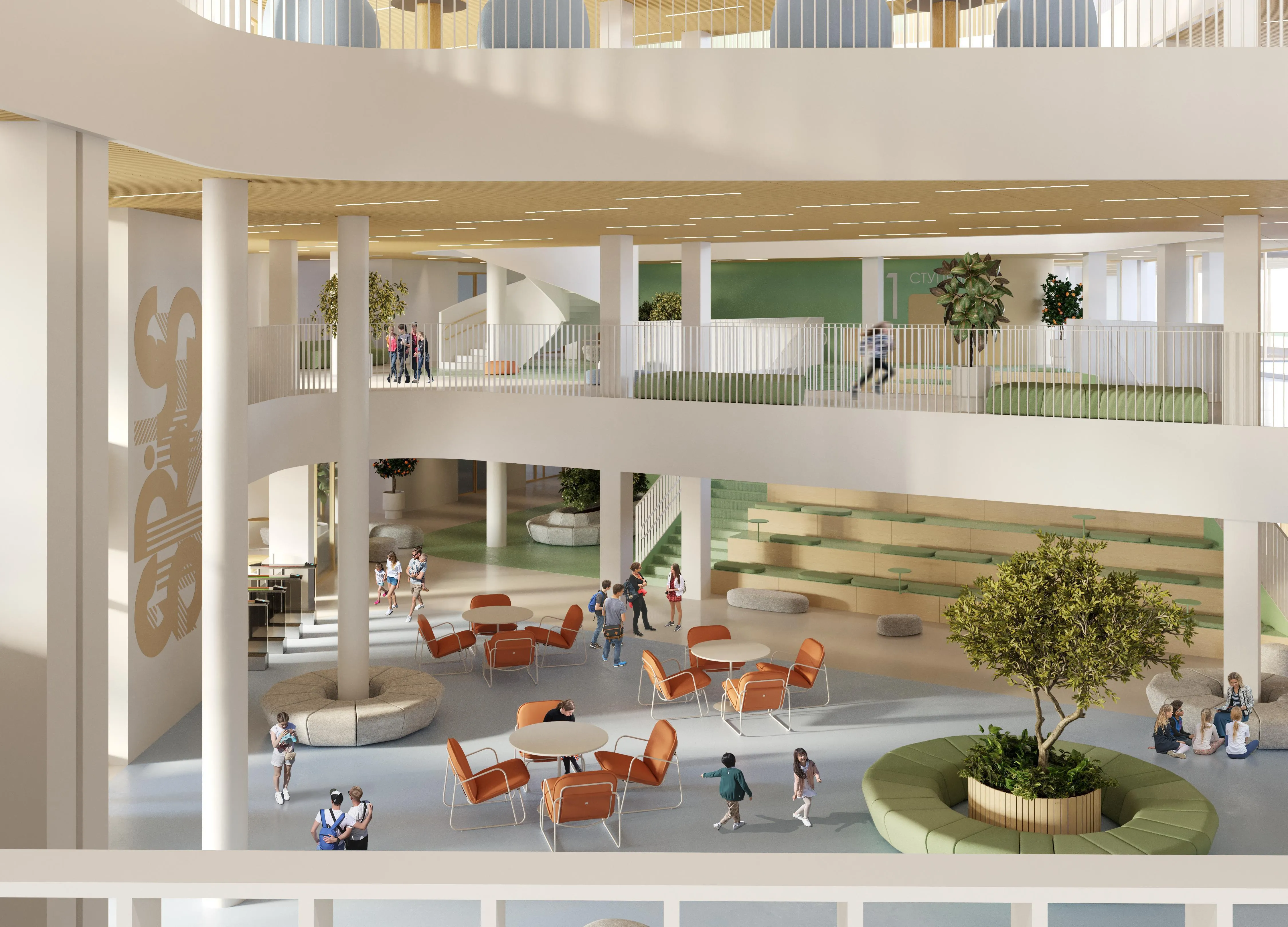
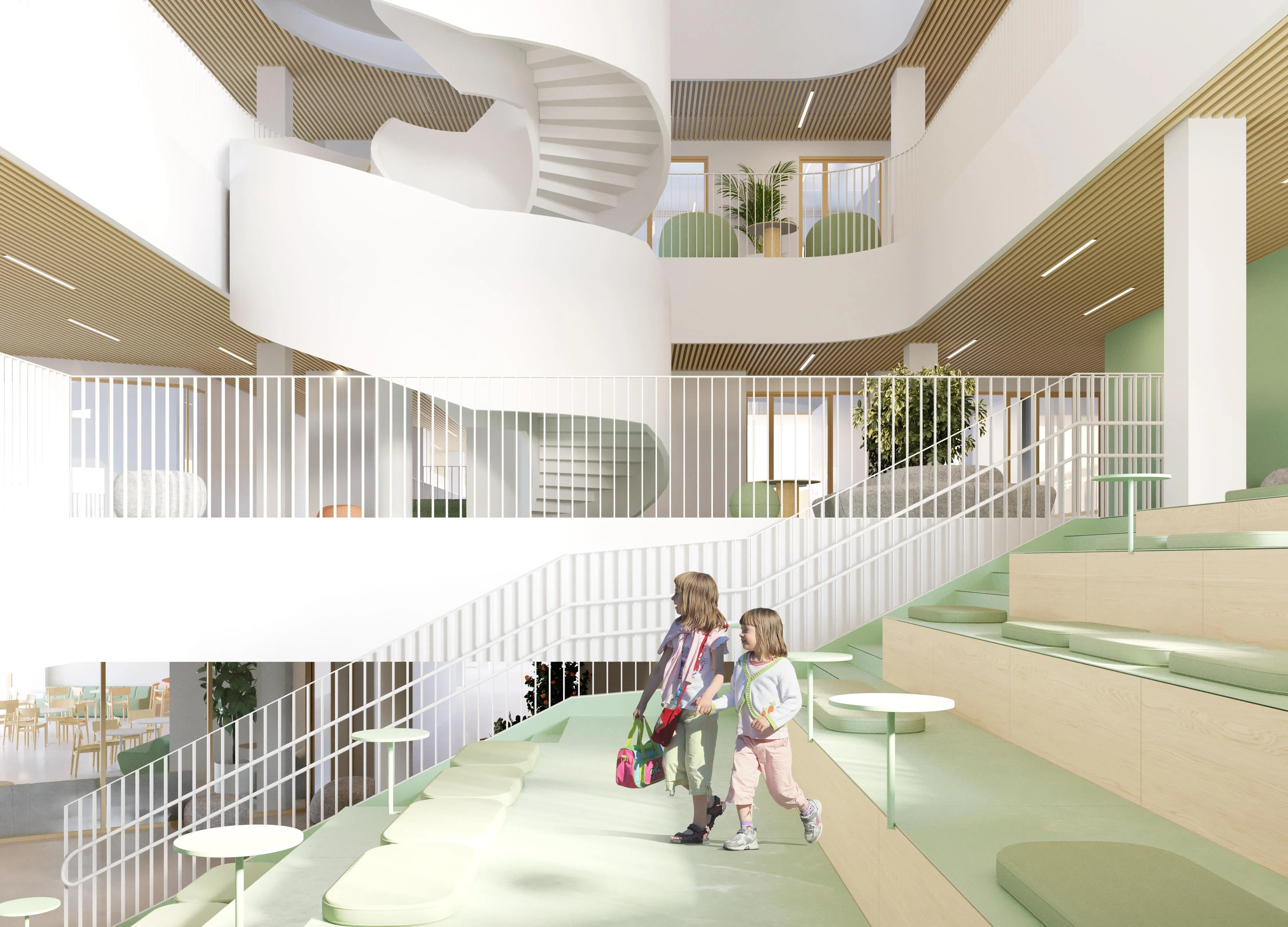
When we think of a typical school, we usually picture a single, large building with long hallways and uniform classrooms. The Educational Complex Sirius takes that traditional idea and turns it completely upside down. Recently named a finalist in the 2025 WAF Future Projects: Education awards, Sirius is not just a school—it is a decentralized urban campus designed to function as a vibrant "miniature city."
By breaking away from the standard single-building model, the project introduces a fresh, community-focused approach to educational architecture.
Four Clusters, One Connected Campus
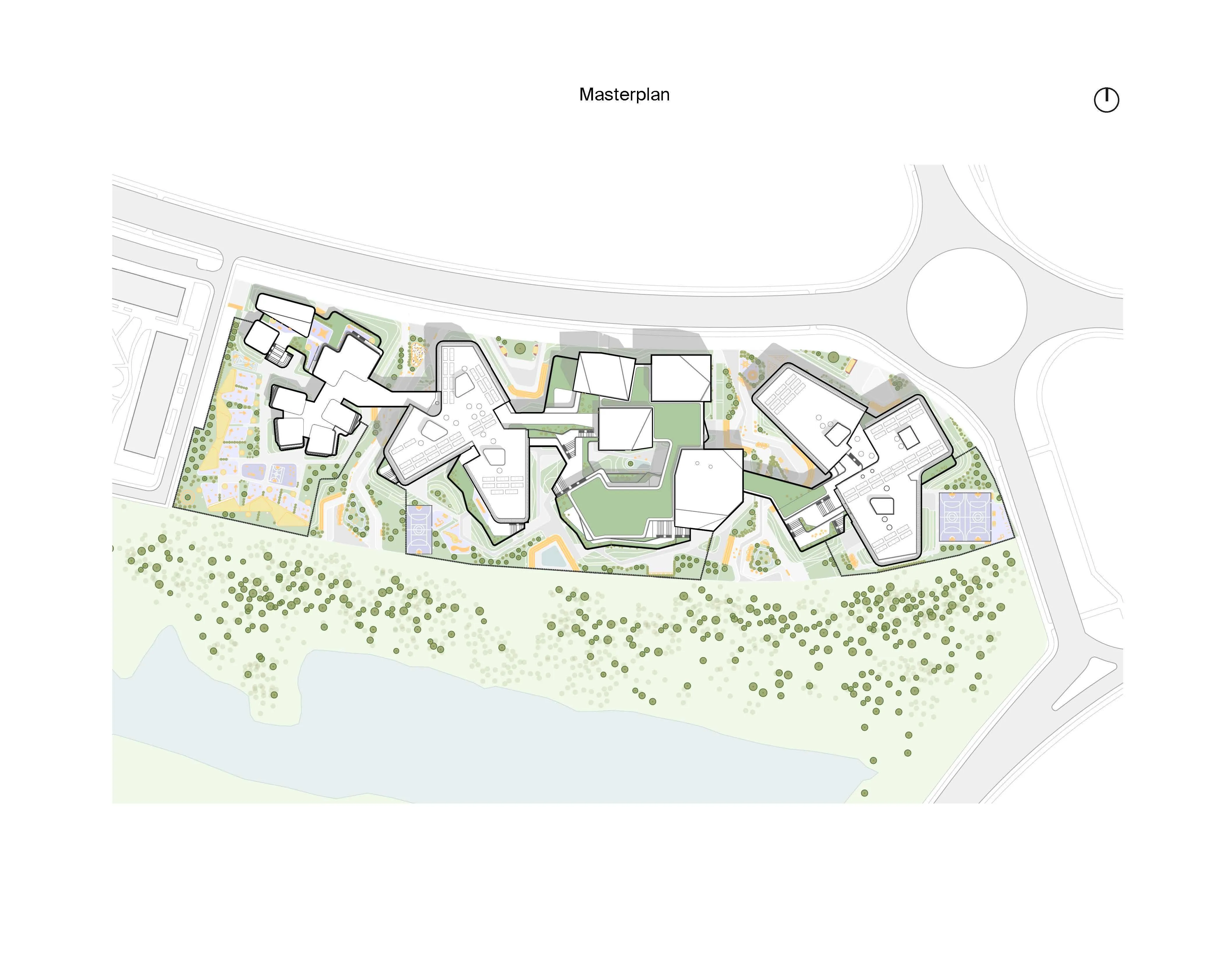
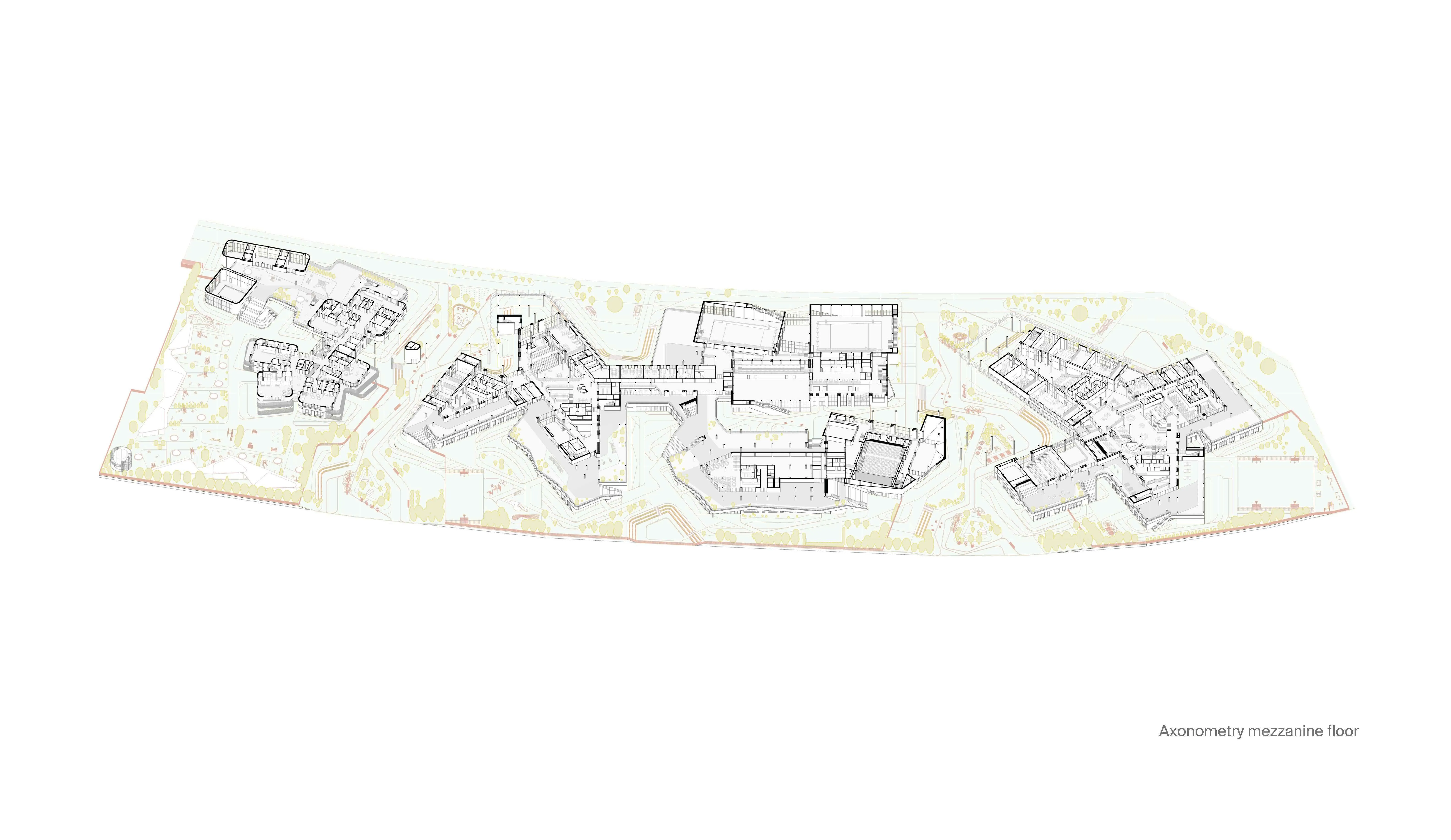
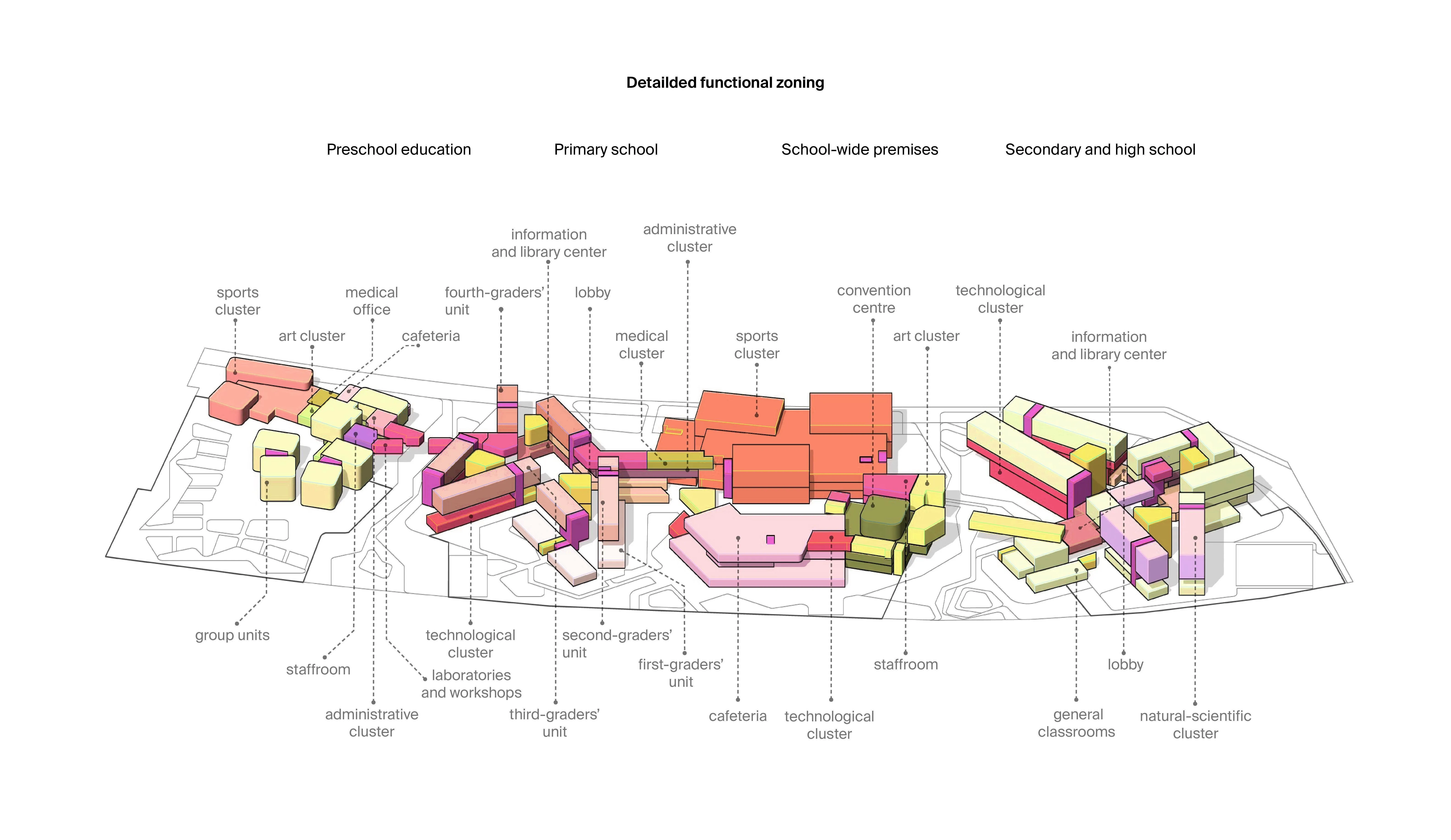
Instead of housing everyone under one roof, the Sirius complex is divided into four distinct hubs: a primary school, a secondary school, a sports cluster, and a congress centre.
What brings these separate spaces together is a thoughtfully designed network of public spaces. Boulevards, open plazas, green parks, and communal courtyards weave between the buildings, replacing traditional hallways with actual city-like streets and squares. For the students, moving between classes feels like walking through a lively, safe neighbourhood. To ensure comfort and safety year-round, all four main blocks are also linked on the second floor by enclosed pedestrian bridges, offering weather-protected routes across the campus.
Spaces that Adapt and Inspire
At the heart of each building is a central atrium—a bright, open hub perfect for student gatherings, informal learning, and community events.
The interior spaces are designed entirely around flexibility. Traditional classrooms are a thing of the past; instead, movable partitions allow rooms to expand or shrink on demand. Whether it is a quiet double-period lesson, a large public lecture, or an academic competition, the rooms effortlessly adapt to the evolving ways we teach and learn.
Beyond standard classrooms, the complex is packed with specialized zones. Students have access to group study pods, open workshops, art and tech clusters, and natural science labs. A standout feature is the system of specialized libraries that act as collaborative hubs, encouraging students of different ages to team up and mentor one another.
Rooted in Nature and Sustainability
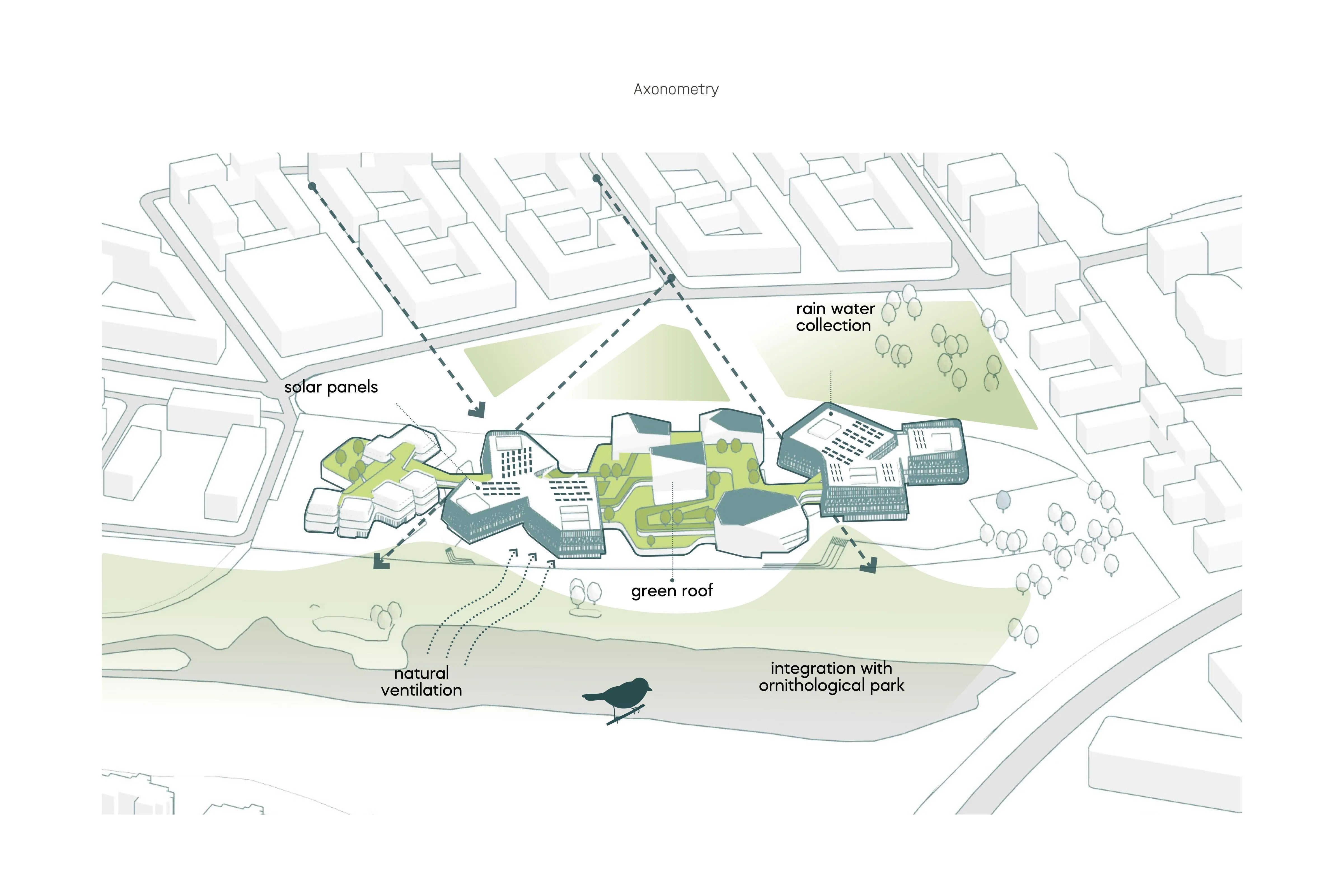
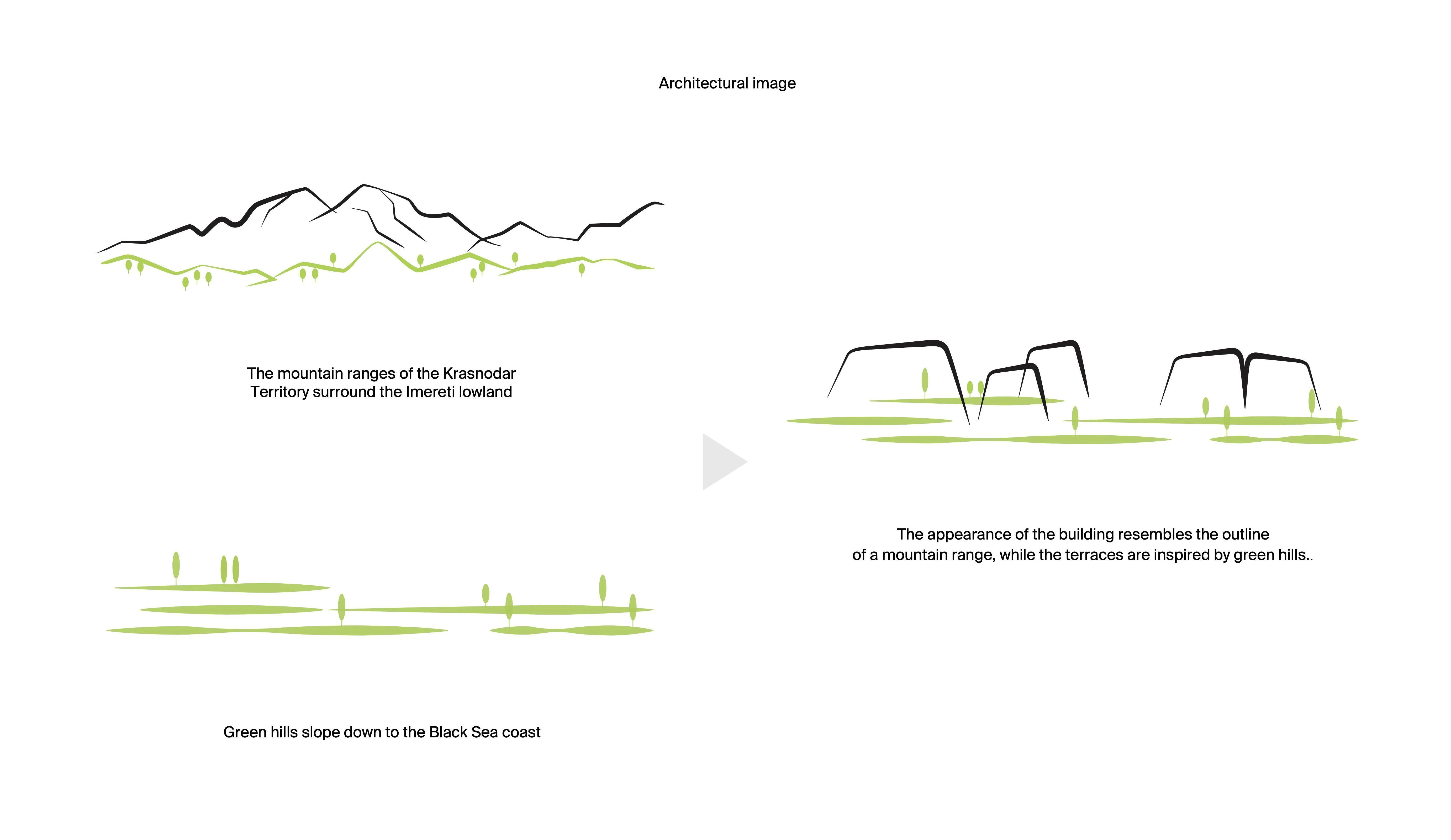
Designed to embrace a warm southern climate, the complex blurs the line between the indoors and the outdoors. Expansive green roofs, shaded terraces, and elevated outdoor dining areas double as observation decks. Because the campus sits right next to an ornithological park, these outdoor platforms give students a front-row seat to wildlife observation and hands-on environmental education.
Sustainability is woven into every inch of the design. The campus generates its own renewable energy through photovoltaic solar panels, while CO₂ sensors constantly monitor and adjust indoor air quality. The buildings are specifically oriented to maximize natural daylight and cross-ventilation, and smart rainwater management systems feed into the continuous green framework that ties the whole site together.
Resilient and Open to the Community
Sirius is built to be as tough as it is beautiful. Elevated to mitigate flood risks and engineered to withstand seismic activity up to a magnitude 9 earthquake, the campus is a fortress of safety.
However, its resilience does not mean it is closed off. The public-facing layout allows the individual blocks—like the sports cluster and congress centre—to operate completely independently outside of school hours. This clever urban planning transforms the school from a daytime-only facility into a permanent cultural and leisure destination for the entire district.
The Educational Complex Sirius is more than just an architectural achievement; it is a blueprint for the future of learning, proving that schools can be sustainable, resilient, and deeply integrated into the communities they serve.
ATRIUM is an international architectural practice, founded in 1994 by Anton Nadtochiy and Vera Butko. The studio is known for its conceptual rigour and contextual sensitivity across diverse typologies, including public institutions, educational complexes, transport infrastructure, and private commissions.
The studio’s work balances innovation with cultural resonance, often exploring the intersection of technology, ecology, and social function. ATRIUM’s projects have been recognized globally, including multiple nominations at the World Architecture Festival (WAF), AR Future Projects Awards, Architizer A+Awards, and others.
Among the studio’s notable projects are the Symbol Residential Complex, Green River Park, the Ruarts Gallery and Museum, the Park of Future Generations (Yakutsk), and Quantum School (Astana).