Meet the Duan Family Center: Boston University’s Fossil-Fuel-Free Masterpiece
2 days ago
4 min read
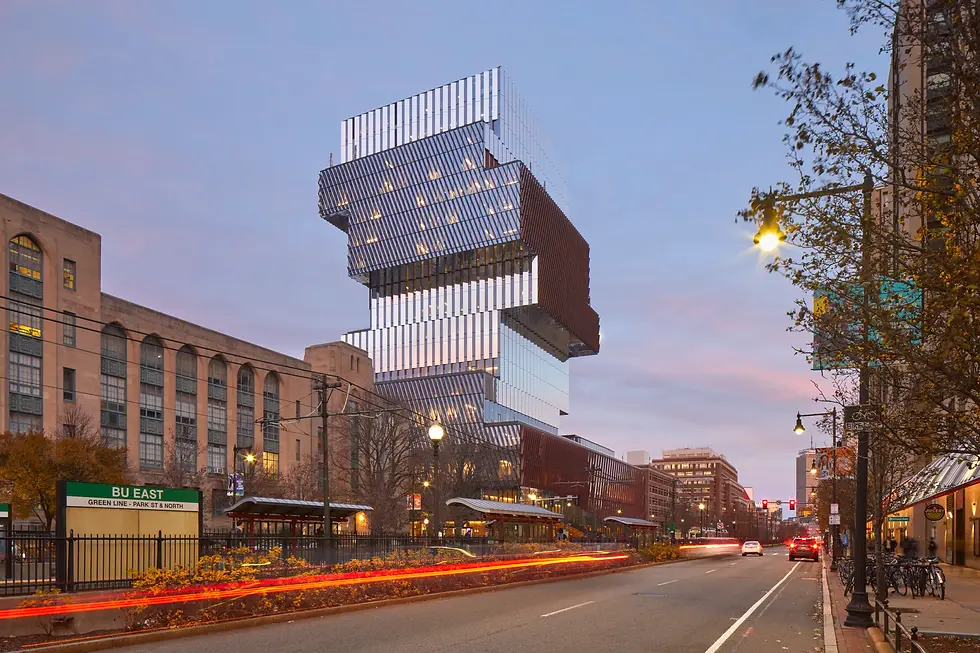
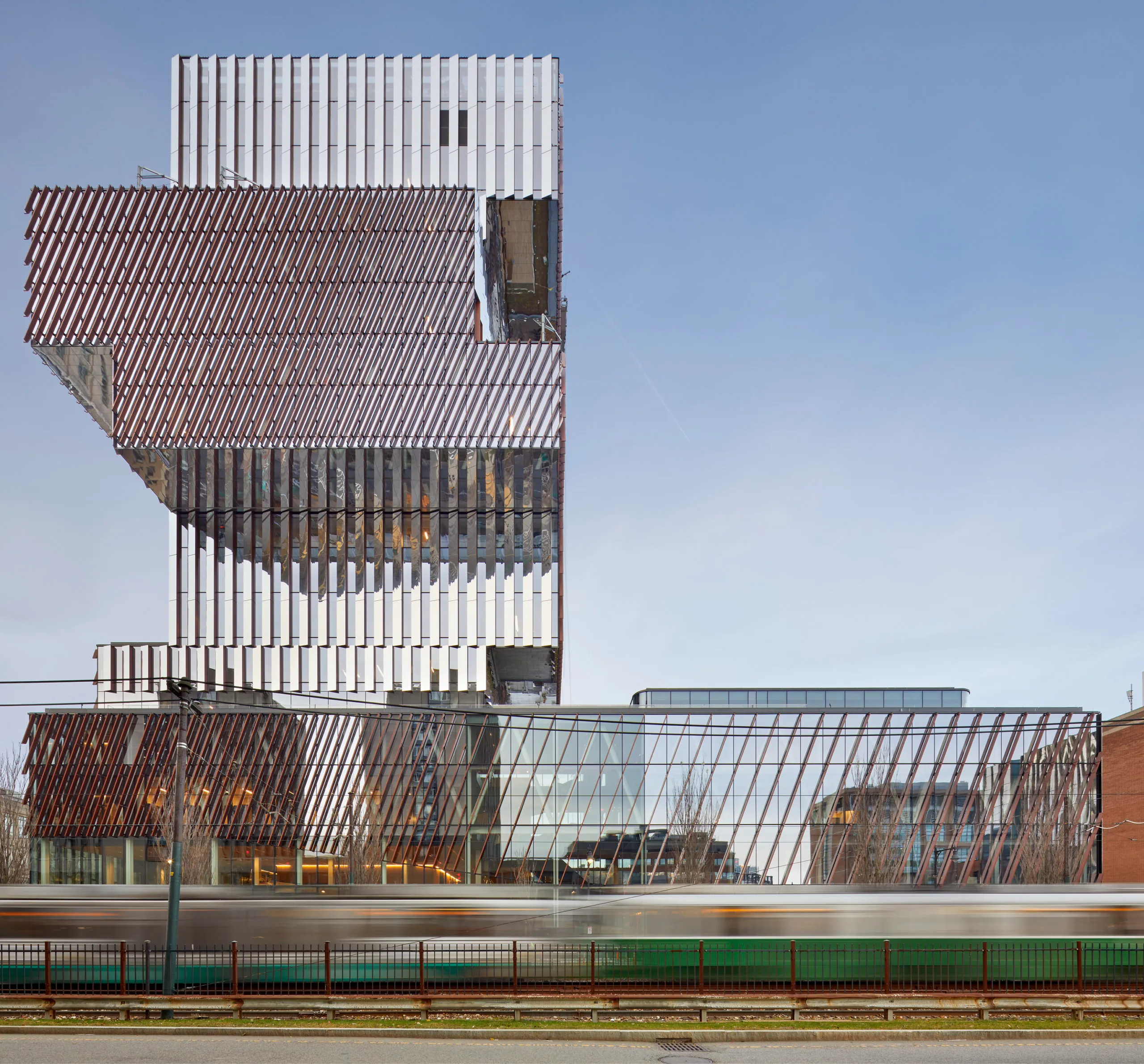
Welcome to the future of the university campus. Towering 19 stories over the banks of the Charles River, the Duan Family Center for Computing & Data Sciences at Boston University is impossible to miss. With its bold, cantilevered blocks that look like a giant stack of books, it has completely transformed the Boston skyline.
But this building isn't just about striking looks. Opened in 2022 and renamed in December 2024, the 345,000-square-foot tower is a cutting-edge hub for mathematics, computer science, and data science. It brings 3,000 students, faculty, and staff together under one very green, highly innovative roof.
Here is what makes the Duan Family Center a true architectural and educational game-changer.
Forget isolated departments and closed-off corner offices. The Duan Family Center is designed as a "vertical campus" that practically forces great ideas to collide.
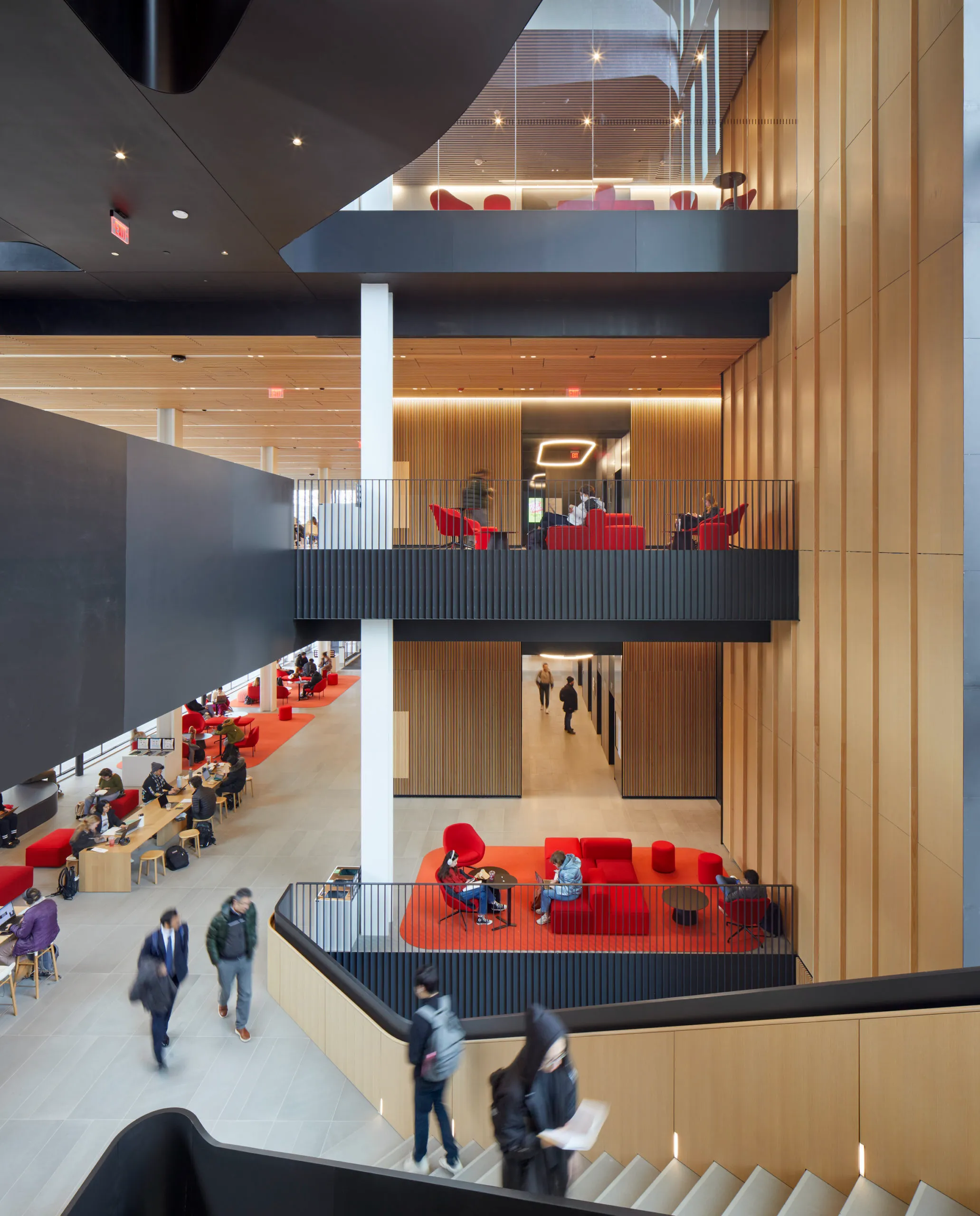
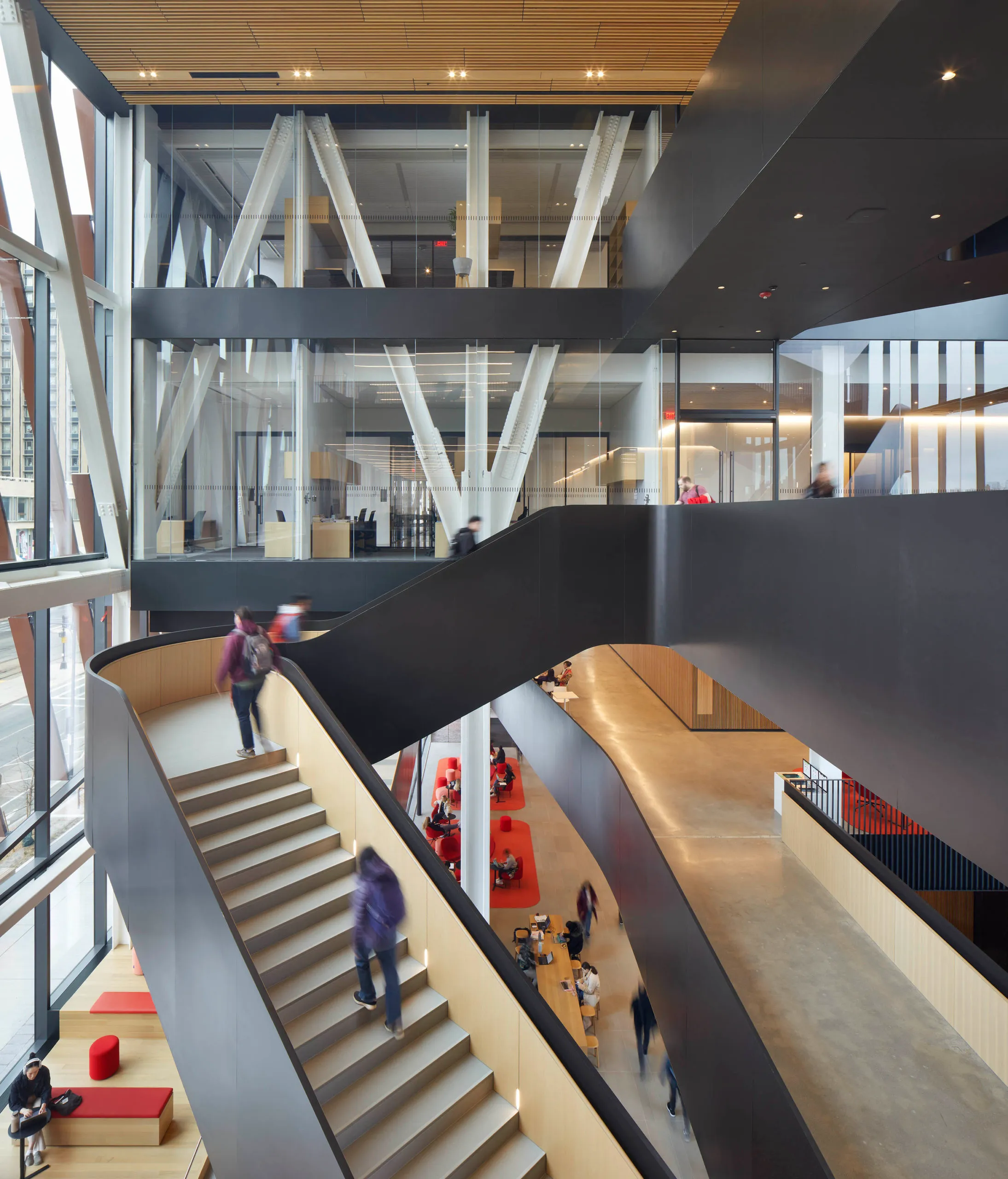
The Academic Neighbourhoods: The layout is highly intentional. The lower floors are dedicated to math and statistics, the middle floors house computer science, and the top floors feature open, interdisciplinary spaces and public venues.
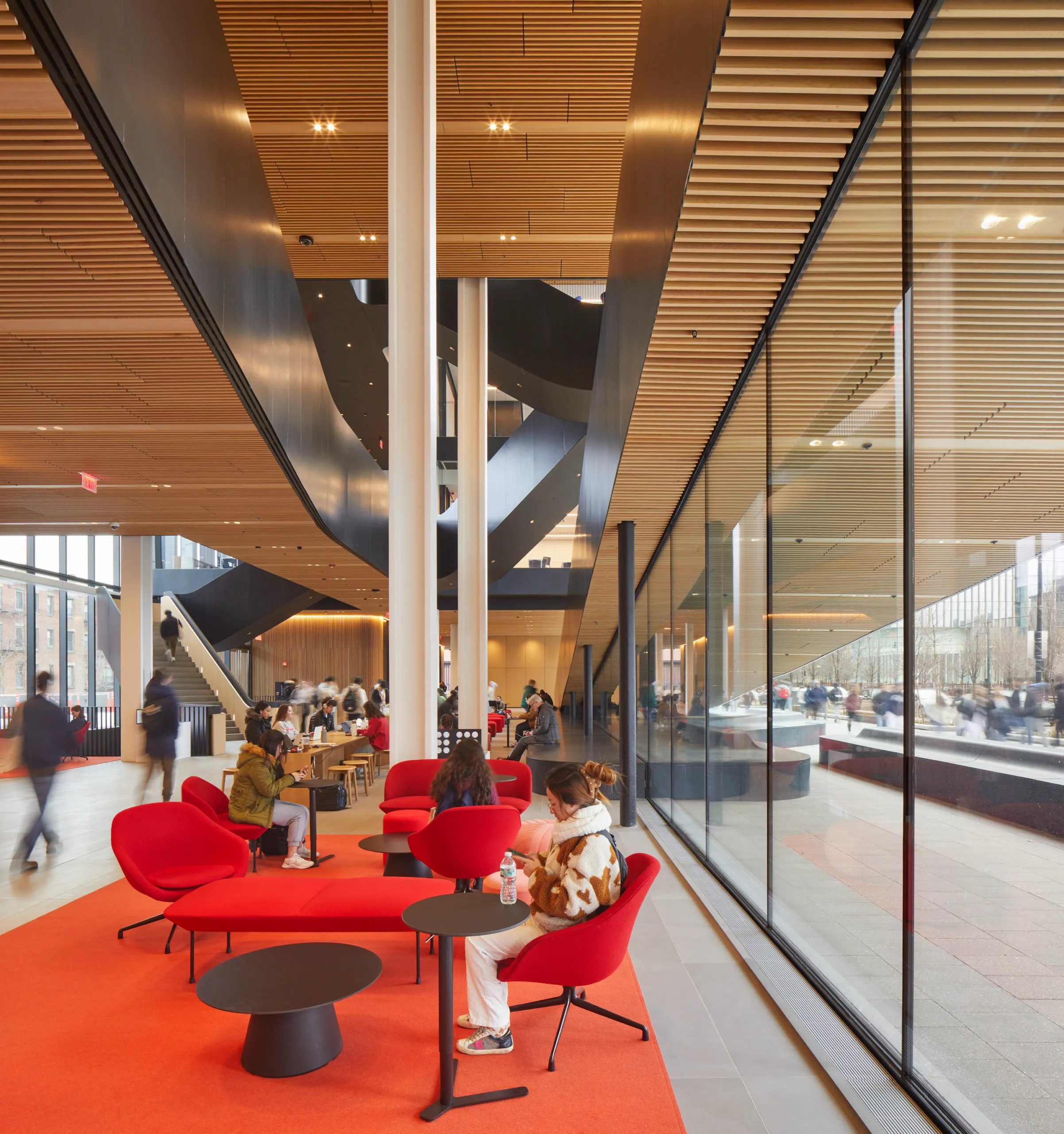
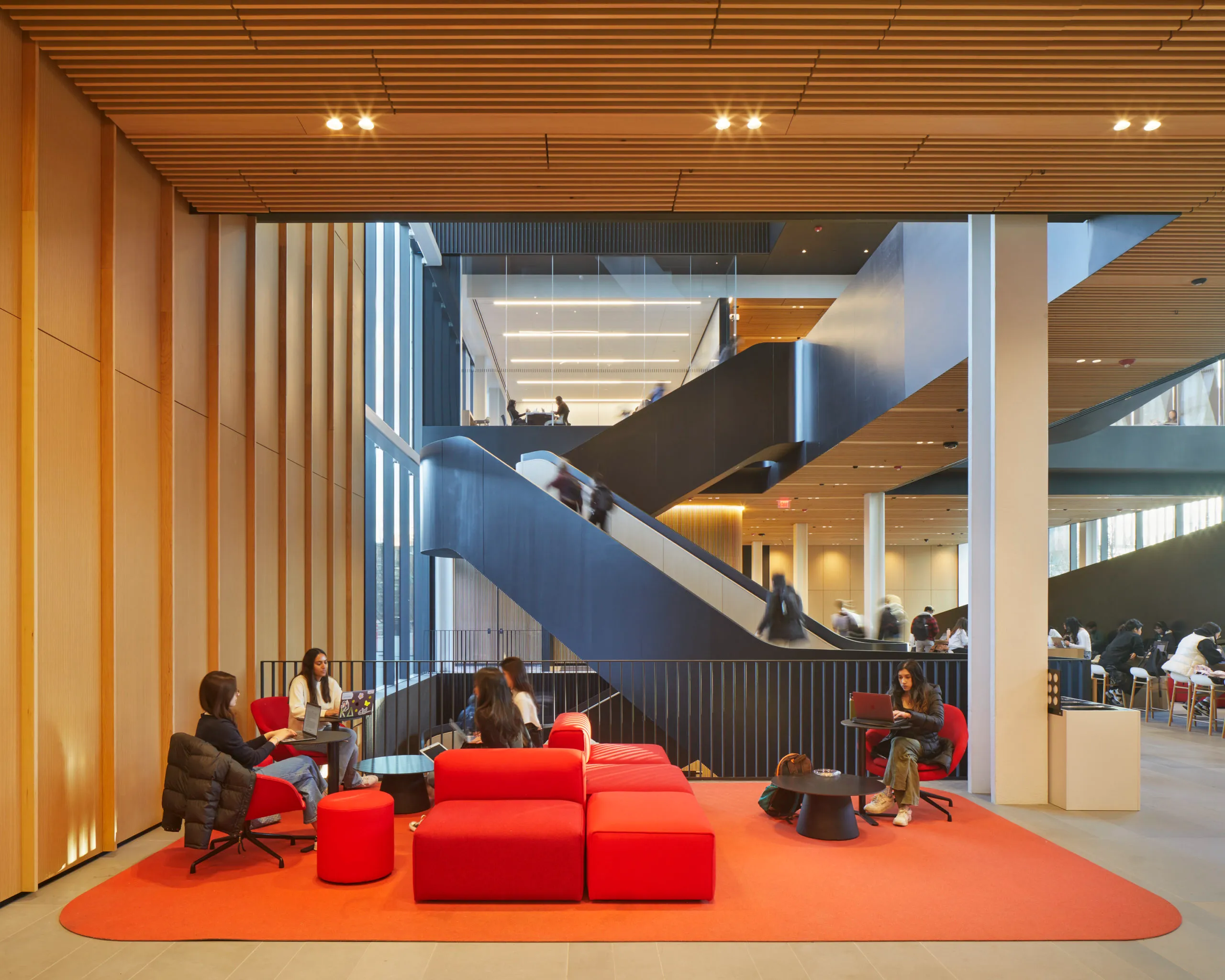
The "Irresistible" Staircase: A massive, ribbon-like staircase weaves through 13 floors of the building. It encourages people to walk, talk, and skip the elevator, sparking serendipitous encounters between different departments.
Spaces to Create: With 12 classrooms, two computer labs, an incubator hub, and a ground-floor café, there is a space for every type of work. Whiteboard walls line the core of the building, inviting students to sketch out their next big idea on the fly.
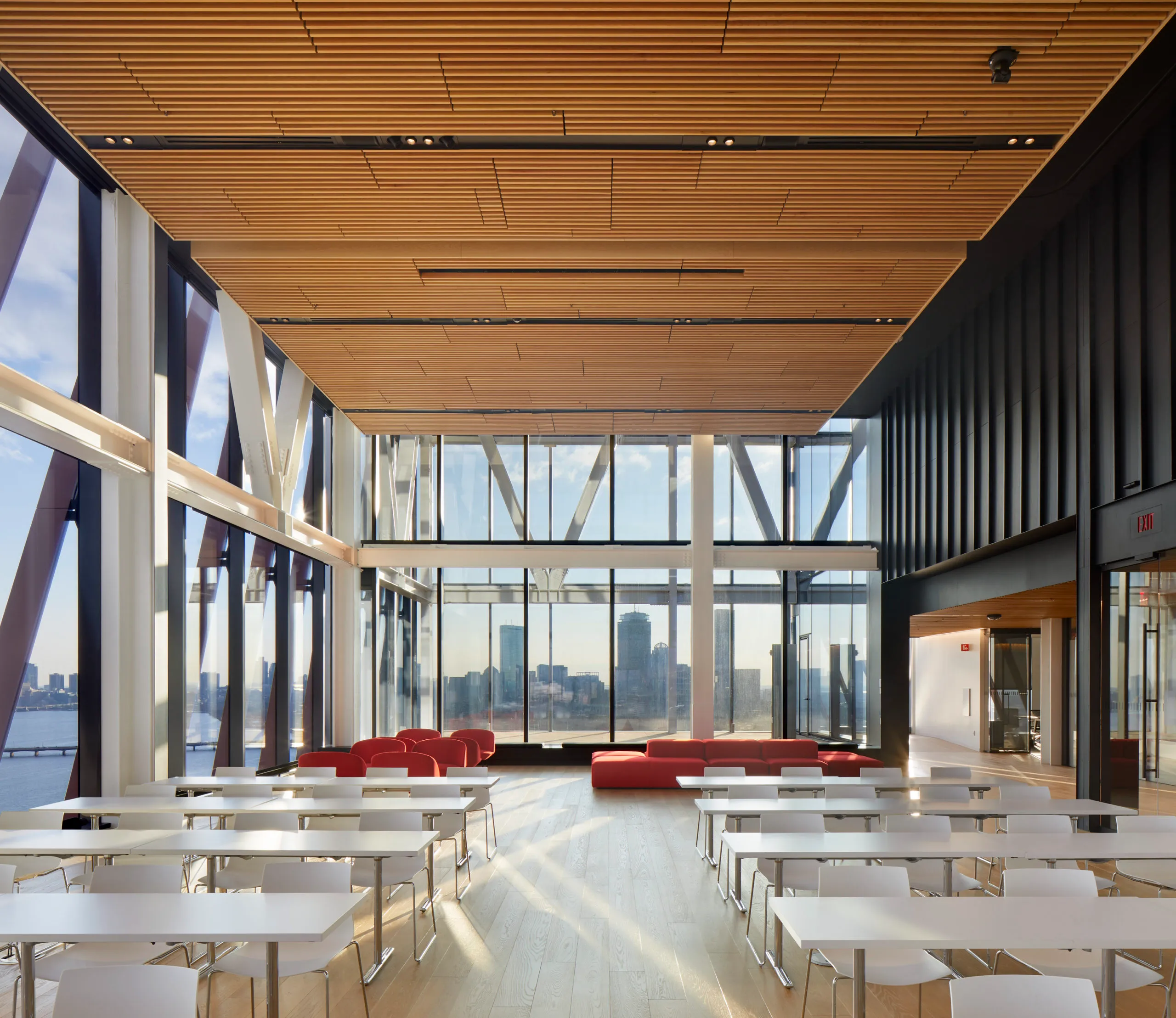
Views and Light: Triple-glazed floor-to-ceiling windows flood the space with natural light and offer expansive, inspiring views of the Charles River, reminding students to stay connected to the natural world even as they work in the digital realm.
Image courtesy of: Tom Arban Photography
Image courtesy of: Tom Arban Photography
Image courtesy of: Tom Arban Photography
Boston’s Greenest Giant
The Duan Family Center isn't just eco-friendly; it is a pioneer. As Boston’s largest sustainable and operationally fossil-fuel-free building, it achieved the highly coveted LEED Platinum certification. It proves that massive urban architecture can be fiercely green.
Zero Fossil Fuels: You won’t find a single gas line connected to this building. Even the on-site dining uses electricity for cooking.
Geothermal Power: The building is heated and cooled by a massive closed-loop geothermal system, featuring 31 boreholes drilled 1,500 feet into the earth.
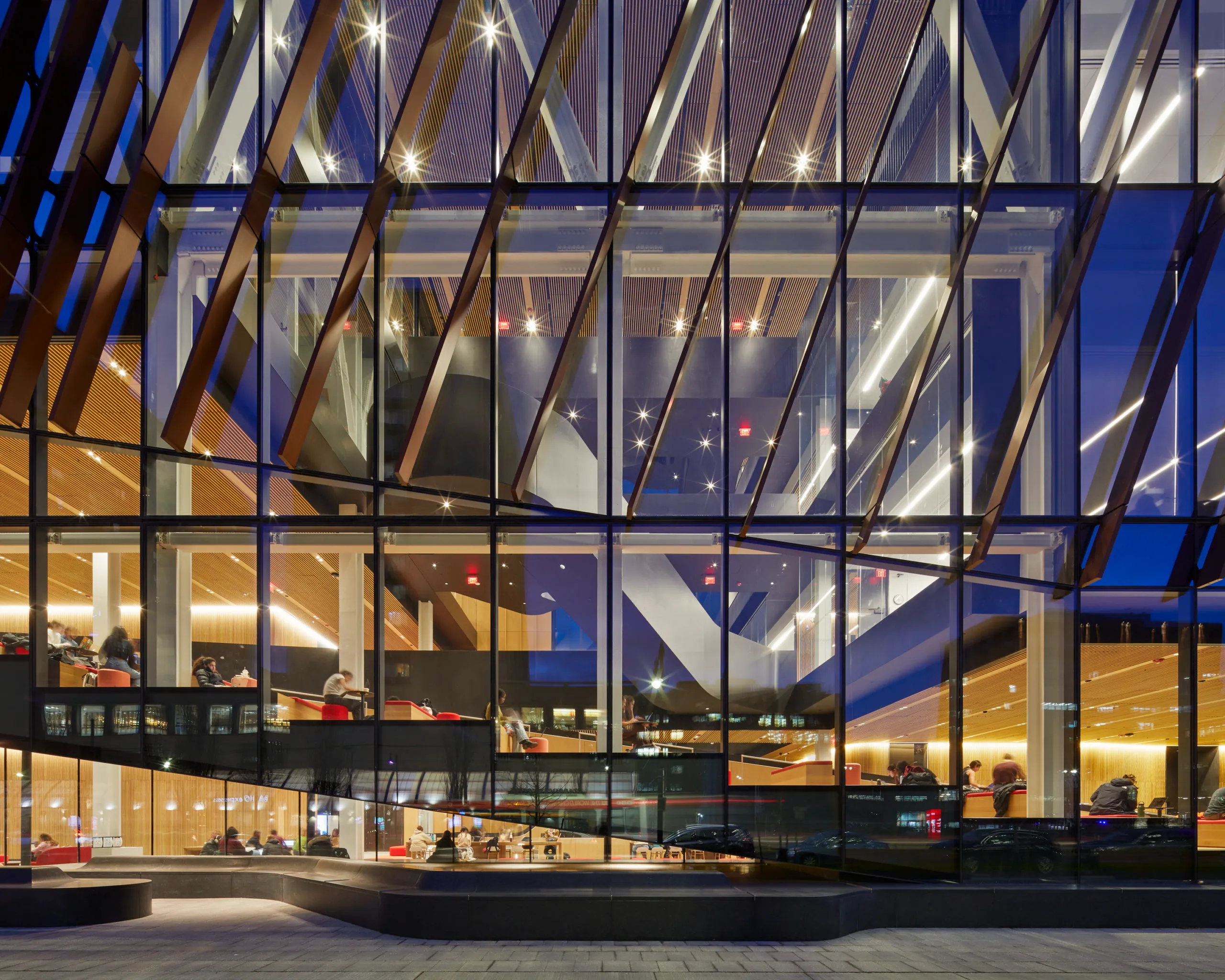
Smart Shading: The distinctive diagonal louvres and sawtooth mirrored facades aren't just for show. They minimize solar heat gain in the summer and keep the building warm in the winter, reducing energy consumption by an impressive 30%.
Climate Resilient: Because it sits close to the river, the building is elevated five feet above Boston’s sea-level rise guidelines to protect against future flooding and storm surges.
Bringing Nature Up: Eight outdoor terraces with native plants help reduce the urban heat island effect, retain rainwater, and give students a breath of fresh air.
Image courtesy of: Tom Arban Photography
Image courtesy of: Tom Arban Photography
Image courtesy of: Tom Arban Photography
Image courtesy of: Tom Arban Photography
Real-World Impact
Since opening its doors, the Center has done exactly what it was built to do: advance research, build community, and drive innovation.
It has become a dynamic crossroads for the entire university, intersecting with arts, business, law, and engineering. The facility has already helped attract $3 million in grants for data science initiatives and has hosted community-driven events such as the Civic Tech Hackathon, which uses data science to tackle major issues like climate change and social justice. Best of all, it's fostering a diverse new generation of tech leaders—women now make up 40% of matriculating students in BU's data science programs.
The Duan Family Center is more than just a place to go to class. It is a literal and symbolic crossroads that proves what happens when human-centred design, bold architecture, and a deep commitment to the planet all come together.
Founded in 1987, KPMB is an internationally recognized Canadian architectural practice dedicated to designing built environments that catalyze positive change. For over three decades, the firm has evolved from a "collaborative adventure" into a multifaceted practice of over 130 professionals, completing more than 31 million square feet of projects across sectors, including education, healthcare, arts and culture, and sustainable development.
KPMB is guided by four core values—evolution, collaboration, community, and design—which anchor its commitment to solving the complex challenges of the 21st century. The firm’s work is characterized by a balance of aesthetic excellence and rigorous standards for sustainability and social equity. This dedication has earned KPMB over 400 awards, including 18 Governor General’s Medals, Canada’s highest architectural honour.
In 2021, the firm marked a significant milestone in its evolution by expanding its leadership team, naming seven new partners to join founders Bruce Kuwabara, Marianne McKenna, and Shirley Blumberg. Supported by KPMB Lab, an internal incubator for research and innovation, the firm continues to push the boundaries of regenerative design, digital integration, and climate-responsive architecture to improve the lives of the communities it serves.
After more than a decade immersed in the relentless energy of New York City, the clients behind the Avoca Condo were ready to come home. Seeking a space that honoured their fast-paced past while embracing their grounded future, they found a 1,200-square-foot sanctuary near Rosedale’s leafy Yonge and St. Clair corridor. Boasting excellent bones and serene park views, the canvas was there—but it needed vision.
In the first part of our series, we examined the mechanics of the "Practice Before Practice" exhibition—a bridge between Toronto Metropolitan University students and the professional world. We heard from the student perspective on the "culture shock" of real-world constraints.
For decades, the design, architecture, and engineering worlds have followed a strict, sequential script: learn first, practice later. Students spend years perfecting theory in academic bubbles, only to graduate and crash into the hard realities of budgets, building codes, and client demands.
In our previous feature, we explored the "Practice Before Practice" model—a collaboration between Toronto Metropolitan University (TMU), Mason Studio, and developer HOEM—that is redefining design education in Toronto. By placing students directly into the high-stakes environment of live development, the project aims to replace academic isolation with real-world execution.
Welcome to the future of the university campus. Towering 19 stories over the banks of the Charles River, the Duan Family Center for Computing & Data Sciences at Boston University is impossible to miss. With its bold, cantilevered blocks that look like a giant stack of books, it has completely transformed the Boston skyline.
As the editorial team behind Forma The Magazine, we attend our fair share of industry events. We have to confess, sometimes trade shows can feel repetitive—a sea of standard, uninspiring exposition booths. We arrived expecting more of the same, but what we experienced over the last two days at the Living Luxe Design Show 2026 proved that assumption wrong.
Canada’s architectural glass industry is preparing to gather once again for Top Glass 2026, the nation's definitive trade conference and expo for glazing professionals. Now in its 13th year, the event hosts hundreds of glazing contractors, glass fabricators, architects, specifiers, and building engineers for an intensive, highly technical program laser-focused on building with glass.
It was a quiet but profound gesture, perfectly capturing the spirit of a project built by—and for—the people of Nakusp. When the final tools are packed away, the Summit Lake Ski Lodge will stand not as a reinvention, but as a beautiful continuation of a building shaped by its past and fully prepared for the future.