For many young families looking to plant roots in or near Toronto’s downtown core, the detached housing market presents an insurmountable barrier. However, one family found what they describe as a “loophole in the Toronto housing market”—and it was hiding right in their parents.
Enter the Glencrest Laneway Suite, a project designed and built by Lanescape. Far from a cramped studio or a simple guest house, this remarkable build proves that with the right lot and intelligent design, you can essentially build a full-sized, second home in a backyard.
Beating the Market with Multi-Generational Living
The clients knew what they wanted: a spacious home in a well-established neighbourhood close to parks, schools, and transit. When traditional real estate prices pushed a detached downtown home out of reach, they looked to their parents' property in East York, which was eligible for a laneway suite.
By utilizing this existing land, the family bypassed the crushing cost of a new lot, saving hundreds of thousands of dollars. The site plan neatly places the two-storey suite at the rear of the property abutting the laneway, leaving a comfortable distance between the new build and the primary residence. The result is a masterclass in multi-generational living that allows the growing family to stay in their ideal neighbourhood with plenty of indoor and outdoor space, a backyard, and room for vehicles and toys.
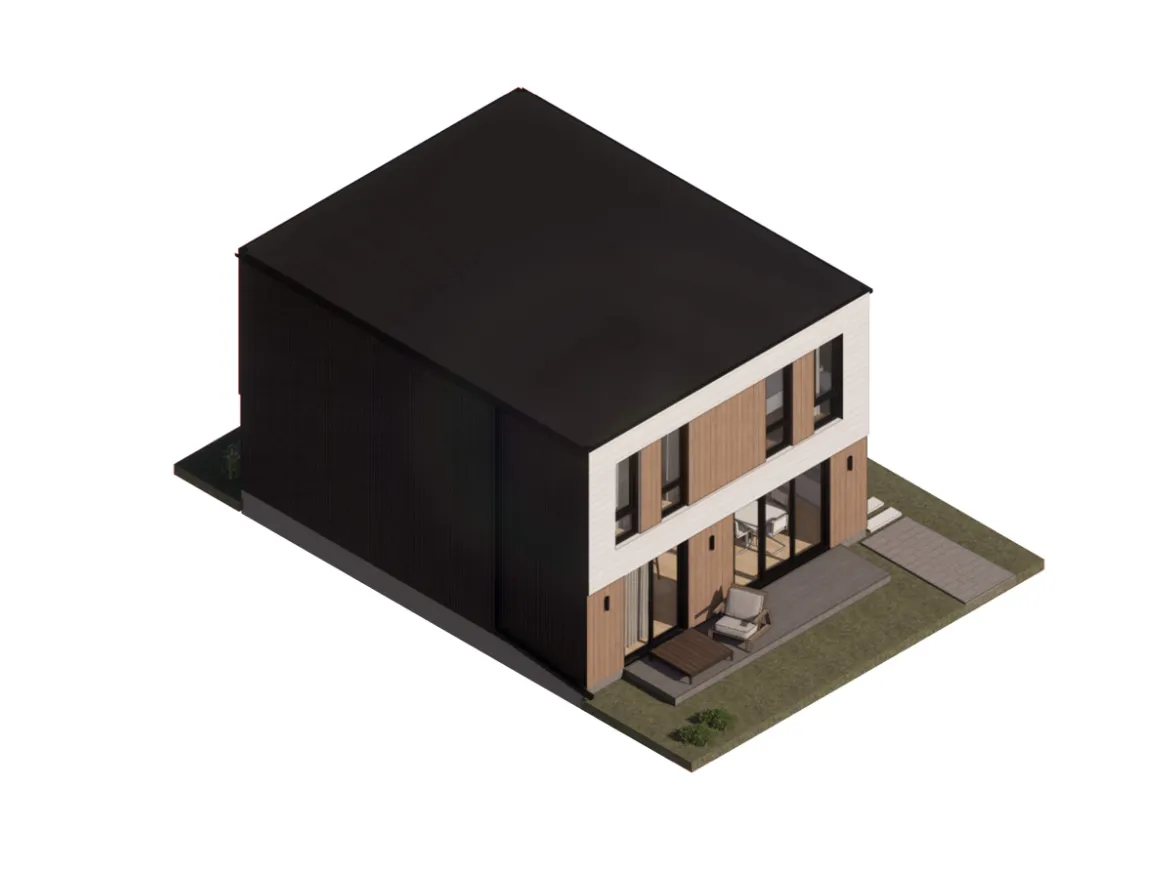
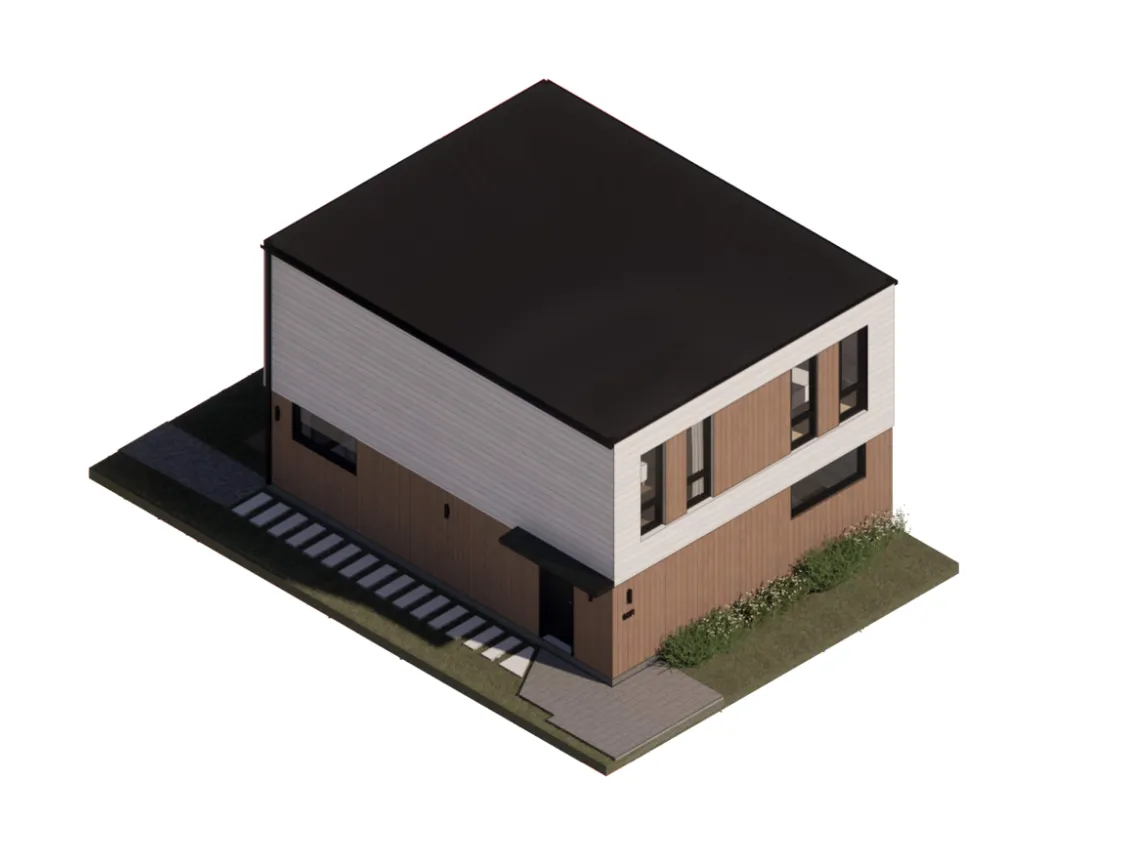
Visually, the Glencrest suite is a stunning modern addition to the neighbourhood canopy. The exterior boasts a highly modern, boxy silhouette with a flat roof, clad in a crisp two-toned palette. The upper half features clean white horizontal siding, while the lower half is grounded by warm, vertically oriented wood-toned panels. Dark window frames add a sharp, contemporary contrast.
The landscaping and site design emphasize usability. An expansive interlocking brick driveway provides ample parking space right off the laneway. At the rear, expansive glass sliding doors open directly onto a large private wooden deck, seamlessly blending indoor and outdoor living while taking advantage of the lot's mature trees.
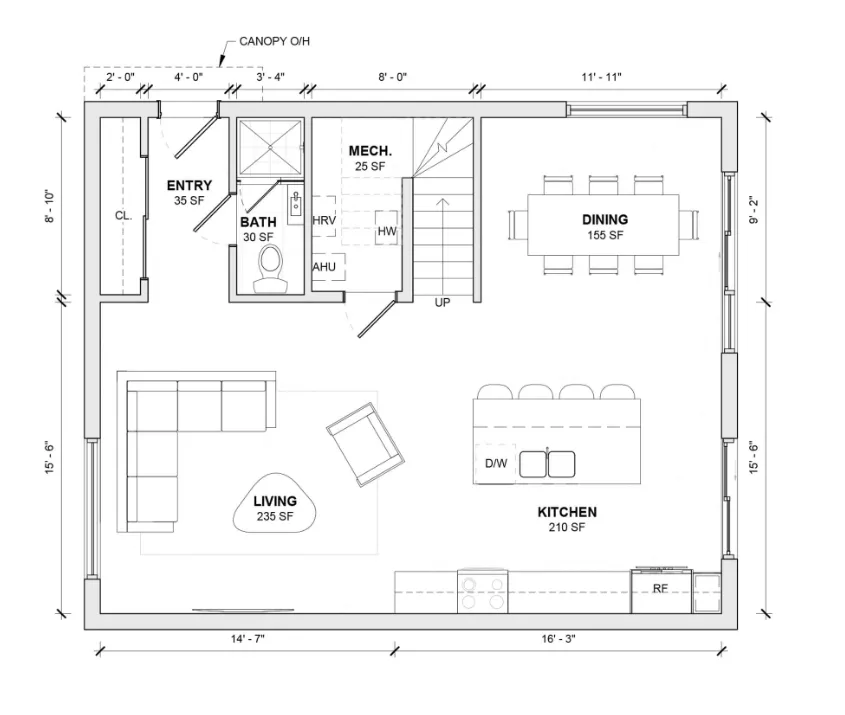
At an expansive 1,710 square feet across two levels, the Glencrest project shatters the tiny-home stereotype. The ground floor layout is meticulously sculpted to prioritize family time and entertaining.
A Welcoming Entry: A dedicated entryway with a large coat closet keeps the main living space clutter-free, while a conveniently located 30-square-foot, 3-piece bathroom sits just off the hall.
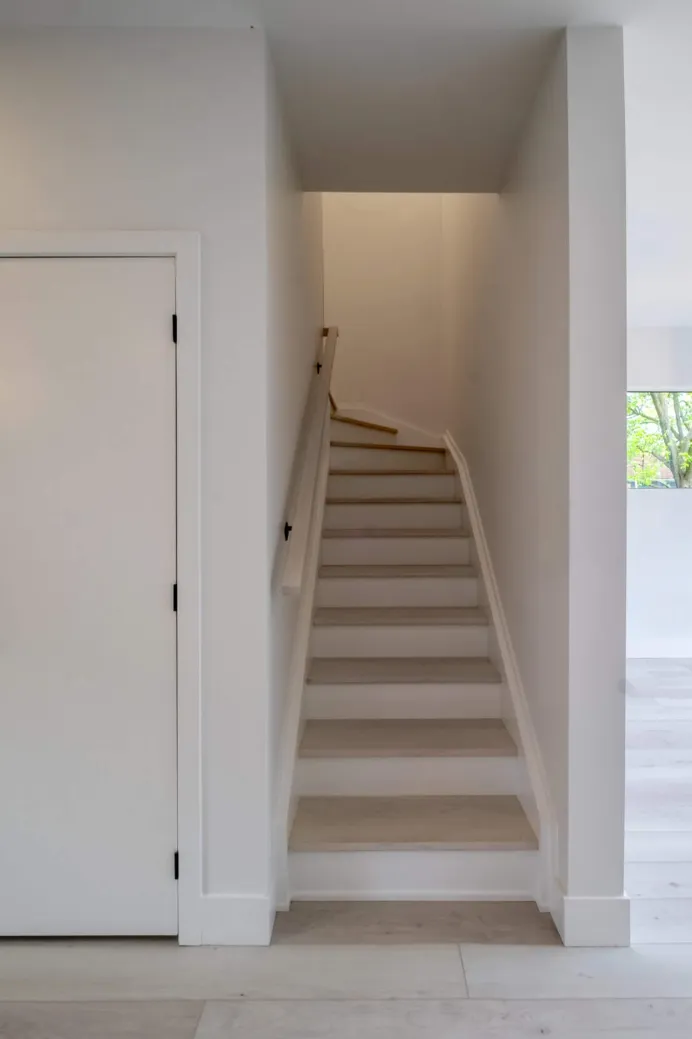
Smart Mechanicals: To save space, the mechanical room (housing the HRV, air handling unit, and hot water) is cleverly tucked beneath the staircase.
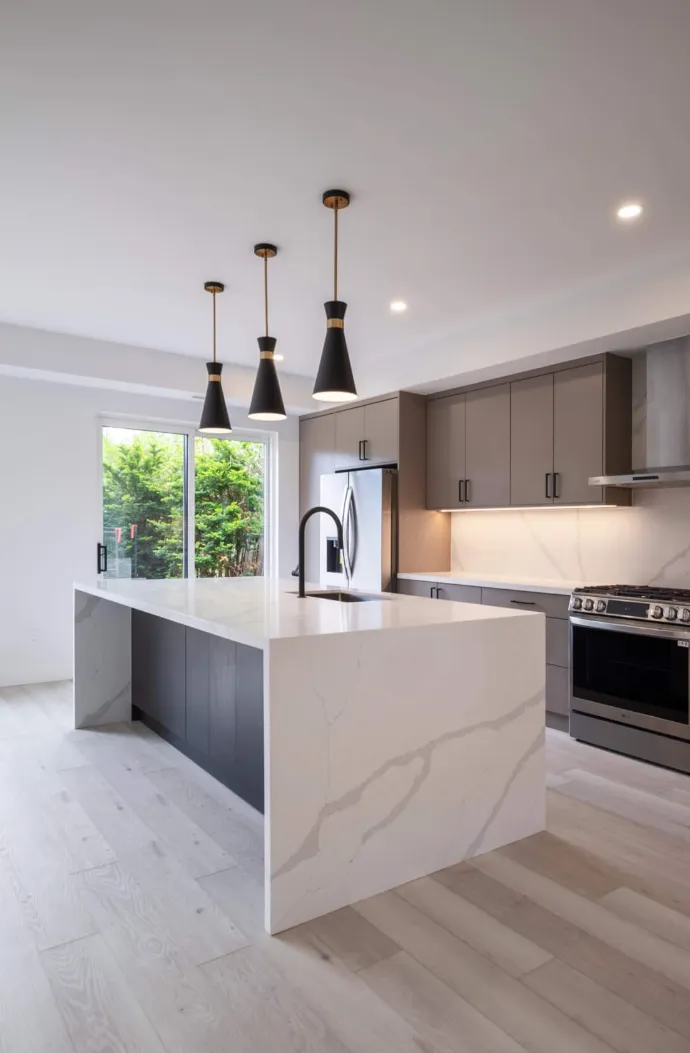
The Chef’s Kitchen: The heart of the 210-square-foot kitchen is a massive island featuring white quartz countertops with dramatic grey veining and a modern waterfall edge. The island seats four and is illuminated by three striking black and gold cone-shaped pendant lights. Flat-panel greige cabinetry, dark base cabinets, and high-end stainless steel appliances—including a gas range—complete the sophisticated look.
Open-Concept Flow: The kitchen flows effortlessly into a 155-square-foot dining area capable of hosting an eight-person table, and a generous 235-square-foot living room. Light wood-look flooring runs throughout, reflecting the abundant natural light.
Image courtesy of: Lanescape
Image courtesy of: Lanescape
Second Floor: A Feat of Family Engineering
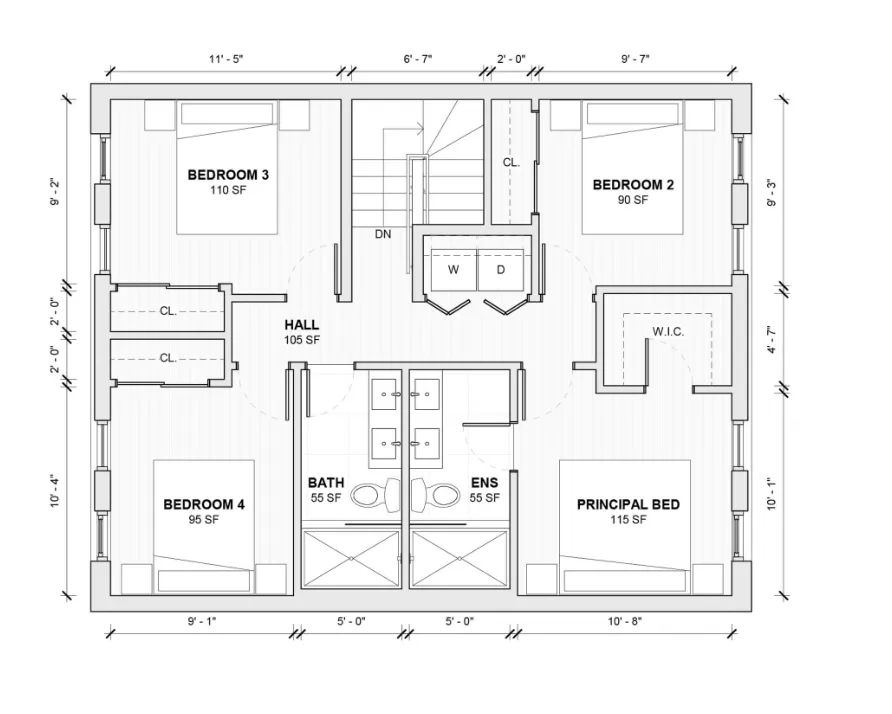
Fitting four bedrooms into a laneway suite is an absolute rarity, but the second-floor floor plan executes it flawlessly without feeling cramped.
The Principal Suite: The 115-square-foot primary bedroom leaves nothing to be desired, featuring a dedicated walk-in closet and a private 55-square-foot ensuite bathroom with a large walk-in shower.
Three Additional Bedrooms: Ranging from 90 to 110 square feet, the three additional bedrooms offer ample space for children, guests, or home offices.
Family-Friendly Logistics: A second 55-square-foot full bathroom serves the secondary bedrooms. Furthermore, the upper-level hall was designed with ultimate convenience in mind, featuring two large linen closets and a dedicated double-door closet for a full-sized washer and dryer.
Image courtesy of: Lanescape
Image courtesy of: Lanescape
By the Numbers: Time and Budget
Building a custom home from the ground up requires patience, but the timeline for this laneway suite was incredibly efficient.
Design & Permits: Approximately 4 months.
Construction: Around 9 months (notably swift for a 1,700 sq. ft. custom home, especially considering it was one of Lanescape's earlier, larger construction projects).
The Cost: While custom builds vary widely based on size, materials, and upgrades (typically ranging from $350 to $500 per square foot), a unit of this size hits the more efficient end of that spectrum. The Glencrest suite came in at approximately $520,000 for construction hard costs (exclusive of management fees).
Ultimately, the Glencrest Laneway Suite is more than just a beautiful building; it is a blueprint for the future of urban density. It demonstrates that laneway suites have the profound potential to provide long-term, comfortable, and highly customized living solutions for families unwilling to compromise on space or location.
Lanescape is a group of planning, design, and development professionals who have long considered laneway and garden suite development to be a potential resource and opportunity for the City of Toronto to thoughtfully improve housing options in existing residential neighbourhoods.
In 2014, Lanescape set out to crowd-source an as-of-right zoning policy that would allow homeowners to easily and affordably build laneway suites. We, like many Torontonians, needed help affording our mortgages, aging in place, and finding family-oriented rental options near parks and schools. After 4 years of tireless effort consulting with communities, planning professionals, city staff, and municipal leaders, our dream became a reality when the City of Toronto approved and implemented as-of-right laneway housing by-laws in the summer of 2018.
Over the course of our advocacy efforts, our expertise in design and construction was integral to our success. With the Changing Lanes policy now in place and the Garden + Suites project well underway, our experience in establishing the by-law now informs our design-build approach, establishing our team as the leading authority on laneway and garden suite development. Lanescape’s fundamental mandate, centred on thoughtful, positive and sustainable development, continues to permeate all facets of our practice throughout our ongoing advocacy efforts, approach to design and methods of construction delivery.
JOIN THE FORMA COMMUNITY
Stay Inpired.
Shape the Future.
Receive the latest updates on architecture, design, and sustainability, along with news of upcoming competitions, events, and exclusive stories, delivered directly to your inbox.
Great design bridges past and future,
creating spaces that evolve with us.
At Forma The Magazine, we believe architecture and design have the power to elevate lives, restore places, and inspire generations.
We invite you to join our community of thinkers, creators, and dreamers shaping the future of design.
Then there is Montréal—a city that, for twenty years, has chosen to "govern" itself. In June 2006, the Québec metropolis became the first city in North America and only the third in the world to join the UNESCO Creative Cities Network in the field of design. Two decades on, that designation has proven to be far more than a badge of honour. It has become the philosophical spine of an entire urban project.
Humans spent 99% of their evolutionary history adapting to the natural world. Today, we spend roughly 90% of our lives inside sealed, climate-controlled boxes. This massive shift has left us chronically stressed, fatigued, and disconnected.
Winner of the 2026 Award of Excellence in Architecture from the Quebec Association of Architects, the Aubé House is more than just a beautifully designed residence. It is a physical timeline—a space where a rich family history meets breathtaking modern design.
Just north of Toronto, perched on the edge of a wooded valley, sits Ravine House—a contemporary home that redefines what it means to live in harmony with nature. Rather than acting as a barrier against the outdoors or simply occupying a plot of land, this stunning residence acts as an immersive, beautiful mediator between comfortable domestic living and the natural landscape.
On May 29th, as the sun began to set over the historic brick facades of Old Town Toronto, the streets took on a new, electric energy. The King East Design District (KEDD) Neighbourhood Hop—the highly anticipated annual event presented by DesignTO in collaboration with the Old Town Toronto BIA—was officially underway. For a few magic hours, the neighbourhood morphed into a sprawling, interactive playground for creativity and innovation.
In the heart of Quebec’s rugged Laurentians region, a new kind of home has taken flight. Located in the quiet community of La Conception, The Albatross is not just a house; it is a masterclass in modern residential design. Image courtesy of: Stéphane Groleau Created by the teams at MU Architecture in close collaboration with architect Anik Patry, this extraordinary home was built around a beautiful, simple idea: to place a modern family at the very center of a spectacular nat
Great architecture does more than simply house people; it shapes how they learn, create, and connect with the world around them. Université du Québec à Montréal (UQAM) has long understood this, and the architectural community agrees. Recently, UQAM’s iconic pavillon de Design was awarded the Royal Architectural Institute of Canada’s (RAIC) Prix du XXe siècle, a prestigious honour that recognizes the most outstanding and enduring architectural achievements of the last century.
Medical laboratories are often defined entirely by their complex, technical needs, leaving little room for architectural beauty. However, the new Montérégie Central Laboratory in Quebec completely rewrites that rule. Designed by the architectural firms NFOE and Archi–, this cutting-edge facility proves that high-tech infrastructure can be surprisingly elegant.