A landmark development in the Canary District creates a precedent-setting ecosystem for healing, education, and reconciliation.
Project Credits & Details
Location: Canary District / West Don Lands, Toronto, Ontario
Client: Anishnawbe Health Toronto (AHT), Dream, Kilmer Group, Tricon Residential
Architects & Design Partners:
Stantec (Prime Consultant / Architect of Record)
BDP Quadrangle (Master Planner, Residential, TEEC Interiors)
Construction: EllisDon
Size: 440,000 sq. ft. (approx. 40,000 m²)
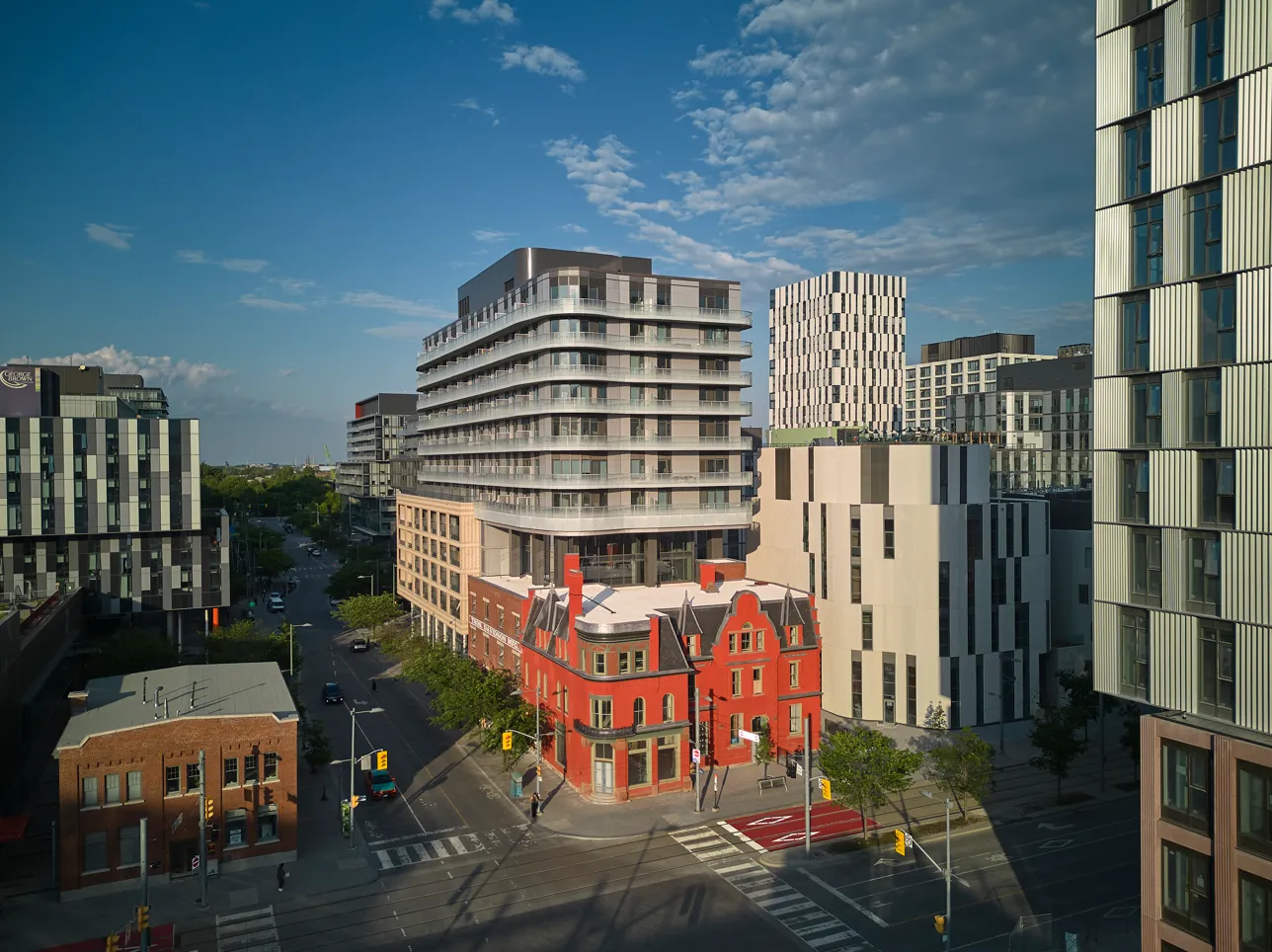
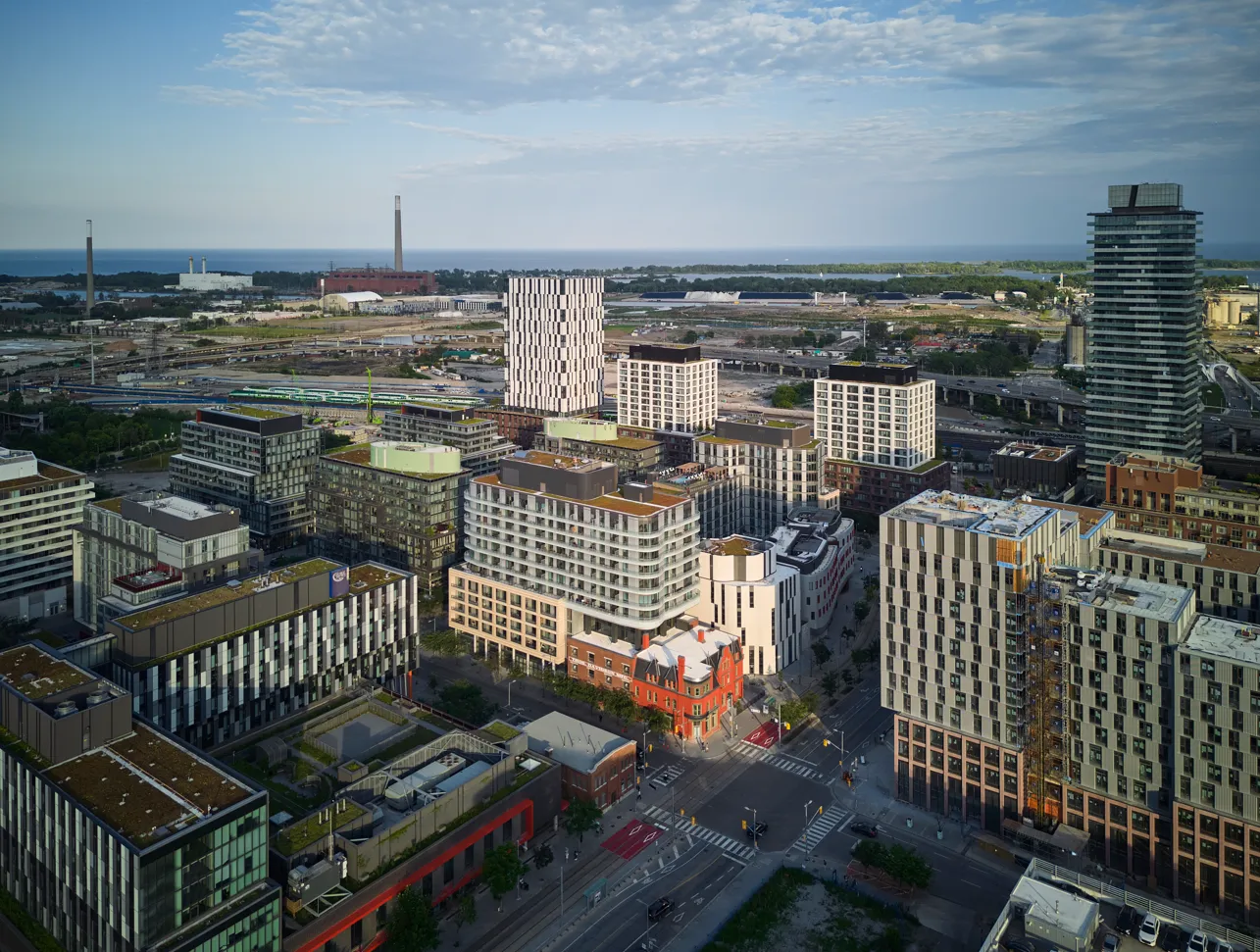
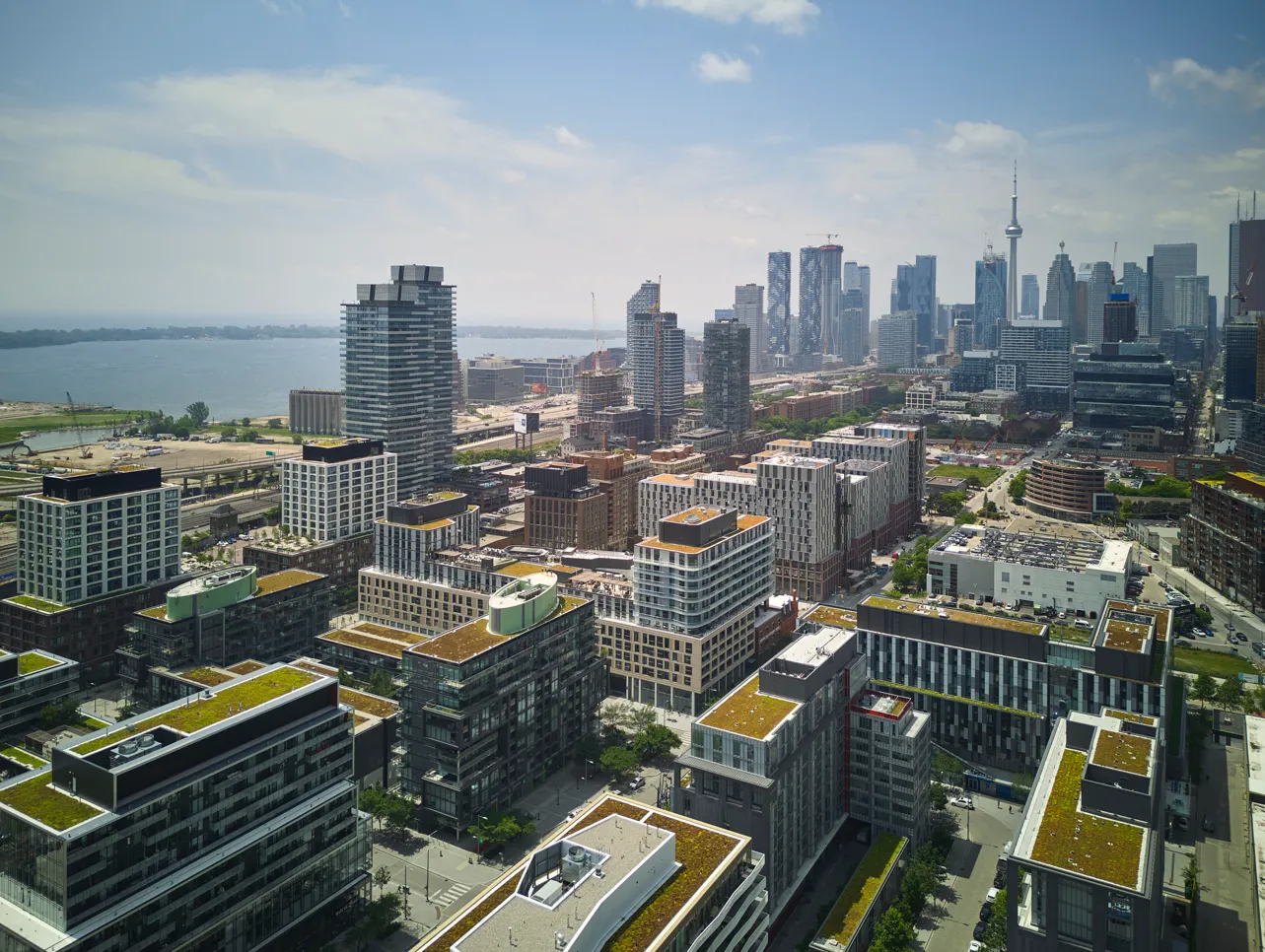
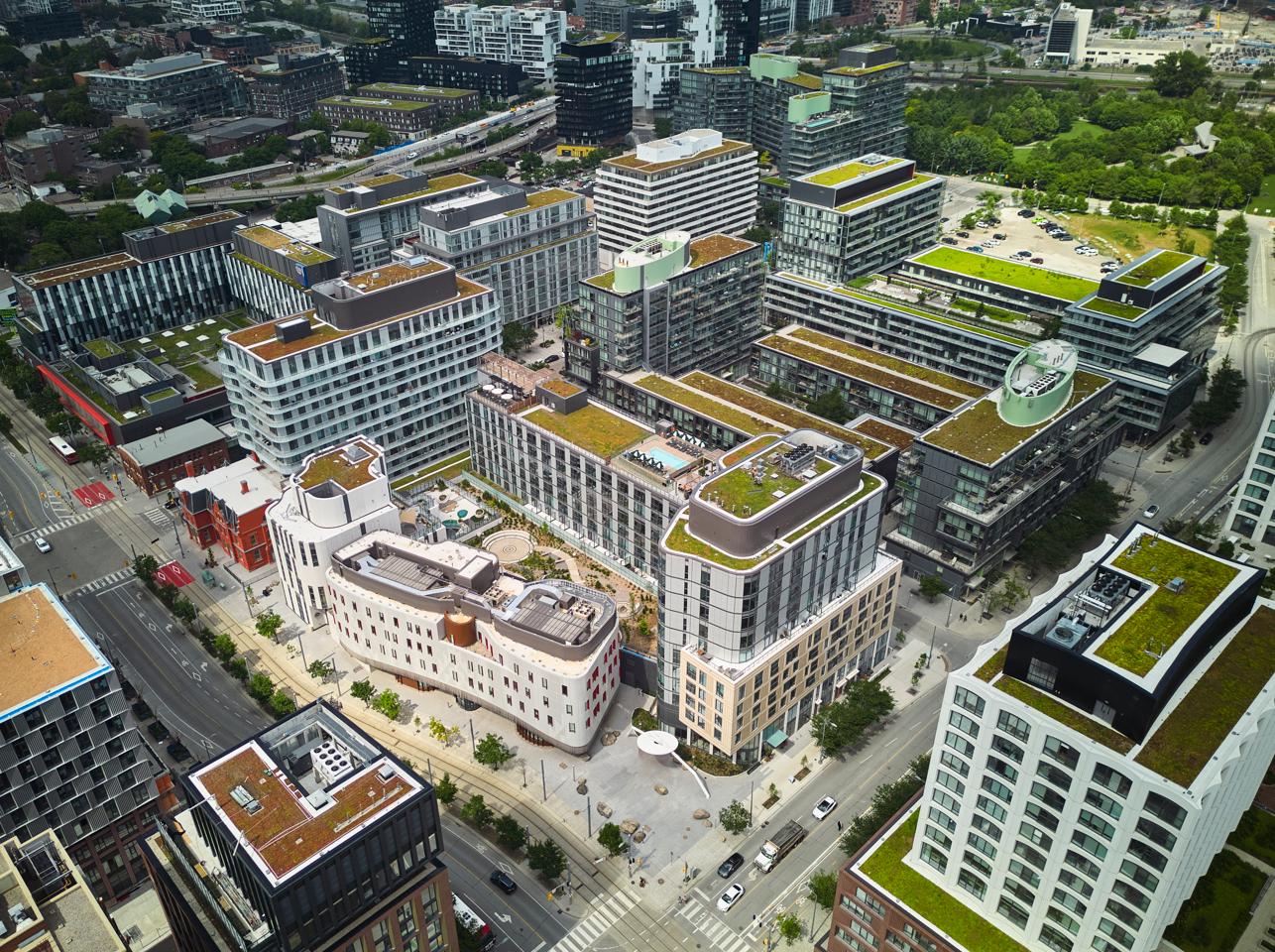
In the heart of Toronto’s Canary District, a transformation is underway that is more than just construction; it is an act of restitution and cultural resurgence. The Indigenous Hub is a 440,000-square-foot mixed-use development that spans an entire city block. It is the first of its kind in Canada—a unified, culturally grounded campus designed to serve Toronto’s Indigenous community of approximately 70,000 people.
Integrating health services, housing, childcare, and employment training, the Hub stands as a blueprint for how architecture can foster reconciliation and build a future rooted in cultural pride.
A Vision of "Two-Eyed Seeing"
The project is the culmination of two decades of advocacy led by the late Indigenous leader Joe Hester. It is built upon 9,700 square meters of ancestral land transferred by the Province of Ontario to Anishnawbe Health Toronto (AHT).
The design process was guided by the principle of Two-Eyed Seeing: the integration of Indigenous ancestral knowledge and Western perspectives as complementary viewpoints. This collaboration brought together Indigenous and non-Indigenous design teams, including Two Row Architect, Stantec, BDP Quadrangle, and ERA Architects, to ensure that Indigenous knowledge systems and symbolism were embedded at every scale—from site planning to material expression.
“Our goal was to create a community of inclusiveness. This project is not symbolic, it is structural; not a gesture, but a grounded return. It is a space of healing, a platform for community-led growth and a new urban typology born of Indigenous values.” Les Klein, Principal, Co-founder and Studio Head, BDP Quadrangle
The Heart of the Hub: Anishnawbe Health Toronto
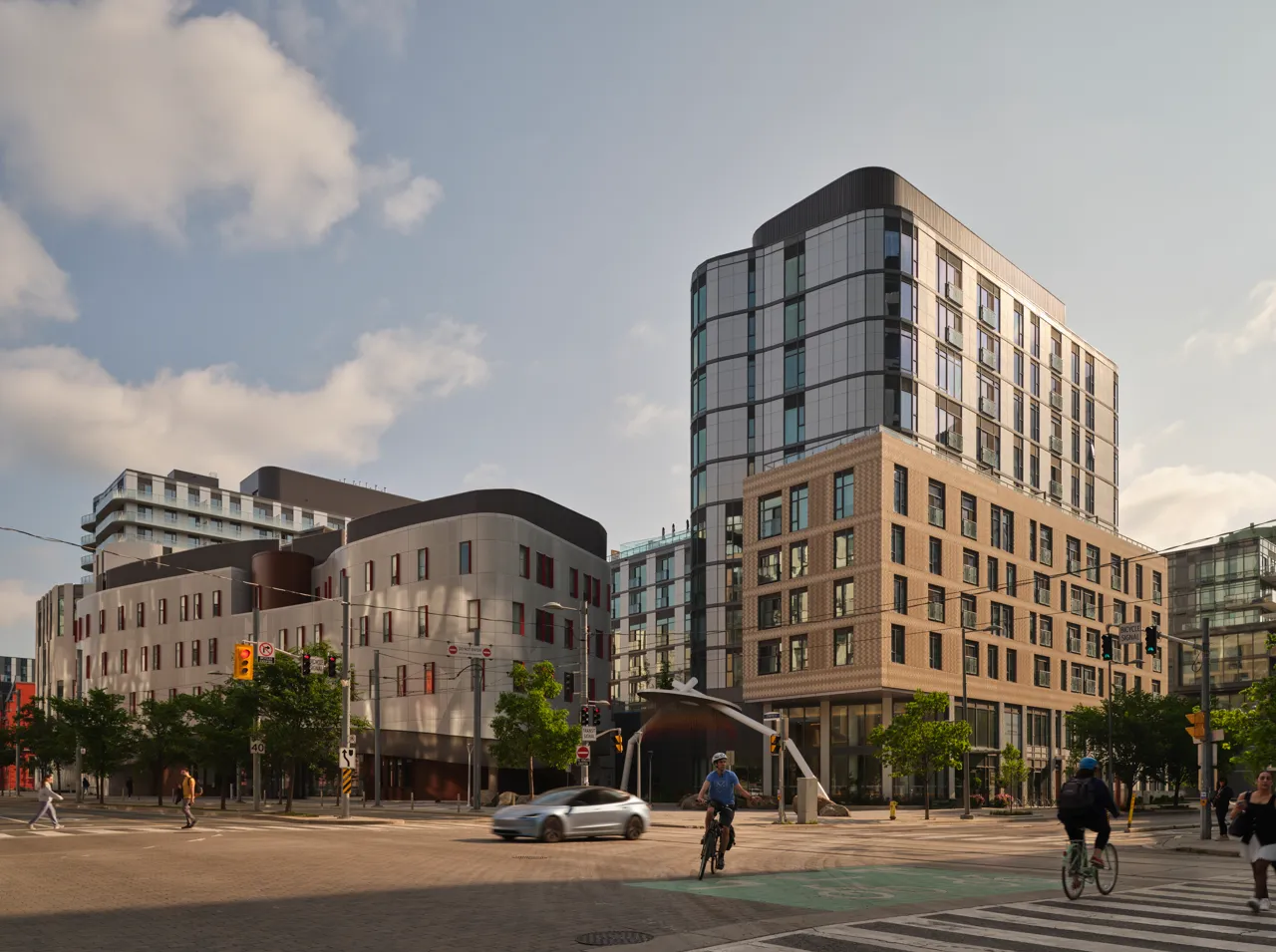
The centrepiece of the development is the new Anishnawbe Health Toronto Indigenous Community Health Centre (ICHC). The building’s design is a direct translation of comfort and protection.
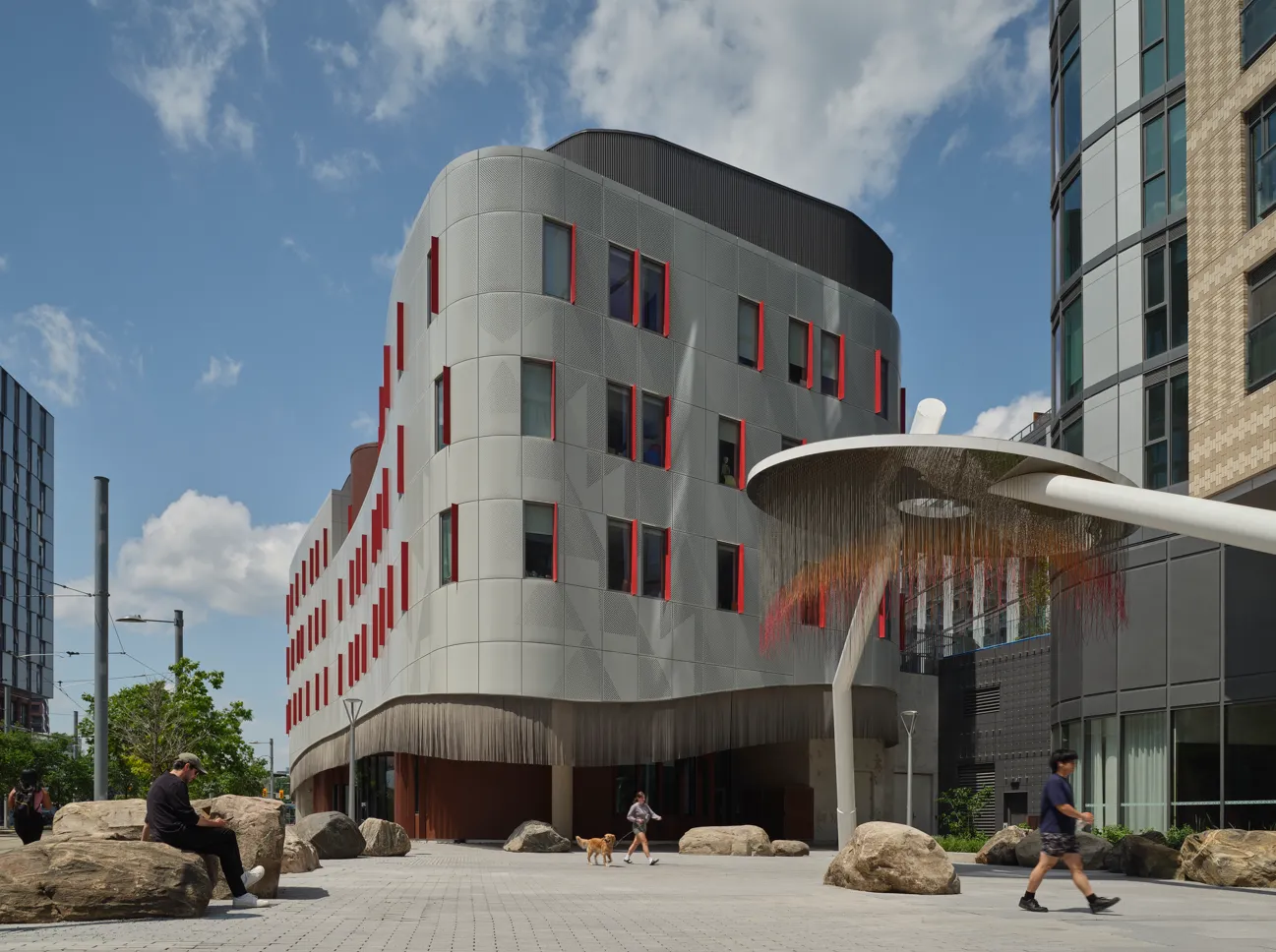
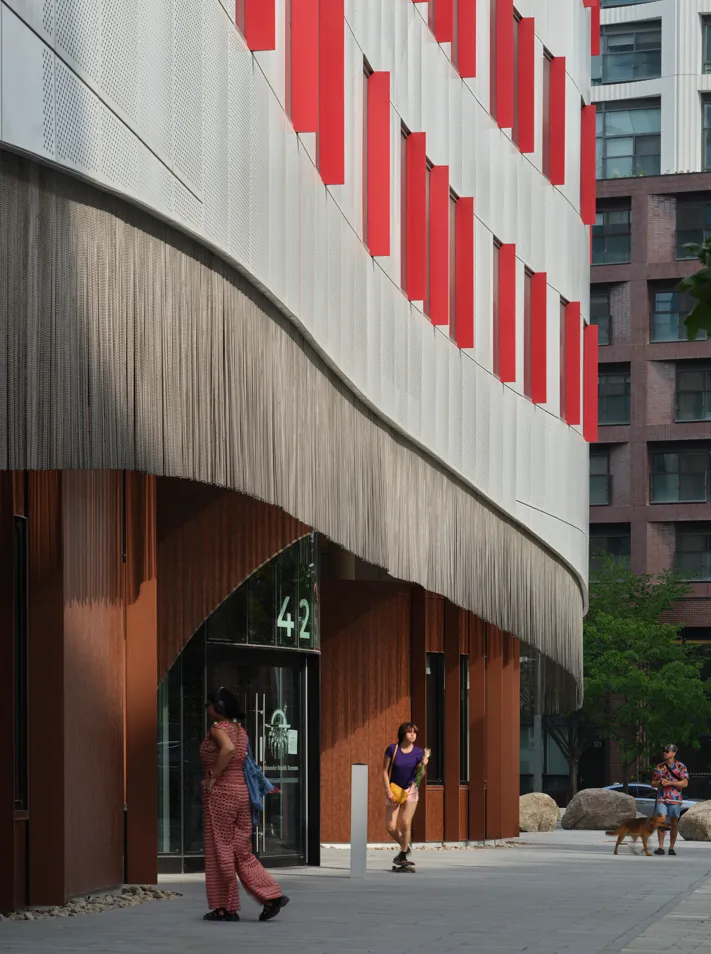
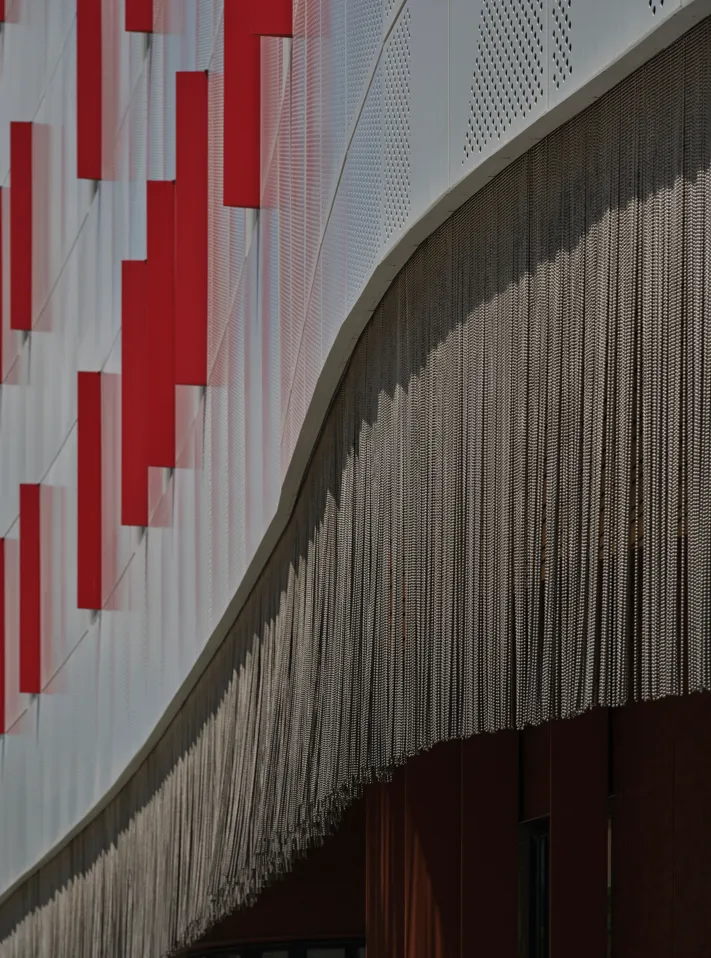
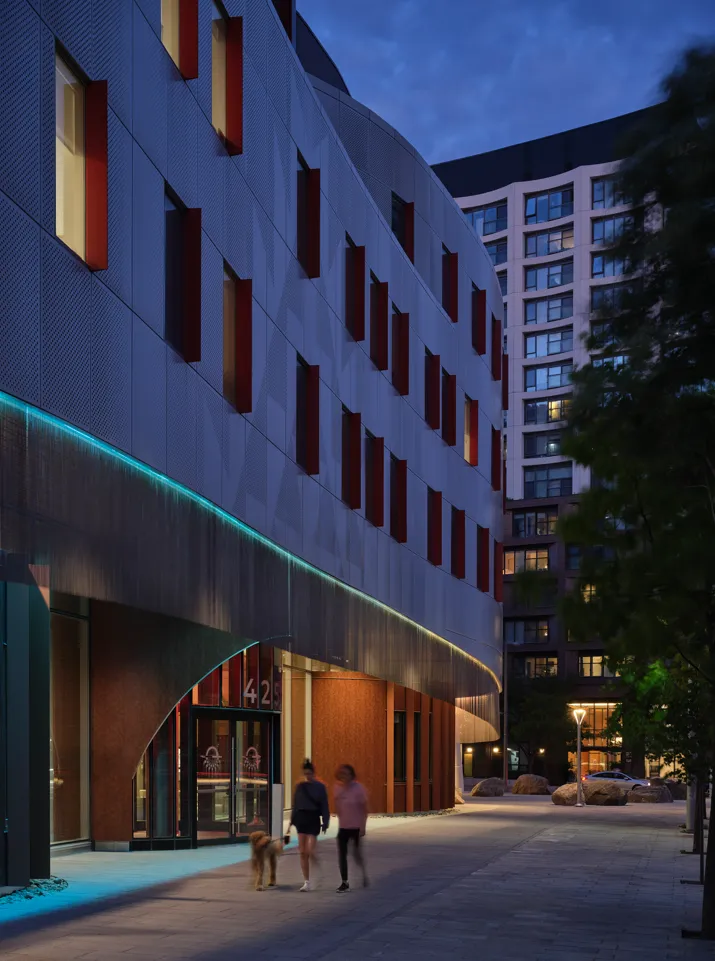
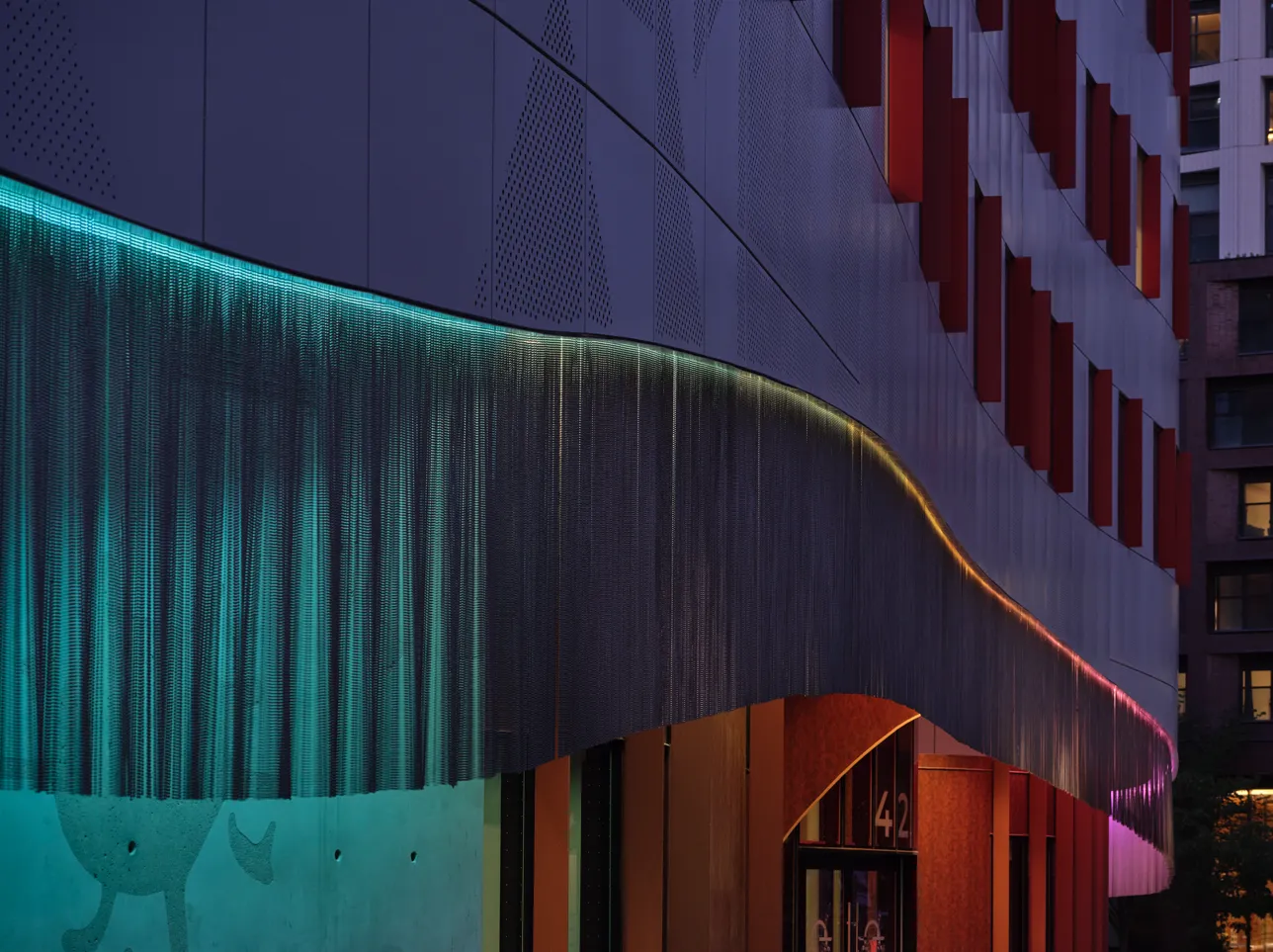
The Shawl Metaphor: The building’s exterior curves and folds like a traditional Indigenous woven shawl, offering care to its users. The façade combines cast-in-place concrete and lightweight metal panels to create a soft, flowing aesthetic.
Connection to Light: The atrium opens to the east, aligning with the sunrise to reflect the spiritual importance of rebirth and renewal.
The Red Road: Inside, a prominent red staircase serves as a metaphor for "the red road," representing wise and spiritual choices in life.
Pebbles in the Stream: On the ground floor, key programs like the ceremonial space, traditional healer’s room, and community kitchen are housed in standalone pavilions inspired by pebbles in the Don River delta.
The Miziwe Biik Training Institute
Complementing the health center is the Miziwe Biik Training, Education and Employment Centre (TEEC). This facility, which also houses a municipally-operated childcare center, draws its architectural inspiration from nature.
The exterior features prefabricated panels that mimic the texture of birch bark, while the windows symbolize the various stages of a tree's life. The interior design ties each floor to natural elements—water, delta, earth, and sky—reflecting Indigenous teachings through custom finishes and symbolic motifs.
Living on the Land: Residential & Landscape
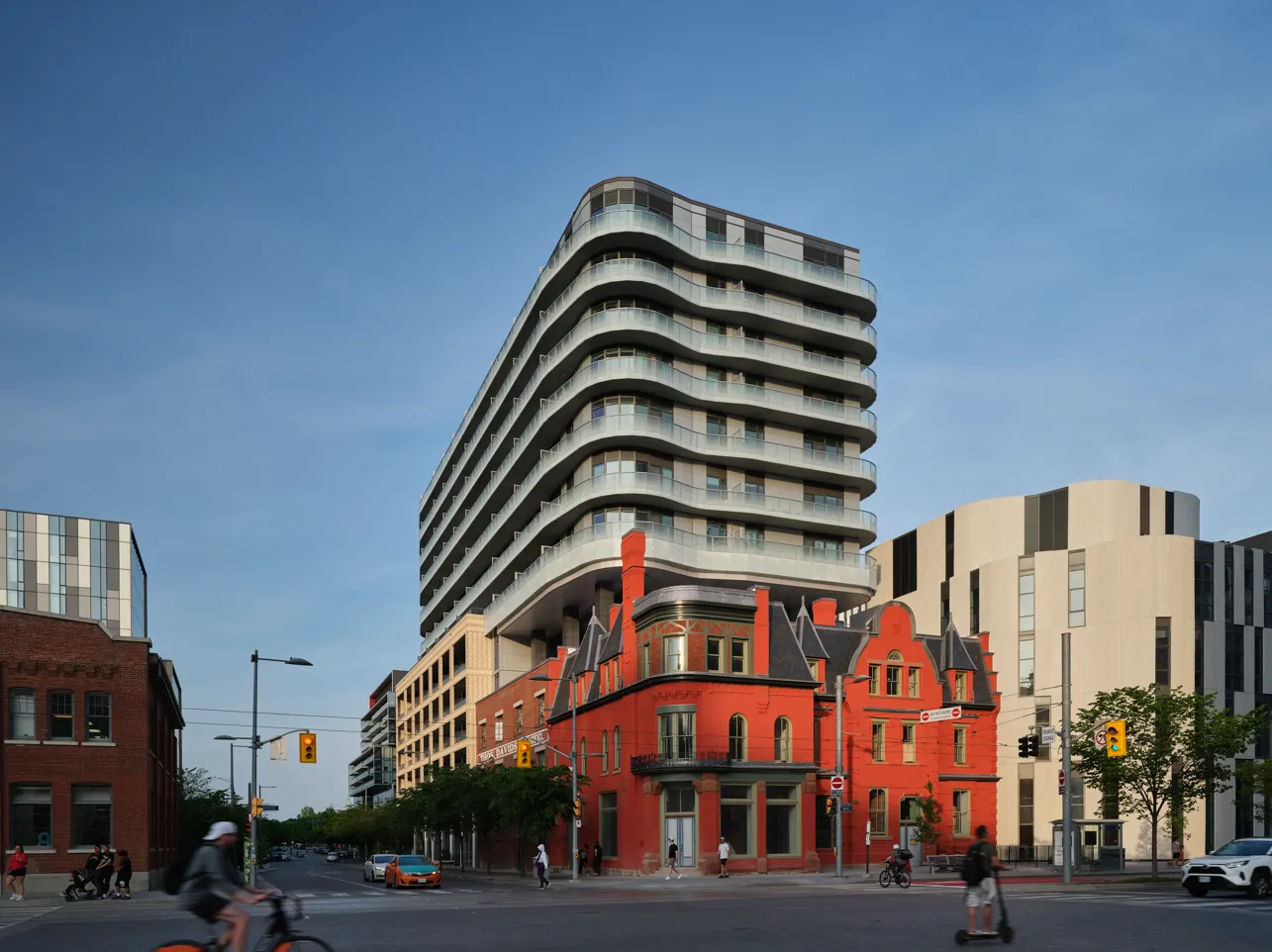
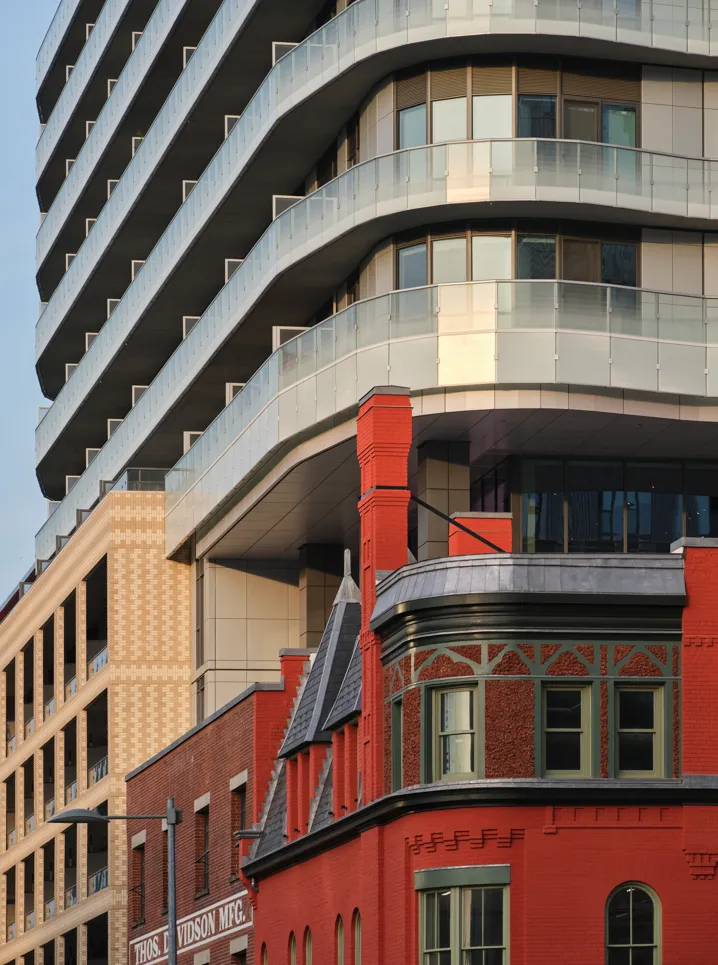
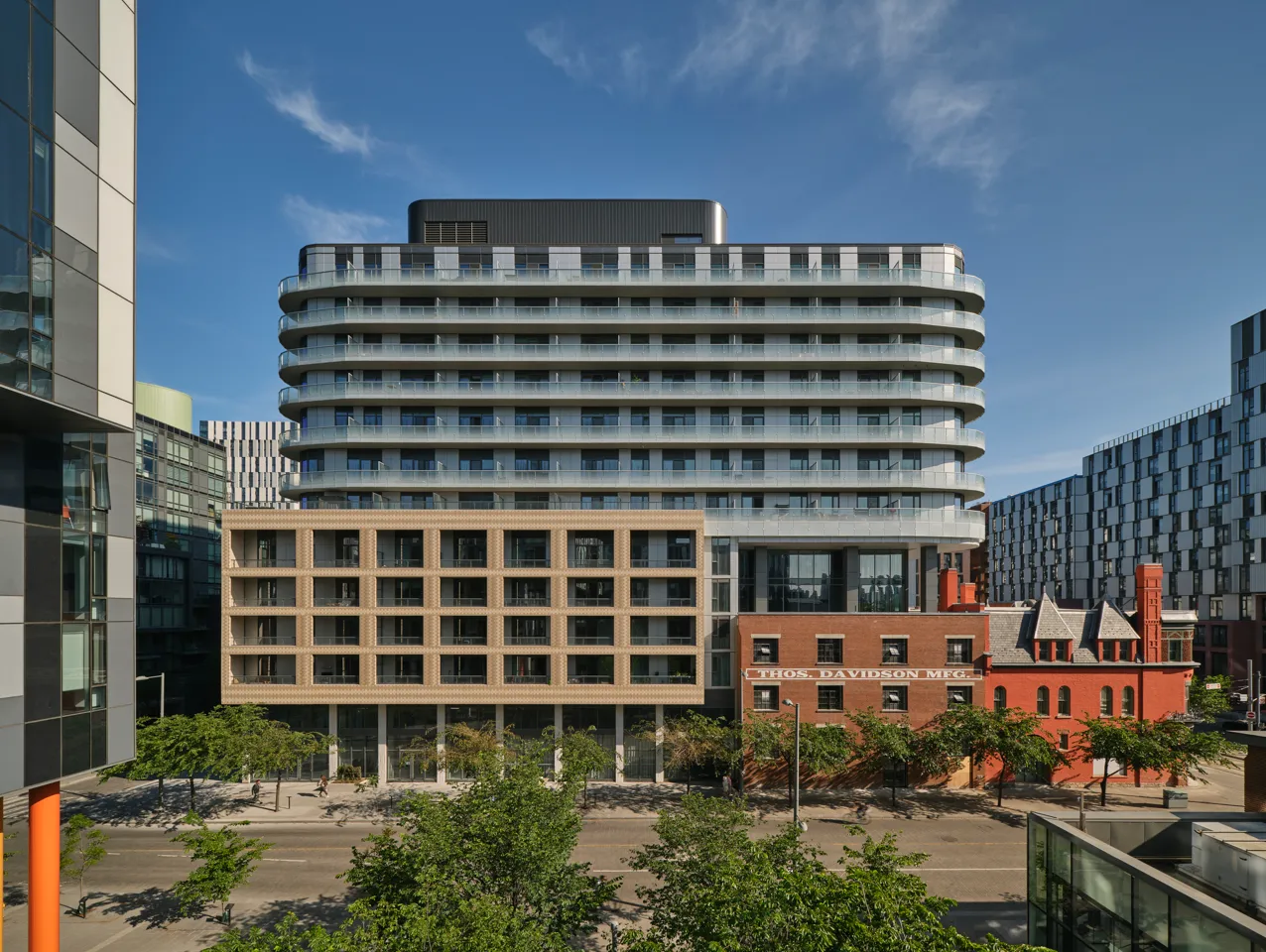
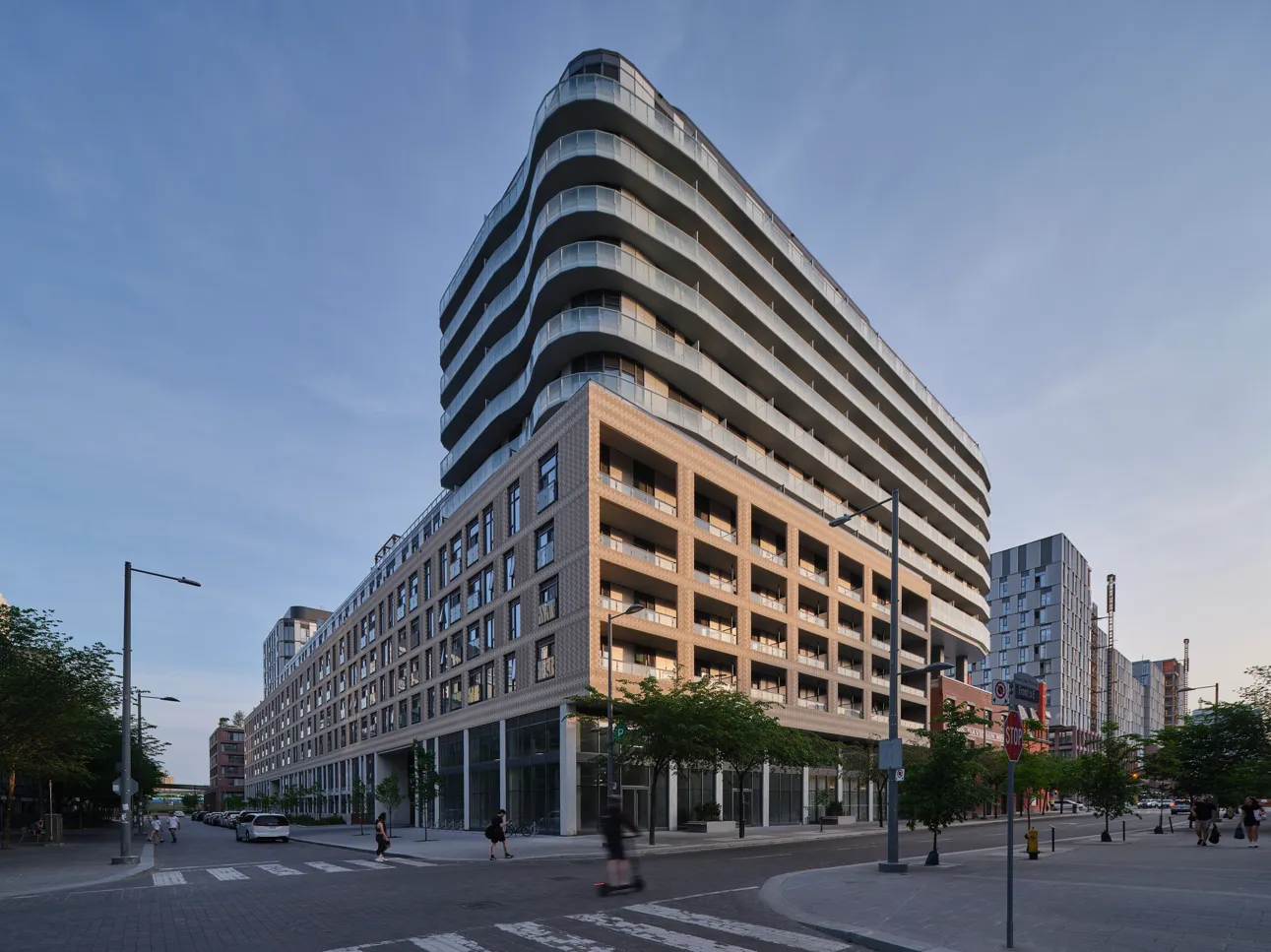
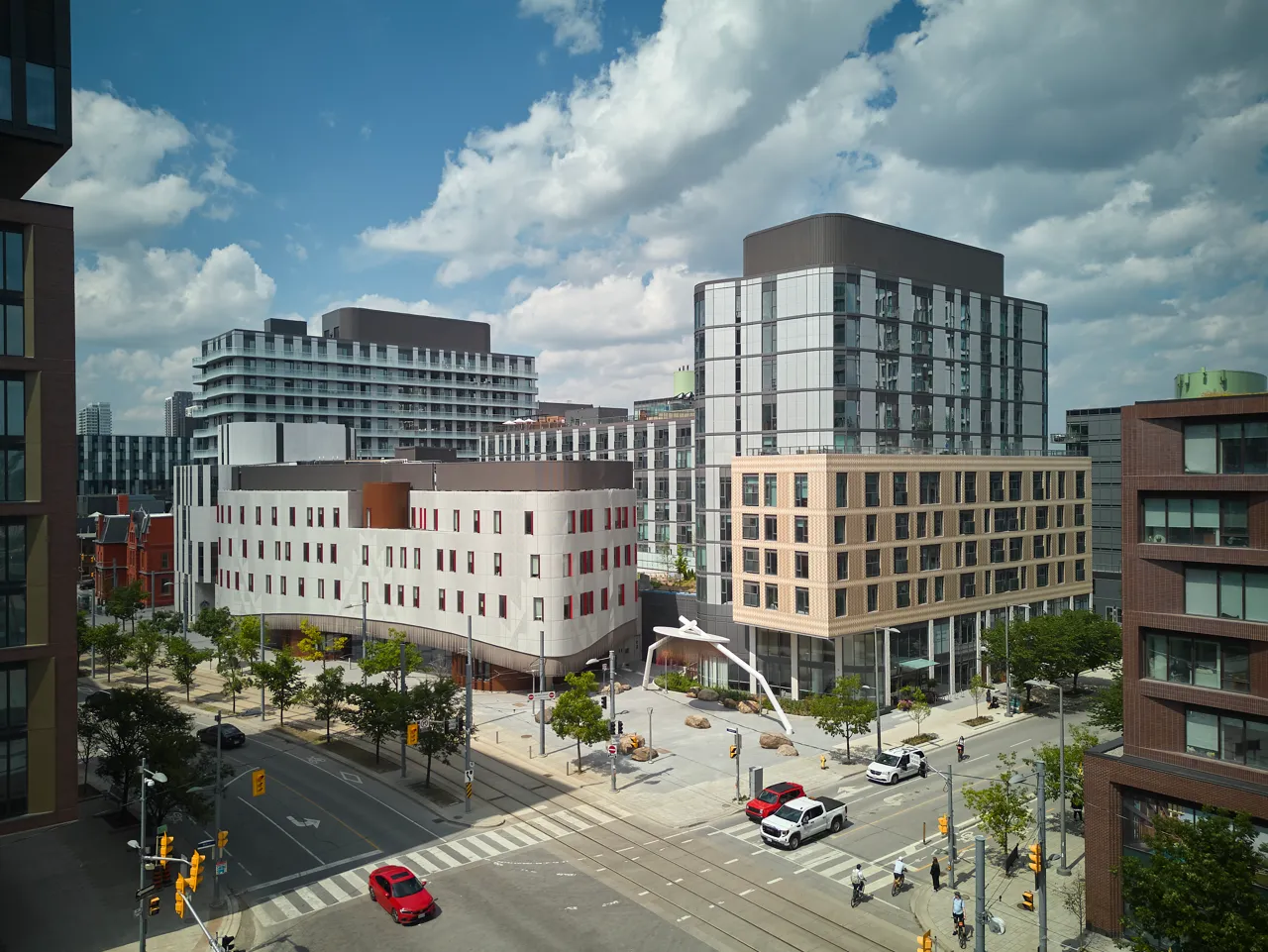
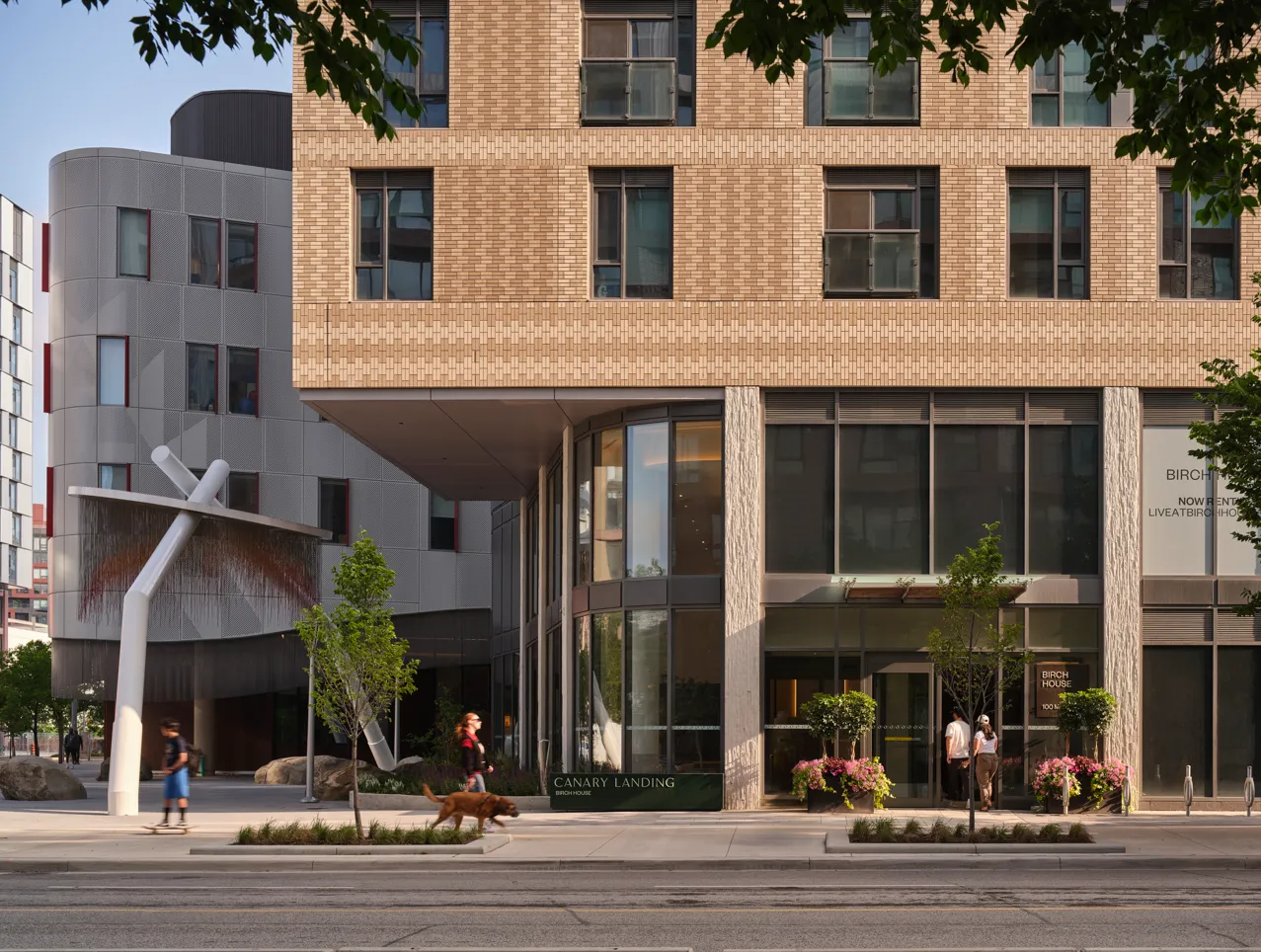
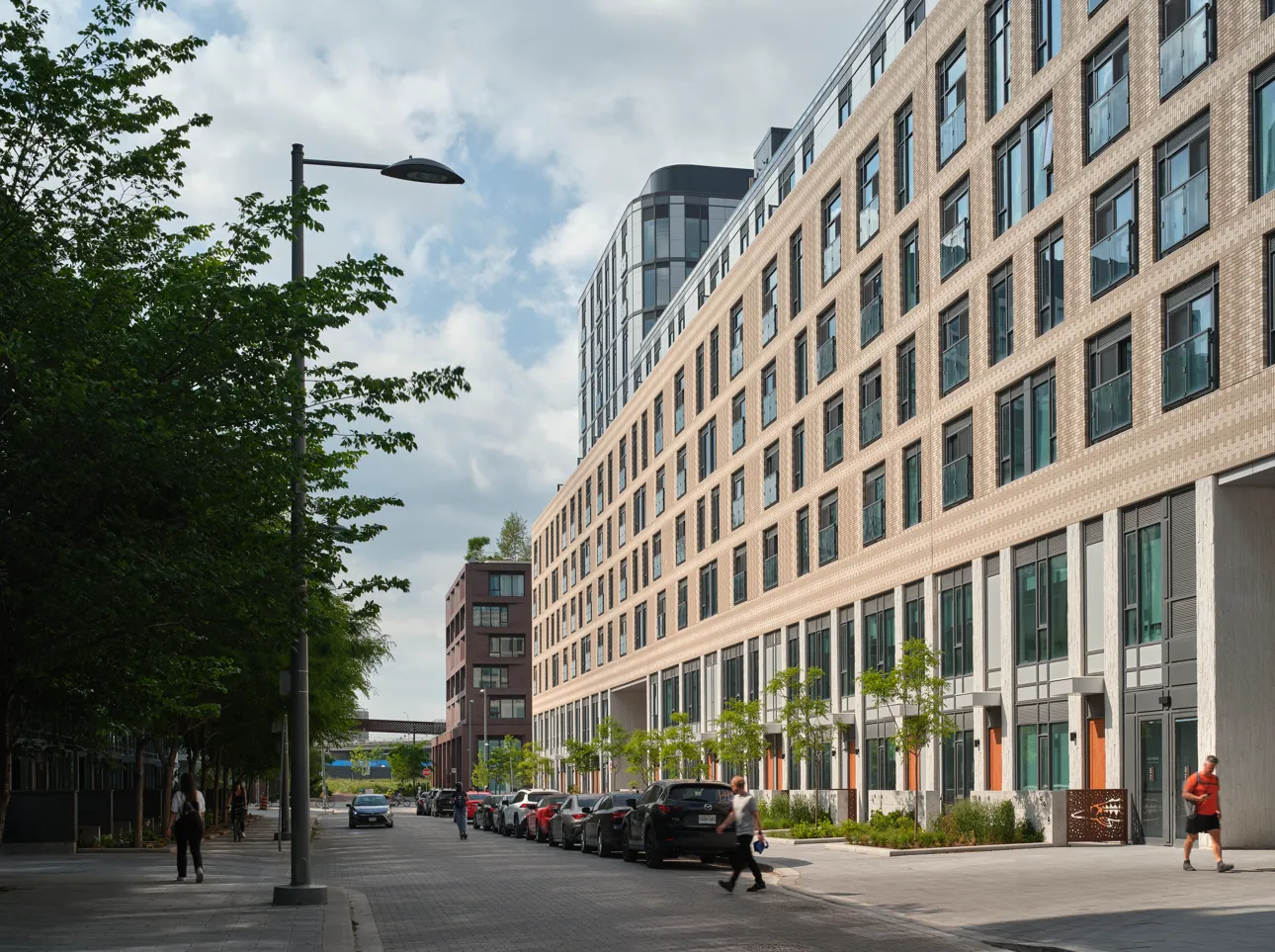
The Hub is a true mixed-use ecosystem, integrating two residential buildings: the 13-storey Canary House (condominiums) and the 11-storey Birch House (rentals). These buildings reinterpret traditional materials to honour the site's intent. Woven brickwork wraps the podium levels like a blanket or basket, while curved balcony rails evoke the clouds.
Tying the campus together is a thoughtful landscape strategy led by NAK Design Strategies:
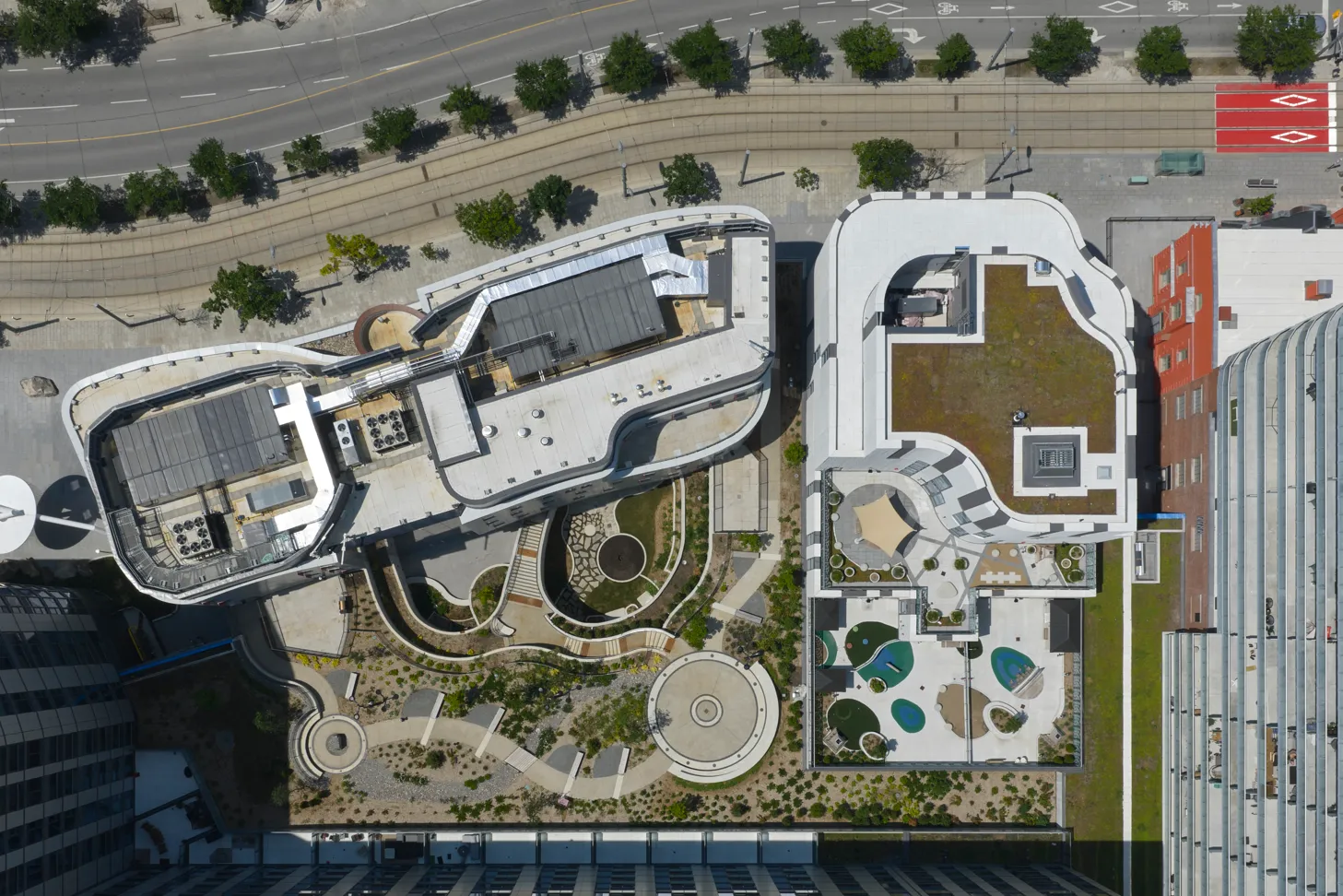
The Indigenous Peoples Garden Patio: Elevated 6.5 meters above the street, this space includes medicinal gardens where sacred plants like sage and sweetgrass are cultivated.
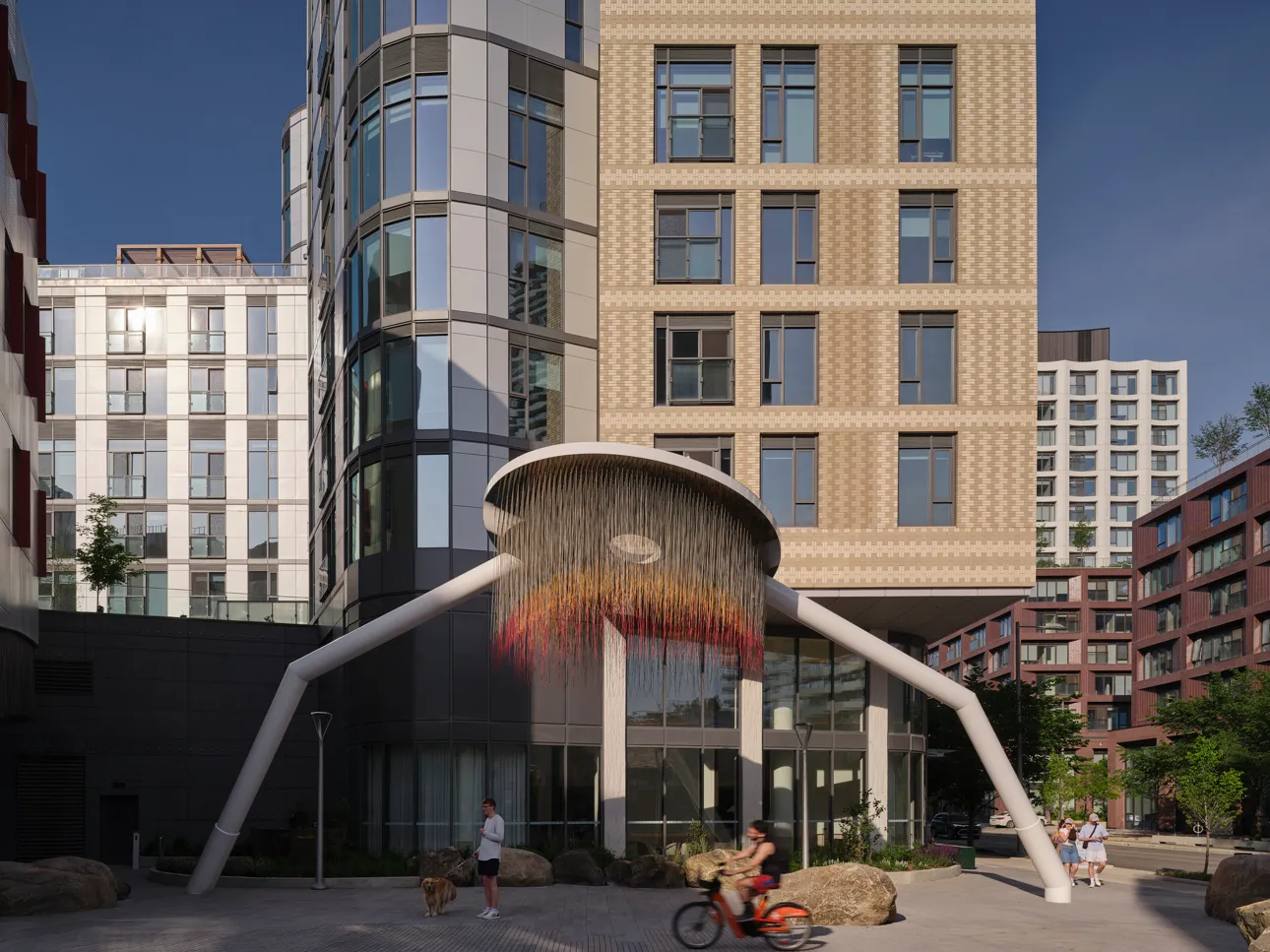
The Plaza: A flexible hardscape featuring large granite pebbles arranged in a circle, referencing stones smoothed by water. The design ensures that specific ceremonial spaces connect directly to the earth, bypassing underground parking to maintain a spiritual link to the land.
A Model for the Future
The Indigenous Hub is more than a collection of buildings. It is a powerful statement of Indigenous self-determination and inclusive urbanism. By reclaiming a long-vacant site for healing, ceremony, and community, the Hub redefines how a city can build community from the land toward the future.