Vivre 2: The Story of New Life into Montreal’s Industrial Past
4 days ago
4 min read
Transforming a former industrial district into a welcoming residential neighbourhood is one of the toughest challenges in modern city planning. Too often, new developments bulldoze the past to build the future, erasing the unique character of a neighbourhood. However, a new residential project in Montreal is flipping the script.
Located in the Atlantic sector of the Outremont borough, right behind the new Université de Montréal campus, Vivre 2 is a masterclass in how to blend modern housing with historical charm.
Honouring the "Soul of the Place"
For years, this sector of Montreal was closed off, functioning solely as a hub of warehouses and industry. Recently, the creation of Thérèse-Lavoie-Roux Street opened the neighbourhood back up to the city, bringing with it a wave of new possibilities.
Designed by ACDF Architecture, Vivre 2 is the natural continuation of its neighbouring sister project, Vivre 1. Instead of dropping a generic glass-and-steel box into the neighbourhood, the architects decided to draw inspiration directly from the area's industrial roots.
"The reconversion of such a sector should never be a blank page, but rather a dialogue between the before and the after," explains. It’s about listening to the soul of the place—its history, its scale, its textures—and understanding what makes it unique. Only then can we add a new building that is coherent with this identity, enriching the genius loci, rather than diluting it.” Maxime Frappier, the project’s lead architect.
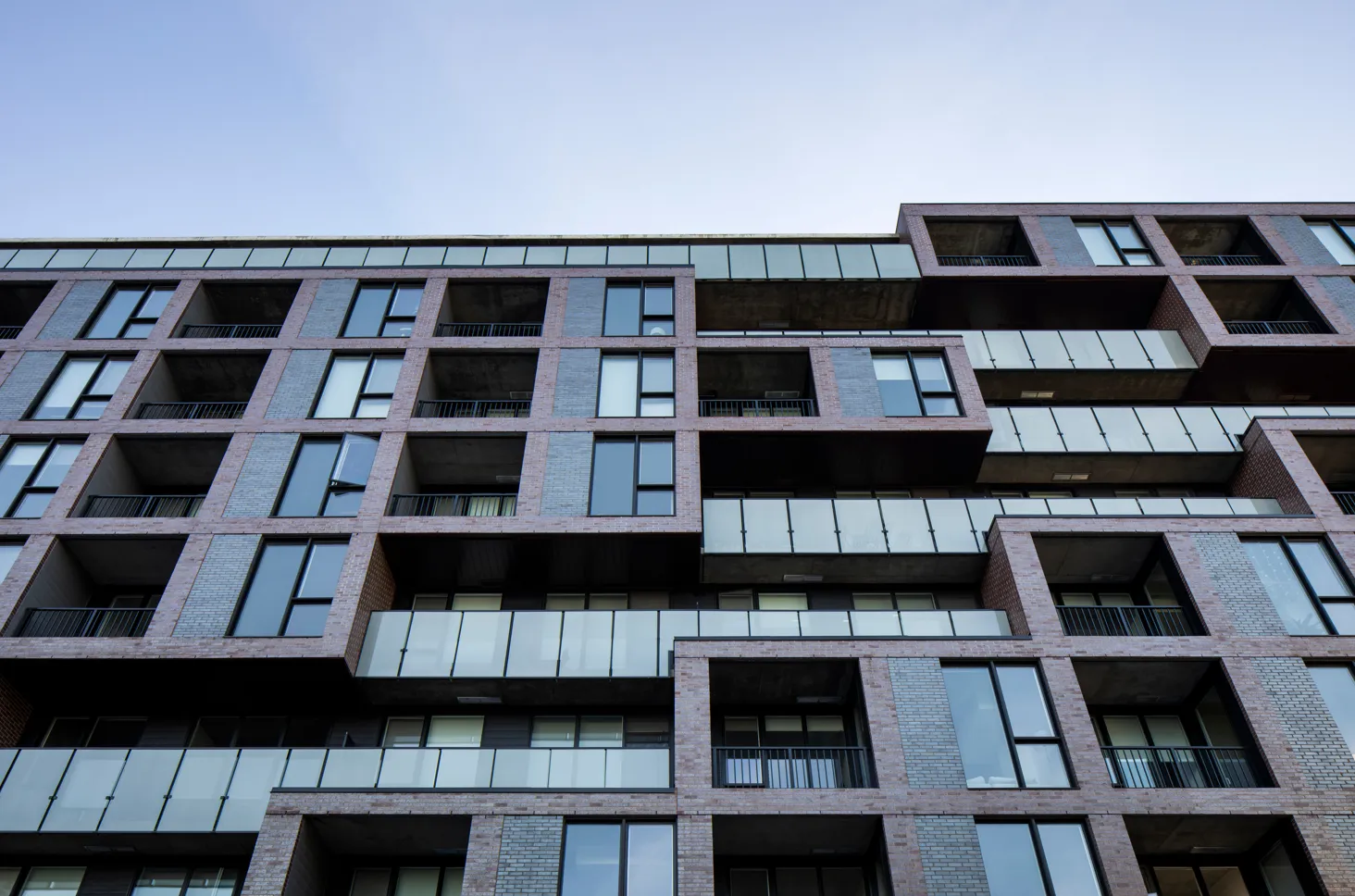
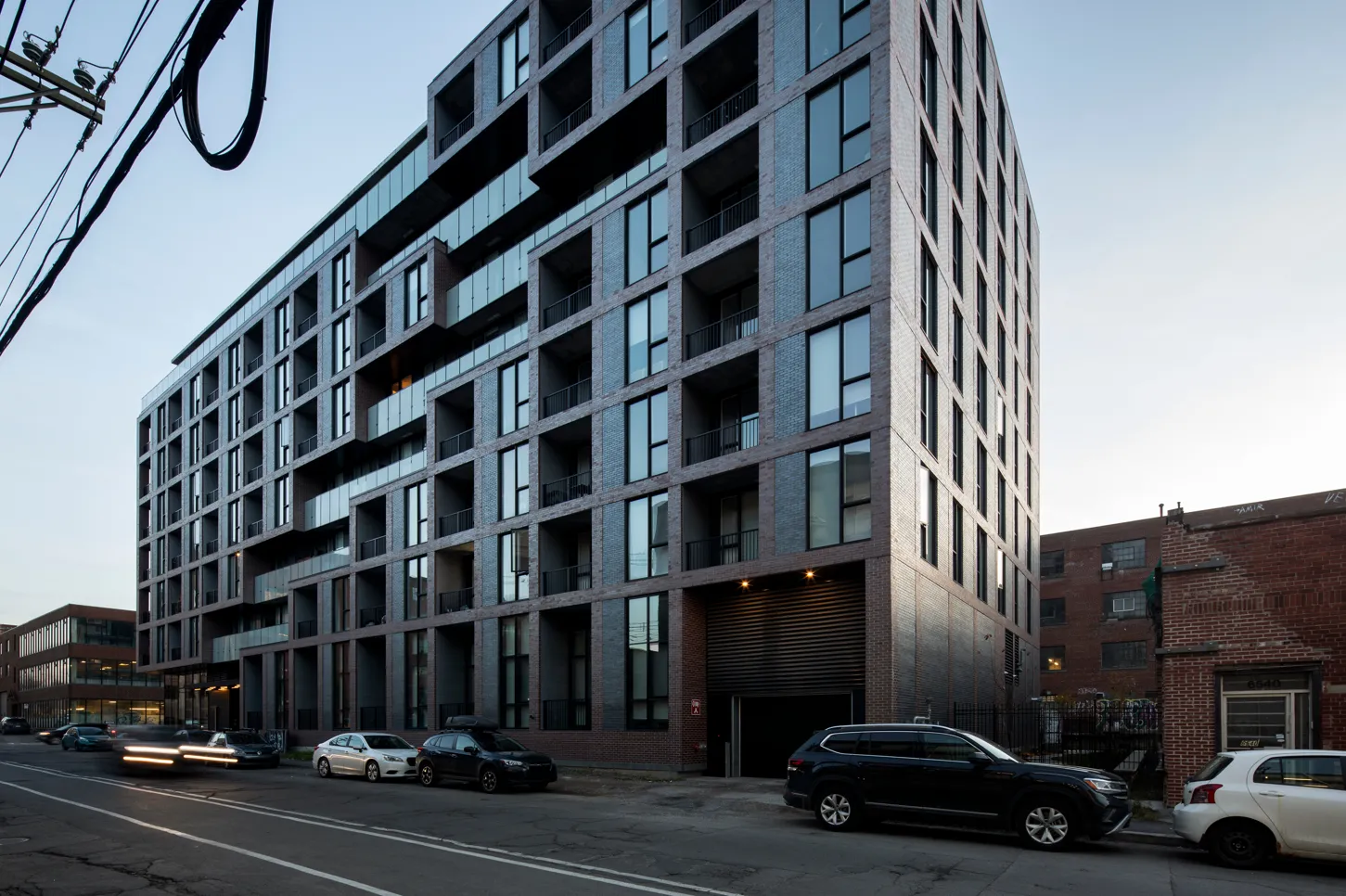
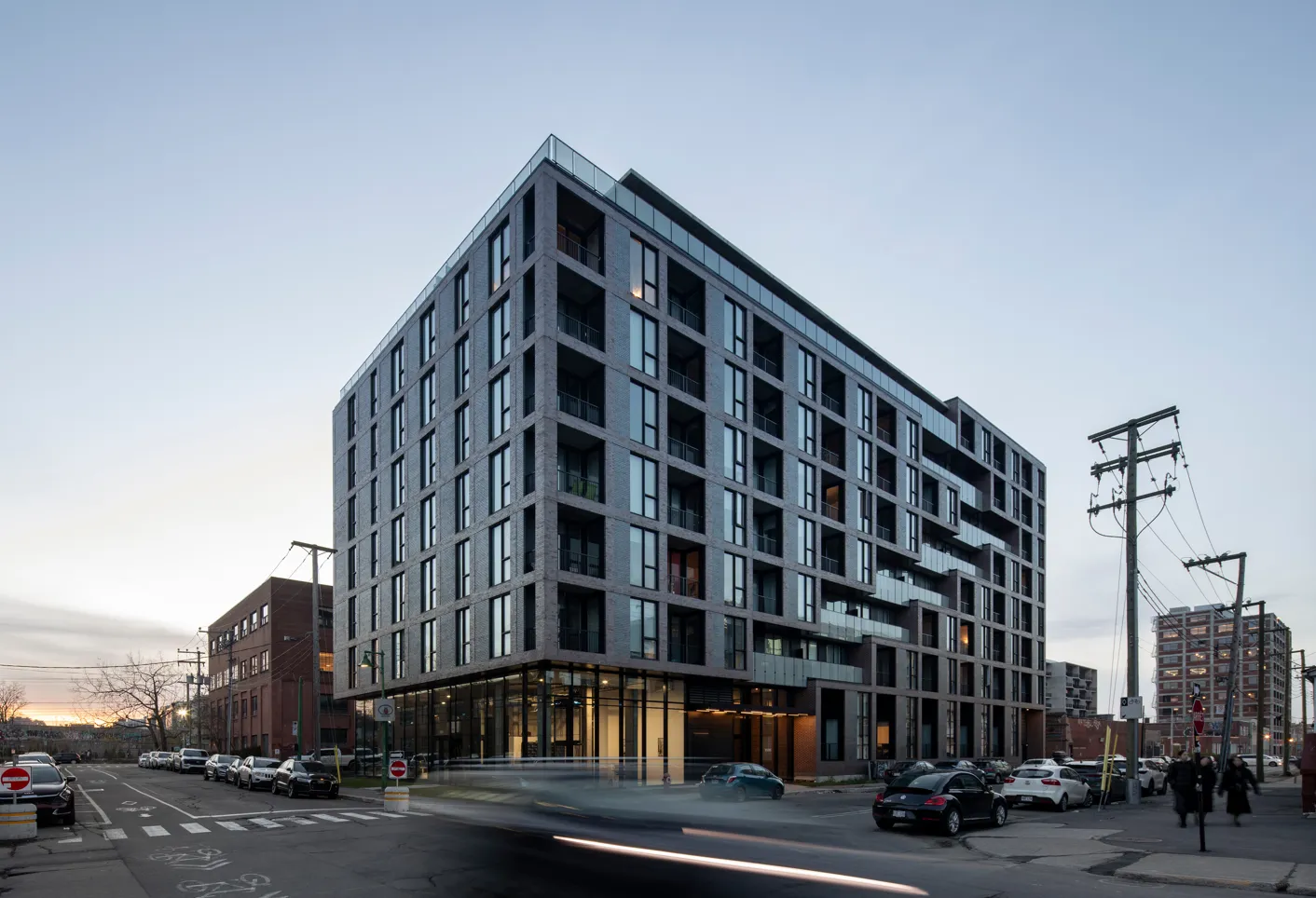
From the outside, Vivre 2 nods respectfully to the strong, pragmatic shapes of the factories that once defined the area. But it is far from a simple, heavy block.
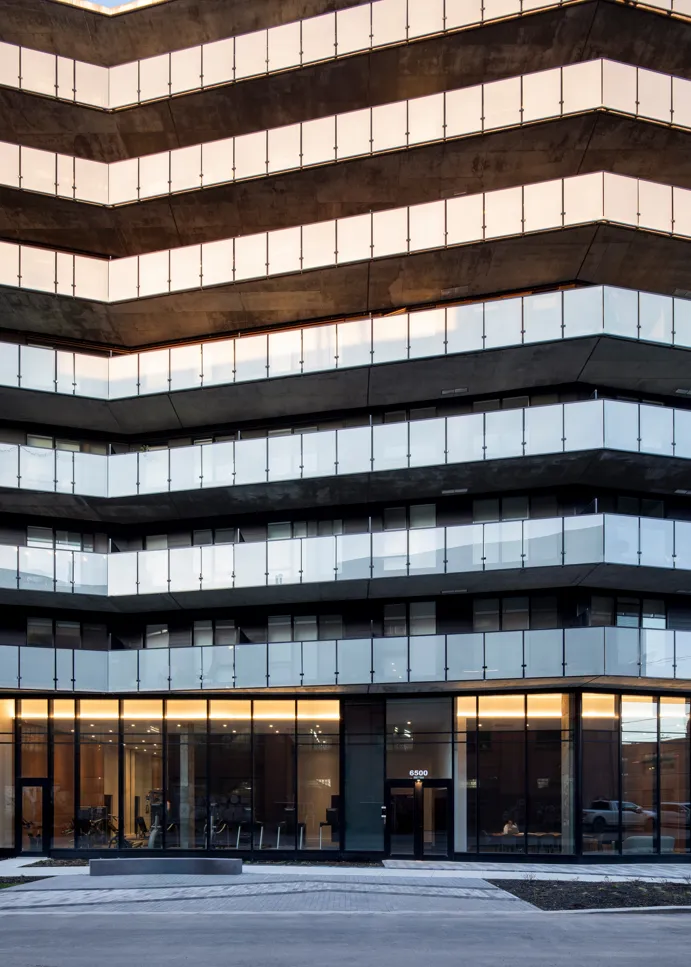
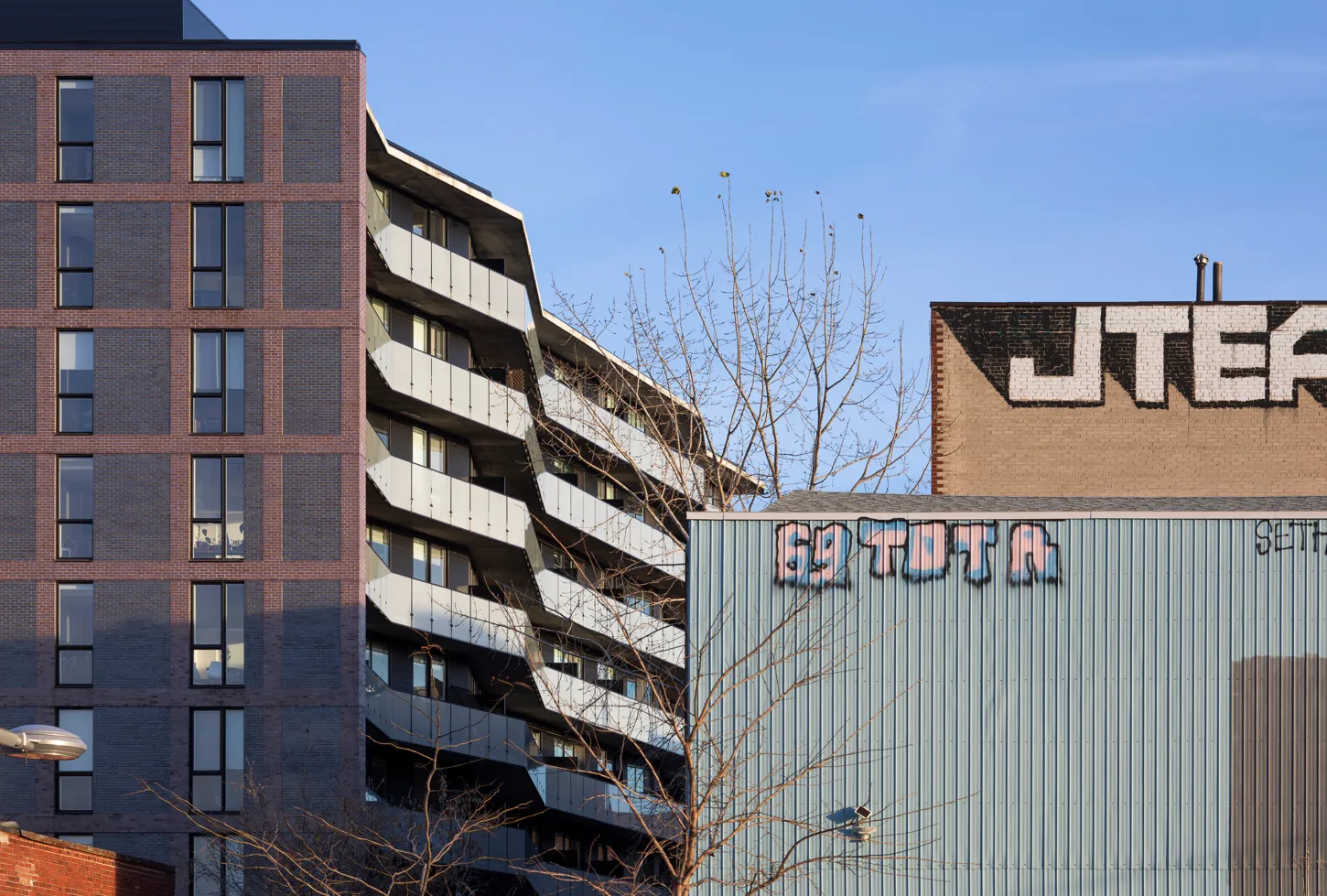
To keep the building feeling fresh and dynamic, the architects introduced a striking diagonal "cut" that climbs up one of the main facades, starting from the ground-floor lobby and commercial spaces all the way to the top. Lined with sleek glass guardrails, this design choice breaks up the visual weight of the building. As Frappier notes, it injects an "architectural breath" into the structure.
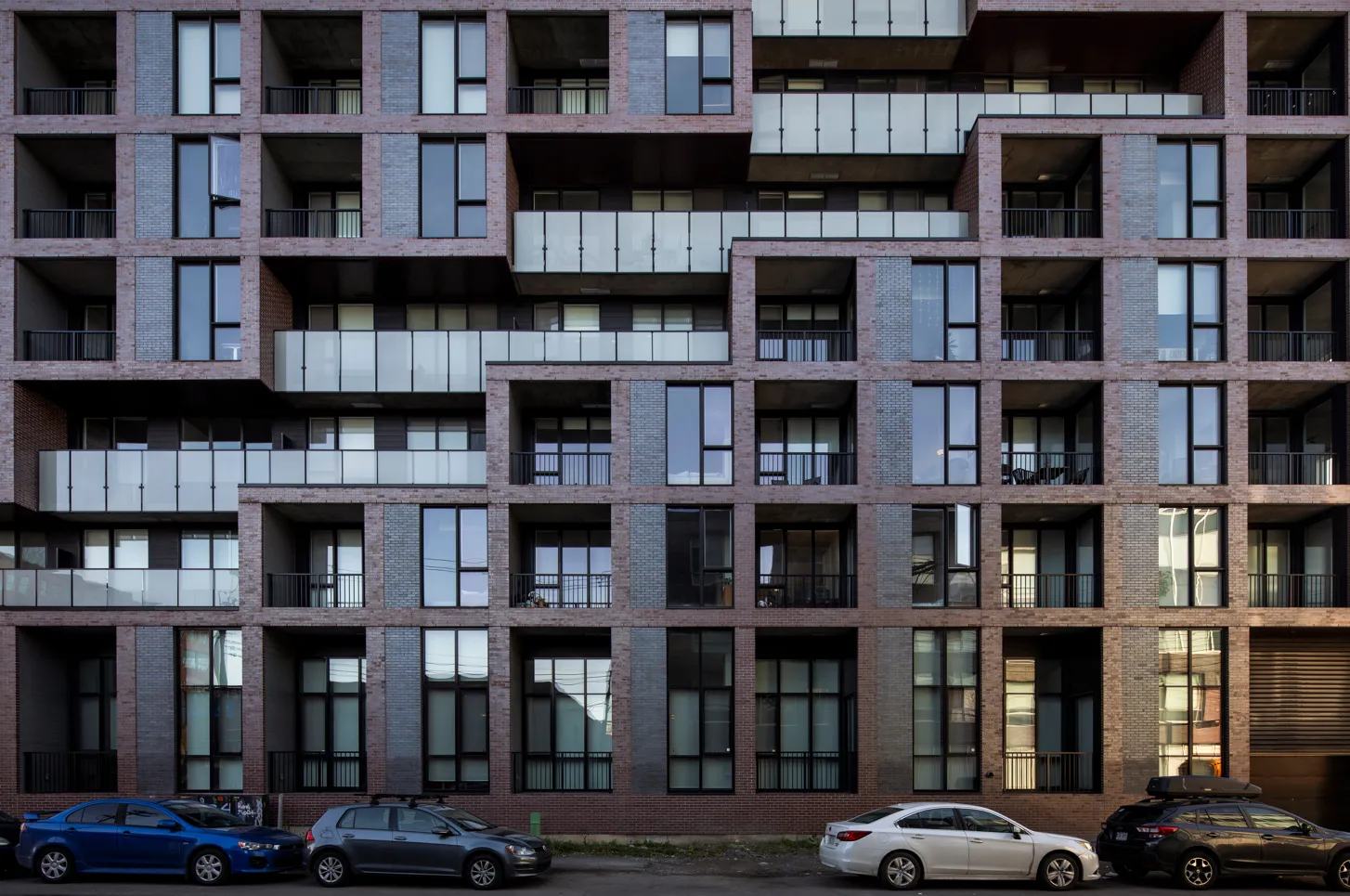
The materials also tell a story of old meeting new. The facade features two distinct shades of clay brick:
The Structural Grid: One shade is used to highlight the building's framework, mimicking the old concrete frames of traditional industrial buildings.
The Intervals: The second shade fills in the gaps, creating a beautiful play of contrast that is both deeply historic and resolutely modern.
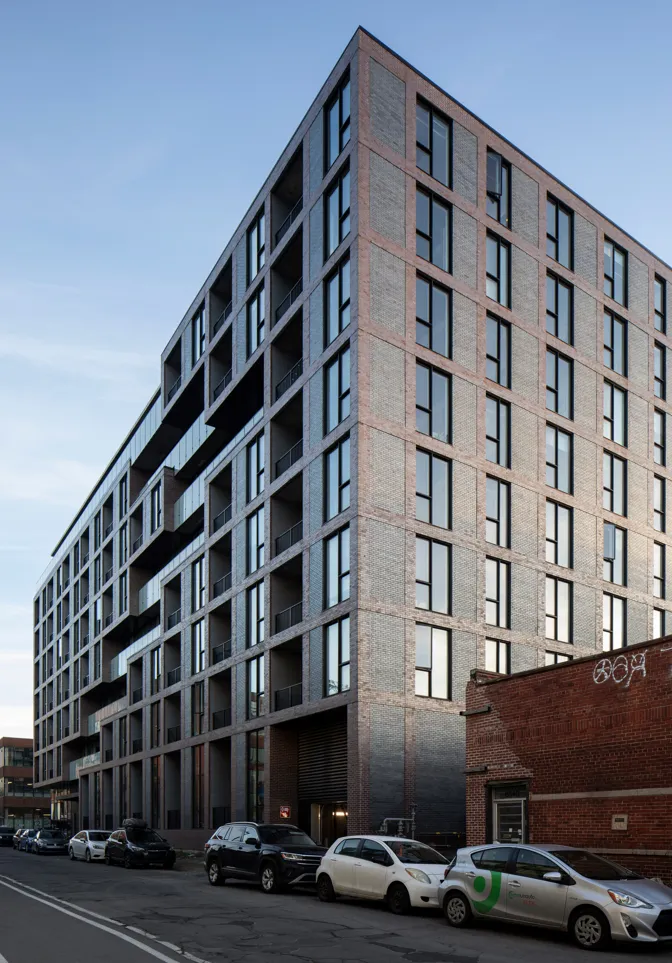
Vivre 2: The Story of New Life into Montreal’s Industrial Past. Image courtesy of: Adrien Williams
Vivre 2: The Story of New Life into Montreal’s Industrial Past
Rethinking the Alleyway
Perhaps the most brilliant aspect of Vivre 2 is how it treats its surrounding spaces—specifically, the back alley.
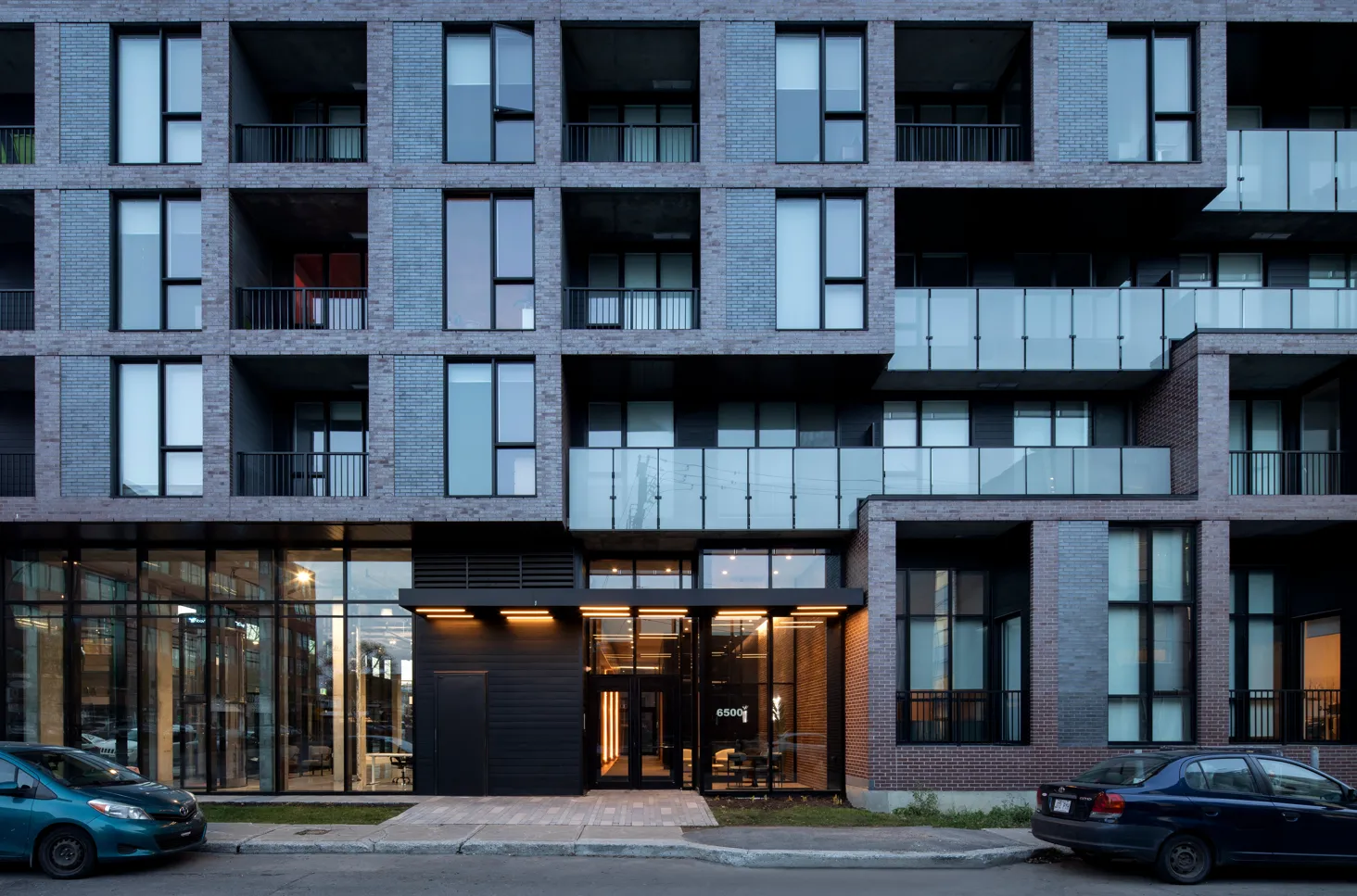
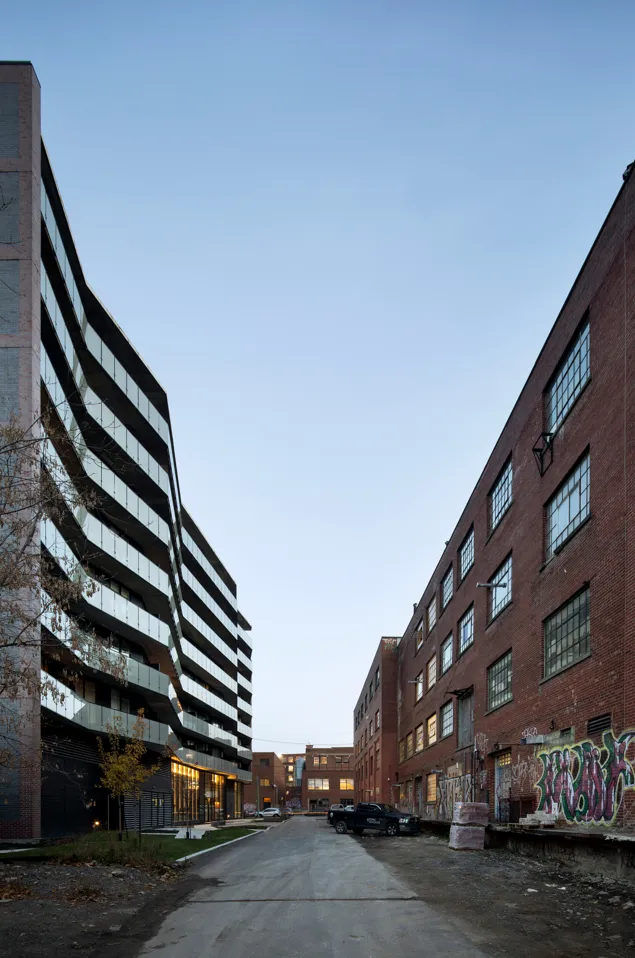
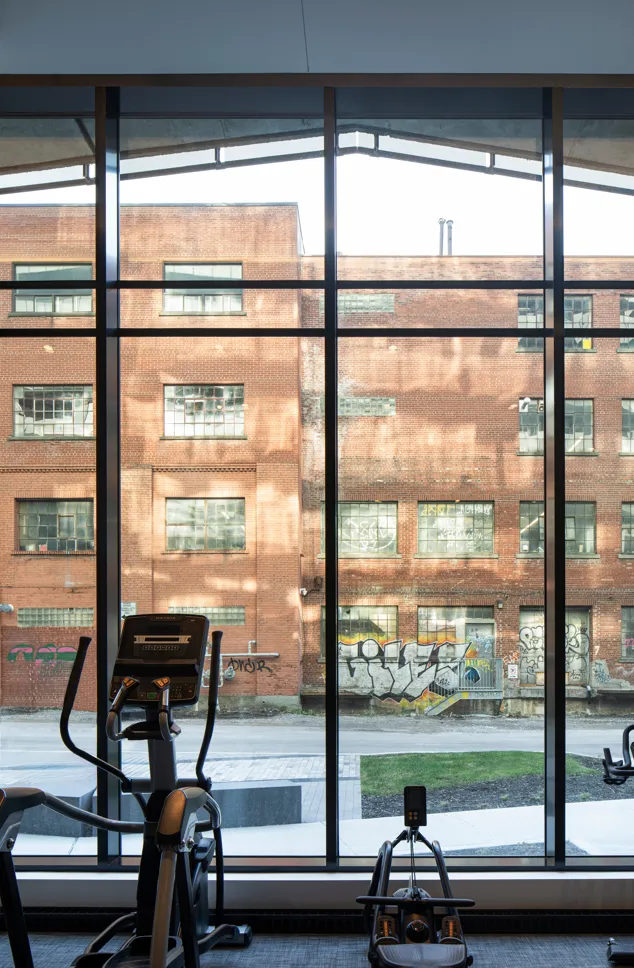
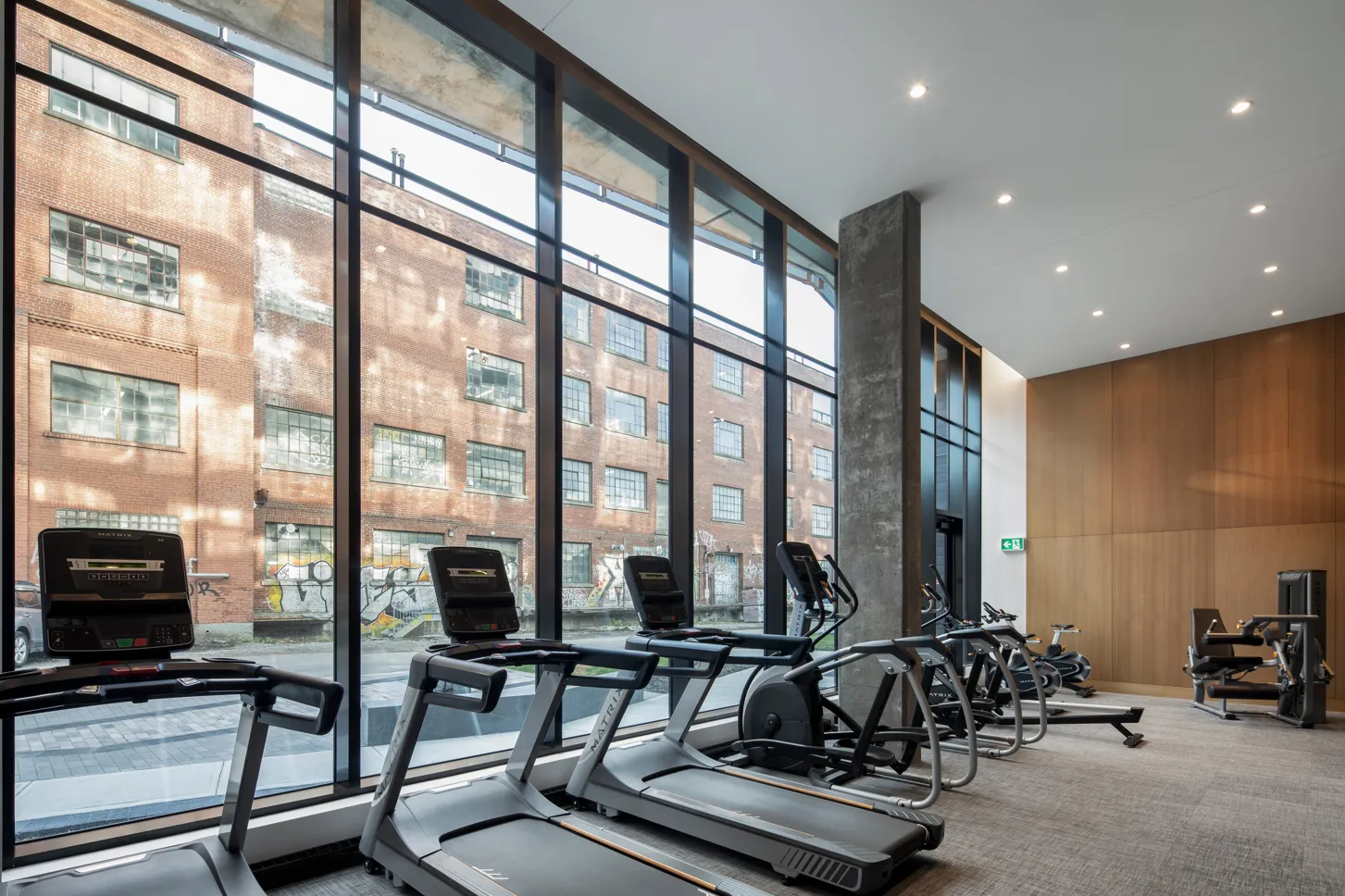
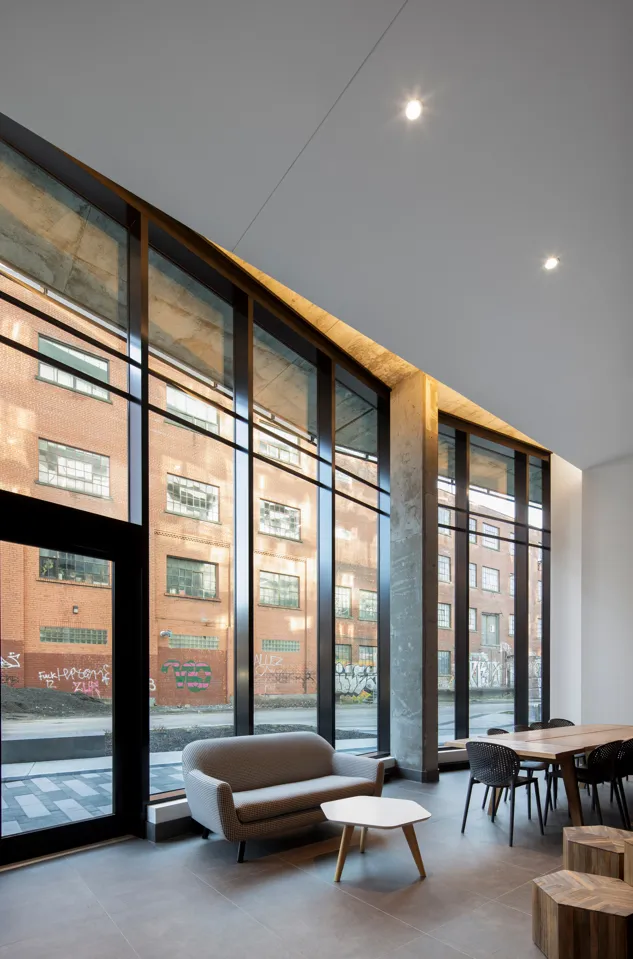
While the facade facing the main street is restrained, organized, and confident, the side facing the alley is designed to be energetic and inviting. In many modern buildings, common spaces (like lounges or gyms) are tucked away on the roof. The team at ACDF took the opposite approach: they placed the shared amenities right on the ground floor, opening up into the alleyway.
This incredibly smart layout transforms the alley from a forgotten, neglected service road into a vibrant hub of community life. It encourages residents to interact, naturally increases safety by keeping "eyes on the street," and breathes human energy back into the urban landscape.
Vivre 2: The Story of New Life into Montreal’s Industrial Past
A Blueprint for the Future
Vivre 2 is a shining example of how cities can grow and densify without losing their history. By respecting the scale of the past, getting creative with traditional materials, and prioritizing community connection, ACDF Architecture has created more than just a place to live. They have created a highly sensitive, intelligent model for the future of urban living.
"We wanted to inject air into the mass—an architectural breath that structures without weighing it down.” Maxime Frappier, the project’s lead architect.
With a portfolio of ambitious and design-savvy commercial, residential, hospitality, interior, and master planning projects, ACDF is recognized as one of Canada’s most forward-thinking architecture firms. Under the direction of Maxime-Alexis Frappier, Joan Renaud, and Etienne Laplante Courchesne, the firm’s harmonious designs of large-scale projects have received numerous awards and accolades in recognition of their progressive approach to a new generation of meaningful and impactful buildings.
ACDF is built upon a foundation of pragmatism and creativity, embracing the belief that every building should serve its inhabitants and passersby. Beyond the status of grand gestures and iconic appearances, the firm believes that buildings should be experiences infused with emotive and democratic architecture that touches and benefits all who come in contact with it. That process begins with practical solutions and creative designs that foster harmonious architecture, ensuring that every finished structure projects a sense of meaning and mission.
Based in Montreal, Quebec, ACDF draws inspiration from a city known for its liveability and vitality, and which straddles the divide between Europe and North America, and between the historic and the modern. Energized by challenges and constraints, ACDF explores and evaluates each project’s limitations in order to inject it with fresh ideas and innovative solutions that exceed expectations and imagination.
Transforming a house into a forever home often requires looking past severe imperfections to see the hidden potential. In a recent full-scale renovation, an interior design team took a failing structure and completely reimagined it, blending classic Cotswold design elements with fresh, modern charm.
Imagine a surface that feels exactly how it looks. Tafisa, a North American leader in decorative panels, has brought this concept to life with the launch of ICONIQ, a brand-new collection of decorative melamine and high-pressure laminate surfaces.
Great architecture does more than provide shelter—it tells a story. For VMA, a dynamic architecture firm headquartered in Philadelphia with offices in New York City and Washington, D.C., that story is all about connecting the past with the future.
The global economy is built on a foundation of confidence, but in China, that very foundation is visibly cracking and crumbling. The numbers involved are almost too large to comprehend for the average person. Since the crisis began to take hold in 2021, Chinese real estate developers have failed to repay more than $100 billion in debt.
Transforming a former industrial district into a welcoming residential neighbourhood is one of the toughest challenges in modern city planning. Too often, new developments bulldoze the past to build the future, erasing the unique character of a neighbourhood. However, a new residential project in Montreal is flipping the script.
What if architecture could change the way we look at aging? In Beloeil, the newly designed shared spaces of the Cloria residence are doing exactly that. Designed by Taktik, this fresh approach to senior living leaves outdated conventions behind. Instead of rigid schedules and clinical spaces, the design encourages autonomy, freedom, and a vibrant sense of community.
When we think of a typical school, we usually picture a single, large building with long hallways and uniform classrooms. The Educational Complex Sirius takes that traditional idea and turns it completely upside down. Recently named a finalist in the 2025 WAF Future Projects: Education awards, Sirius is not just a school—it is a decentralized urban campus designed to function as a vibrant "miniature city."
When we think about the future of our cities, it is not just about the buildings that fill the skyline. It is about how people move, how communities connect, and how urban spaces adapt to a changing world. Recognizing the need for this big-picture thinking, the global design firm CannonDesign has officially welcomed Cityfi into its consulting practice.