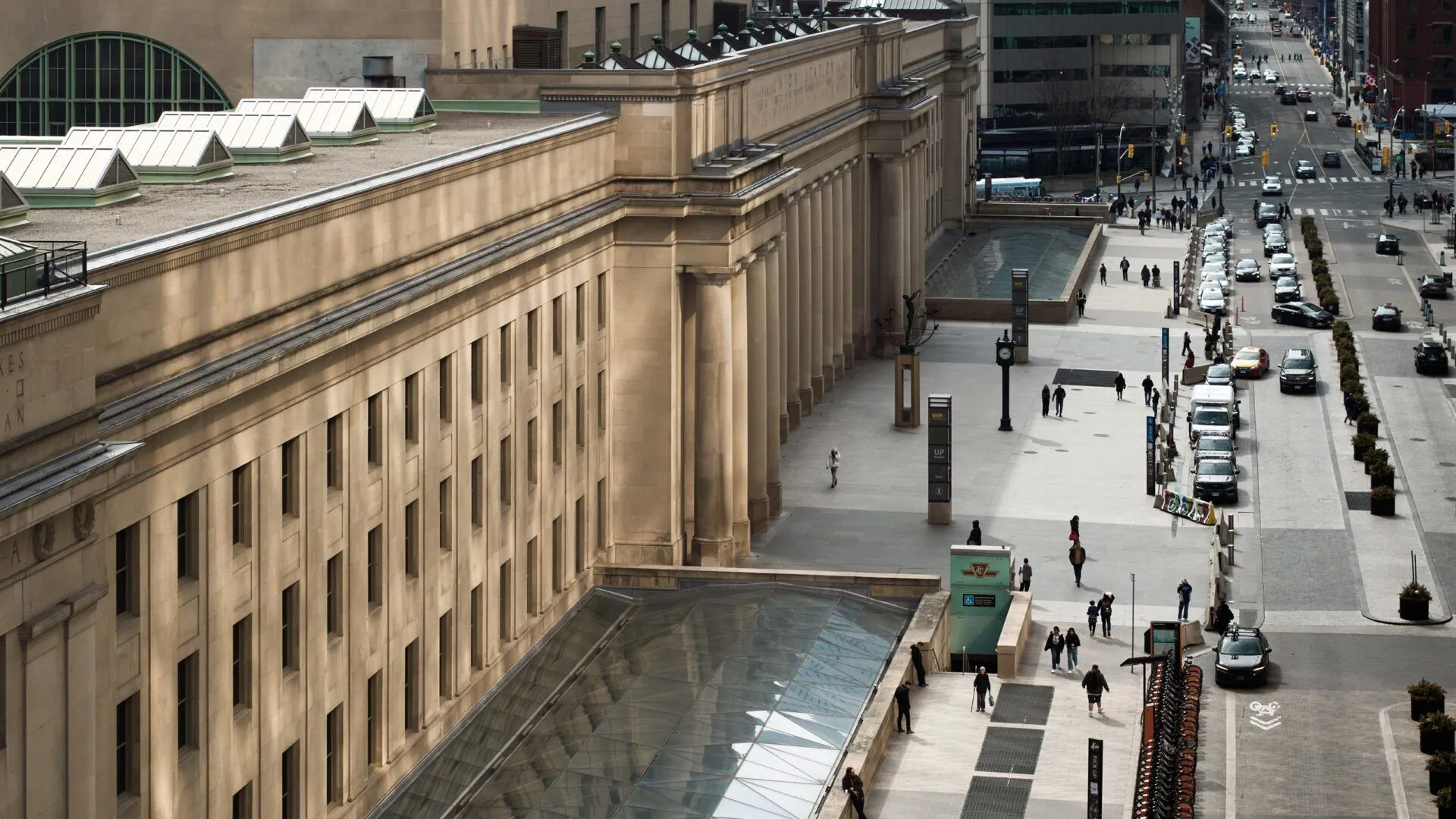
Today, following a 14-year, $824 million comprehensive overhaul, Canada’s largest multi-modal transportation hub has officially transformed from a mere pass-through into a world-class civic destination.
Led by NORR Architects & Engineers and heritage specialists EVOQ Architecture, the Union Station Revitalization Project has expanded the historic 1927 Beaux-Arts facility to handle a projected 130 million passengers annually. By seamlessly blending bravura engineering with careful historical preservation and a vibrant new retail strategy, the station is now positioned as a premier cultural and culinary hotspot in the heart of downtown Toronto.
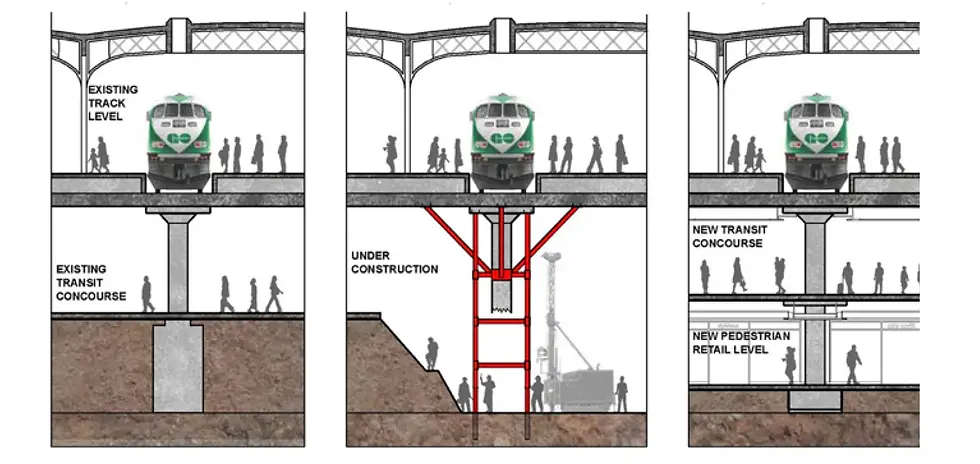
To accommodate the staggering growth in commuter traffic—currently sitting at 65 million passengers a year—the design team had to get creative. Instead of building up, they dug down.
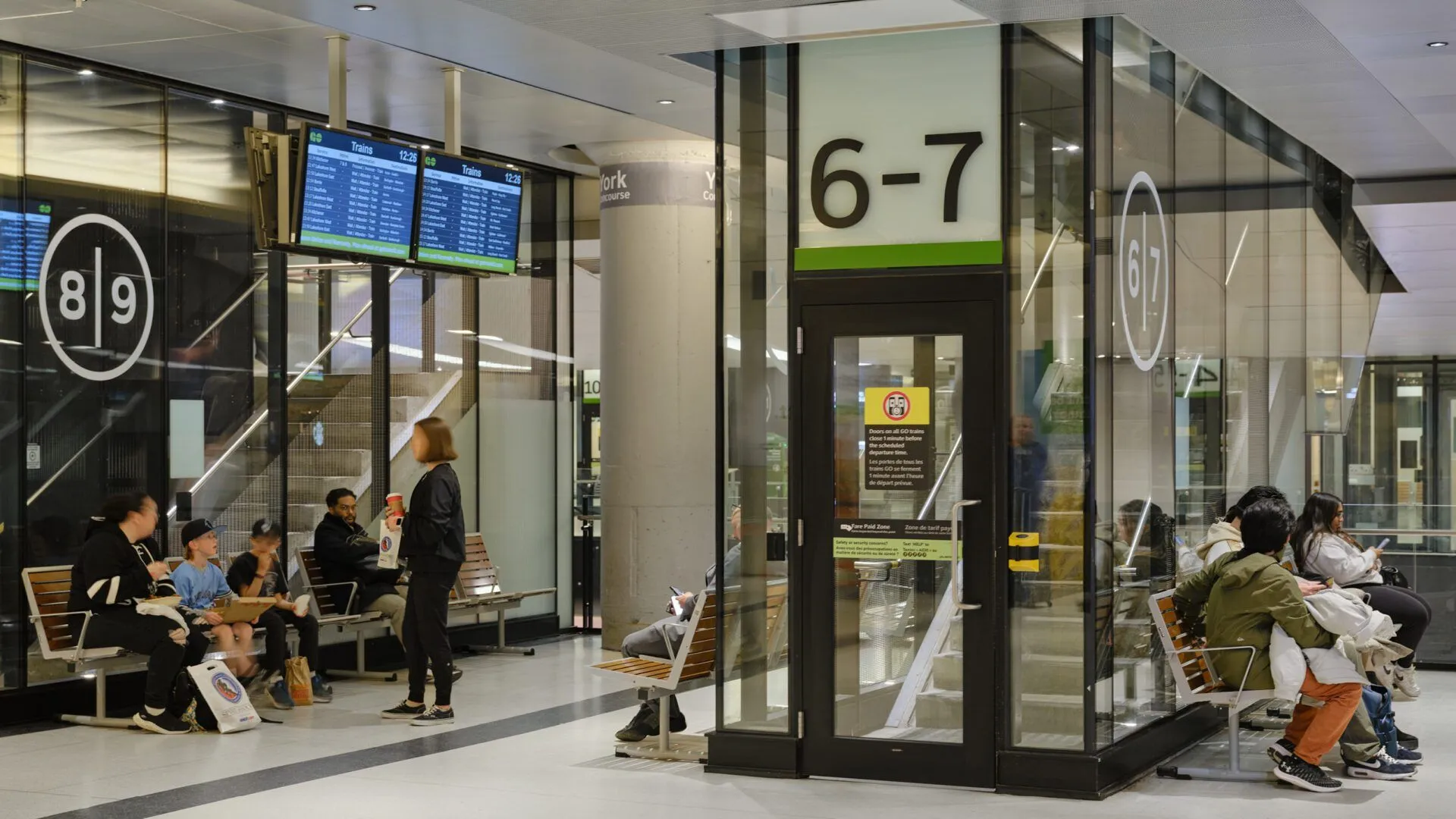
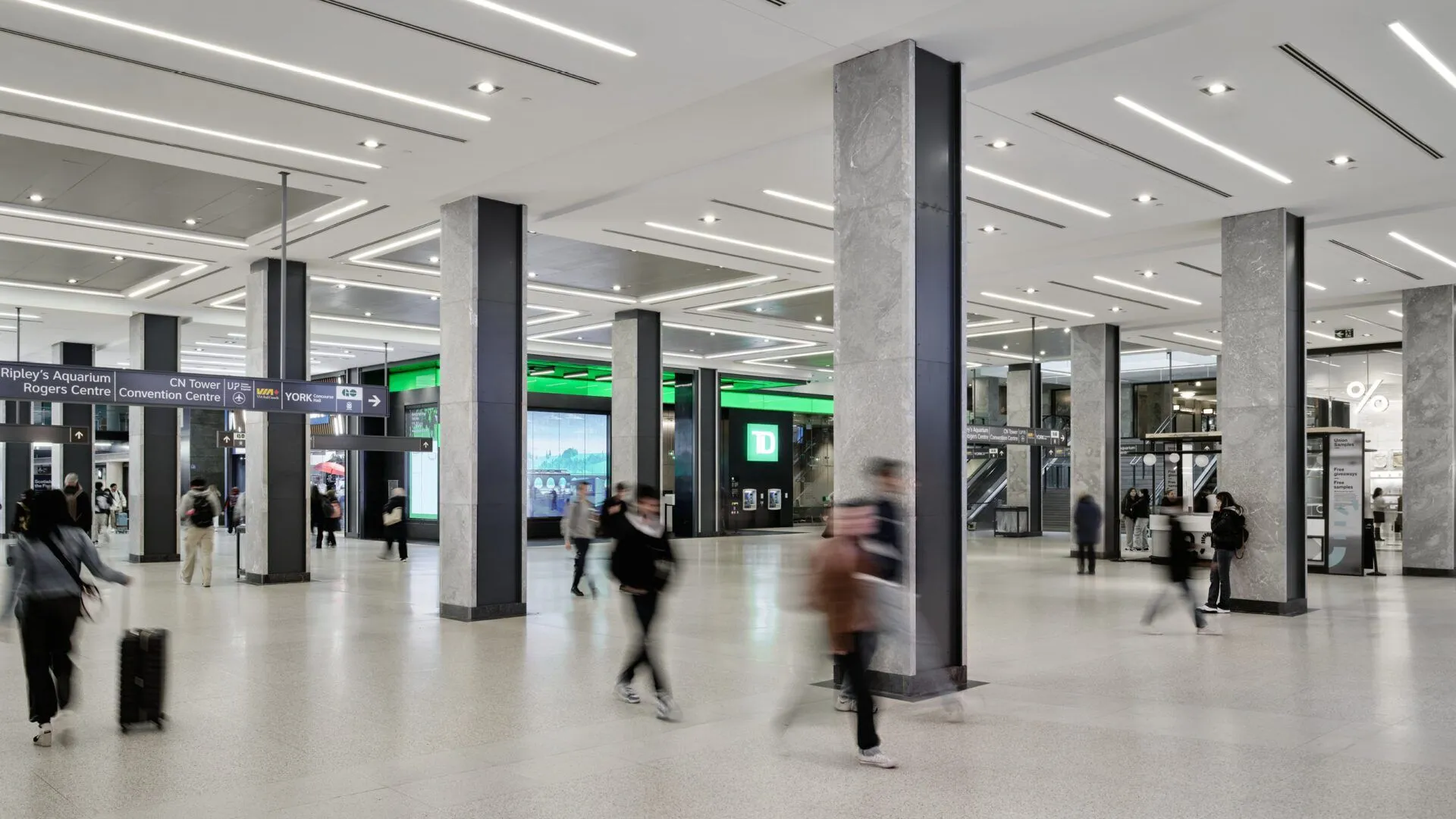
The ambitious project carved out a 270,000-square-foot expansion four meters below the existing basement level, effectively doubling the size of the previous Bay Street GO concourse and adding a brand-new York Street GO concourse.
The "Dig-Down" Feat: To achieve this without halting transit, 185 track-supporting columns were jacked up, transferred onto bedrock-supported micro-piles, and cut away. Remarkably, 11 of the 12 tracks remained fully operational throughout, with track movement kept to less than three millimetres.
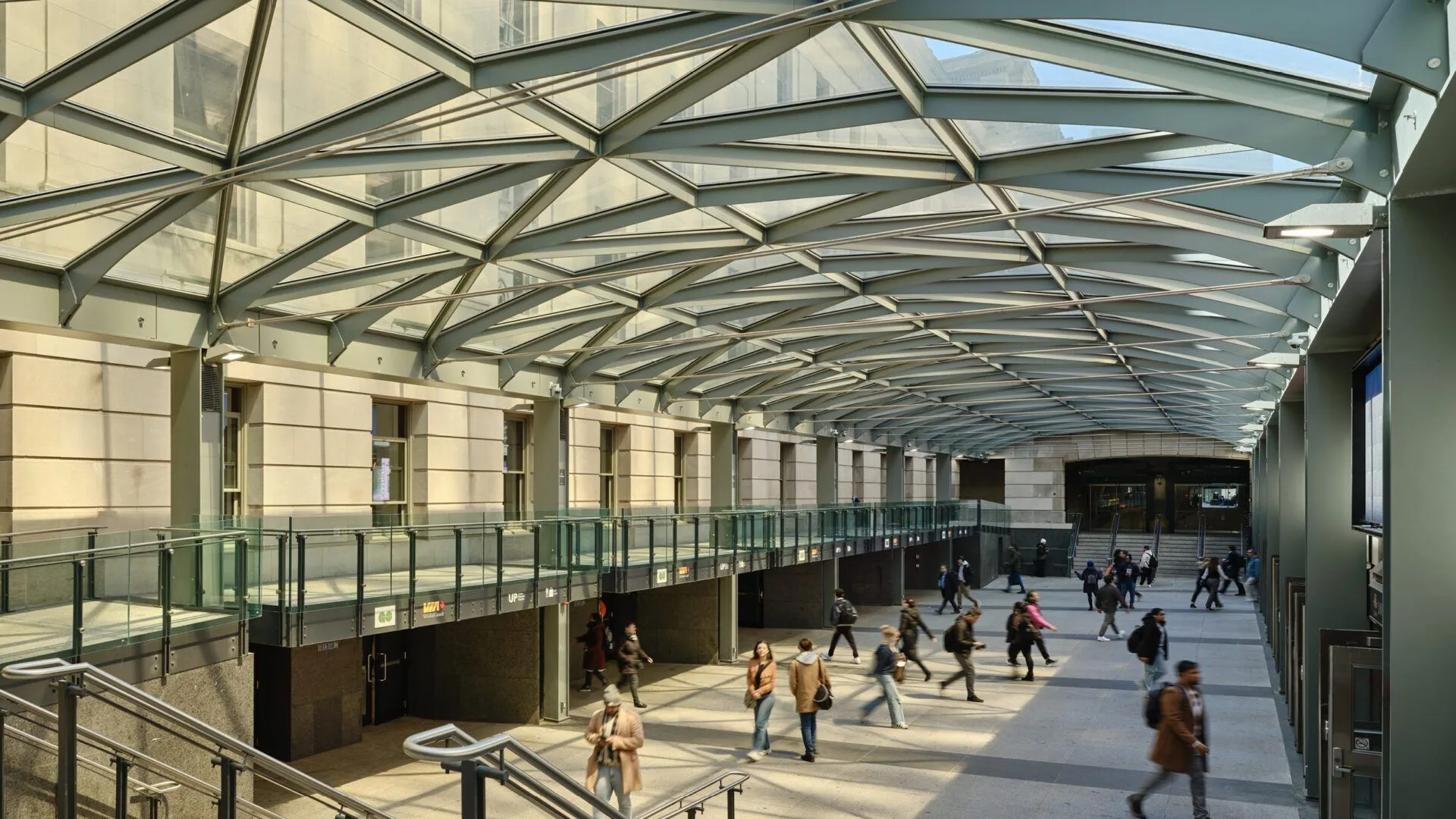
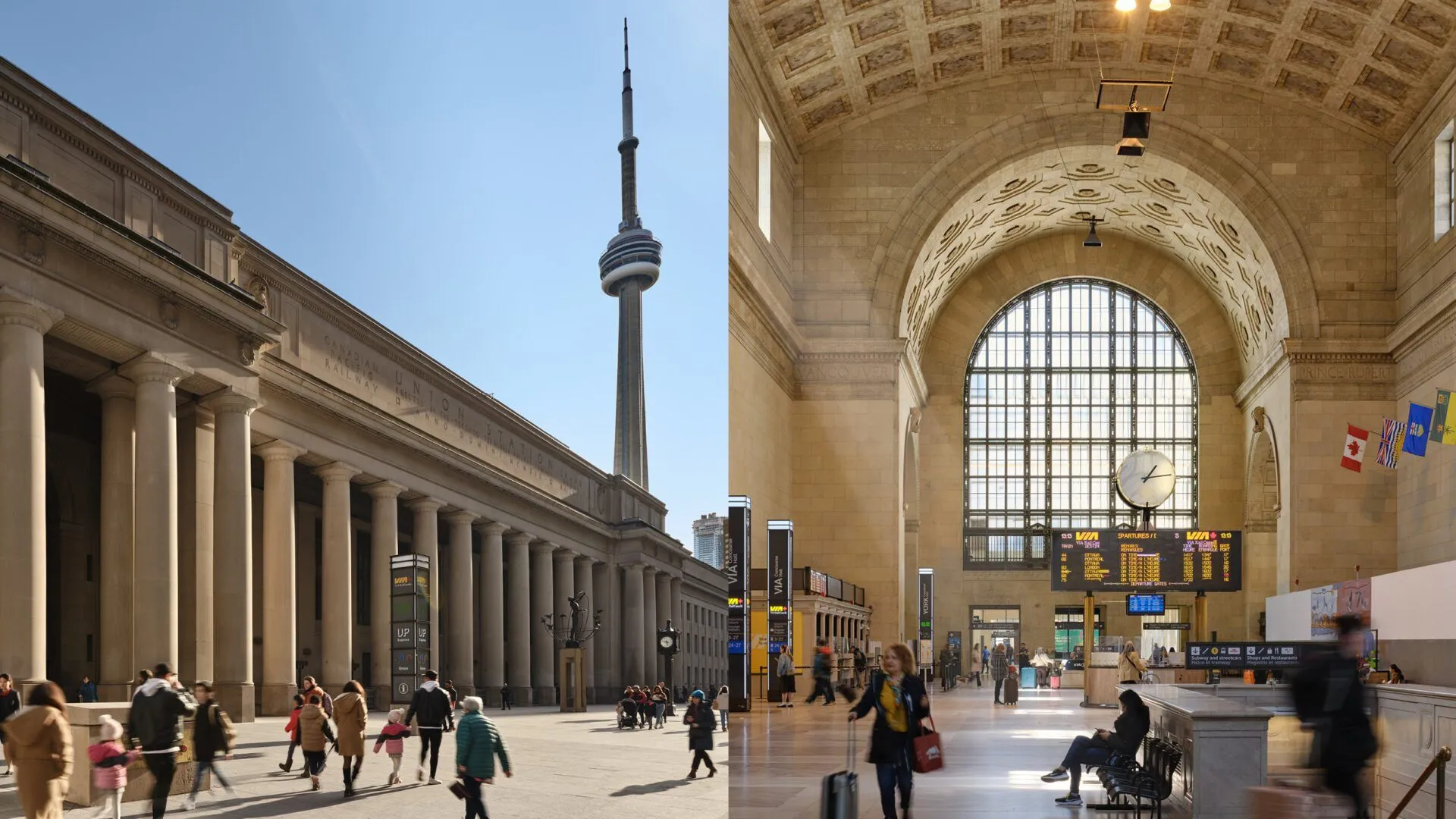
The Glass Moat: The previously open-air 'moat' surrounding the station has been levelled for accessibility and enclosed with a sleek, steel-ribbed glass canopy. This giant skylight protects commuters from the elements while offering stunning worm’s-eye views of the CN Tower, all while stopping just short of the heritage façade to preserve its structural integrity.
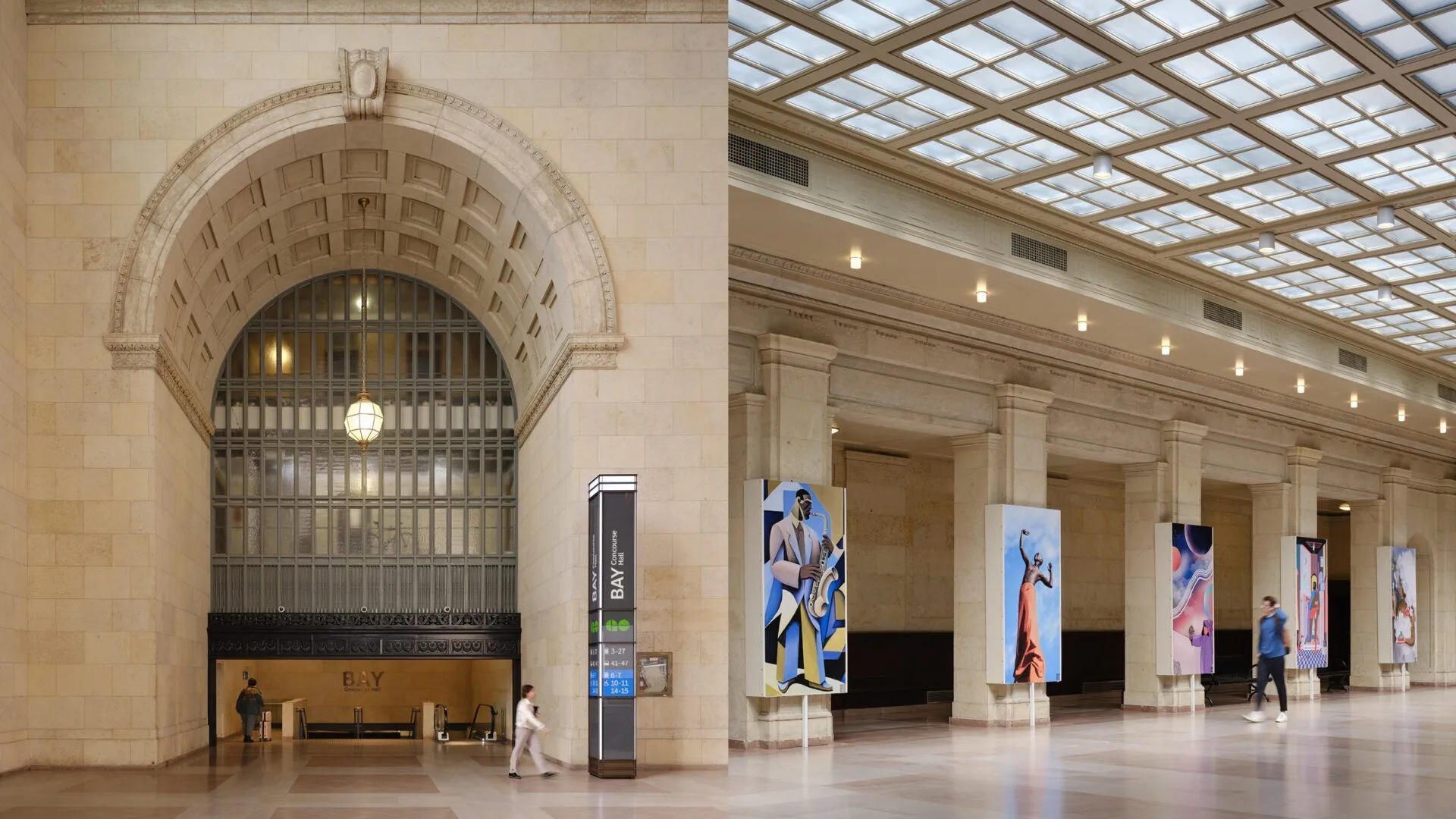
Heritage Restored: The majestic Great Hall underwent a colossal cleaning to remove a century's worth of train exhaust and cigarette smoke, restoring the exquisitely engineered Guastavino tile vault and historic Zumbro stone to their original glory.
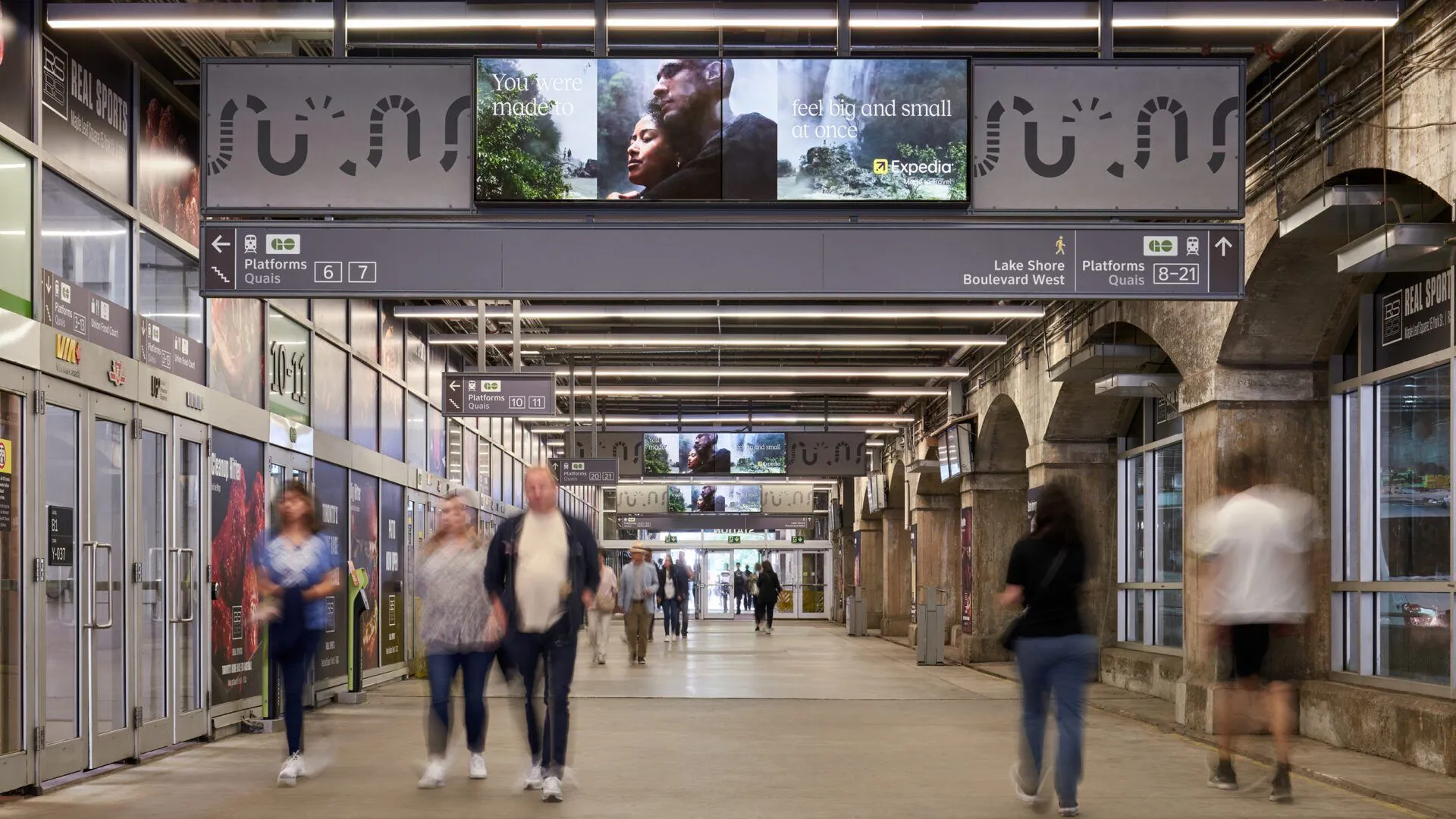
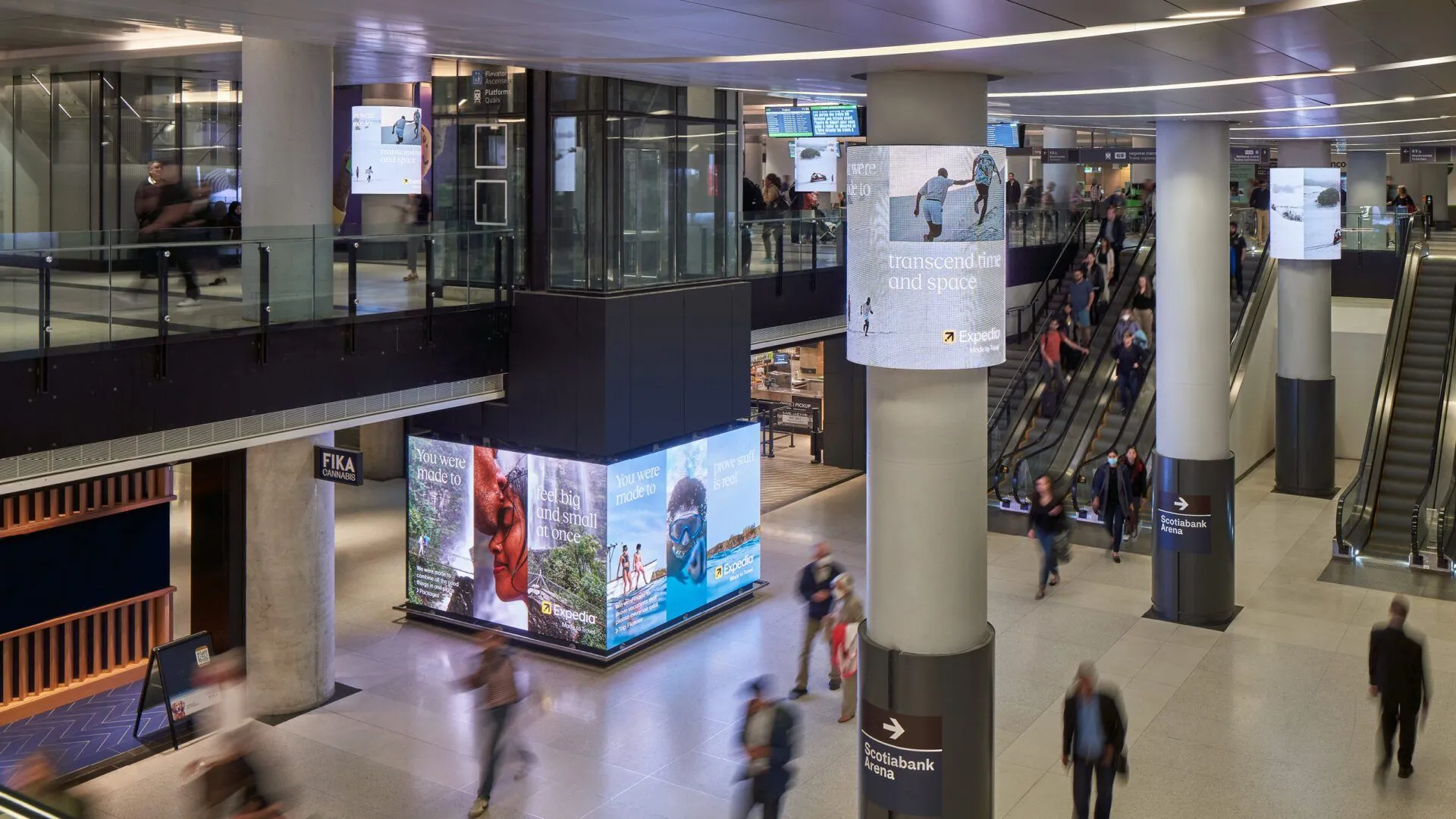
The dig-down didn't just create room for commuters; it unlocked 160,000 square feet of brand-new retail space, curated by retail developer Osmington Inc., turning the station into a foodie haven.
Say goodbye to the dead-end fast-food joints and hello to distinctly Torontonian retail neighbourhoods:
The Foodie Aisle: Located near the Scotiabank Arena entrance, this market-style corridor features a diverse selection of local chefs and quick bites, including Mean Bao, Butter Chicken Roti, and Grand Tacos Taqueria.
Union Market & Promenades: The Front and York Street Promenades act as the station's "Main Street," offering everything from fast-casual dining at the Union Food Court to sit-down experiences like Amano Italian Kitchen, WVRST, and the upscale Blue Bovine fine dining in the East Wing.
Image courtesy of: NOOR
Image courtesy of: NOOR
A Living Cultural Hub
Union Station is no longer just a place to catch a train; it is a lively venue for Toronto's arts and culture scene. As of early 2026, the station is actively programming its spaces to engage the public:
Art Exhibitions: The station is currently hosting Unionnale: Aura by Jason Zante in the Union Market, alongside the A Kind of Order exhibition in the West Wing, which amplifies Black voices and BIPOC creatives.
Live Music & Events: Commuters can regularly catch live DJ sets through the TD Union Beats program, or stumble upon interactive pop-ups like free local food samplings at the Bay Kiosk.
Image courtesy of: NOOR
Image courtesy of: NOOR
Image courtesy of: NOOR
Image courtesy of: NOOR
Image courtesy of: NOOR
Image courtesy of: NOOR
Award-Winning Architecture
The Union Station Revitalization proves that public infrastructure can still ennoble the fabric of a city. The project has already garnered significant industry acclaim, sweeping recent architectural honours:
AIA Canada Society Design Awards 2025 – Merit in Architecture
Toronto Urban Design Awards 2025 – Public Buildings in Context
Heritage Toronto Awards 2024 – Heritage Planning & Architecture Award in Built Heritage
By leveraging the value of an irreplaceable heritage building and expanding it from within, the City of Toronto and its partners have ensured that Union Station will continue to be the beating heart of the city for generations to come.
Receive the latest updates on architecture, design, and sustainability, along with news of upcoming competitions, events, and exclusive stories, delivered directly to your inbox.
Great design bridges past and future,
creating spaces that evolve with us.
At Forma The Magazine, we believe architecture and design have the power to elevate lives, restore places, and inspire generations.
We invite you to join our community of thinkers, creators, and dreamers shaping the future of design.
Then there is Montréal—a city that, for twenty years, has chosen to "govern" itself. In June 2006, the Québec metropolis became the first city in North America and only the third in the world to join the UNESCO Creative Cities Network in the field of design. Two decades on, that designation has proven to be far more than a badge of honour. It has become the philosophical spine of an entire urban project.
Humans spent 99% of their evolutionary history adapting to the natural world. Today, we spend roughly 90% of our lives inside sealed, climate-controlled boxes. This massive shift has left us chronically stressed, fatigued, and disconnected.
Winner of the 2026 Award of Excellence in Architecture from the Quebec Association of Architects, the Aubé House is more than just a beautifully designed residence. It is a physical timeline—a space where a rich family history meets breathtaking modern design.
Just north of Toronto, perched on the edge of a wooded valley, sits Ravine House—a contemporary home that redefines what it means to live in harmony with nature. Rather than acting as a barrier against the outdoors or simply occupying a plot of land, this stunning residence acts as an immersive, beautiful mediator between comfortable domestic living and the natural landscape.
On May 29th, as the sun began to set over the historic brick facades of Old Town Toronto, the streets took on a new, electric energy. The King East Design District (KEDD) Neighbourhood Hop—the highly anticipated annual event presented by DesignTO in collaboration with the Old Town Toronto BIA—was officially underway. For a few magic hours, the neighbourhood morphed into a sprawling, interactive playground for creativity and innovation.
In the heart of Quebec’s rugged Laurentians region, a new kind of home has taken flight. Located in the quiet community of La Conception, The Albatross is not just a house; it is a masterclass in modern residential design. Image courtesy of: Stéphane Groleau Created by the teams at MU Architecture in close collaboration with architect Anik Patry, this extraordinary home was built around a beautiful, simple idea: to place a modern family at the very center of a spectacular nat
Great architecture does more than simply house people; it shapes how they learn, create, and connect with the world around them. Université du Québec à Montréal (UQAM) has long understood this, and the architectural community agrees. Recently, UQAM’s iconic pavillon de Design was awarded the Royal Architectural Institute of Canada’s (RAIC) Prix du XXe siècle, a prestigious honour that recognizes the most outstanding and enduring architectural achievements of the last century.
Medical laboratories are often defined entirely by their complex, technical needs, leaving little room for architectural beauty. However, the new Montérégie Central Laboratory in Quebec completely rewrites that rule. Designed by the architectural firms NFOE and Archi–, this cutting-edge facility proves that high-tech infrastructure can be surprisingly elegant.