The House and The Tree: Rooted in Architecture
- Apr 4
- 2 min read
Updated: Apr 29
In residential architecture, nature is often treated as a beautiful backdrop—an element placed adjacent to the built environment. The House and The Tree, a single-storey residence in Barrie, Ontario, turns this convention inside out. Here, a single central tree is not just part of the landscape; it is the origin point of the entire architectural composition.

Rather than the house framing the landscape, the house is arranged entirely around its living centrepiece.
A Spatial Spine
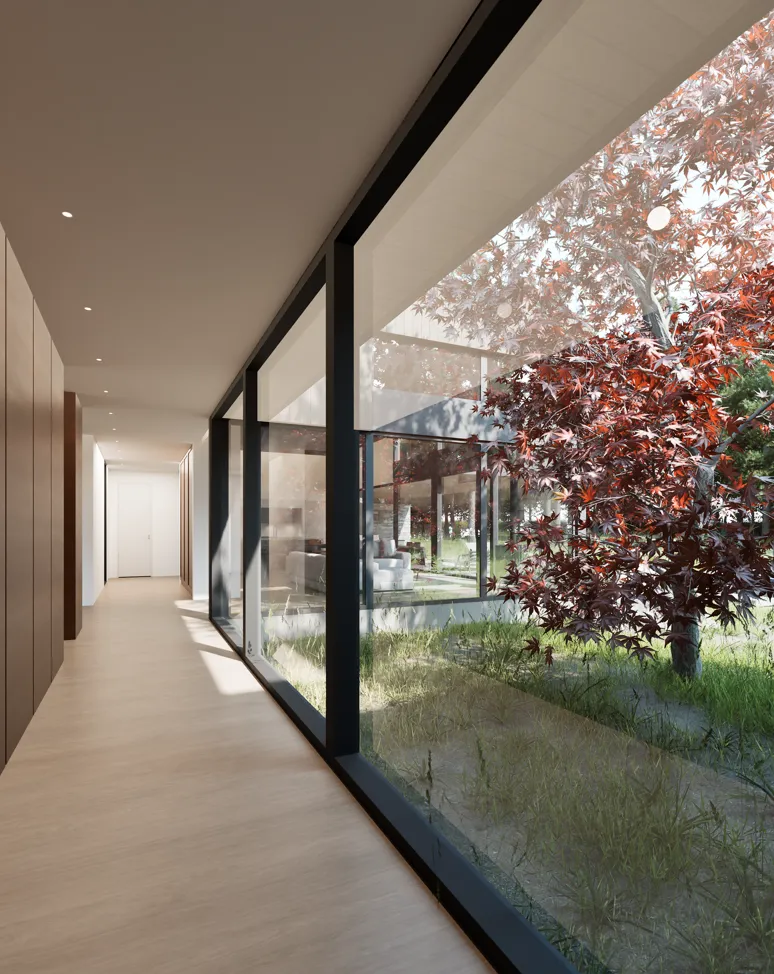
The design is structured as a sequence of horizontal volumes that establish a clear, intuitive transition from public to private areas. Connecting the social spaces with the private wing is a linear gallery. This corridor acts as the home's spatial spine, intentionally framing views toward the central courtyard and constantly reinforcing the delicate relationship between the interior and the exterior world.

The Choreography of Arrival
The experience of entering the home is carefully controlled, relying on the architectural principles of compression and release. The arrival is defined by a contained space with a deliberately lowered ceiling, creating an intimate pause.
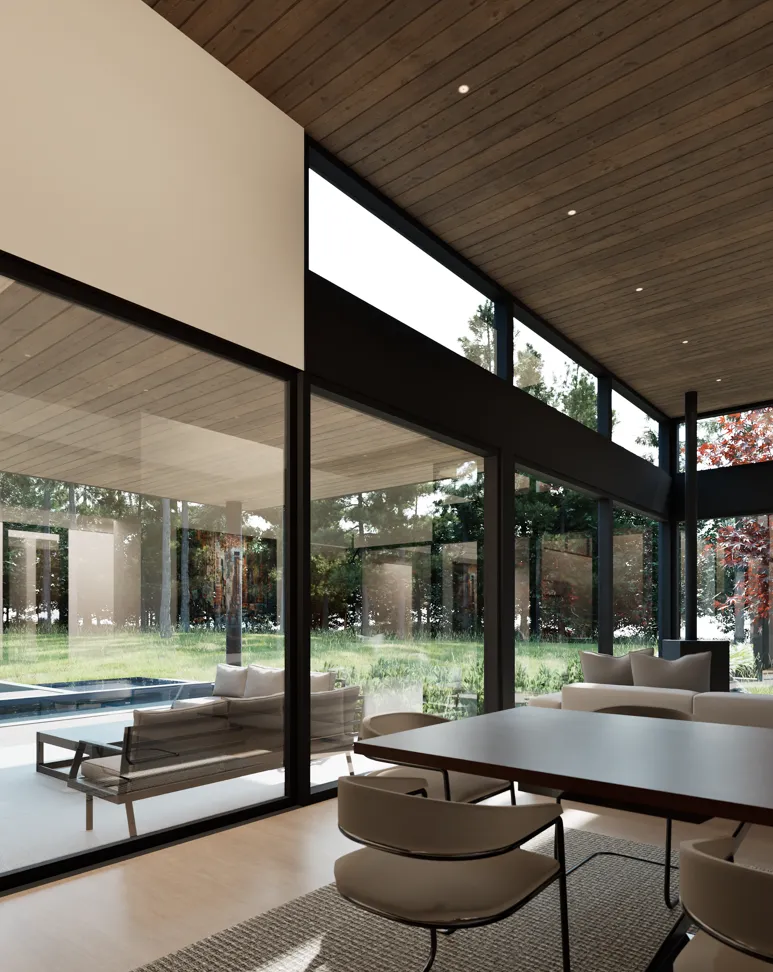
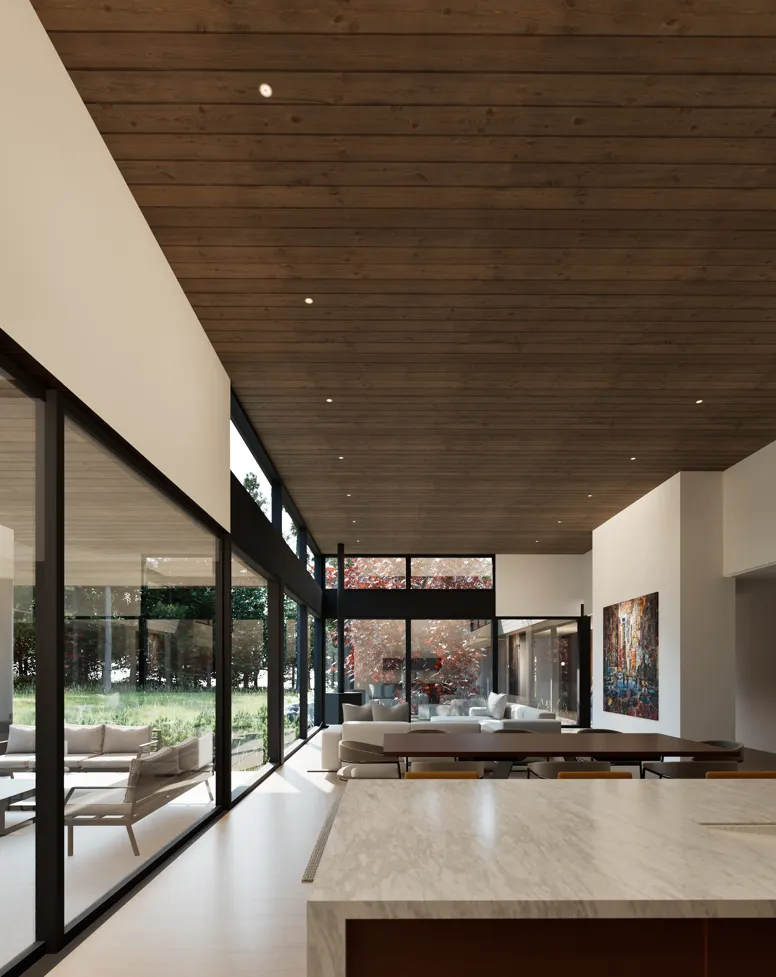
From this compressed threshold, the house dramatically opens into a double-height living area. Here, ace, natural light, and sightlines rapidly expand outward toward the courtyard. This stark contrast between compression and release establishes a clear spatial hierarchy, vastly enhancing the psychological perception of openness within the social wing.