Quebec’s Sleek New Biomedical Lab: Form Meets Function
31 minutes ago
4 min read
Medical laboratories are often defined entirely by their complex, technical needs, leaving little room for architectural beauty. However, the new Montérégie Central Laboratory in Quebec completely rewrites that rule. Designed by the architectural firms NFOE and Archi–, this cutting-edge facility proves that high-tech infrastructure can be surprisingly elegant.
Located in an industrial park in Saint-Bruno-de-Montarville, this facility is the first off-site medical laboratory built for Quebec’s Optilab program. Instead of hiding its industrial purpose, the building embraces it, resulting in a design that is smart, efficient, and beautifully simple.
A Monolithic Presence
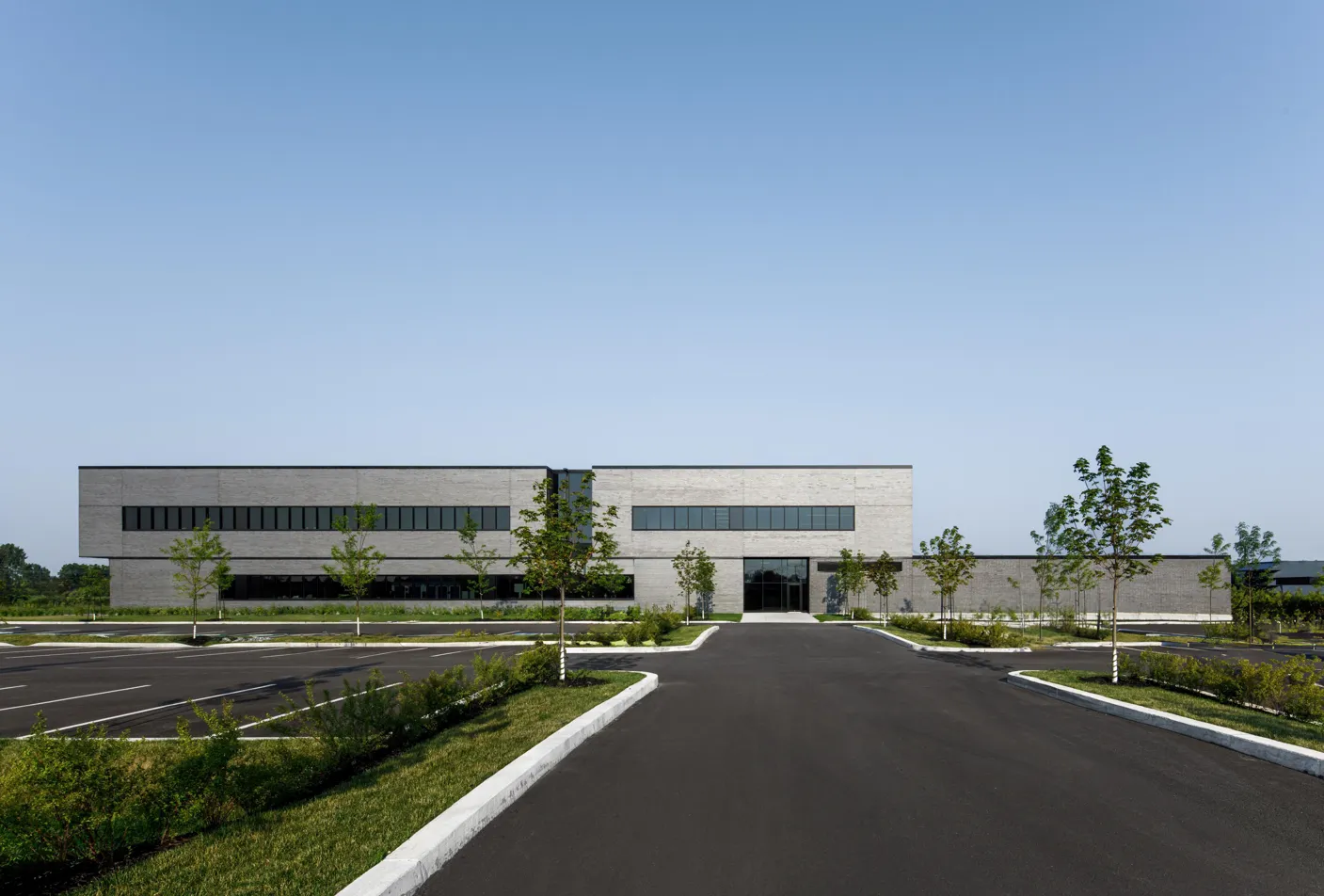
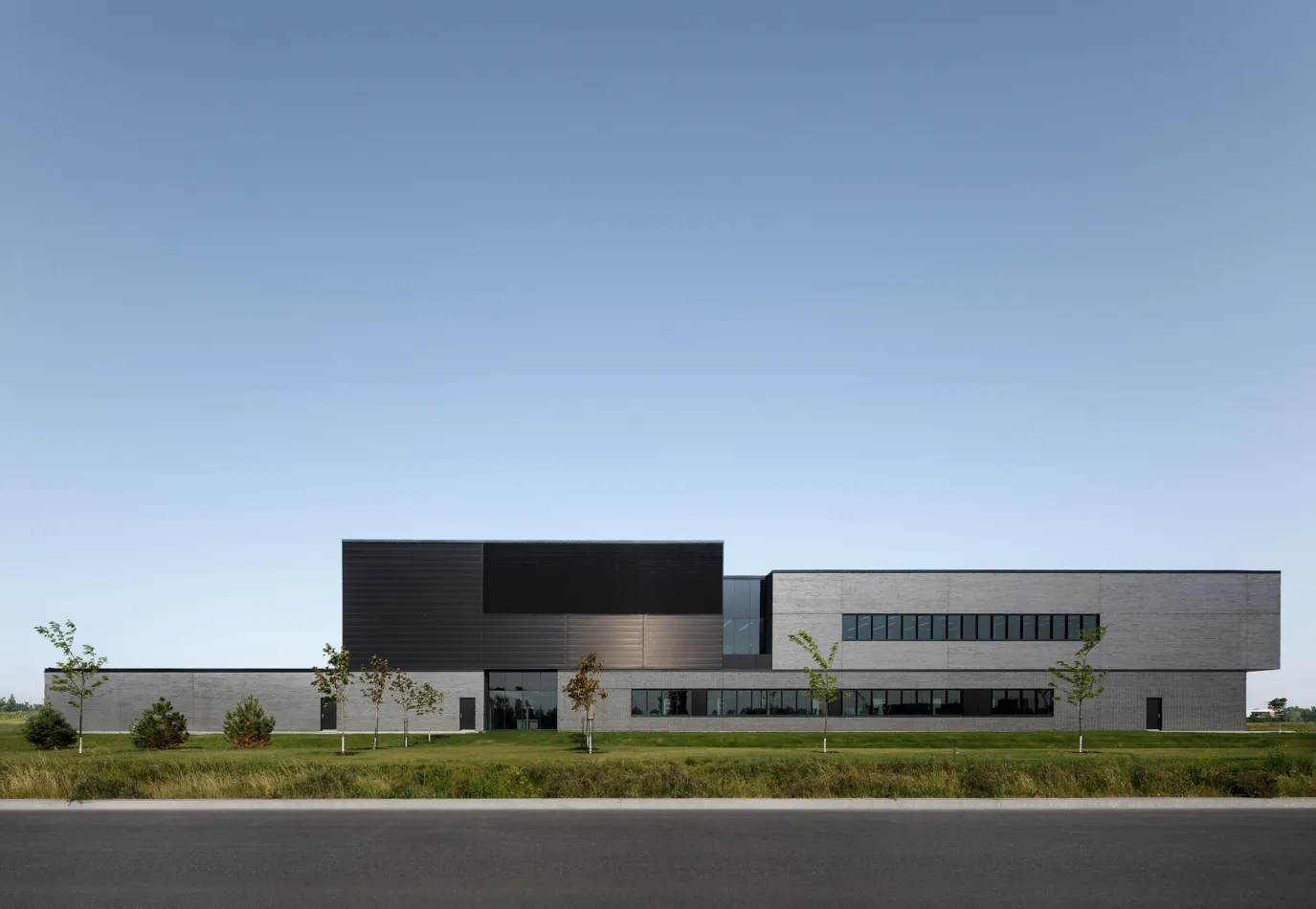
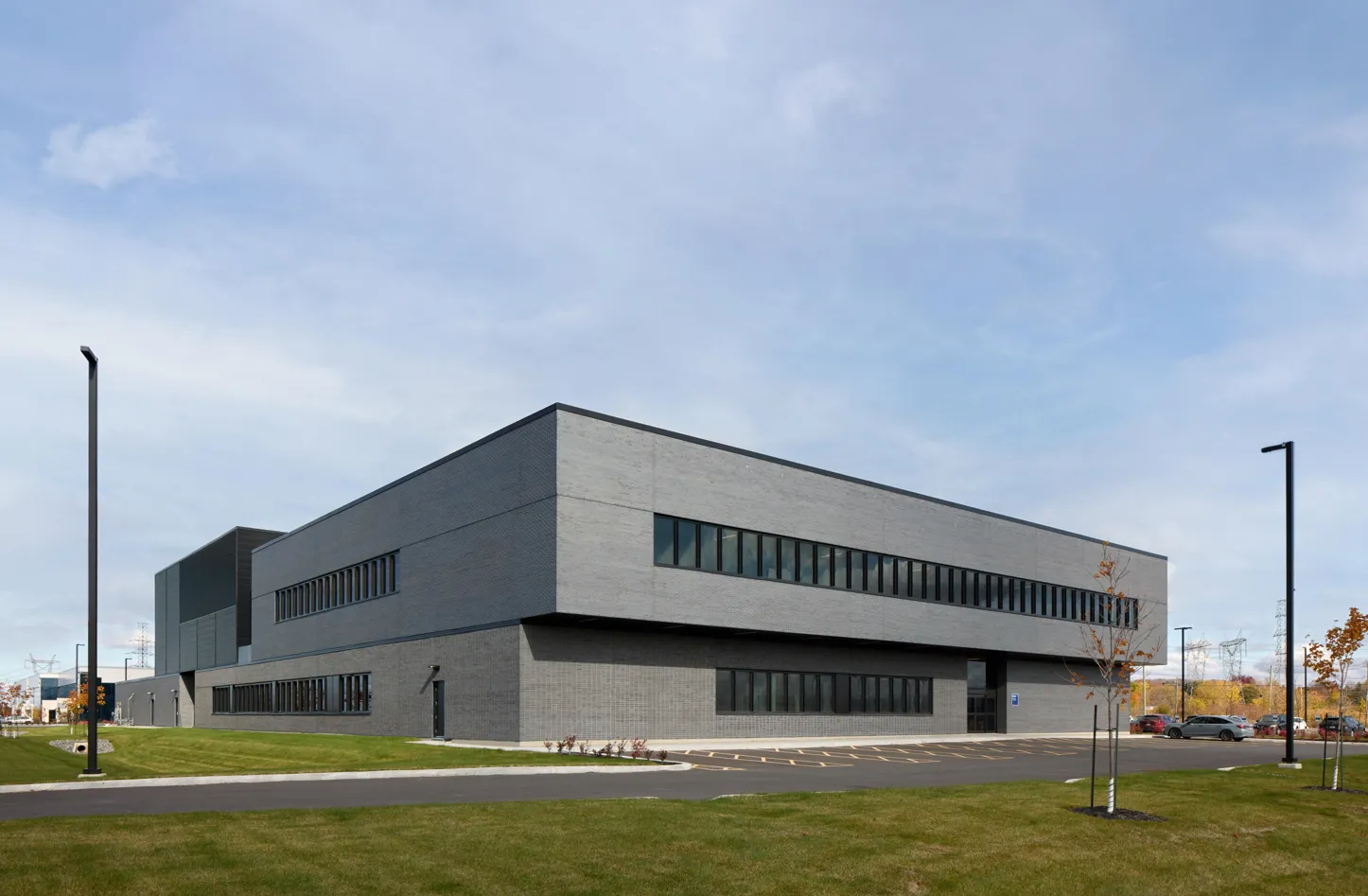
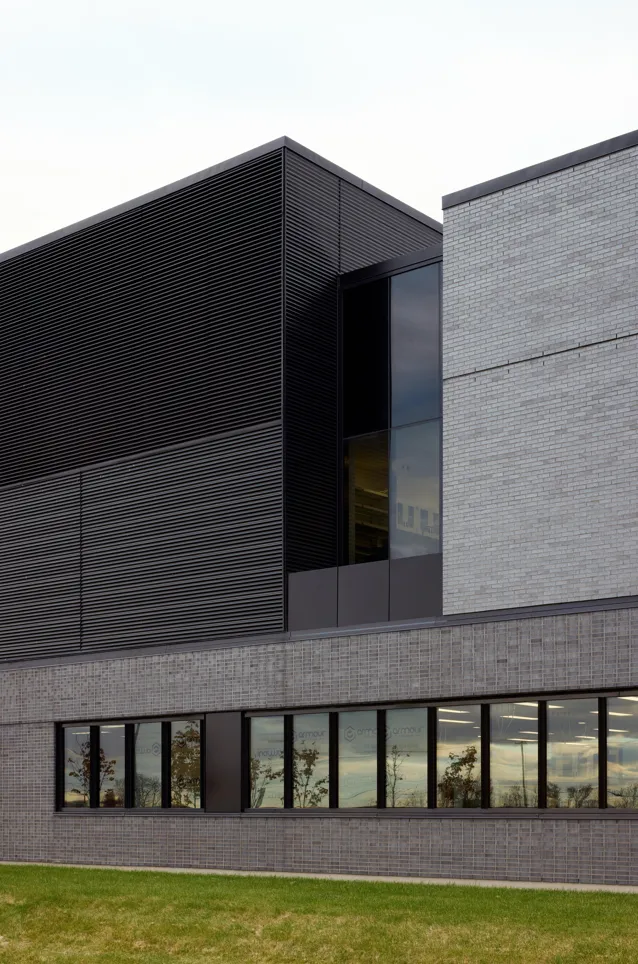
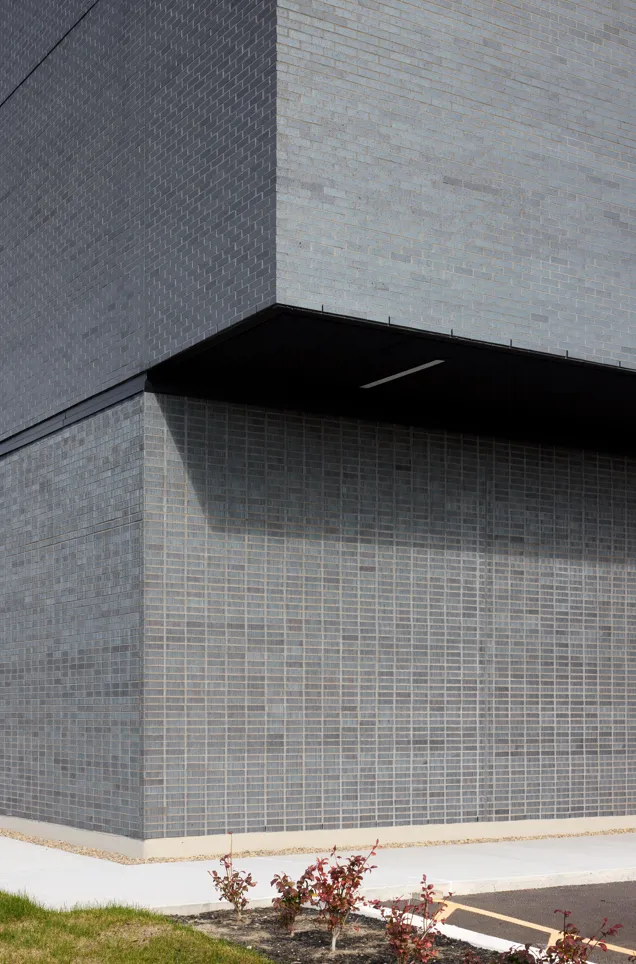
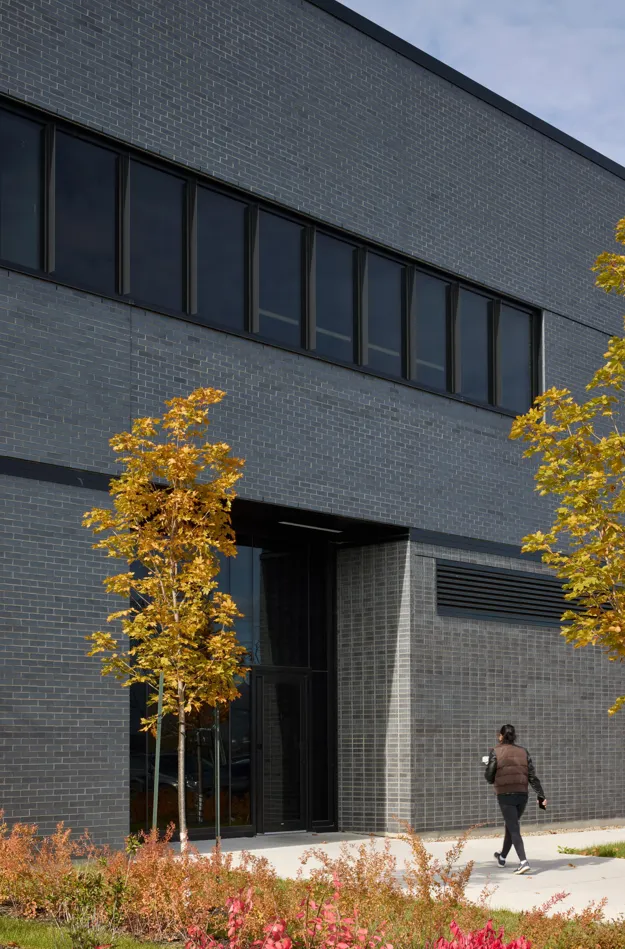
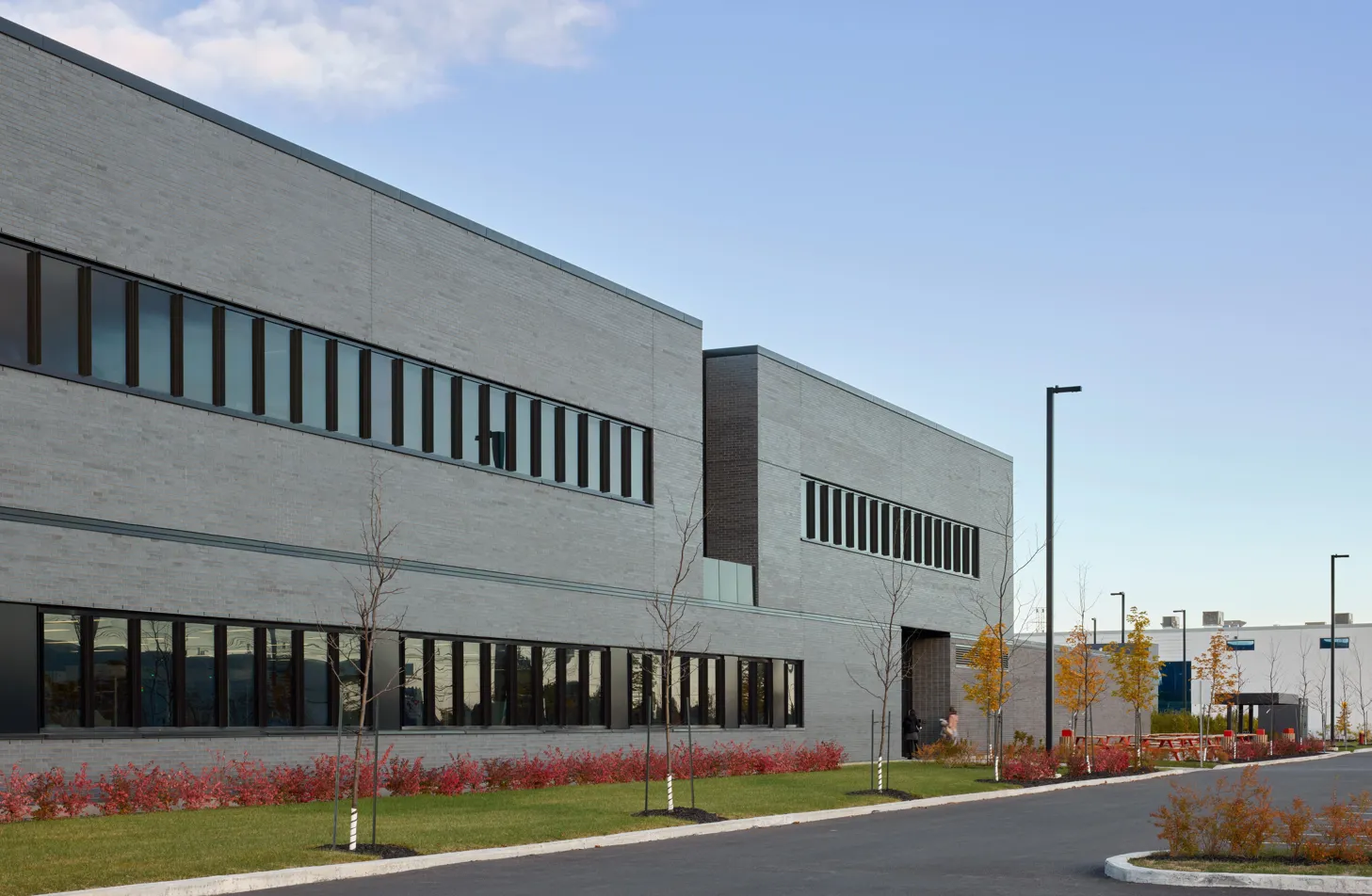
The architecture is defined by what the designers call a "monolithic" approach—a style that feels solid, singular, and grounded. The building is composed of large, superimposed blocks that are slightly offset from one another. This subtle shift creates a sense of movement, breaking up the mass of the building while maintaining a restrained and powerful presence against the open horizon.
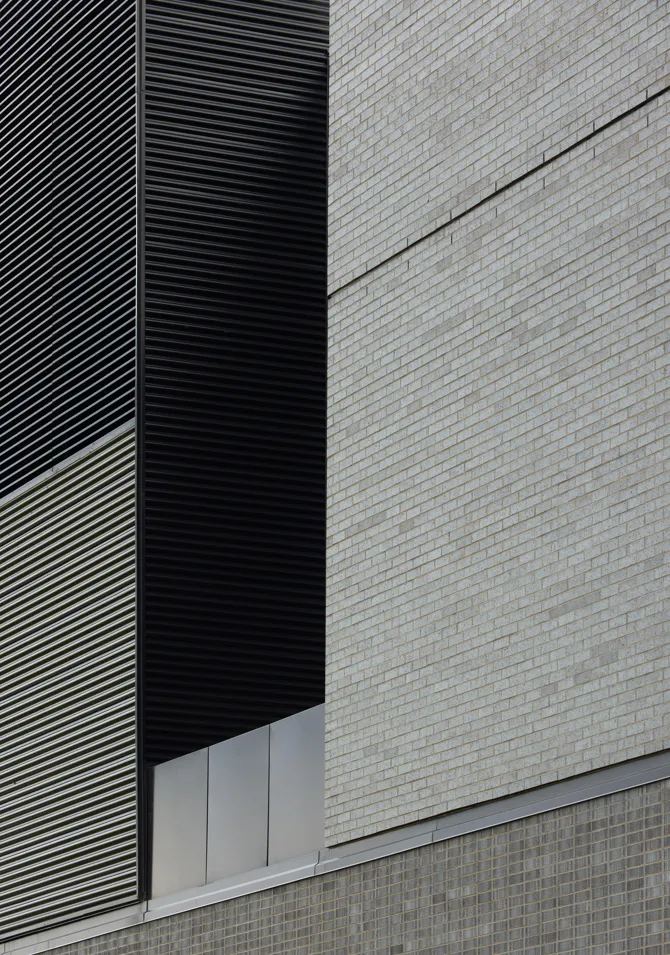
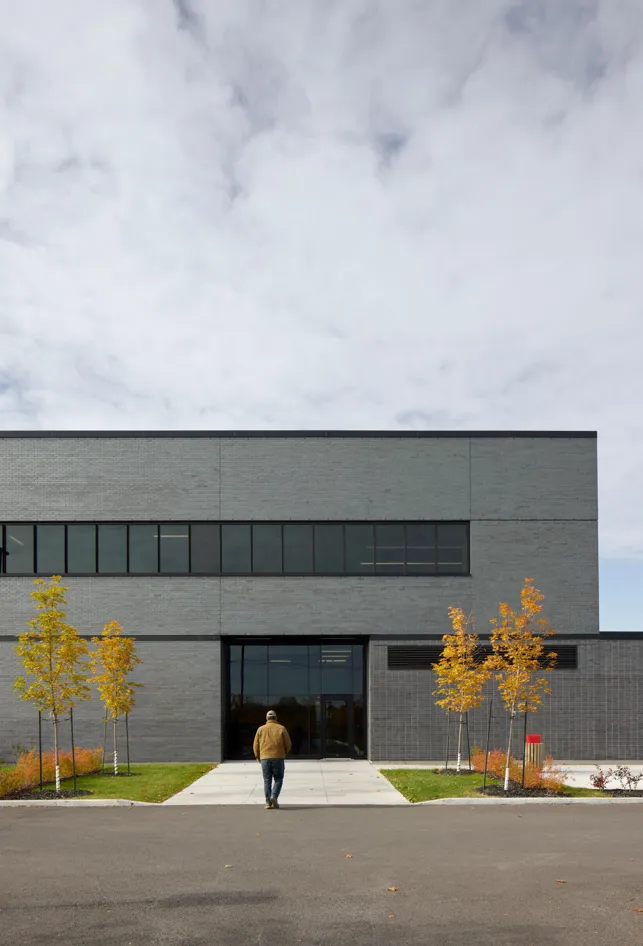
Clad in a deep anthracite brick, the exterior is both durable and precise. Rather than feeling like a closed-off fortress, the building is punctuated by "glass fissures"—vertical slices of windows that mark the entrances and guide people through the site.
Sleek New Biomedical Lab. Image courtesy of: Stéphane Brügger
Sleek New Biomedical Lab. Image courtesy of: Stéphane Brügger
Sleek New Biomedical Lab. Image courtesy of: James Brittain
The Architecture of Flow
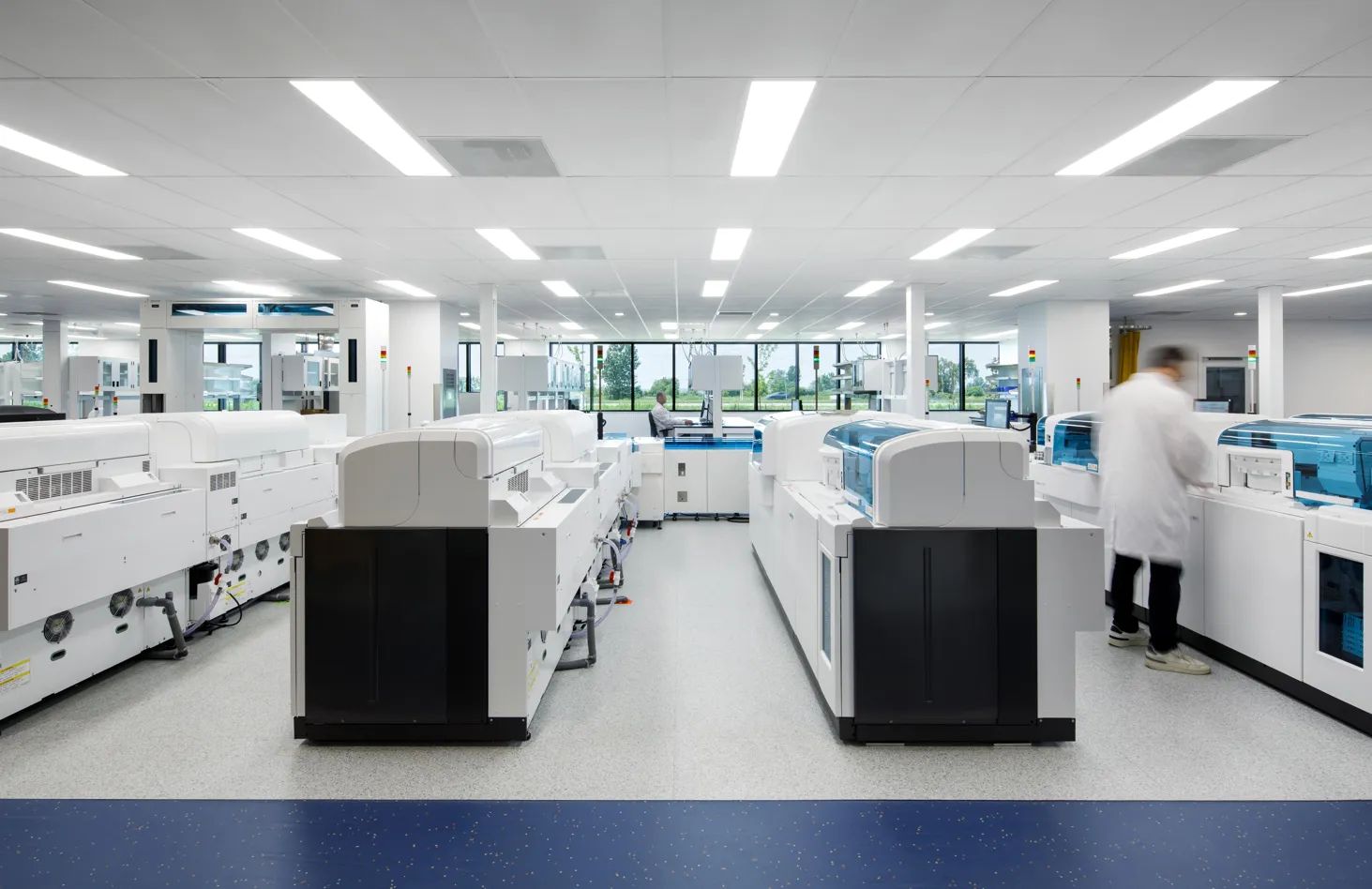
Every inch of the laboratory’s spatial organization is born from the same logic: flow, containment, and precision.
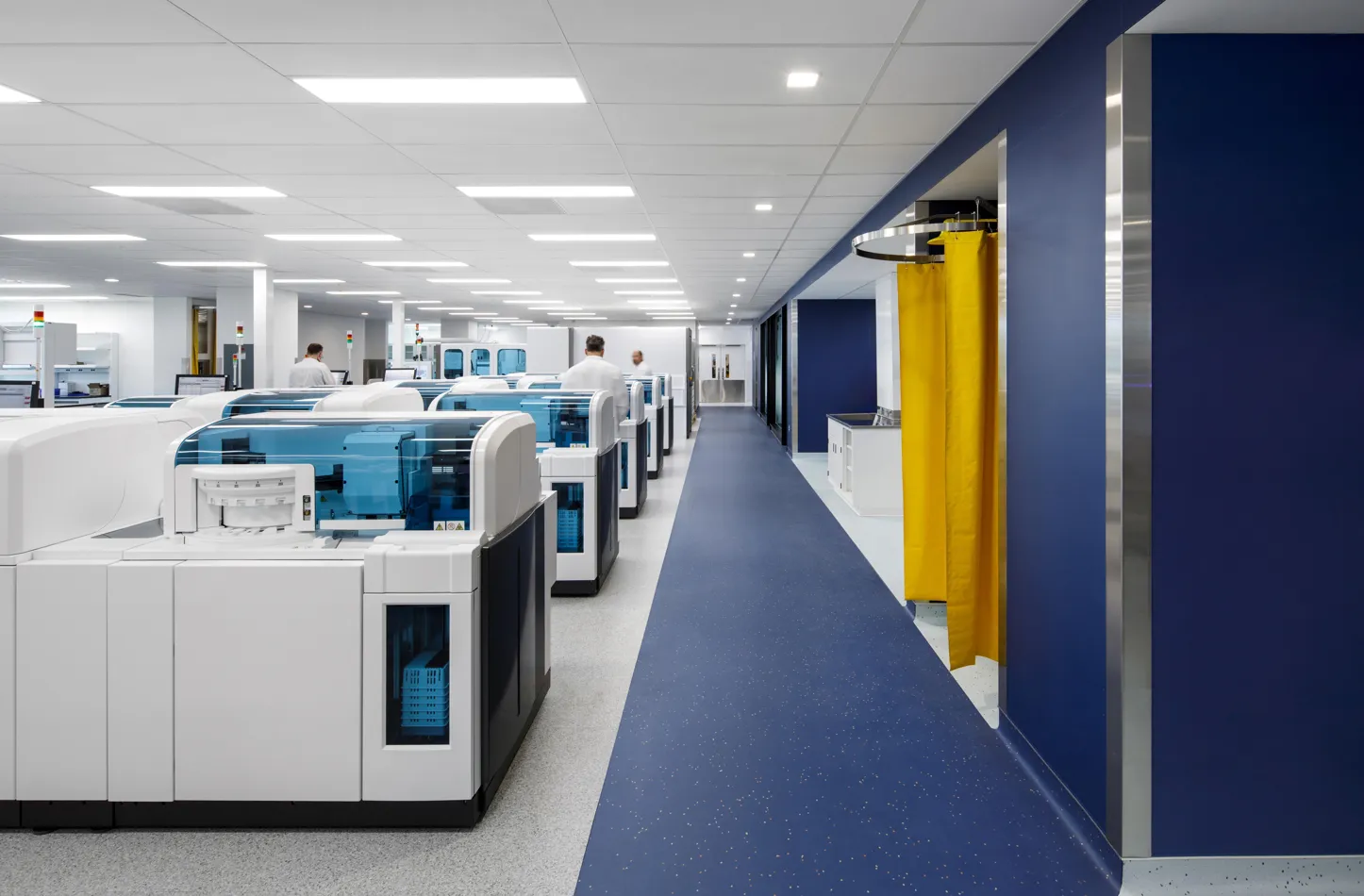
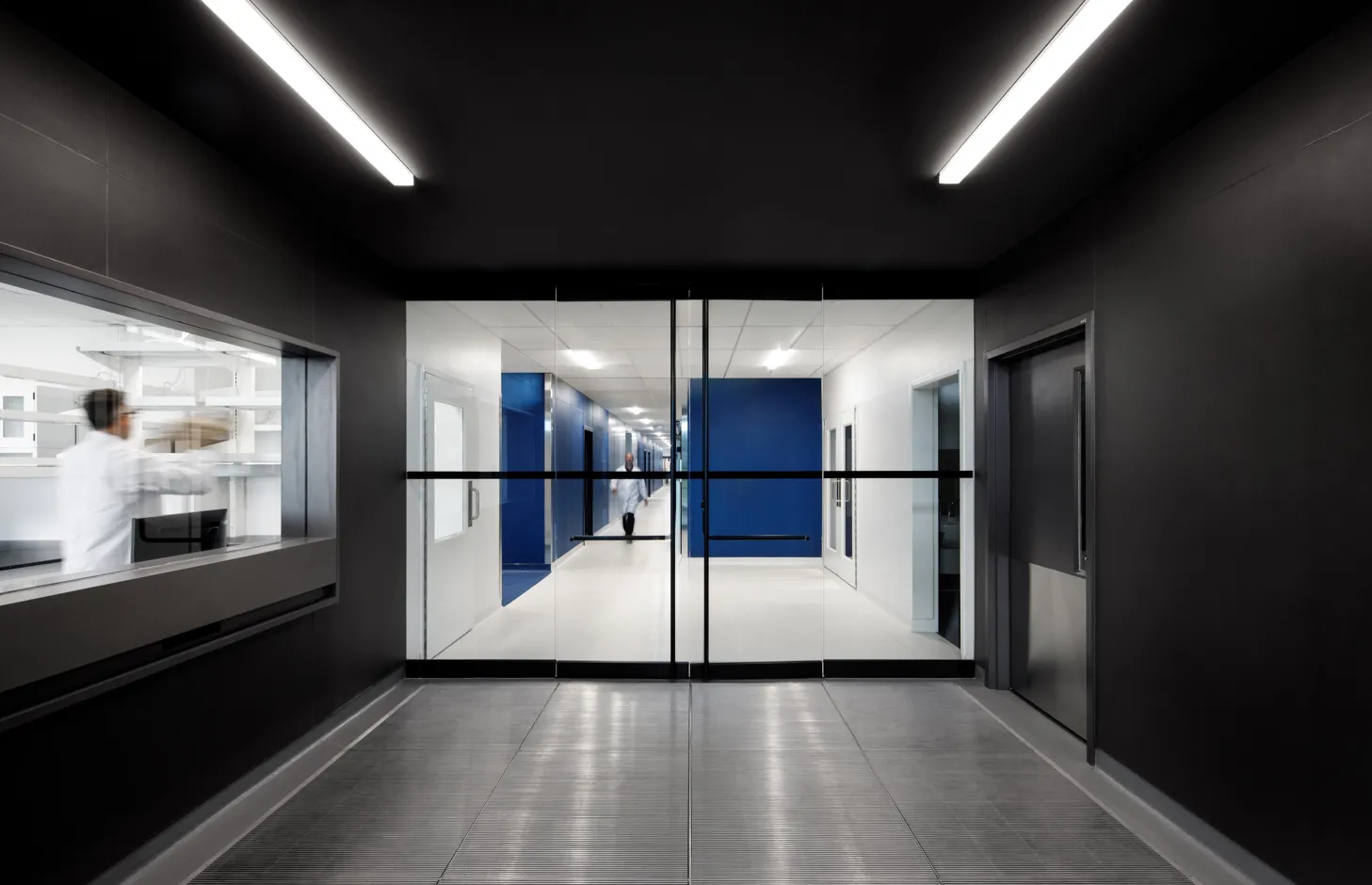
Inside, the floor plan is a physical map of a medical sample’s journey. From reception to processing, every room is positioned to support a "just-in-time" workflow. Because the lab handles sensitive biomedical work, the design meticulously separates different zones to ensure biosafety and operational efficiency. However, this high degree of technical complexity doesn't result in a confusing interior. Instead, the layout is remarkably clear and legible, making the daily work of staff easier and more intuitive.
Sleek New Biomedical Lab. Image courtesy of: James Brittain
Sleek New Biomedical Lab. Image courtesy of: James Brittain
Sleek New Biomedical Lab. Image courtesy of: James Brittain
Clarity and Comfort
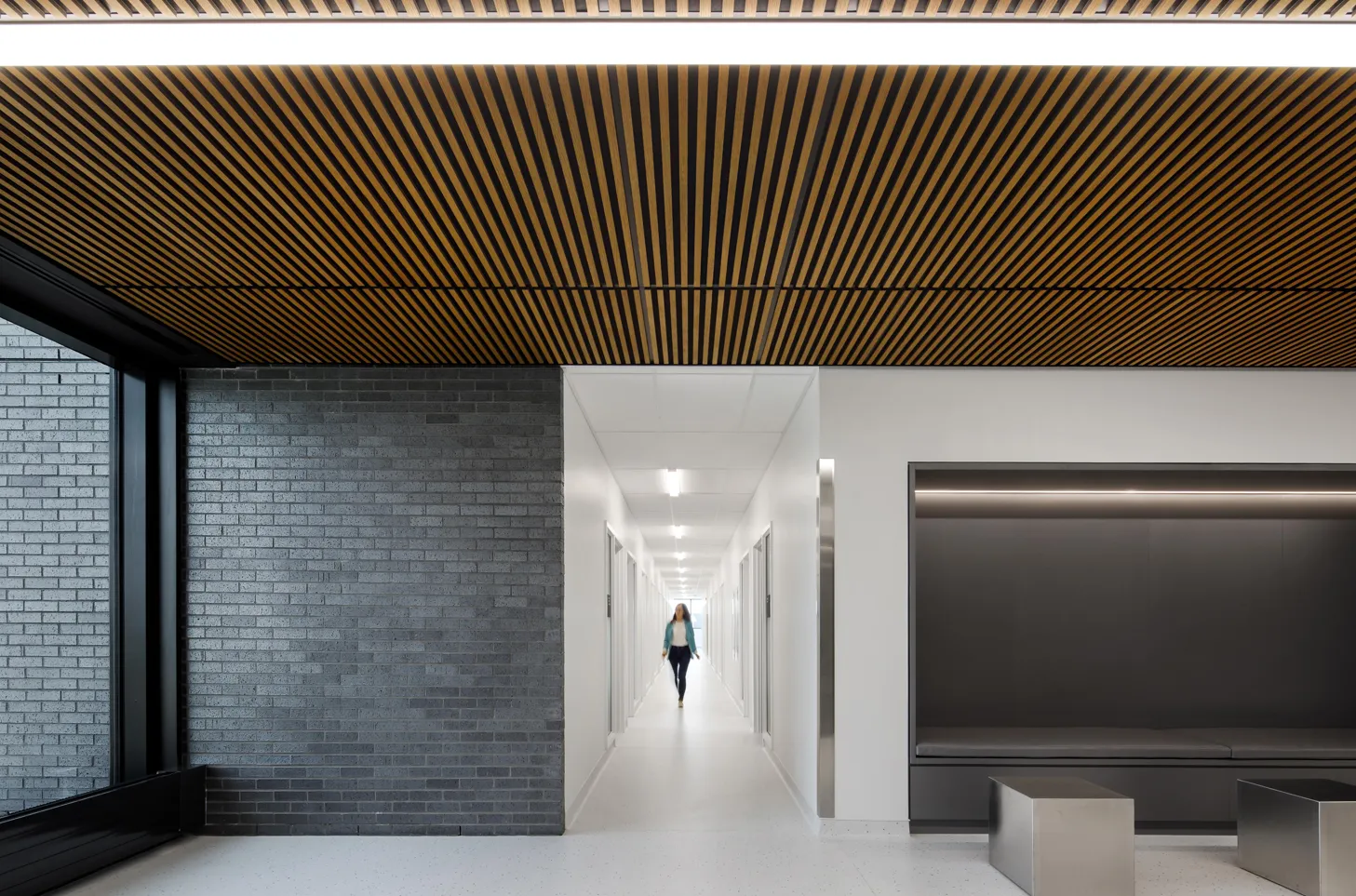
While the program is highly specialized, the architects prioritized the human experience. The interior is designed to be a "clear, luminous, and comfortable" workplace, moving away from the windowless, sterile feel of traditional labs.
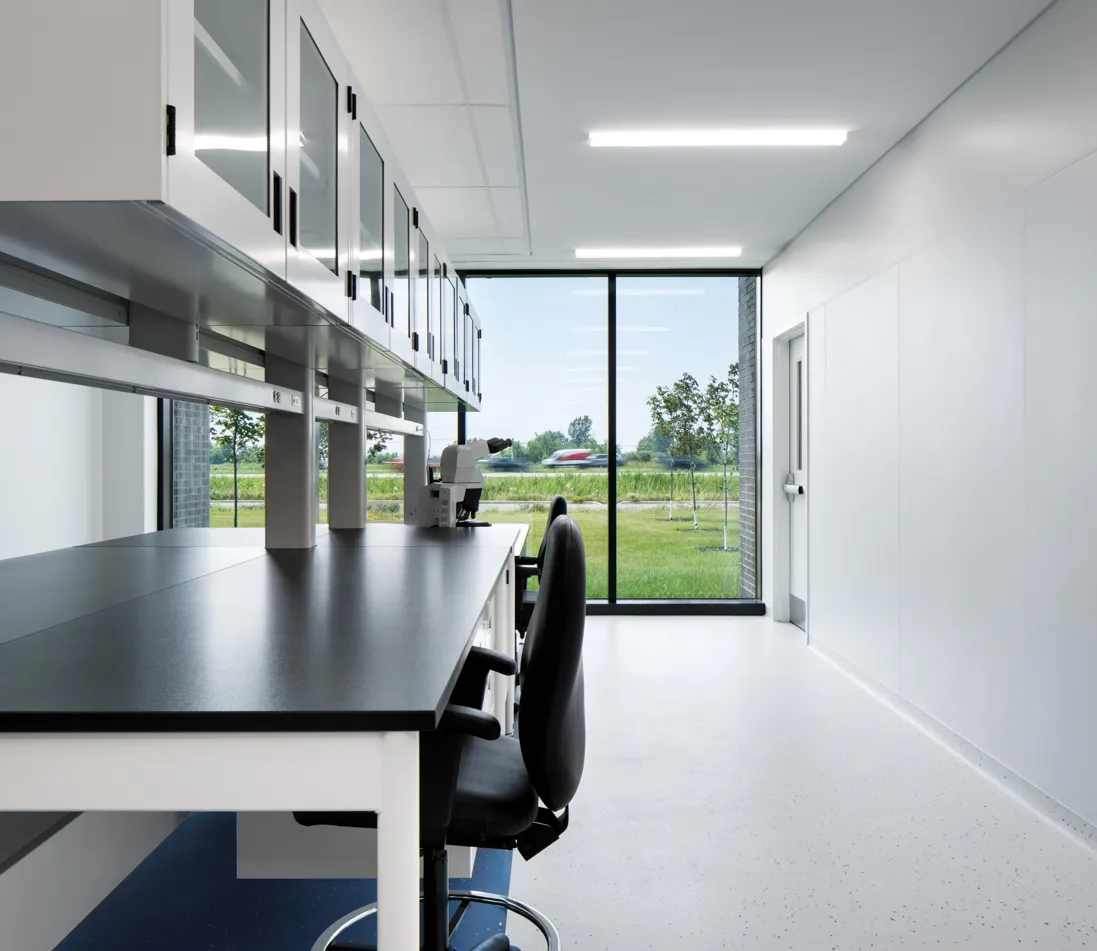
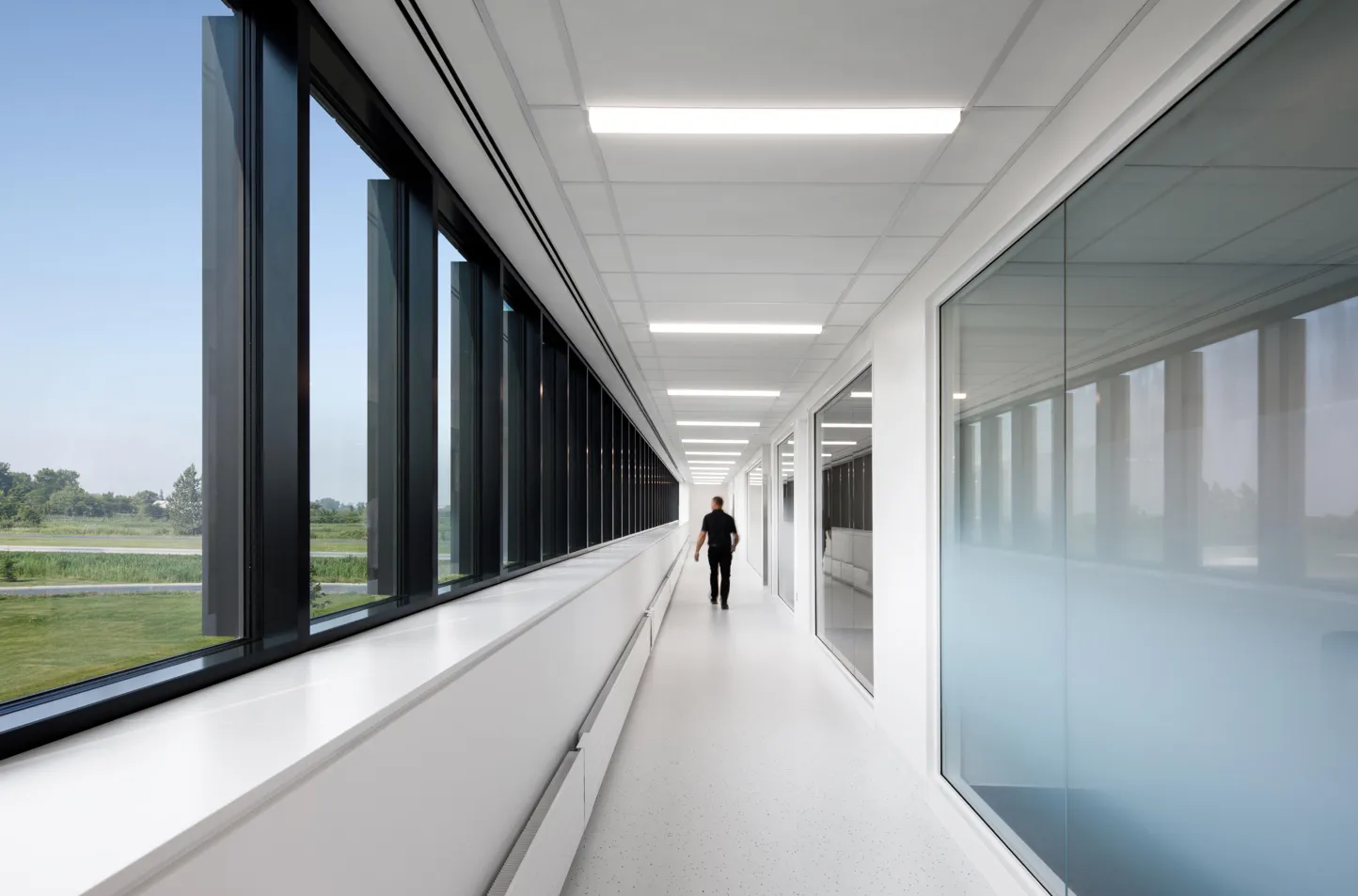
Natural Light: Ribbon windows and glass openings wrap around the building, opening the laboratories to the surrounding landscape and flooding the halls with daylight.
Visual Connections: These glass elements do more than let in light; they provide visual cues that help staff orient themselves within the large facility.
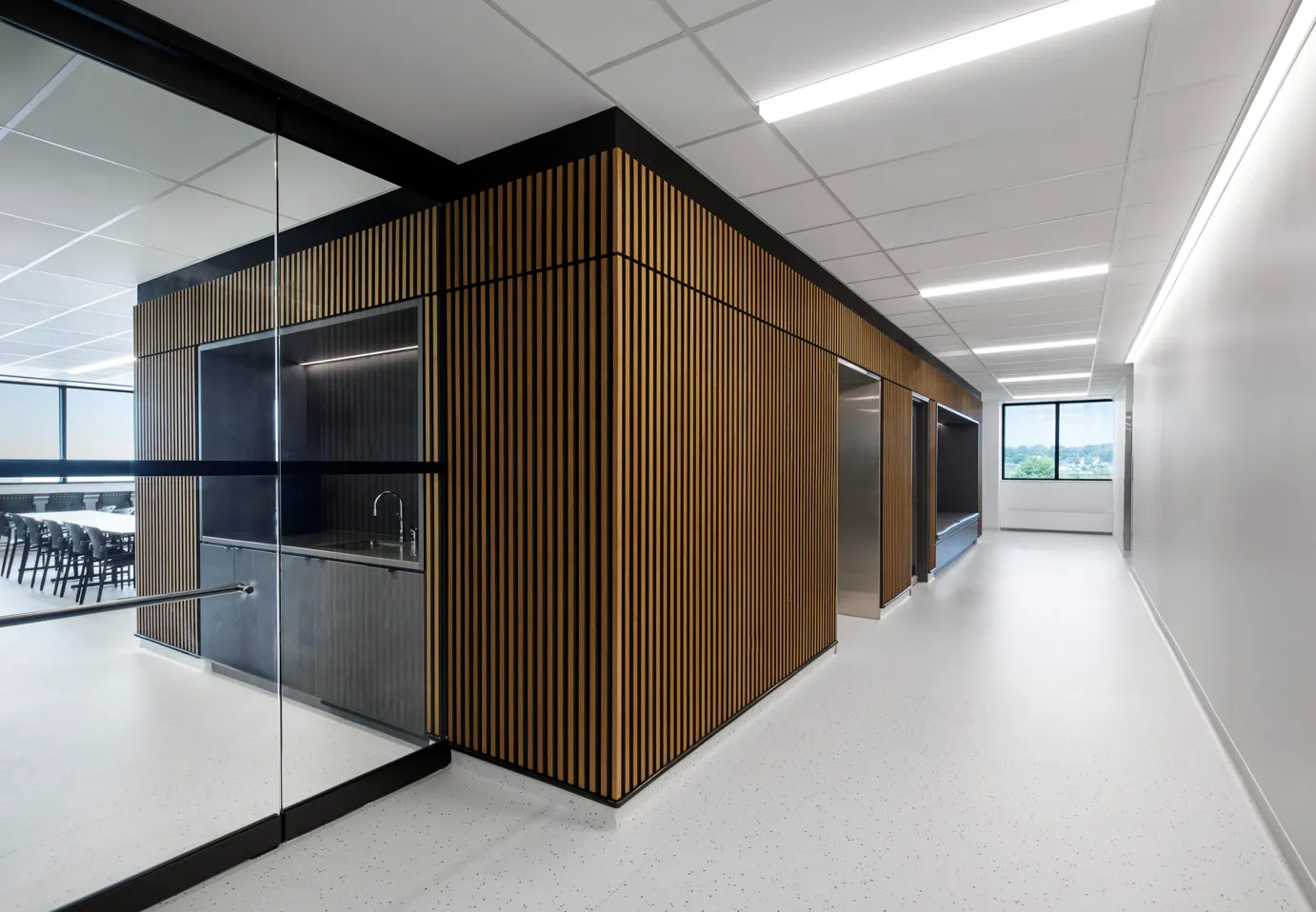
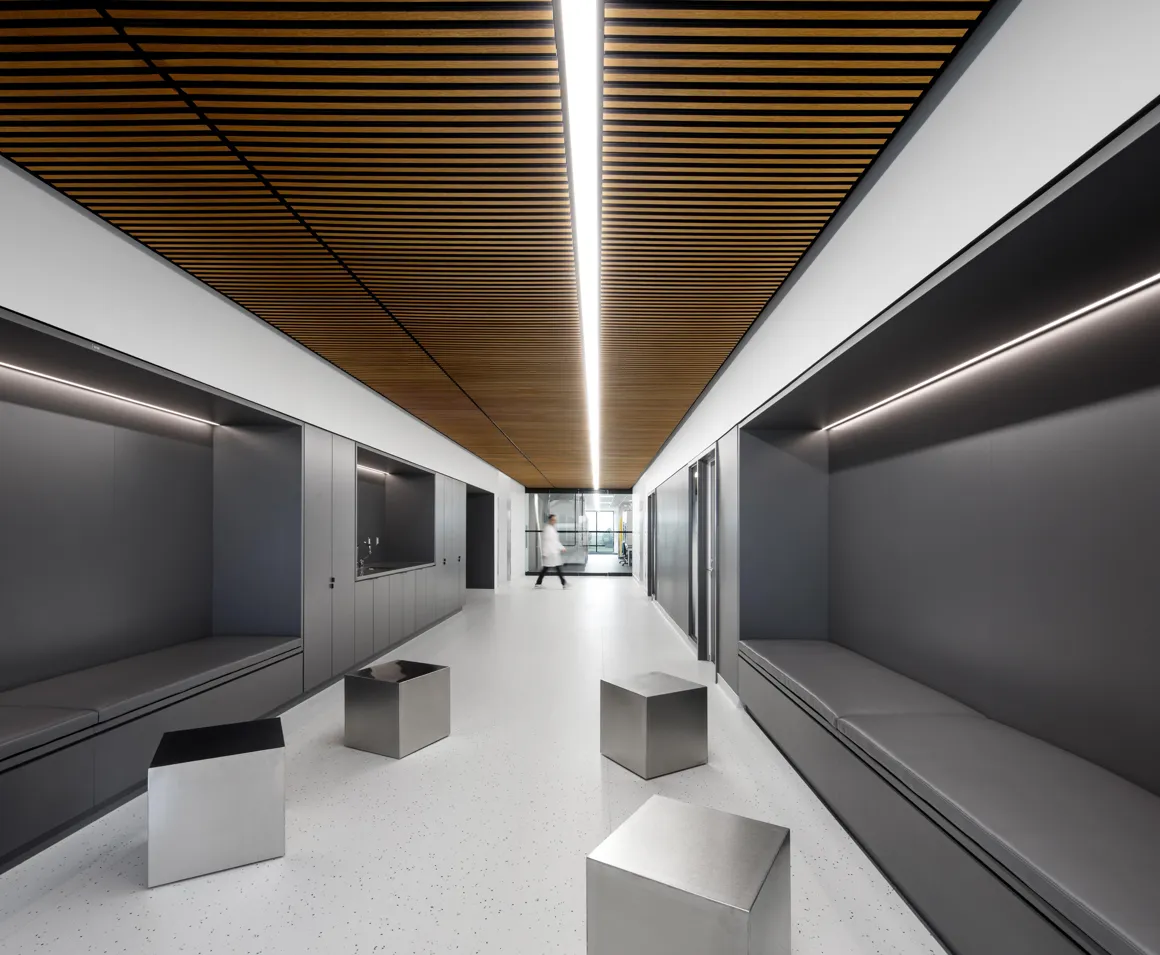
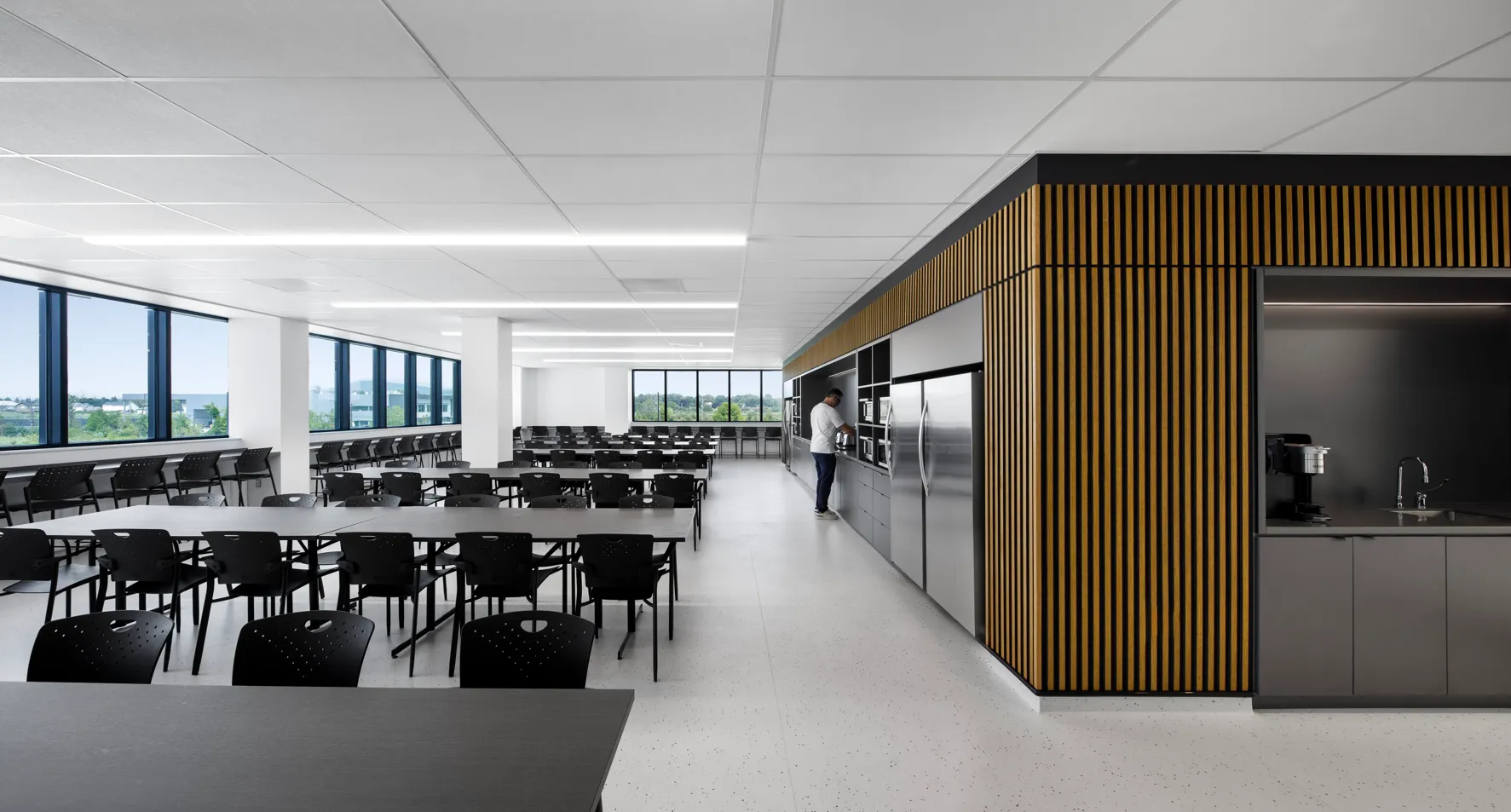
Warmth in Detail: To balance the clinical nature of the equipment, areas dedicated to staff use warmer materials like wood, creating a sense of respite and encouraging collaboration.
Sleek New Biomedical Lab. Image courtesy of: Stéphane Brügger
Sleek New Biomedical Lab. Image courtesy of: Stéphane Brügger
Sleek New Biomedical Lab. Image courtesy of: Stéphane Brügger
Sleek New Biomedical Lab. Image courtesy of: Stéphane Brügger
Sleek New Biomedical Lab. Image courtesy of: Stéphane Brügger
Sleek New Biomedical Lab. Image courtesy of: Stéphane Brügger
Sleek New Biomedical Lab. Image courtesy of: Stéphane Brügger
Sleek New Biomedical Lab. Image courtesy of: Stéphane Brügger
Sleek New Biomedical Lab. Image courtesy of: Stéphane Brügger
Sustainability Through Discipline
The laboratory’s environmental performance isn't the result of trendy gadgets, but of a disciplined architectural philosophy. By focusing on compactness, durability, and reduction, the project naturally lowers its footprint.
Key green features include:
High-Performance Envelope: A tightly sealed exterior that maintains thermal comfort.
Geothermal Energy: Utilizing the earth's natural temperature for heating and cooling.
Long-Lasting Materials: Choosing brick for its low carbon footprint and its ability to age gracefully over decades.
Built for the Future
The Montérégie Central Laboratory isn't just smart in its layout; it’s also highly sustainable. Rather than slapping on flashy green technology as an afterthought, the building’s eco-friendly nature is baked right into its core.
Its compact shape naturally saves energy, while high-performance windows, geothermal heating, and smart heat-recovery systems keep energy demands incredibly low year-round. Outside, the landscaping features rain gardens and retention basins that manage water naturally.
Perhaps its greatest sustainable feature is its flexibility. The open, well-lit spaces are designed to easily adapt as medical technology evolves over the years.
Between territorial logic, technical precision, and spatial quality, the project demonstrates how rigour itself can become an architectural language.
Sleek New Biomedical Lab. Image courtesy of: James Brittain
Sleek New Biomedical Lab. Image courtesy of: James Brittain
Sleek New Biomedical Lab. Image courtesy of: James Brittain
Ultimately, the Montérégie Central Laboratory demonstrates that rigour itself can become an architectural language. By treating technical requirements as a creative challenge rather than a limitation, the team has created a space that is as flexible as it is solid—a building ready to adapt to the future of medical science while providing a high-quality environment for the people who power it.
Founded in 1995, Archi– is a Montreal-based architectural firm that places the "program"—the specific function and needs of a building—at the absolute center of its creative process. Their approach is defined by a pursuit of clarity, creating architecture that is self-evident, essential, and easy to understand. Rather than relying on superficial trends, they find beauty in the internal logic of a project, where flow, site context, and technical precision dictate the final form.
Specializing in complex institutional and industrial projects, Archi– has become a master of "monolithic" architecture—designs that feel solid, durable, and grounded. Their work is characterized by a "formal economy," meaning every gesture serves a purpose, whether it’s a subtle shift in volume to create movement or a strategically placed window to guide natural light. By balancing high-performance technical requirements with a deep sensitivity to the human experience, Archi– creates spaces that are as functional as they are poetic. For them, rigour isn’t a constraint; it is the very language that makes a building timeless.
Established in 1912, NFOE is a prominent Montreal-based architectural firm with over a century of expertise in designing complex, high-performance facilities. As one of Canada’s most enduring practices, NFOE has carved out a specialized niche in the science, technology, healthcare, and industrial sectors. They are widely recognized for their ability to master intricate technical programs, ranging from cutting-edge pharmaceutical plants and vaccine facilities (such as Moderna) to advanced university research hubs and integrated cancer treatment centers.
Their philosophy centers on "inspiring designs and innovative solutions," achieved through a deeply collaborative approach. With a team of over 120 professionals across offices in Montreal, Laval, and Quebec City, NFOE balances the rigorous demands of biosafety, laboratory flow, and technical infrastructure with a commitment to sustainable, LEED-certified design. For NFOE, architecture is a tool to solve complex human and scientific challenges, resulting in spaces that are as functional as they are visionary.
Medical laboratories are often defined entirely by their complex, technical needs, leaving little room for architectural beauty. However, the new Montérégie Central Laboratory in Quebec completely rewrites that rule. Designed by the architectural firms NFOE and Archi–, this cutting-edge facility proves that high-tech infrastructure can be surprisingly elegant.
Keeping a pulse on design shifts is essential for curating a modern space. Whether one is planning a complete renovation or a simple room refresh, understanding the latest aesthetic movements ensures that a space feels current rather than dated. This year, the focus is firmly on timeless elegance, historic architectural charm, and deep personalization.
Gabriel Fain Architects provides a brilliant answer with the Montrose Sixplex. Completed in 2026, this six-unit rental housing project in Toronto shows how smart design can gracefully add homes to a community while perfectly matching its existing character.
If her personality were a piece of furniture, she says she would be a big, wooden kitchen table. It is a fitting metaphor for an interior designer whose ultimate goal is to be approachable, comforting, and a unifying force for the people around her. For this designer, creating a beautiful home is not just about picking the right paint colour; it is about bringing people together through intentional, thoughtful design.
The renowned architecture and design firm Provencher_Roy is taking a major step to support the future of the built environment. The firm recently announced the launch of the Claude-Provencher Excellence Scholarship, an annual initiative designed to empower emerging talent in architecture and related design fields. Image courtesy of: Provencher_Roy Created to honour the profound legacy of co-founder Claude Provencher (1949–2022)—a leading figure in Canadian architecture—the sc
In the high-stakes world of hospitality renovations, the clock is just as critical as the aesthetics. Every delayed shipment and missed deadline translates directly to lost revenue and operational headaches. However, through the meticulous execution demonstrated by Kabana Group in this project, a large-scale renovation breathes new life into a property, elevating its market position and thrilling its guests.
Standing 302 metres tall, just a stone's throw from the Burj Khalifa, a striking new silhouette has officially joined the bustling heart of Dubai. Completed in late 2025, Wasl Tower is far more than just another glass skyscraper.
In the world of modern interiors, "perfect" can sometimes feel a little cold. We’ve grown accustomed to factory-precise finishes and ultra-glossy surfaces that look great in photos but lack a certain soul. Clayhaus Modern Tile, the Portland-based studio known for its bold shapes and vibrant colours, is challenging that sterile perfection with its newest release: The Caldera Collection.