

Quayside: How Toronto is Pivoting to Build More Housing, Faster
- Jan 4
- 2 min read
Updated: Jan 5
Quayside is one of the most significant housing projects in Toronto’s history. It isn't just a development; it is a long-term vision to transform the waterfront into an inclusive, sustainable, and vibrant community.

While the housing crisis has stalled many projects across the city, Waterfront Toronto and its partners are shifting strategies to ensure Quayside stays on track. Here is what’s next for this landmark project and how the plans have evolved to meet today’s economic realities.

1. The Housing Plan: Prioritizing Affordability and Rentals
In response to the current market, Quayside is accelerating its delivery of rental housing. By moving away from some of the original market condominium plans, Phase 1 will now deliver:
550 Affordable Rental Homes: This is roughly 100 more affordable units than originally proposed.
Family-Sized Units: An impressive 57% of these affordable homes will be 2, 3, or 4 bedrooms.
1,100 Purpose-Built Rentals: Replacing a large portion of market-rate condos to provide long-term housing security.
The Timeline: Construction is expected to begin in 2026, with the first residents projected to move in by 2031.
2. Design Evolution: From One Tower to Two
Originally, a single 67-storey tower was proposed for the corner of Bonnycastle and Lake Shore. However, current market conditions make such a massive, single-phase launch difficult.
The new strategy splits this block into two separate buildings. Lead architect Alison Brooks sees this as a design win, allowing for a more dynamic architectural concept than the original single-tower vision.

3. A Focus on Sustainability & Innovation
Quayside remains committed to being a zero-fossil fuel, zero-carbon certified community. While the project has moved away from the initial "mass timber" design for certain mid-rise buildings to ensure faster, more cost-effective delivery of 100% affordable housing, the environmental goals remain unchanged:
Carbon-free heating and cooling systems.
Low-carbon building materials.
Proven construction techniques to ensure units are delivered without delay.
4. Community and Public Space
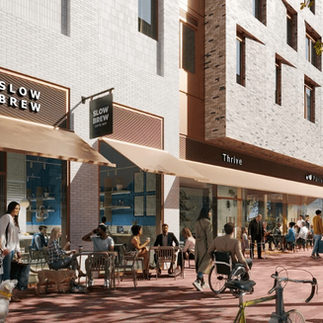
At the "green heart" of Quayside is the Community Forest. This will be one of Toronto’s largest privately owned public spaces, designed by SLA to offer a lush escape from the city. Other community features include:
A New Community Hub: Featuring a childcare centre and health/wellness services.
Rooftop Urban Garden: A space for agricultural education and farm-to-table partnerships.
Indigenous Design: Guided by Two Row Architect to ensure the revitalization respects and reflects the land's history.



What’s Next?
The project is now moving through the City of Toronto’s site plan approval process and pursuing zoning amendments for the market condominium sites. As designs for the buildings and public spaces evolve, public engagement will continue to play a vital role.
Quayside is proof that even in a challenging economy, ambitious city-building can move forward through collaboration and a willingness to adapt.
Reference: Waterfront


