Montreal’s Centre Sanaaq: An Urban Archipelago for a Changing Downtown
- Jan 4
- 3 min read
Updated: Jan 5
In the heart of Montreal’s Peter-McGill district, a new kind of civic institution has emerged—one that challenges the traditional boundaries between library, gallery, and town hall. Centre Sanaaq, a 5,310-square-metre "civic hub", occupies the podium levels of a high-rise complex on the former site of the Montreal Children’s Hospital.

While the residential towers above speak to the city’s dense vertical growth, the Centre at their base speaks to its social soul.
Designed through a multidisciplinary collaboration between Pelletier de Fontenay, Architecture49, and Atelier Zébulon Perron, the project is less a building and more a "public system"—an indoor extension of the sidewalk designed to evolve alongside its community.
The Spirit of "Sanaaq": Creation and Resilience
The name "Sanaaq" carries deep historical and cultural weight. It is taken from the protagonist of a landmark 1950s novel by Inuk author Mitiarjuk Attasie Nappaaluk, the first novel ever written in Inuktitut. The root word sana means to create, work, or sculpt. By adopting this name, the Centre honours the Inuit population of Montreal—a community that has long been underserved in the downtown core.
This spirit of "making" is embedded in every corner of the facility. Beyond its 84,000-item library collection, the hub features a culinary laboratory for community cooking, a Medialab-Musilab for digital creation, and a 255-seat black-box theatre. It is a place where culture is not just archived, but actively produced.

Architecture as an "Archipelago"
The architects avoided the rigid, hallway-driven layouts of 20th-century community centers. Instead, they conceived the interior as an "archipelago of islands".
The Ground Floor "Agora": This central gathering space acts as a social crossroads, linking a vibrant café (operated by the social enterprise L'Itinéraire) to the performance hall and "express" library.
The Light-Filled Staircase: A generous, wide staircase serves as a vertical transition, drawing natural light deep into the building and inviting visitors to the upper level.
The Upper Sanctuary: The second floor houses the primary library collections, wrapping around a central mezzanine that maintains a visual connection to the bustling agora below. Here, quieter zones for study coexist with a dedicated "family drop-in" area and a children's play space.
A Material Collage: Rawness and Warmth
The designers adopted "collage" as their primary architectural language. The goal was to create a space that felt "democratic and accessible"—not a cold institution, but a warm, lived-in environment.
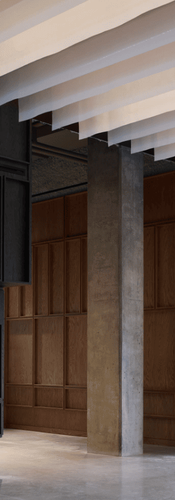
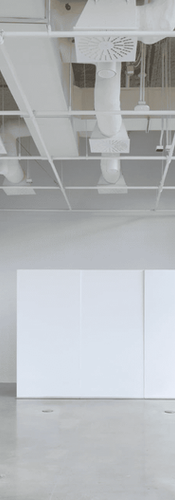
Industrial Honesty: Polished concrete floors and aluminum grating provide durability for high-traffic public use.
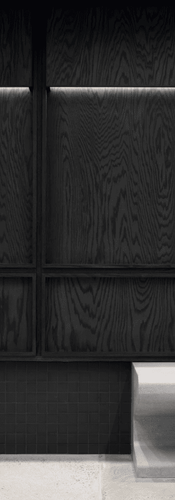
Tactile Warmth: To balance the raw industrial elements, the team used generous amounts of Canadian wood panelling and soft textiles.
Acoustic Engineering: Managing the sound in such a vast, open-plan space was a primary challenge. The solution was a sophisticated mix of coffered wood ceilings, suspended fabric panels, and exposed sprayed cellulose, which provides bio-based sound absorption while adding a unique texture to the ceiling heights.