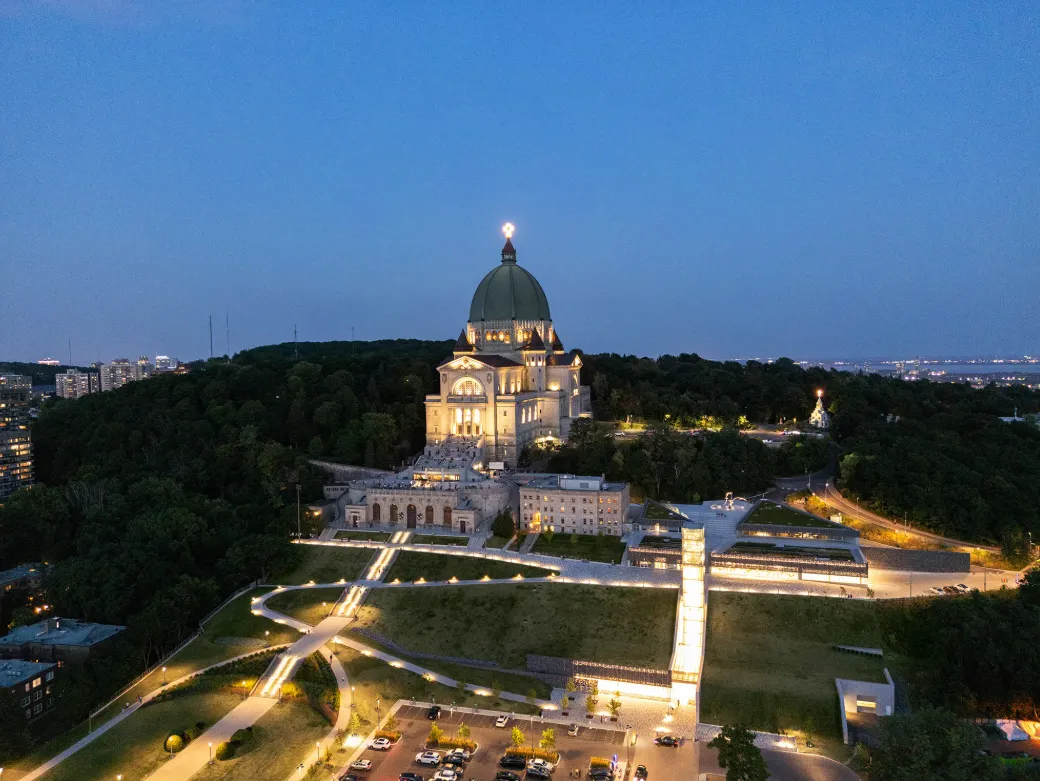
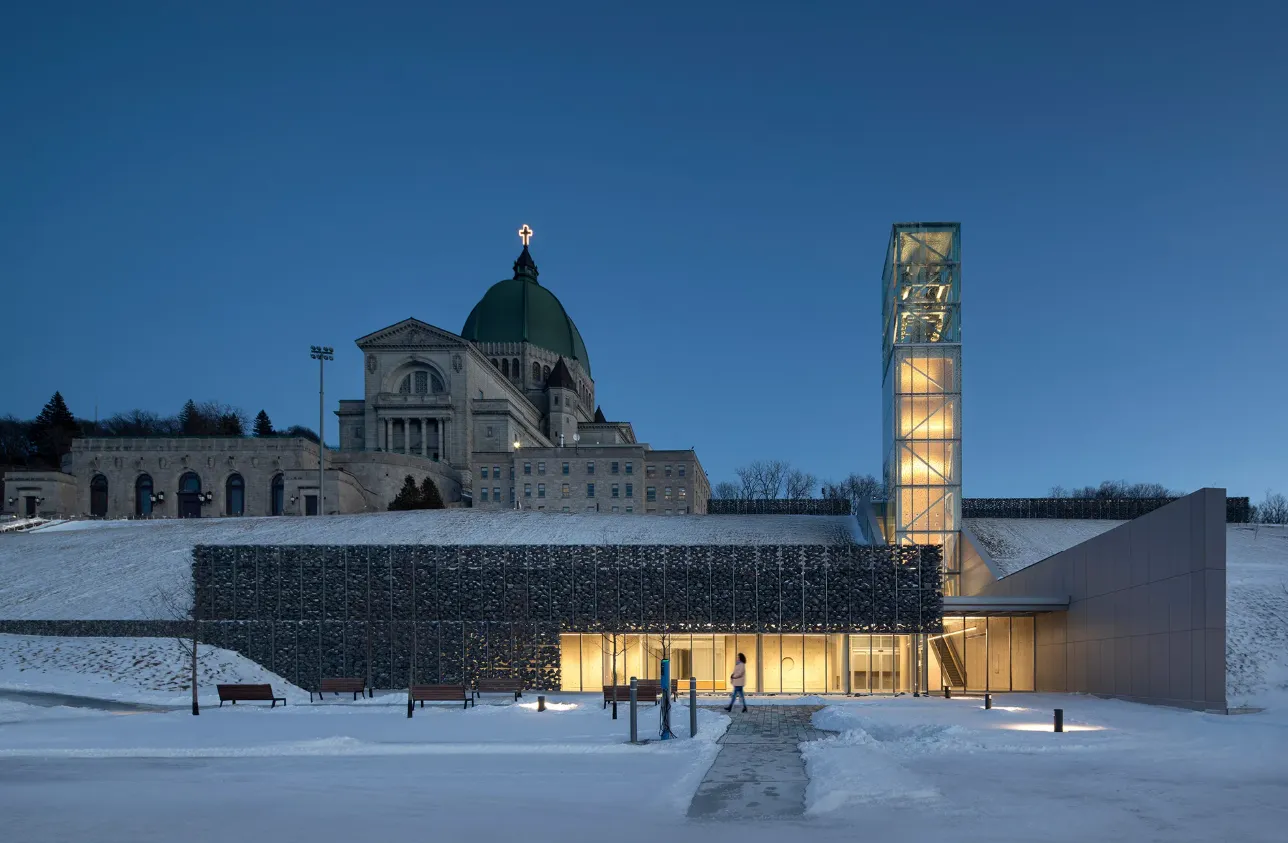
Saint Joseph’s Oratory of Mount Royal, Montreal’s most iconic spiritual landmark, has unveiled a transformative new pavilion. Designed by the architecture firm Lemay, this four-storey intervention creates a seamless connection between the city, the mountain, and the basilica.
As part of a master plan initiated in 2000, the project reinterprets the pilgrimage experience for the 2 million visitors who visit the site annually. By blending heritage with contemporary design, the pavilion improves universal accessibility while acting as a sanctuary where architecture, nature, and devotion intersect.
Before delving into the narrative of this iconic transformation, it is essential to recognize the diverse team of experts whose collaboration brought this vision to life. A project of this magnitude, blending heritage with modernity, is the result of a shared commitment to excellence by the following project team:
Architecture: Lemay
Landscape Architecture: Version Paysage
Mechanical & Electrical Engineering: BPA
Structural Engineering: ELEMA experts-conseils
Civil Engineering: MHA
Construction Manager: Pomerleau
Vertical Transportation Consultant: KJA
Carillon Consultant: Patrick Macoska
Exterior Lighting: Ombrages
A Contemporary Pilgrimage
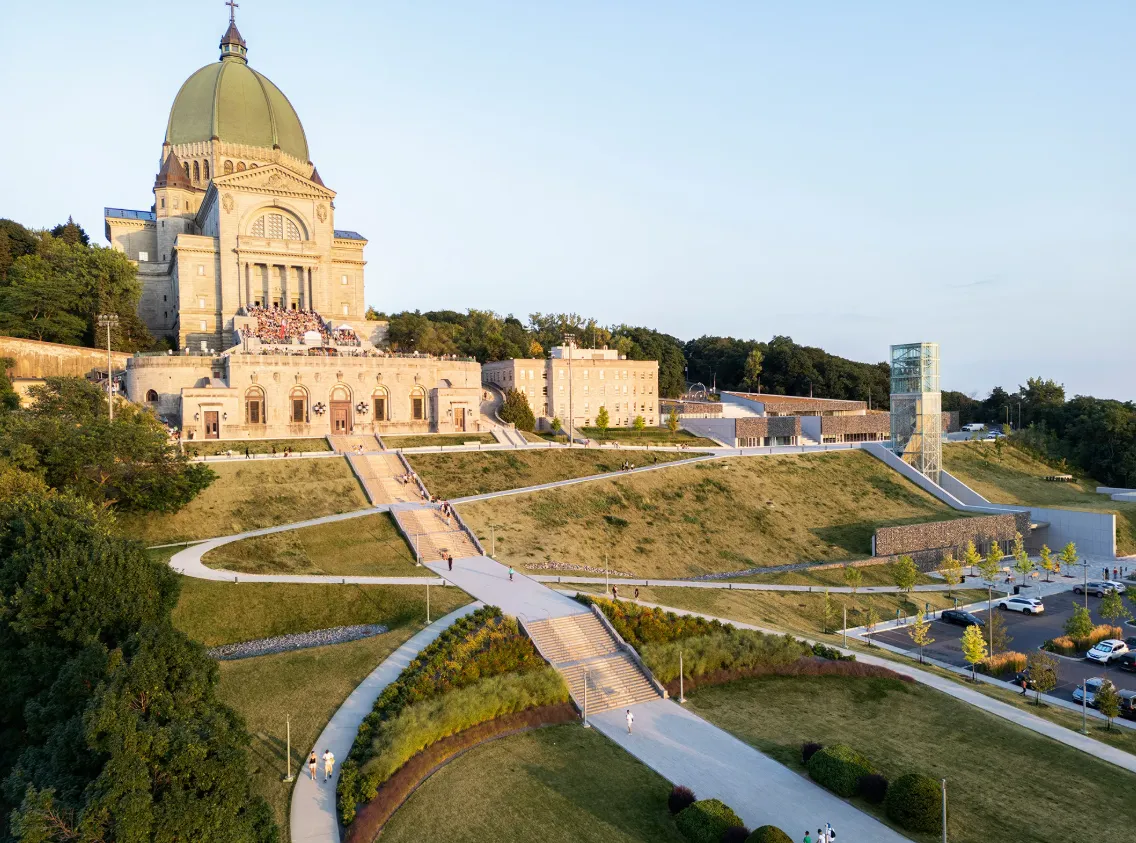
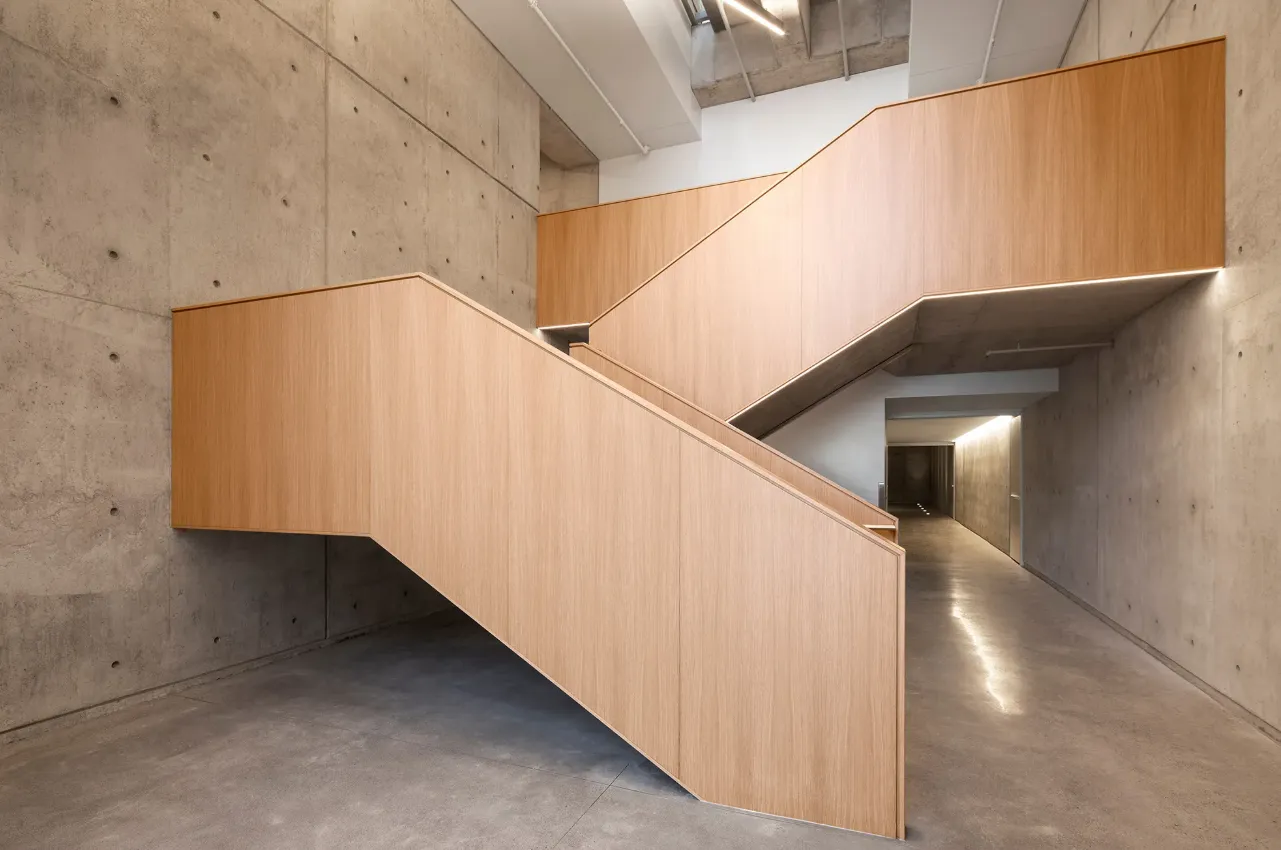
The primary concept driving the design is "ascension." The pavilion does not sit on the landscape but rather within it. Rooted in the topography of Mount Royal, the structure climbs the upper slopes of the mountain park, creating a sequence of spaces that mirror the traditional pilgrim’s journey.
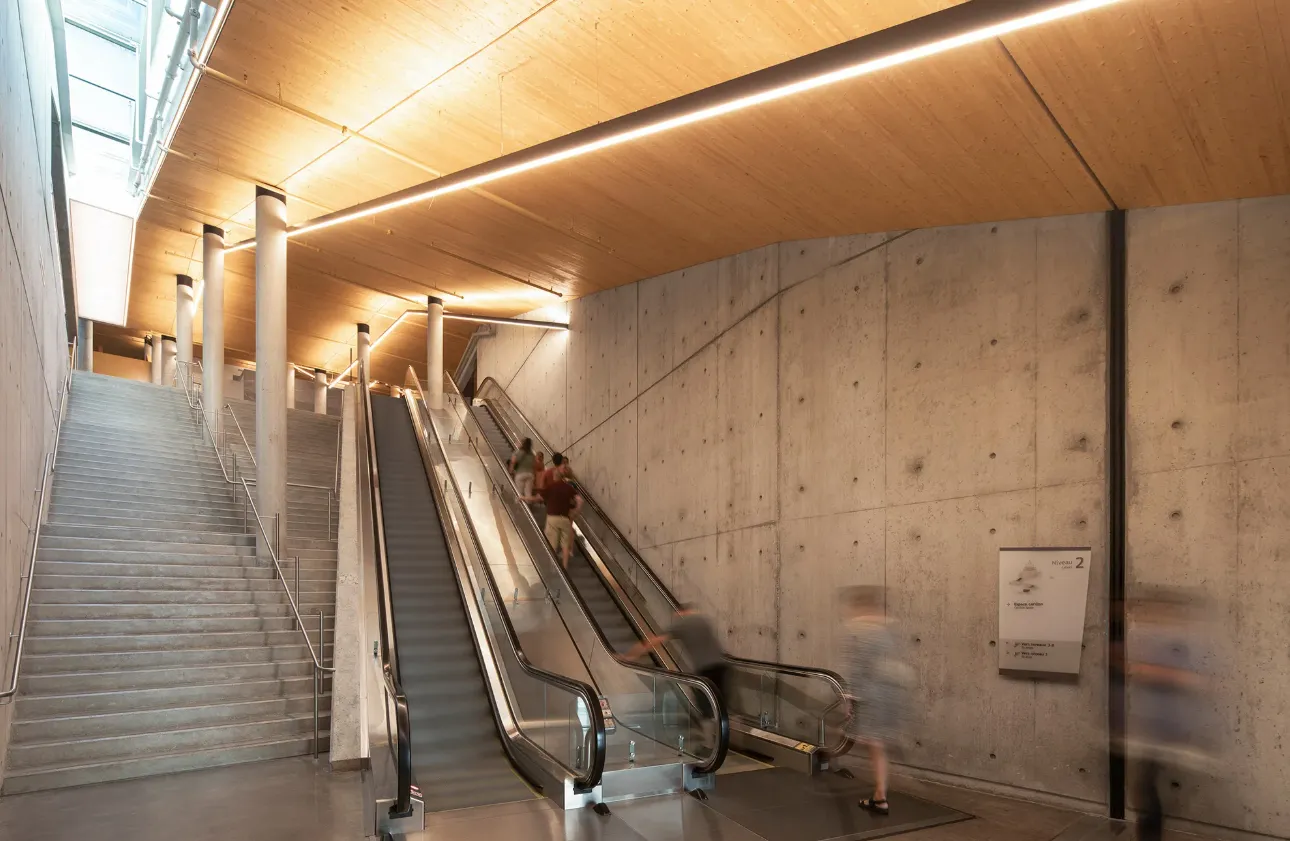
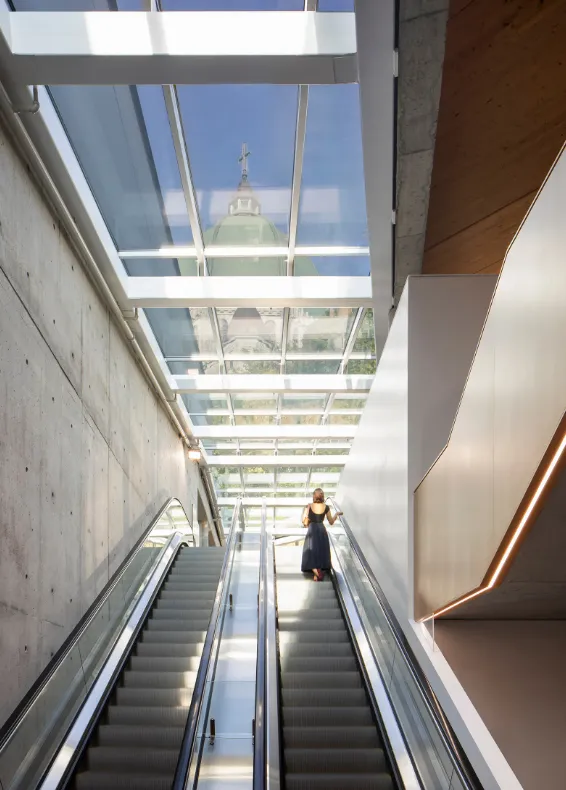
By dissolving the notion of a single entrance, the design creates a calibrated progression through space. Visitors move through a succession of interior and exterior thresholds—ramps, stairs, and elevators—that extend the ceremonial ascent. This approach transforms circulation into an experiential narrative, allowing different modes of movement to converge naturally. The result is an inclusive circulation system that maintains a calm spatial order rooted in procession rather than congestion.
The Carillon: A New Landmark
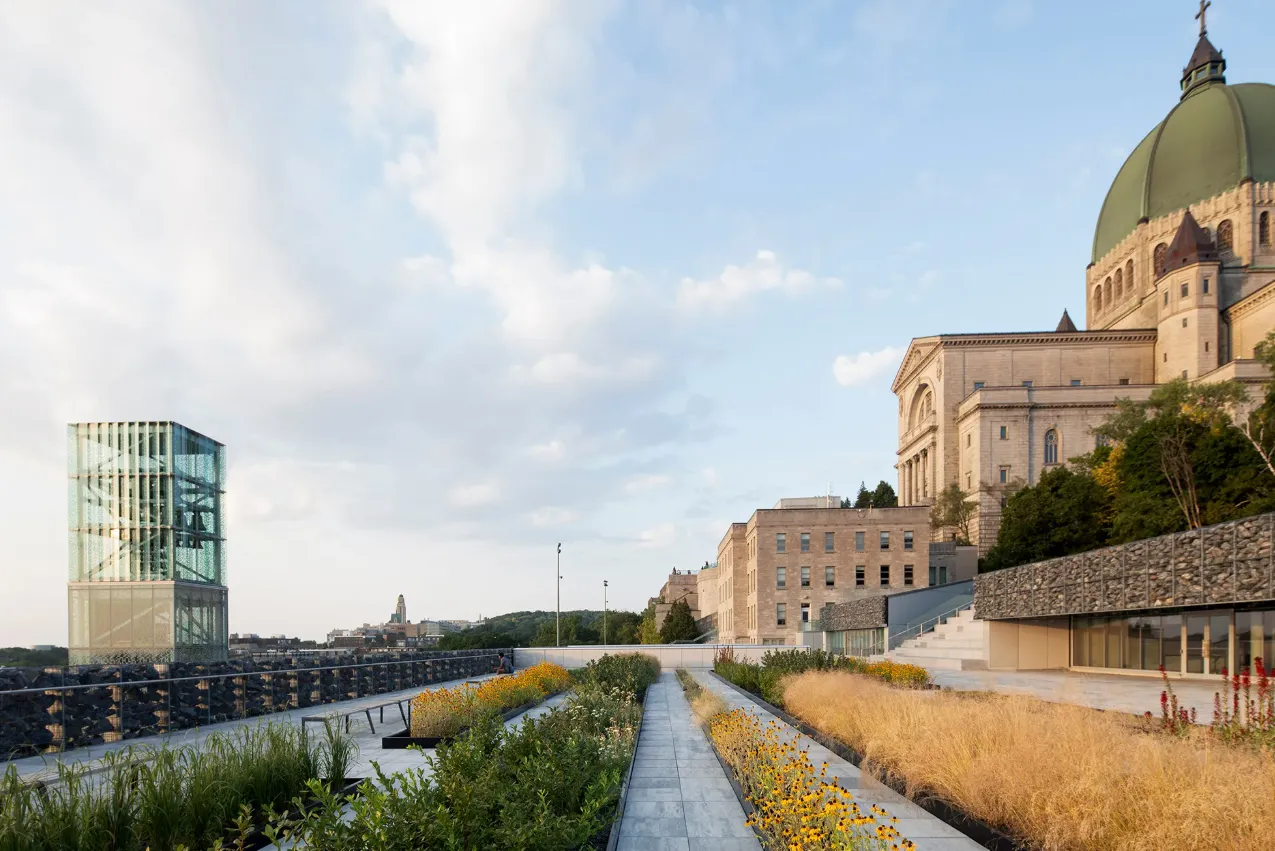
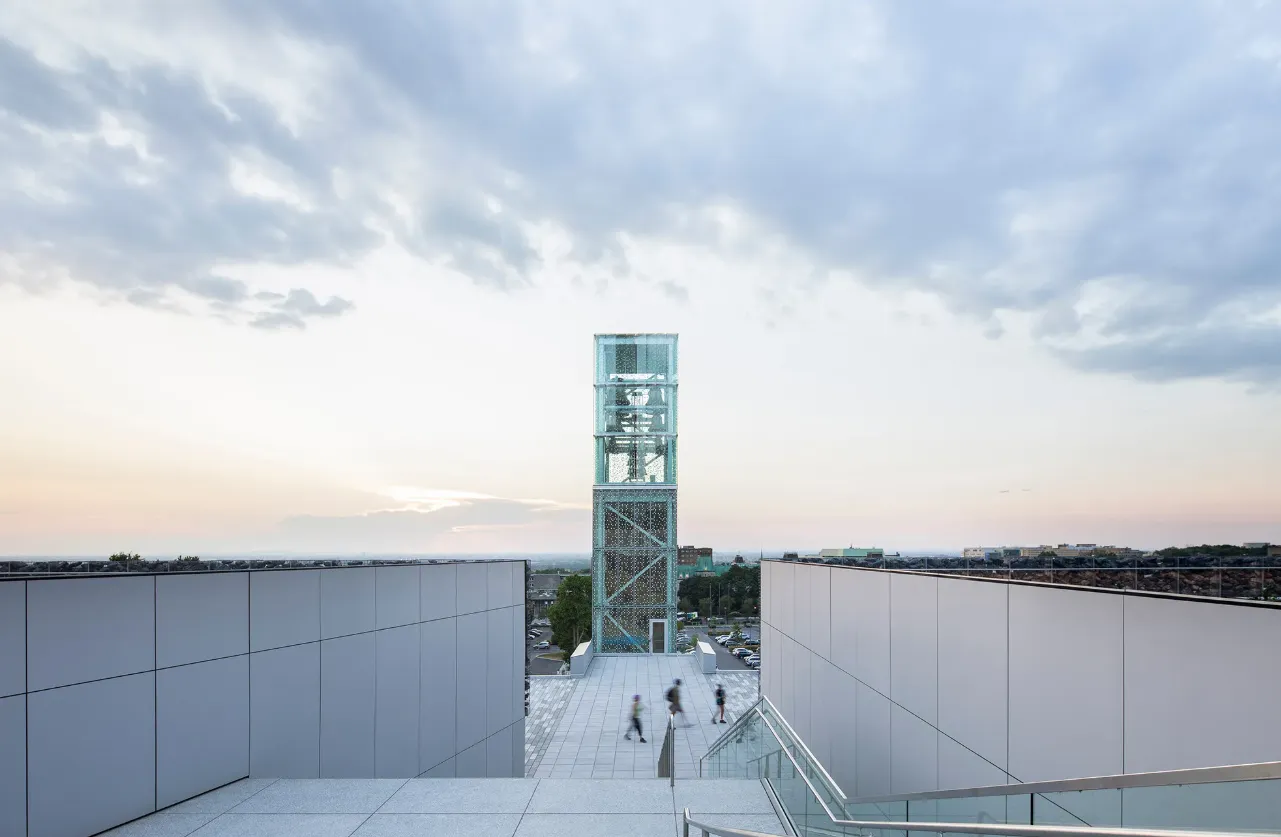
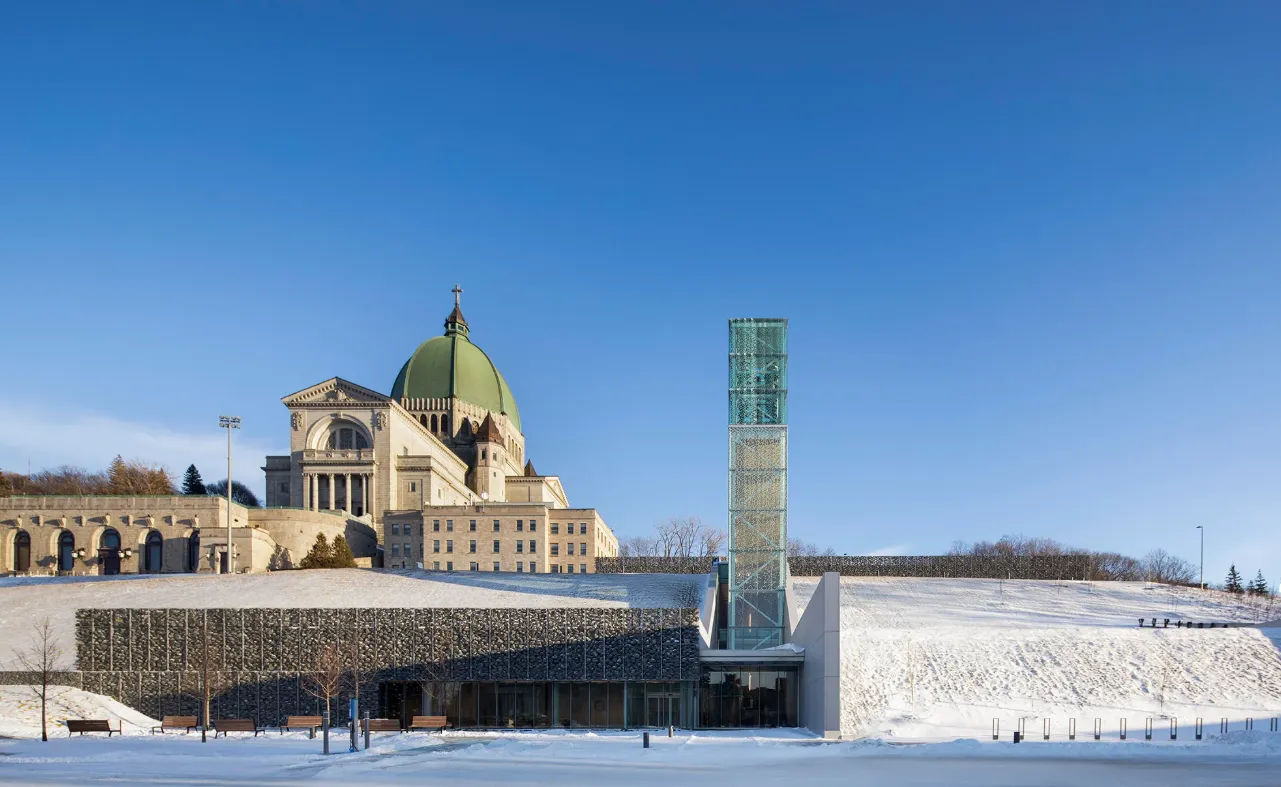
At the heart of this transformation stands a new bell tower, a vertical landmark that pays homage to Montreal’s identity as the "city of a hundred bell towers."
This structure houses a restored 62-bell carillon, serving as both a visual icon and a musical instrument for the Oratory. The bells, which have echoed across Mount Royal for decades, now act as an auditory guide. As the chimes resonate, they mark the rhythm of passage, creating a multi-sensory immersion that deepens the spiritual journey.
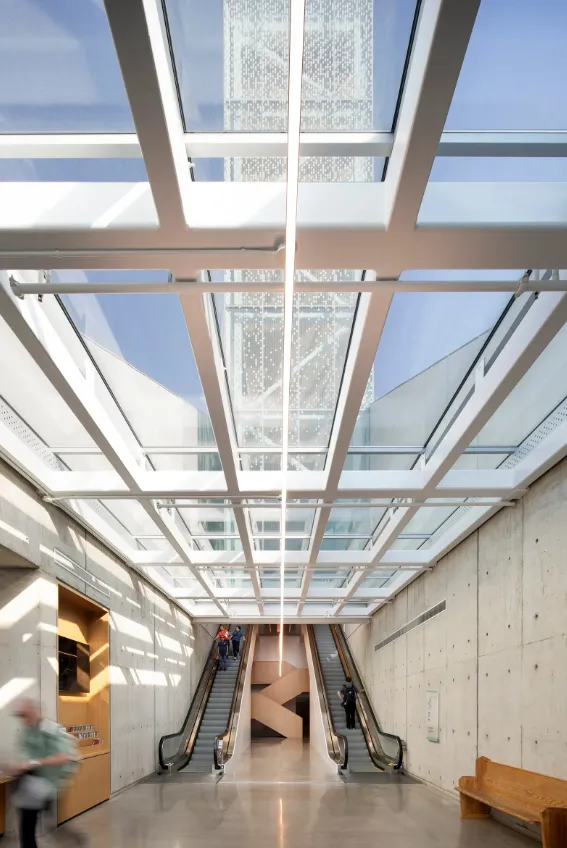
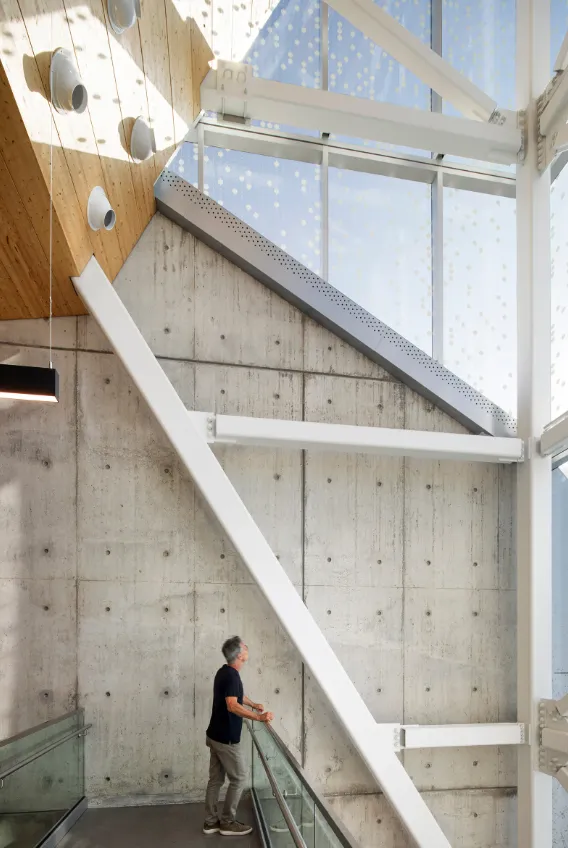
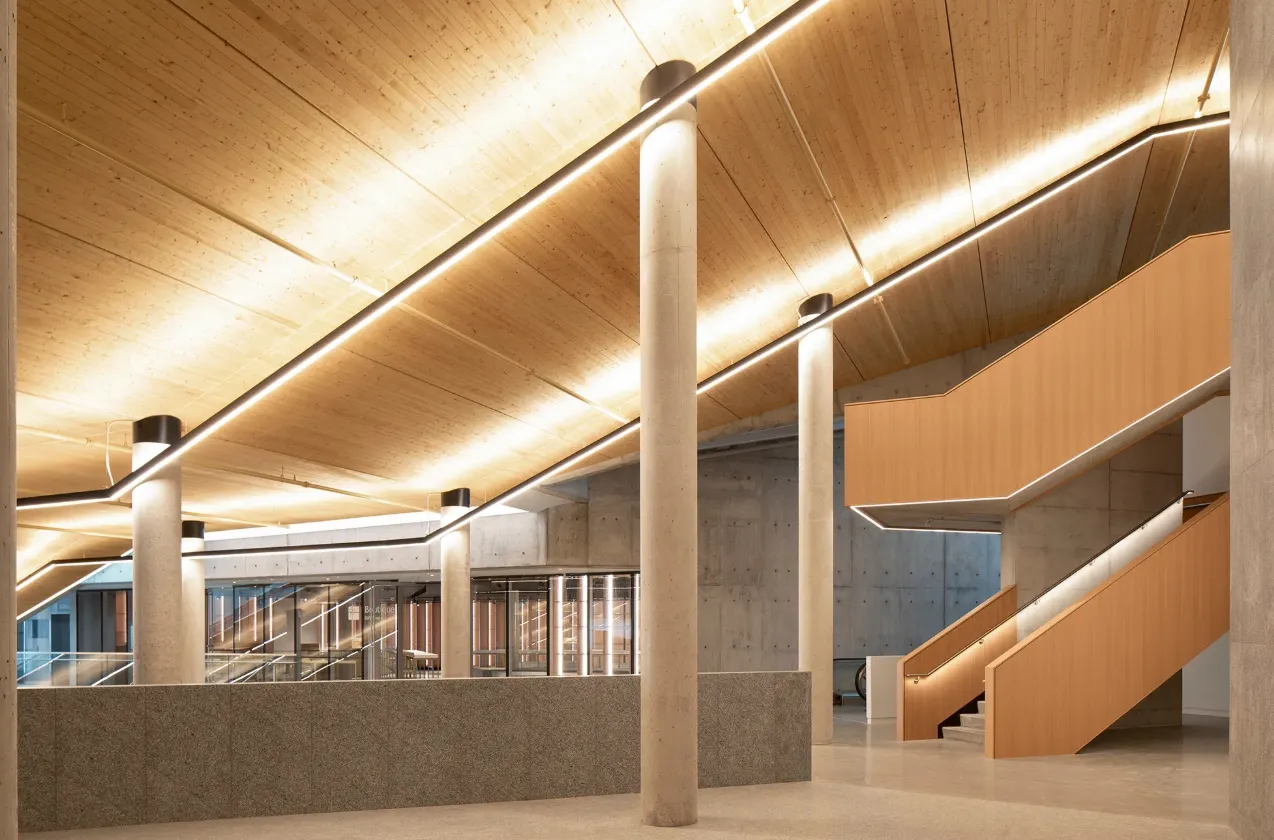
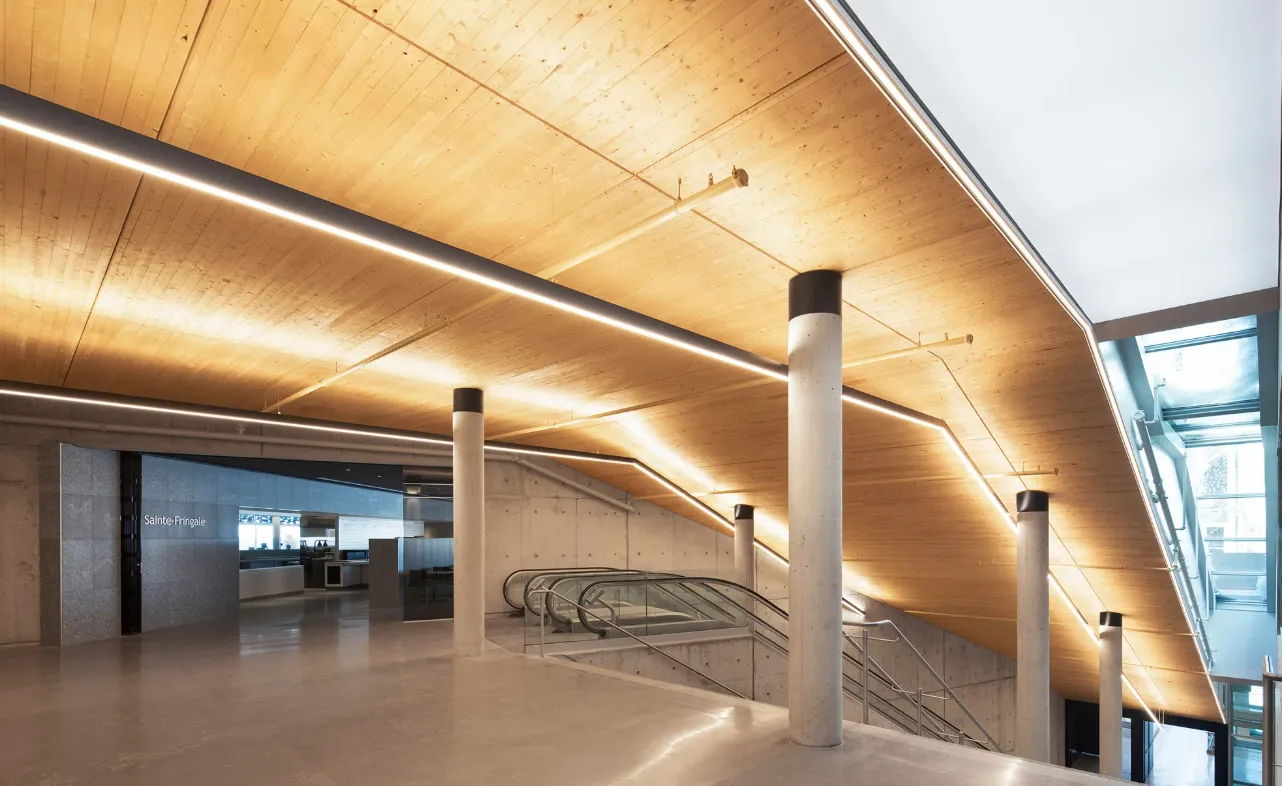
The tower’s verticality is balanced by the pavilion’s low, elongated stance. Its design features a delicate balance of wood and glass, creating an ethereal atmosphere. Glass surfaces soften the transition between interior and exterior, while wood introduces warmth at points of pause.
Materiality: Rooted in the Earth
The pavilion’s material palette is drawn directly from the mountain itself, reinforcing the dialogue between built and natural forms. A defining feature of the project is the use of gabion walls, constructed using stone excavated directly from the site.
These walls serve multiple purposes:
Tactile Density: They echo the solidity of the Oratory’s historic foundation.
Sustainability: They demonstrate a commitment to material reuse and recycling.
Light Filtration: Despite their mass, the walls allow daylight to filter through, producing a subdued interior glow that evokes the sacred quality of stained glass.
Inside, the pavilion is designed to evoke contemplation. Light is not merely functional but acts as a structural element of the experience. Skylights and luminous ceiling planes guide circulation and register the passing hours, establishing a subtle rhythm that corresponds with the site’s spiritual dimension.
The program encourages occupation and pause rather than continuous flow:
The Cafeteria: Positioned high within the volume, it offers panoramic views of the city, encouraging rest.
Sacred Gardens: Adjacent to the building, these exterior courts provide quiet spaces for reflection.
Public Squares: These areas frame views of the basilica dome and the surrounding context.
Sustainability and Landscape Integration
The project is LEED Silver certified, reflecting a deep commitment to environmental excellence. The architecture reads as an extension of the ground, carved and layered rather than imposed.
Key sustainable strategies include:
Green Roofs: Terraced rooftops replace former paved areas, acting as accessible plateaus that reduce the heat island effect and enhance biodiversity.
Thermal Performance: High-performance insulation and energy-efficient lighting/ventilation systems reduce the building’s carbon footprint while maintaining optimal indoor comfort.
Topographic Integration: The massing steps with the terrain, minimizing visual interference with the historic silhouette of the Oratory.
Through this new architectural approach, Lemay has struck a delicate balance between respecting cultural heritage and adapting to contemporary needs. The pavilion is not just a building; it is a threshold—a place of tranquillity, luminosity, and warmth. It stands as a respectful, modern identity on a site of immense value, welcoming all who seek contemplation, connection, and discovery on the slopes of Mount Royal.