Created by Studio Benu and Golshaah, the collection takes its name from the Mexico City neighbourhood that inspired it—Condesa, Spanish for “countess,” a word that evokes quiet strength, grace, and presence.
The collection began after a journey to Mexico City, where the founders—Neda Zavareh of Studio Benu and Golnar Ahmadian of Golshaah—found themselves deeply moved by the city’s architecture, artisanal traditions, and sculptural forms. Rather than translating these influences literally, Condesa interprets them through a contemporary lens, blending raw materiality with refined silhouettes.
At the heart of the collection is a recurring spherical motif. Soft curves, rounded volumes, and bulbous forms appear across the pieces—from mirrors and lighting to seating and tables—referencing both Mexican craftsmanship and the tactile language of sculpture. Each object balances weight and softness, grounding the design while maintaining an elegant visual lightness.
Materials play a central role in shaping Condesa’s identity. Solid oak, plaster-like finishes, ceramics, and textured fabrics are used intentionally, celebrating imperfection and the beauty of the handmade. The finishes are muted and earthy, allowing form and shadow to take precedence over ornamentation. Every piece is handcrafted in Canada and made to order, with customizable dimensions and finishes that allow each design to adapt seamlessly to its environment.
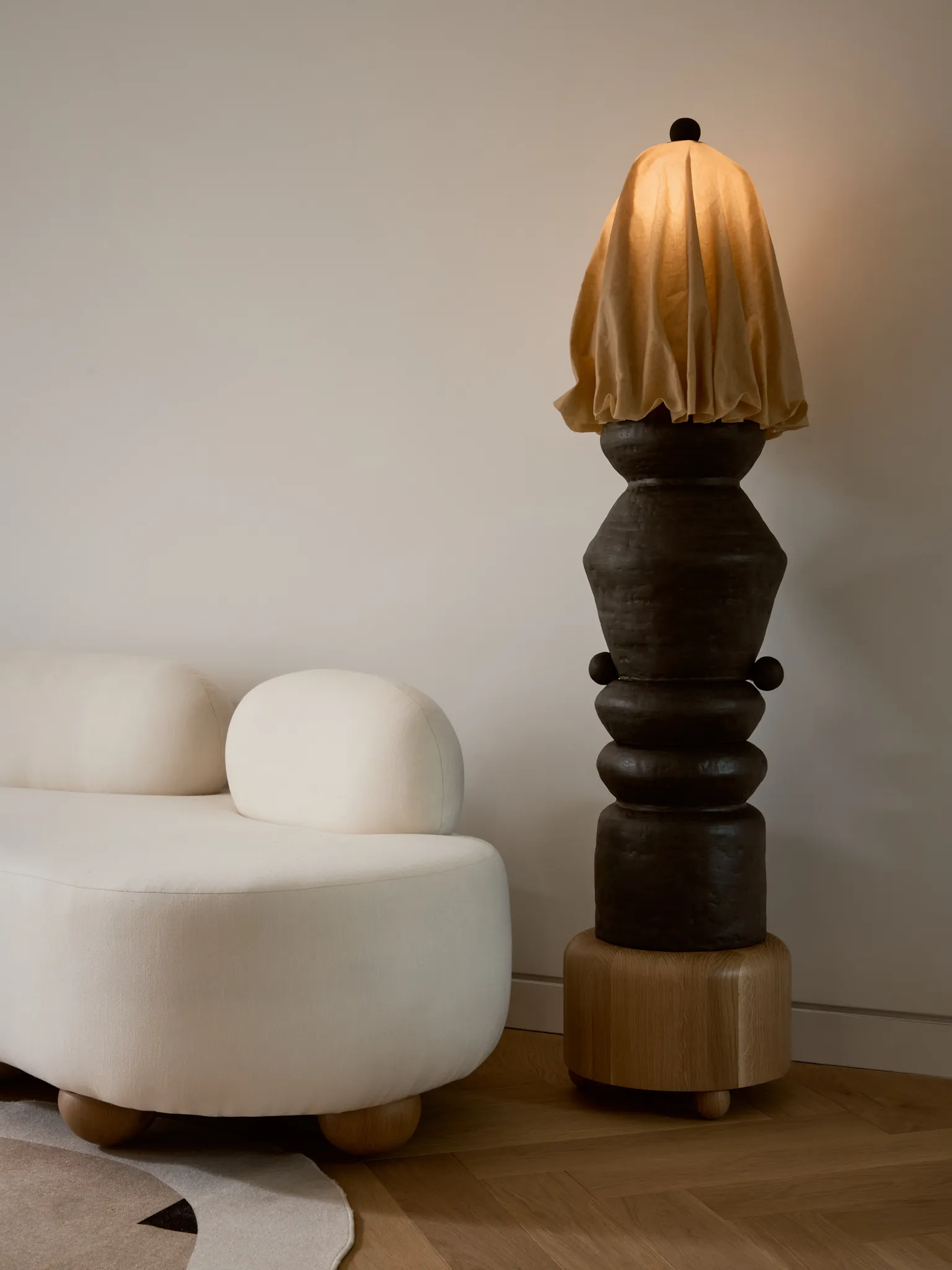
One of the most defining pieces in the collection is the floor lamp, which marked the beginning of the design process and proved to be the most technically challenging. Originally envisioned as a single sculptural ceramic form, its complexity led the designers to construct it in three distinct sections—an approach that preserved the integrity of the design while making production possible. The result is a piece that feels both monumental and intimate, reminiscent of a sculptural artifact.
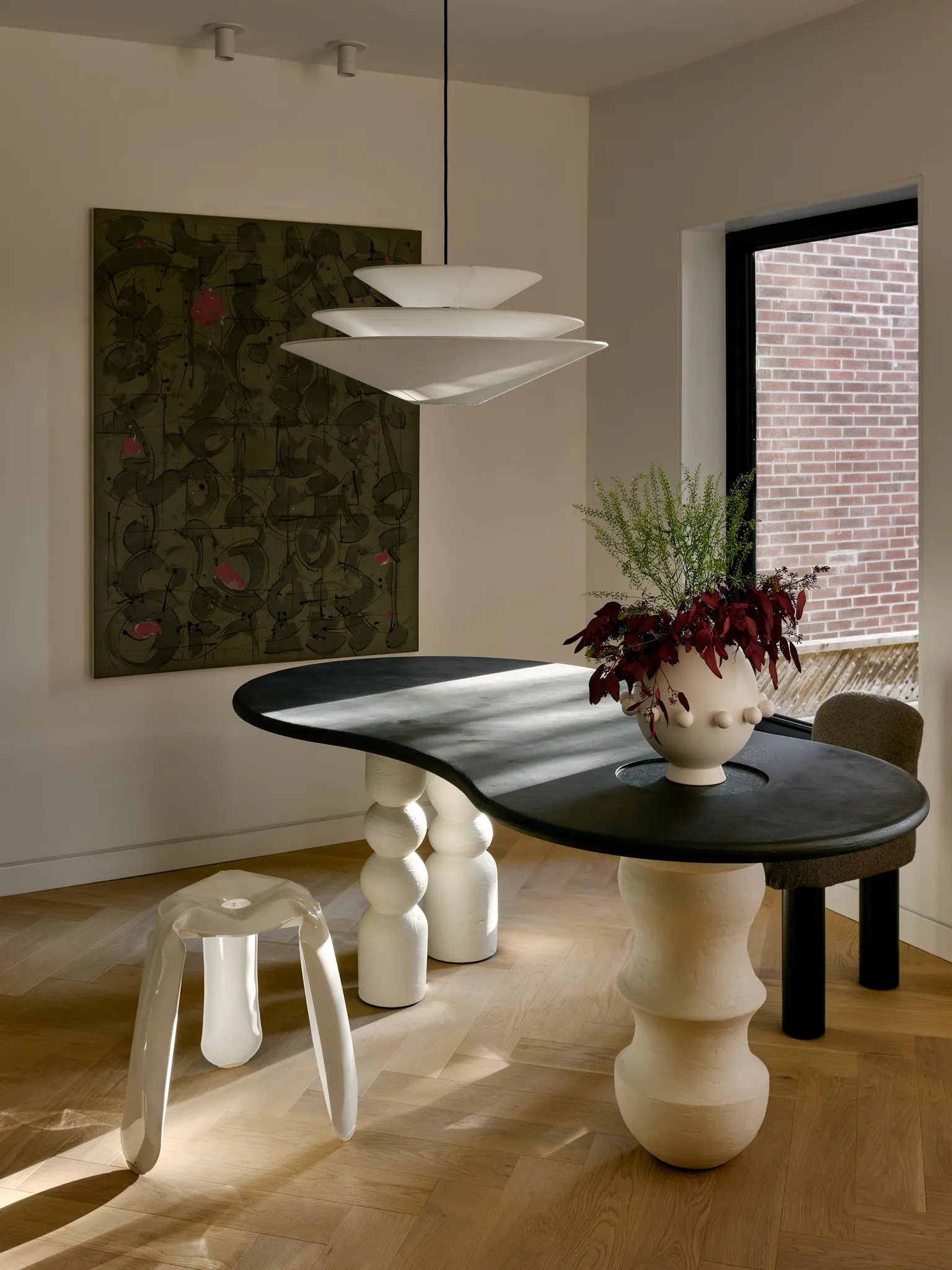
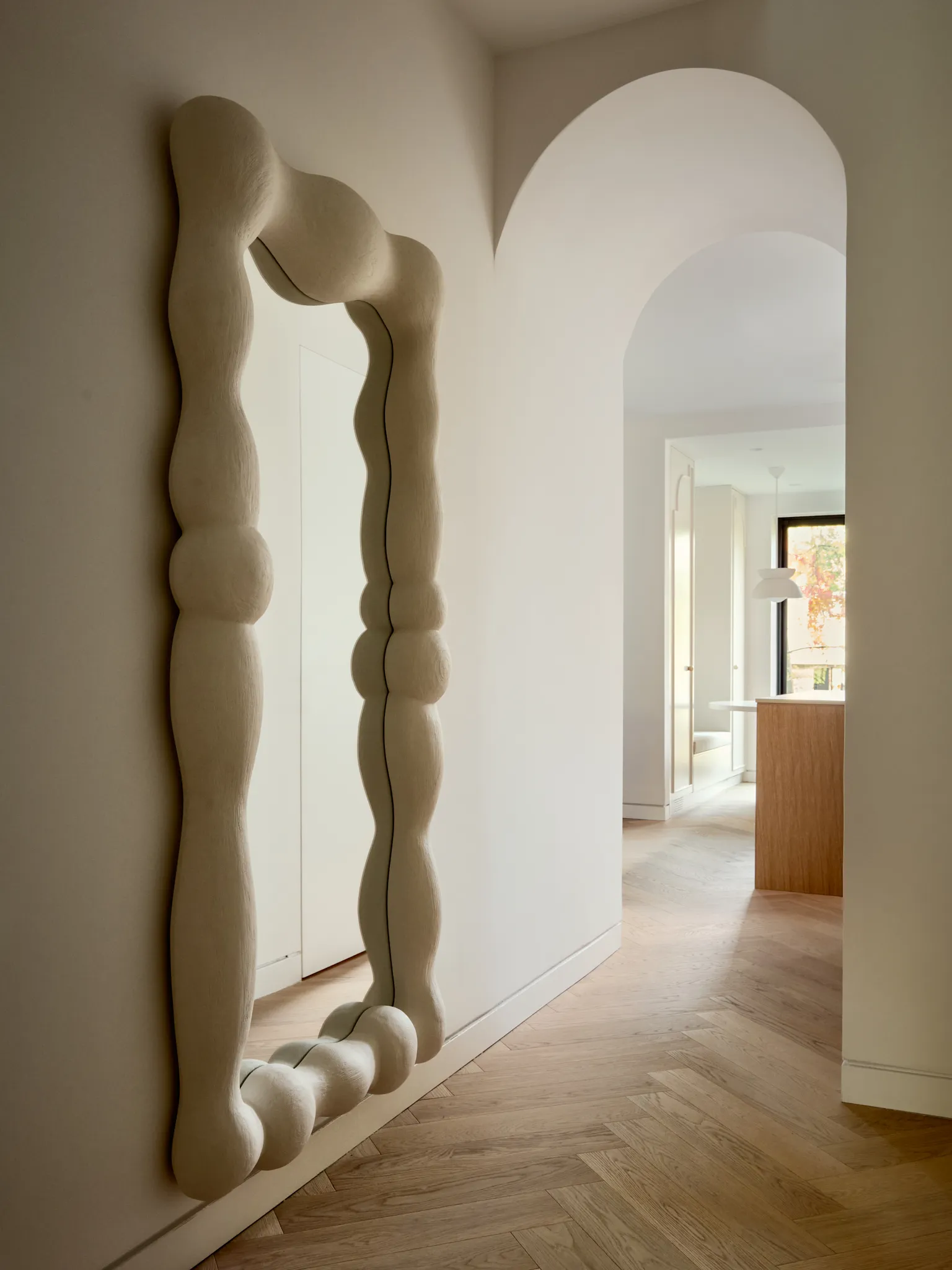
The asymmetric sofa, supported by rounded oak legs, challenges conventional balance while remaining inviting and comfortable. The dining table, similarly asymmetric, explores rhythm and movement through varied leg forms, reinforcing the collection’s sculptural narrative. Completing the series, the floor mirror features a plaster-inspired finish and an organic, bone-like silhouette—subtle yet commanding, designed to exist as both a functional object and a statement piece.
Floor Lamp. Image courtesy of: 2spacephoto
Dining Table. Image courtesy of: 2spacephoto
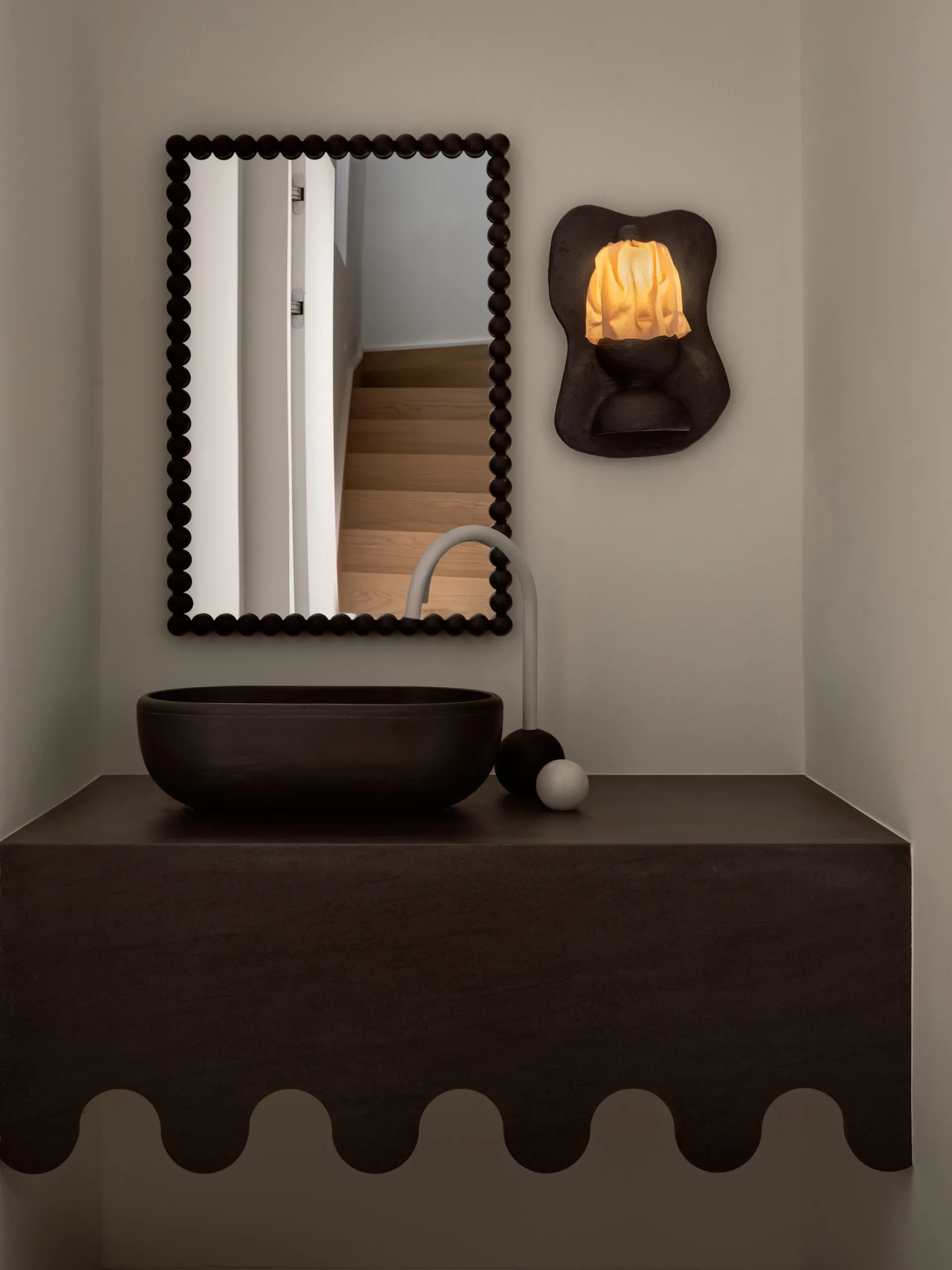
Wall Sconce. Image courtesy of: 2spacephoto
Mirror. Image courtesy of: 2spacephoto
More than a furniture collection, Condesa represents an exploration across disciplines. For Golshaah, whose roots span architecture, fashion, and lifestyle design, the project reflects the fluid boundaries between creative fields. For Studio Benu, Condesa aligns with a philosophy rooted in emotional design, craftsmanship, and storytelling. Together, the collaboration blurs the line between art, furniture, and fashion—resulting in objects that feel deeply personal and timeless.
Condesa is not an endpoint, but a beginning. It marks the first chapter in an ongoing dialogue between two creative practices united by curiosity, cultural appreciation, and a shared belief that meaningful design emerges from lived experience.
Receive the latest updates on architecture, design, and sustainability, along with news of upcoming competitions, events, and exclusive stories, delivered directly to your inbox.
Great design bridges past and future,
creating spaces that evolve with us.
At Forma The Magazine, we believe architecture and design have the power to elevate lives, restore places, and inspire generations.
We invite you to join our community of thinkers, creators, and dreamers shaping the future of design.
Then there is Montréal—a city that, for twenty years, has chosen to "govern" itself. In June 2006, the Québec metropolis became the first city in North America and only the third in the world to join the UNESCO Creative Cities Network in the field of design. Two decades on, that designation has proven to be far more than a badge of honour. It has become the philosophical spine of an entire urban project.
Humans spent 99% of their evolutionary history adapting to the natural world. Today, we spend roughly 90% of our lives inside sealed, climate-controlled boxes. This massive shift has left us chronically stressed, fatigued, and disconnected.
Winner of the 2026 Award of Excellence in Architecture from the Quebec Association of Architects, the Aubé House is more than just a beautifully designed residence. It is a physical timeline—a space where a rich family history meets breathtaking modern design.
Just north of Toronto, perched on the edge of a wooded valley, sits Ravine House—a contemporary home that redefines what it means to live in harmony with nature. Rather than acting as a barrier against the outdoors or simply occupying a plot of land, this stunning residence acts as an immersive, beautiful mediator between comfortable domestic living and the natural landscape.
On May 29th, as the sun began to set over the historic brick facades of Old Town Toronto, the streets took on a new, electric energy. The King East Design District (KEDD) Neighbourhood Hop—the highly anticipated annual event presented by DesignTO in collaboration with the Old Town Toronto BIA—was officially underway. For a few magic hours, the neighbourhood morphed into a sprawling, interactive playground for creativity and innovation.
In the heart of Quebec’s rugged Laurentians region, a new kind of home has taken flight. Located in the quiet community of La Conception, The Albatross is not just a house; it is a masterclass in modern residential design. Image courtesy of: Stéphane Groleau Created by the teams at MU Architecture in close collaboration with architect Anik Patry, this extraordinary home was built around a beautiful, simple idea: to place a modern family at the very center of a spectacular nat
Great architecture does more than simply house people; it shapes how they learn, create, and connect with the world around them. Université du Québec à Montréal (UQAM) has long understood this, and the architectural community agrees. Recently, UQAM’s iconic pavillon de Design was awarded the Royal Architectural Institute of Canada’s (RAIC) Prix du XXe siècle, a prestigious honour that recognizes the most outstanding and enduring architectural achievements of the last century.
Medical laboratories are often defined entirely by their complex, technical needs, leaving little room for architectural beauty. However, the new Montérégie Central Laboratory in Quebec completely rewrites that rule. Designed by the architectural firms NFOE and Archi–, this cutting-edge facility proves that high-tech infrastructure can be surprisingly elegant.