The AIA Coastal Virginia Pop-Up Park at the ForKids Landmark Center in South Norfolk is a temporary, community-driven urban intervention designed to support families experiencing homelessness through trauma-informed design.
When it comes to the growing trend of garden and laneway suites in Toronto, Lanescape is a name that leads the pack. While widely known as premier architects and builders, Lanescape has built a reputation that goes beyond just construction.
In residential architecture, nature is often treated as a beautiful backdrop—an element placed adjacent to the built environment. The House and The Tree, a single-storey residence in Barrie, Ontario, turns this convention inside out. Here, a single central tree is not just part of the landscape; it is the origin point of the entire architectural composition.
In the lush, affluent enclave of Kleinburg, Ontario, a new standard for contemporary residential design is quietly taking shape. Project Kleinburg, a 5,000-square-foot custom residence designed by Studio X Interiors, stands as a masterclass in spatial orchestration.
Éclos® introduces a new category of mineral surfaces with zero crystalline silica, a high proportion of recycled material, and a breakthrough layered design system enabled by Inlayr® technology. The innovation is the result of extensive research and testing, including more than 28,000 hours of R&D and over 1,500 hours of product testing by Cosentino’s Research, Development, and Product teams.
Situated on an unusually deep lot in the heart of Toronto’s vibrant Junction neighbourhood, the Junction Triangle House is a story of radical transformation.
By reimagining the main level’s footprint and flow, the project balances high-end modern finishes with the rugged, organic character of the home’s original stone features.
When a property owner purchased two side-by-side semi-detached, multi-unit homes on Gerrard East, the goal was simple: build two park-side laneway suites as premium rental properties. But what started as a standard property investment quickly evolved into a masterclass in neighbourhood collaboration.
The AIA Coastal Virginia Pop-Up Park at the ForKids Landmark Center in South Norfolk is a temporary, community-driven urban intervention designed to support families experiencing homelessness through trauma-informed design.
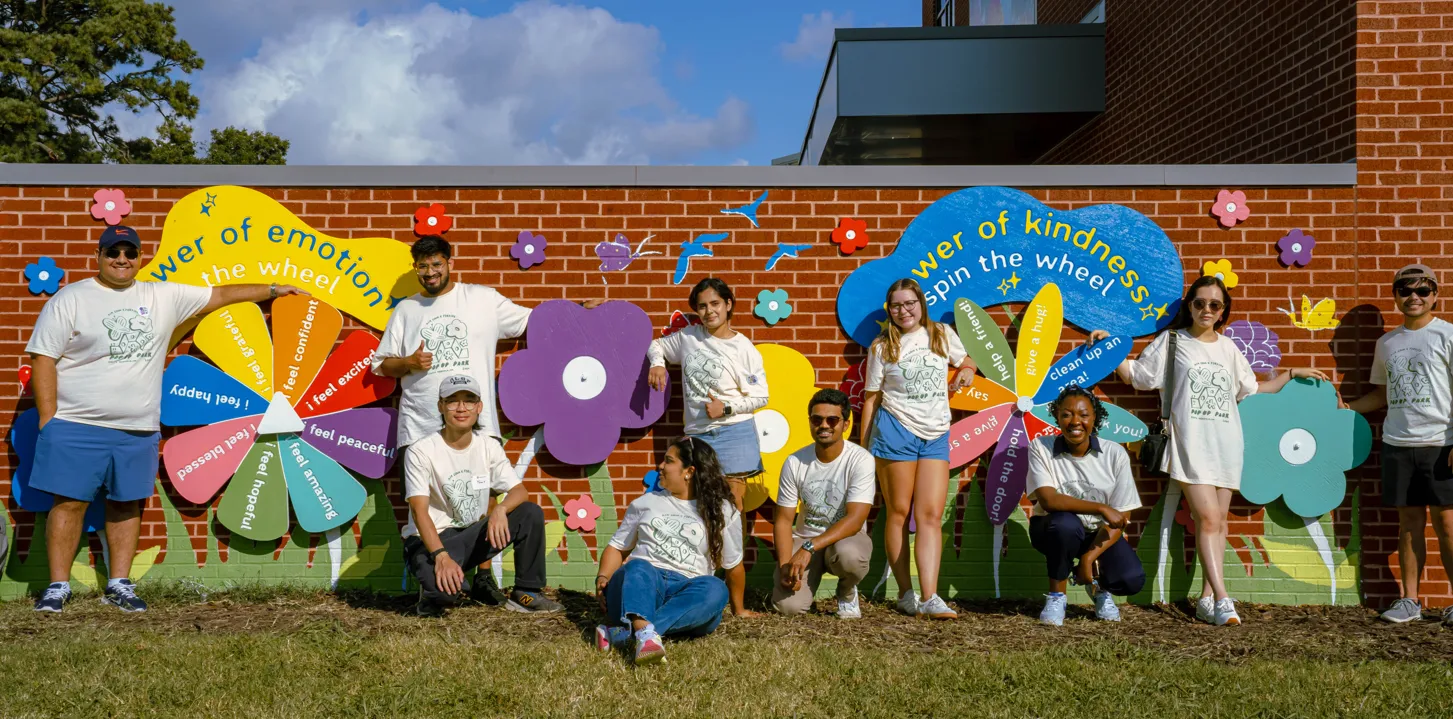
Developed in partnership with ForKids, the project builds on the success of the previous “Block Party” initiative, expanding its vision to create a vibrant, safe, and engaging environment for children and families. The 11-week project brought together over 80 volunteers from 13 AEC firms, organizations, and academic institutions, ultimately serving more than 150 children and families.
The initiative demonstrates how small-scale, temporary design interventions can foster meaningful social impact and community connection.
Design Concept
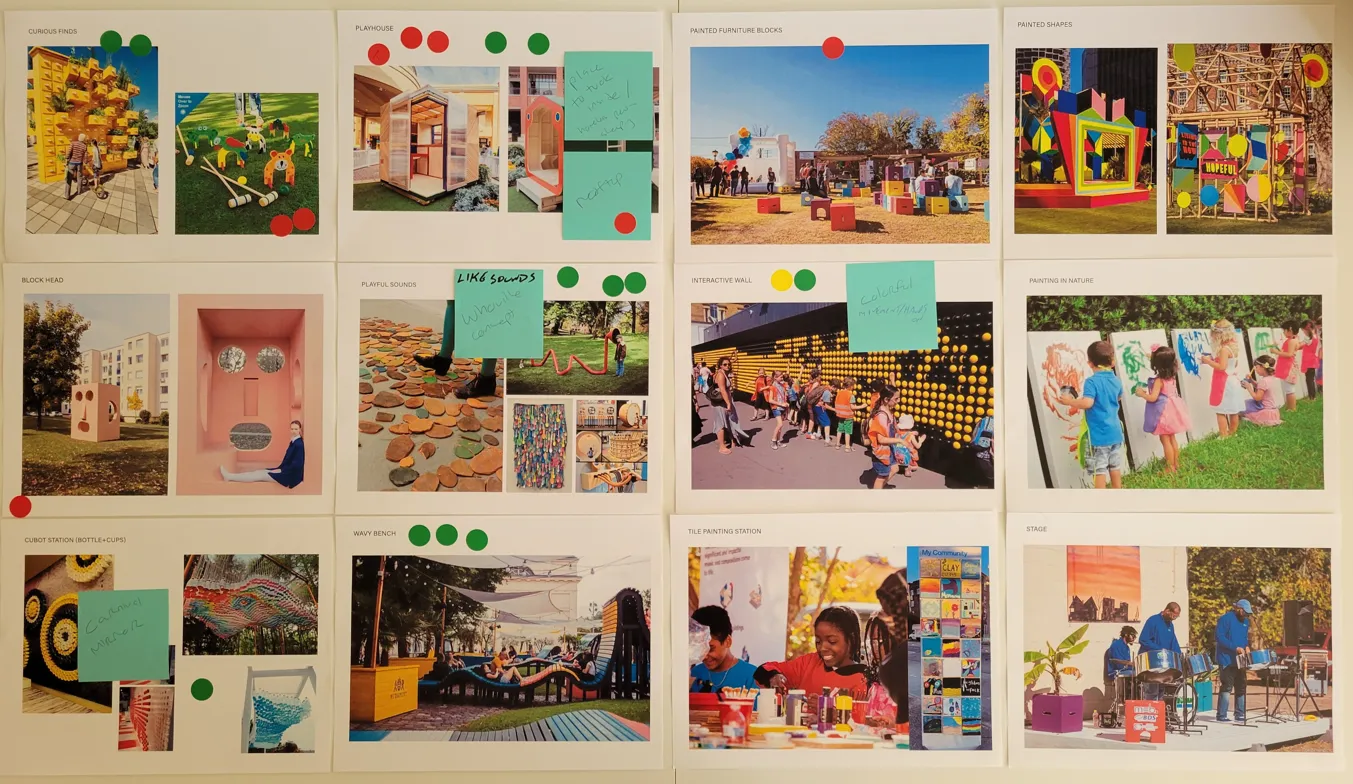
The overarching theme of the project, “Butterfly Garden,” draws inspiration from the pollinator gardens surrounding the Landmark Center. Symbolizing transformation, resilience, and growth, the theme aligns closely with ForKids’ mission of helping families “thrive, not just survive.”Within this broader framework, the project featured four installations: Caterpillar Bench, Chrysalis Canopy, Flower Wall, and Butterfly Sculpture, each contributing to an immersive and cohesive spatial experience.
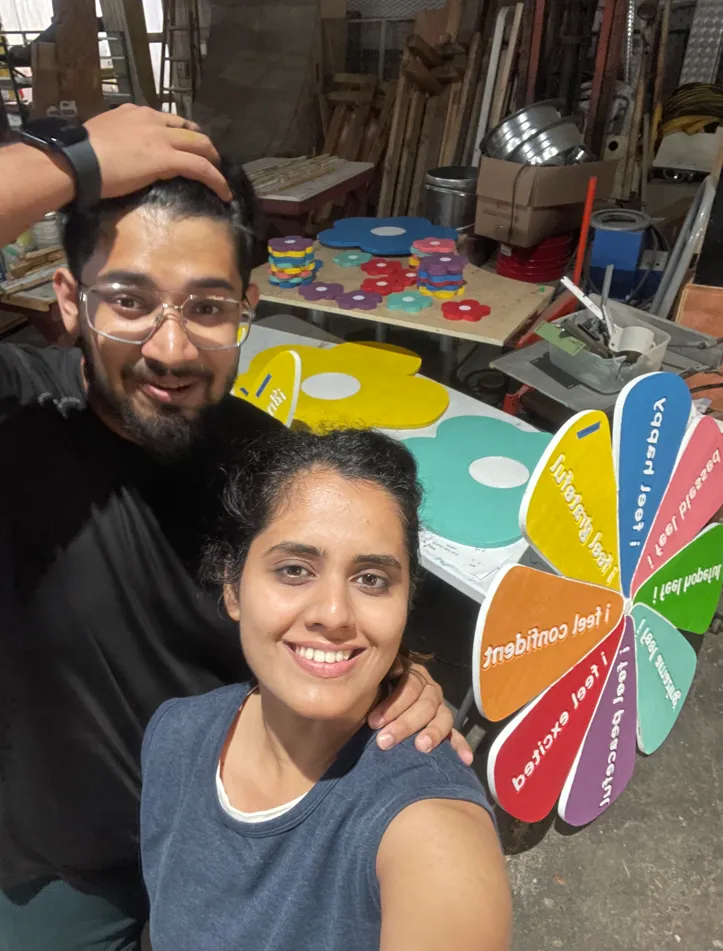
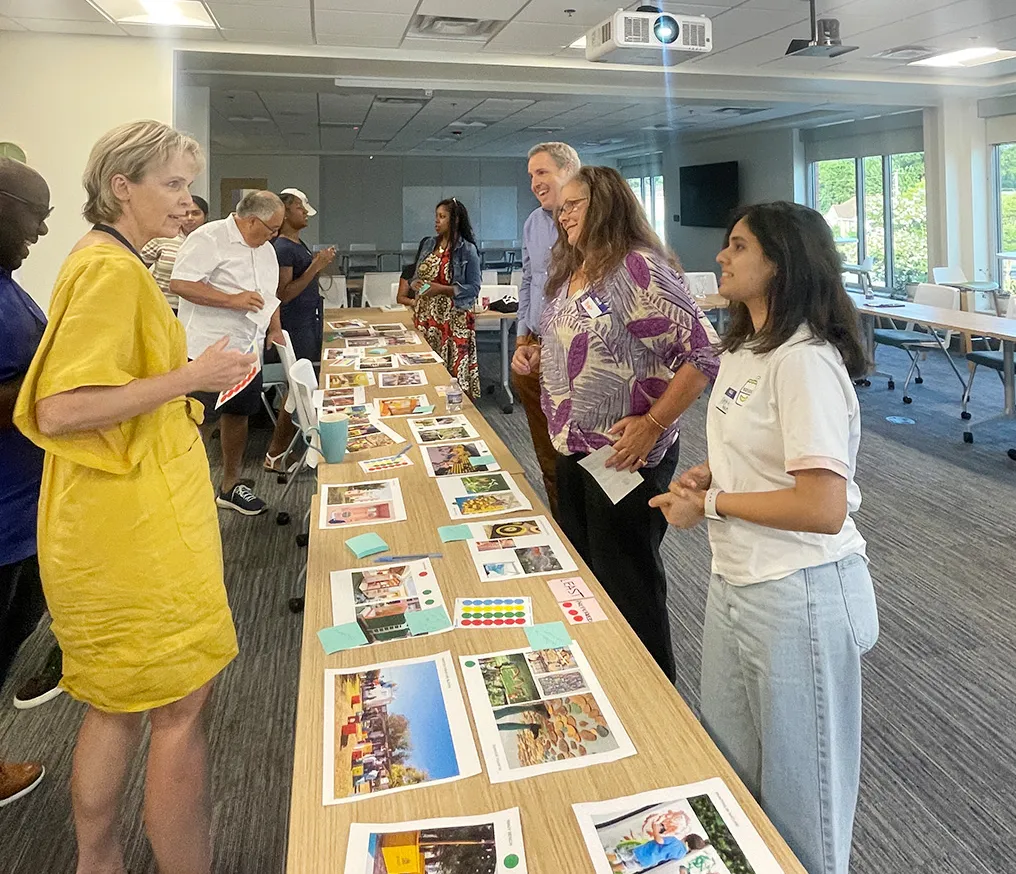
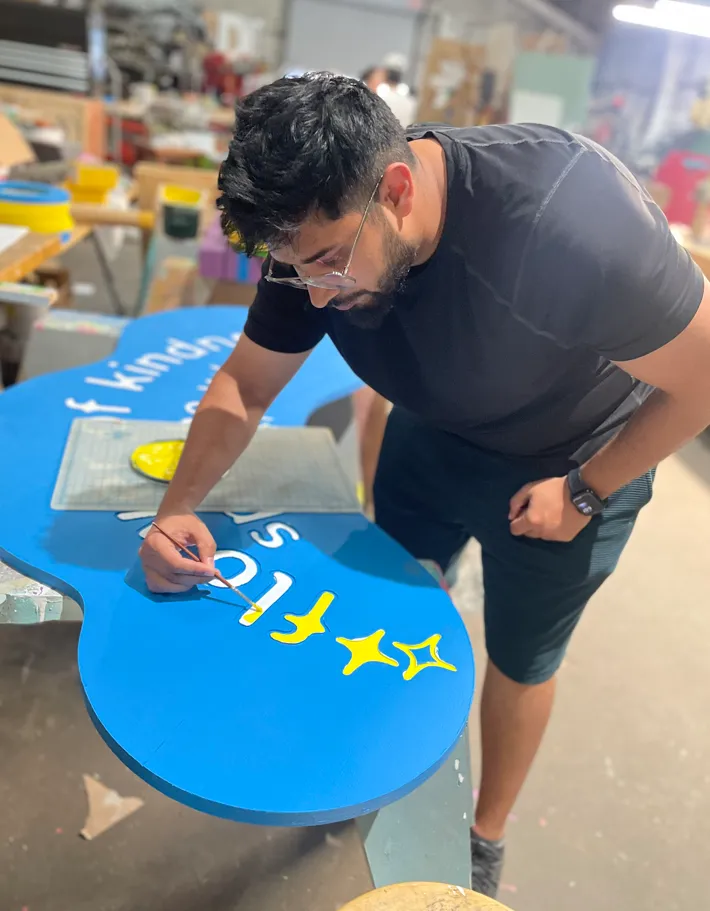
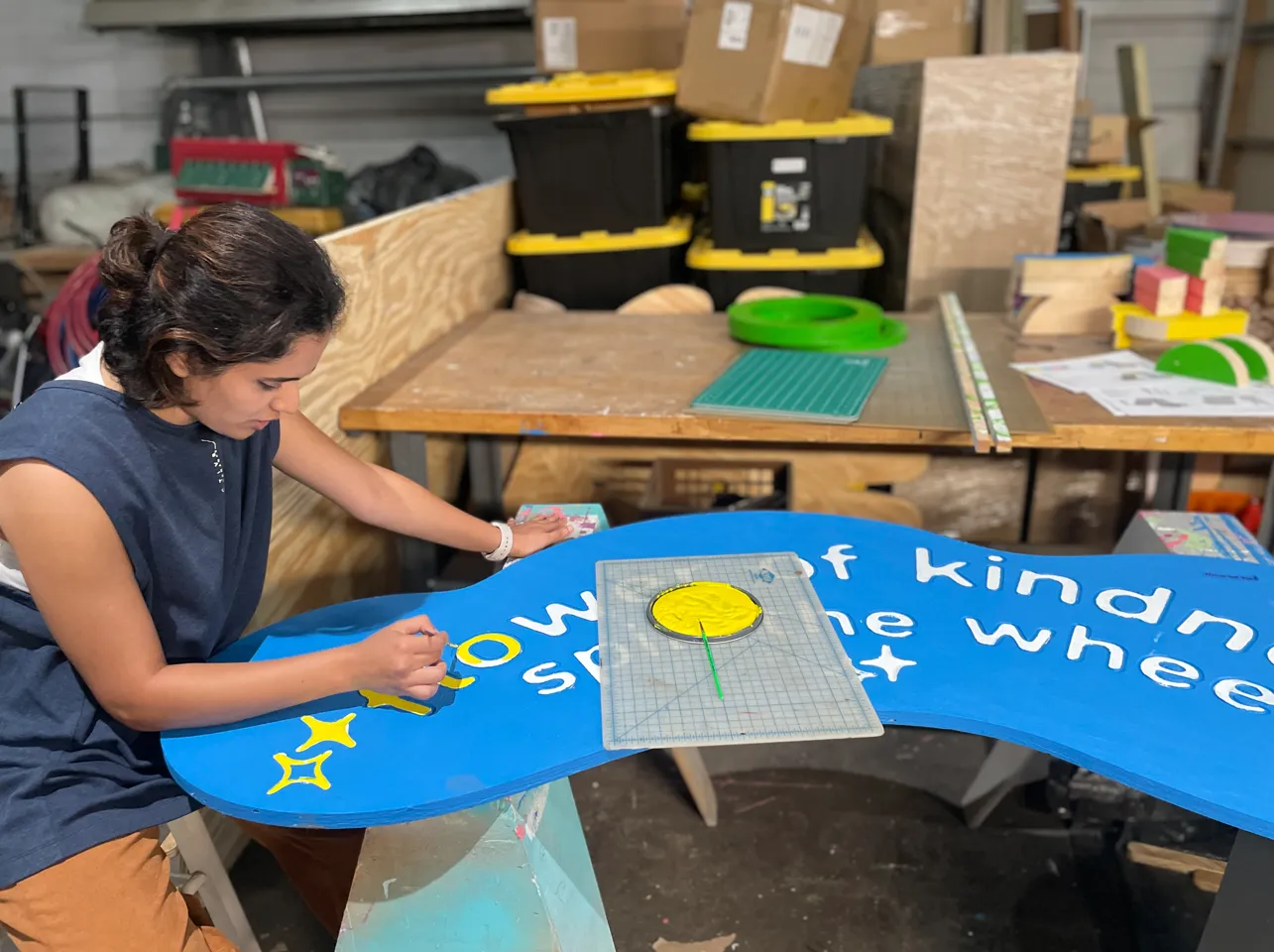
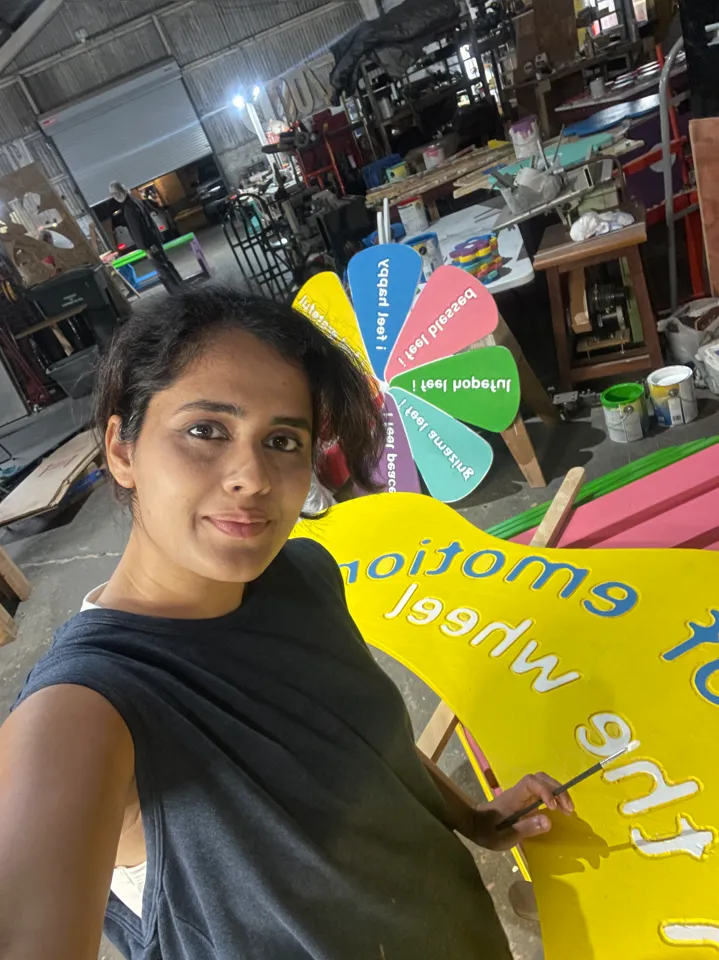
Mariya Anwar served as the Design Lead for the Flower Wall installation, collaborating with Zoque Wahid. She was responsible for overseeing concept development, graphic design, stakeholder coordination, and production execution from design to execution. She also facilitated meetings, managed timelines and budgets, sourced materials, and incorporated stakeholder feedback while planning a day-of program to engage participants meaningfully.
Her work combined illustration, placemaking, and community engagement, including learning CNC fabrication. Her approach focused on transforming an underutilized side lot into a vibrant, interactive environment that encourages engagement, emotional expression, and play.
The side lot of the ForKids building was previously neglected and visually uninviting, despite being a key point of entry. The adjacent sidewalk, heavily used by visitors entering the building, makes this area a key focal point. The space lacked engagement and did not serve the needs of residents, children or visitors.
A major challenge was aligning the client and stakeholders with the design vision, which required clear communication, compelling visual presentations, and iterative feedback sessions. However, this underutilized space presents a valuable opportunity to be transformed into a vibrant, family-friendly environment where the community and children can engage, play, and enjoy a more welcoming atmosphere.
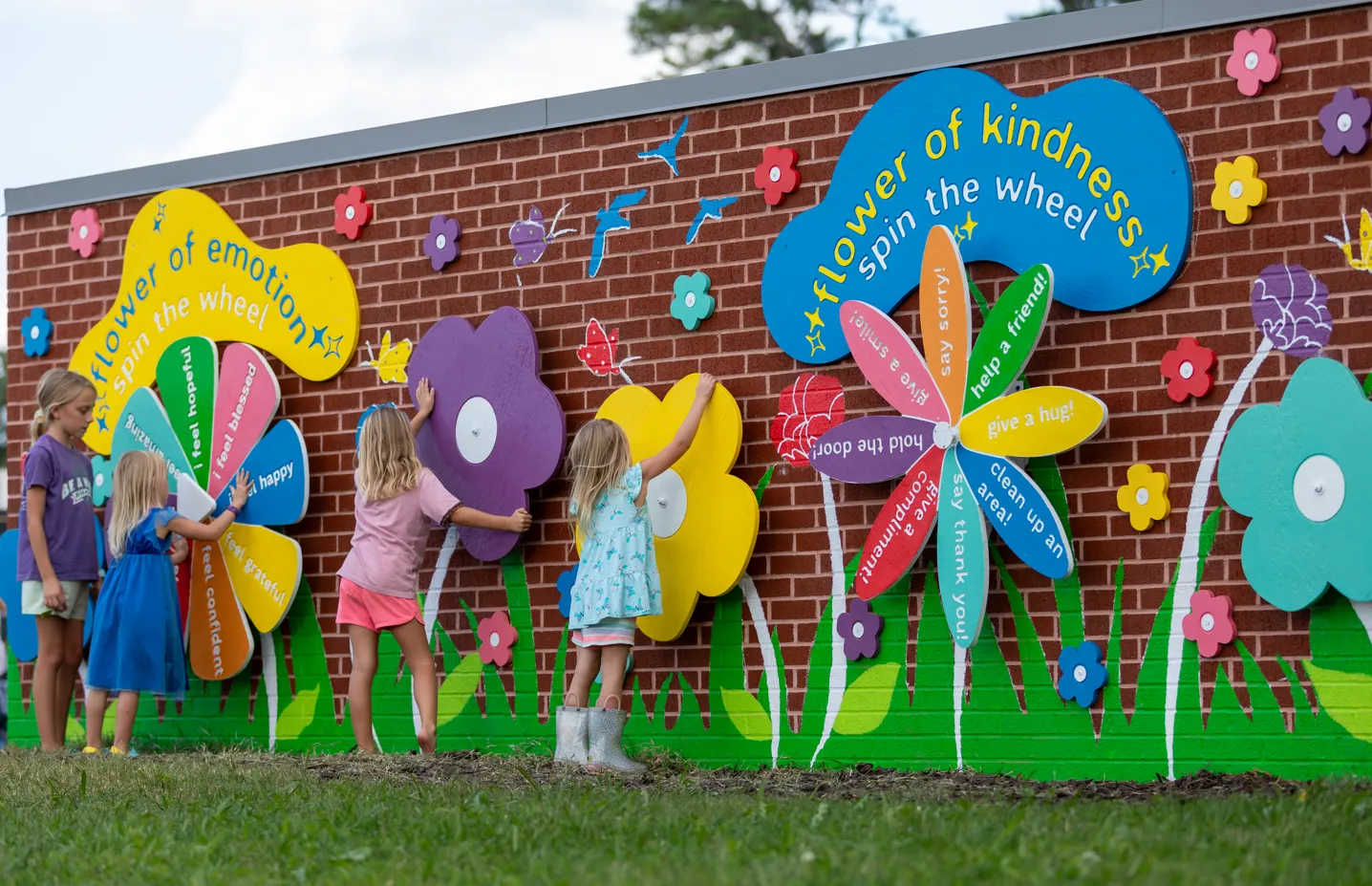
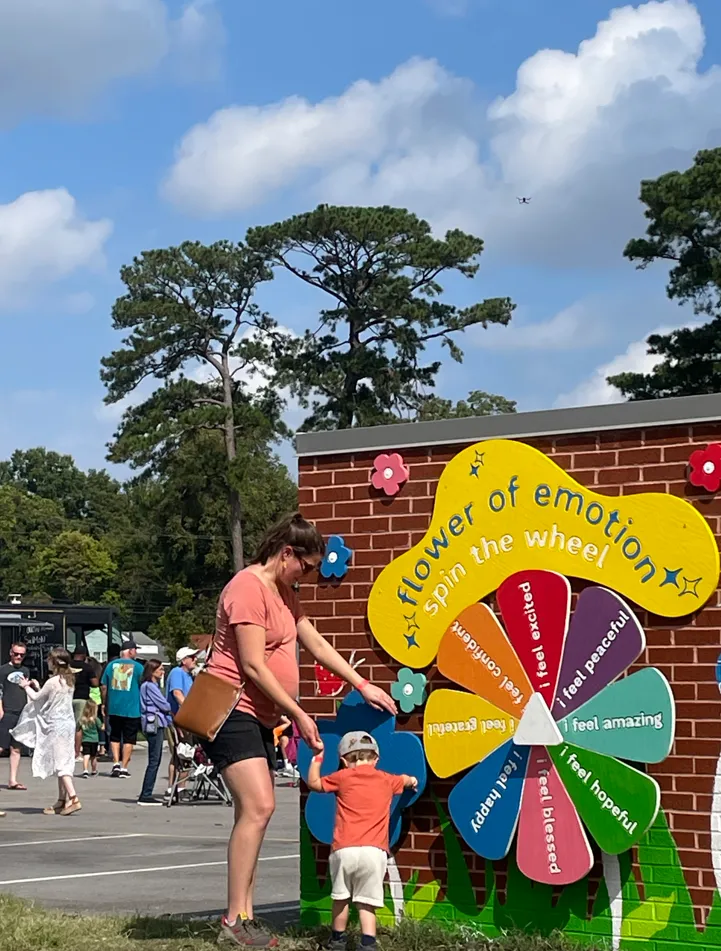
Inspired by the Flower Wall concept, the installation radiated warmth and positivity, creating a tactile, interactive environment that encouraged exploration and social interaction among children and families.
Design Approach
The intervention centred on creating an interactive, sensory-rich environment using bold colours, tactile elements, and educational components.
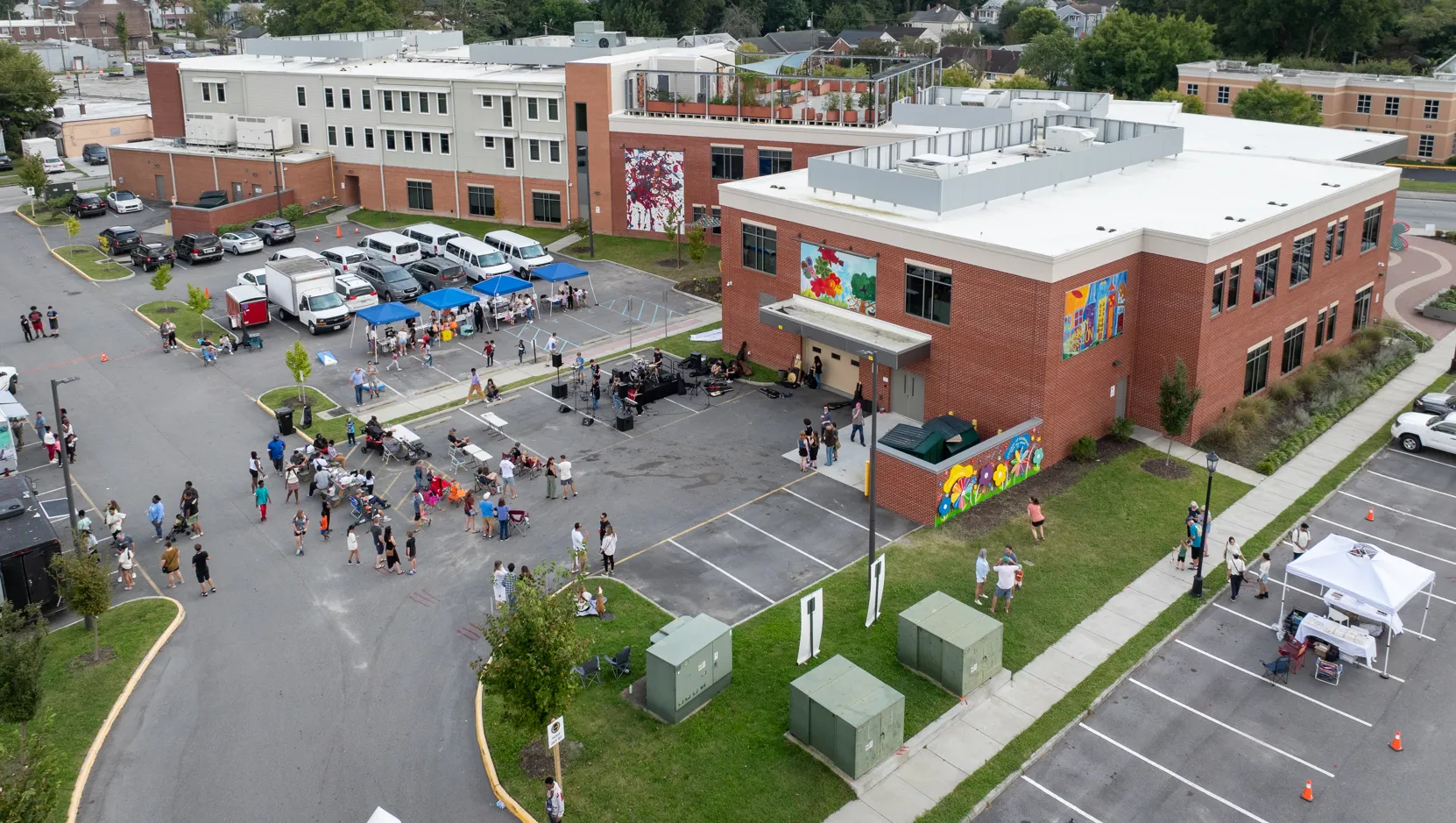
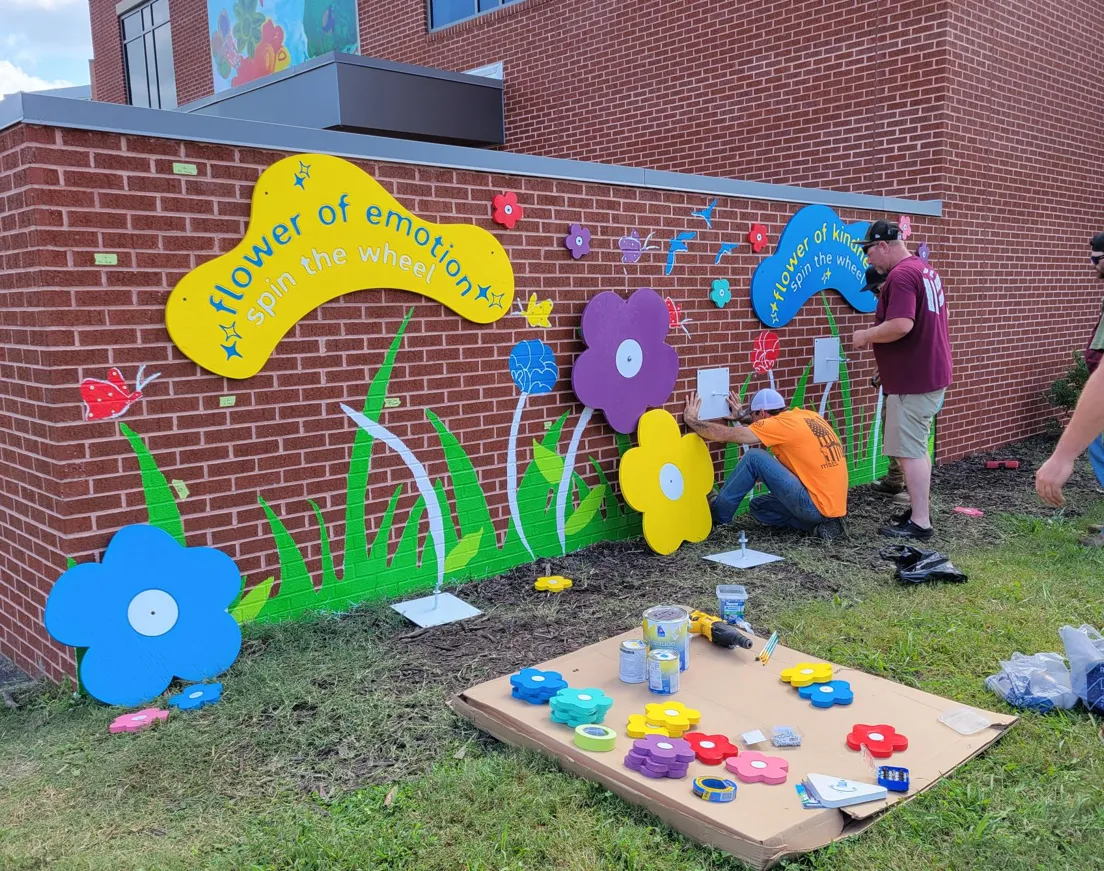
The design, themed around a Butterfly Garden, transforms an underutilized Dumpster wall into a vibrant “Flower Wall” and repurposes three transformer boxes into colourful, engaging features facing the parking lot. The goal is to create an inspiring, playful, educational, and value-driven space for children. Given that the Flower Wall is made of bricks, careful attention was paid to selecting fun, positive-energy colours that are visually appealing.
The wall’s two main features are the “Flower of Emotion,” an interactive spin wheel that helps kids learn about expressing their feelings, and the “Flower of Kindness,” a value-driven game that teaches the importance of kindness. These focal points are surrounded by smaller, spinable, playable flowers, forming a lively mural that includes butterflies, abstract clouds, and a sun, making the wall come alive with engaging activities. The adjacent sidewalk also features playful games to enhance the experience for kids, visitors, and the community upon arrival.
The second component of the design focuses on integrating the transformer boxes with the overall theme. Each side is painted with colourful, captivating designs that evoke curiosity and surprise, creating delightful moments for those passing by. These transformer boxes transform into cheerful installations, serving as “happy encounters” within the side lot. They invite people to pause, engage with the artwork, and experience a sense of connection. These design elements, drawn from the Flower Wall, radiate positivity and warmth, offering children and the community a welcoming, playful space to explore and enjoy.
Image courtesy of: Mariya Anwar
Image courtesy of: Mariya Anwar
Image courtesy of: Mariya Anwar
Materials & Fabrication
The installations utilized durable and cost-effective materials suitable for outdoor conditions. Painted brick surfaces, weather-resistant coatings, and repurposed infrastructure elements such as transformer boxes were used to ensure longevity and safety. The design emphasized modularity and ease of installation, allowing volunteers to efficiently construct and assemble the installations within the project timeline.
Sustainability Features
The project incorporates sustainable strategies through adaptive reuse and community-driven construction. Existing site elements, including walls and utility boxes, were repurposed rather than replaced, reducing material waste. The temporary nature of the intervention allows for flexibility and future adaptability, while the use of low-cost, locally sourced materials minimizes environmental impact. Community participation further reinforces social sustainability by fostering ownership and engagement.
Impact & Outcomes
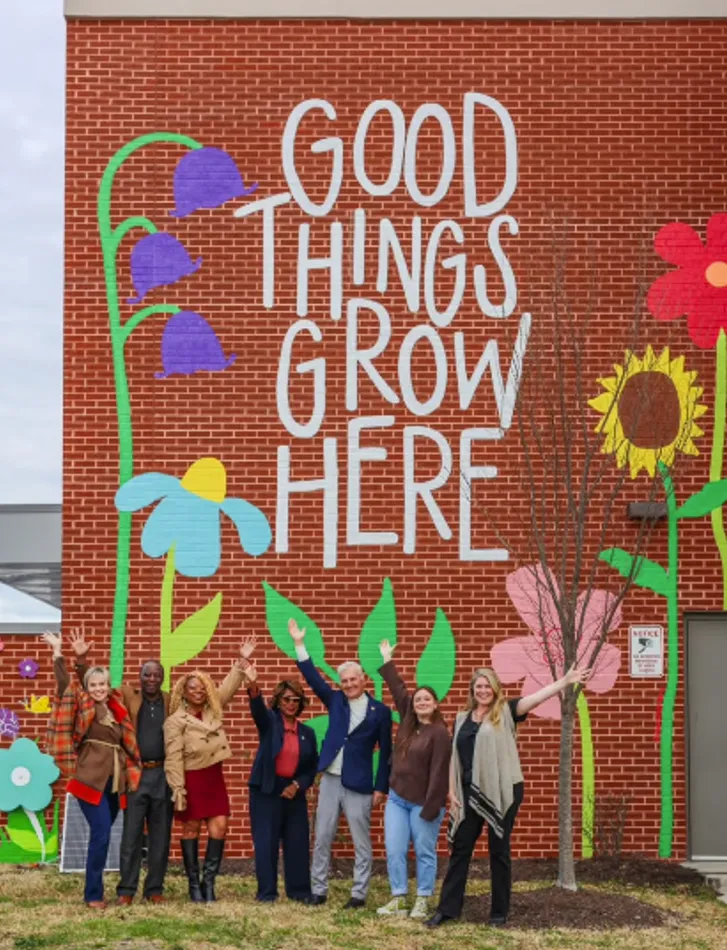
The Pop-Up Park successfully transformed a neglected space into a vibrant community hub. Children and families actively engaged with the installations, interacting through play, movement, and exploration. The project hosted STEAM activities, performances, and community programming, further activating the space. It received recognition through the AIA Coastal Virginia Merit Award for Placemaking and was featured in media outlets, including WAVY-TV 10 and WTKR News. The intervention demonstrates how thoughtful, small-scale design can support emotional well-being, foster inclusivity, and create lasting social impact.
Image courtesy of: Mariya Anwar
Image courtesy of: Mariya Anwar
Image courtesy of: Mariya Anwar
Image courtesy of: Mariya Anwar
Image courtesy of: ForKids
Image courtesy of: Mariya Anwar
Image courtesy of: Mariya Anwar
Image courtesy of: Mariya Anwar
Image courtesy of: Mariya Anwar
Team & Credits
Core Pop-Up Park Team
Community Engagement & Coordination: Bernadette Keplinger, Jonathan Hiser, Sharon Manana
Production Leads: Lorin Schwartz, Gary Bright, Brendon Glover
The AIA Coastal Virginia Pop-Up Park at the ForKids Landmark Center in South Norfolk is a temporary, community-driven urban intervention designed to support families experiencing homelessness through trauma-informed design.
When it comes to the growing trend of garden and laneway suites in Toronto, Lanescape is a name that leads the pack. While widely known as premier architects and builders, Lanescape has built a reputation that goes beyond just construction.
In residential architecture, nature is often treated as a beautiful backdrop—an element placed adjacent to the built environment. The House and The Tree, a single-storey residence in Barrie, Ontario, turns this convention inside out. Here, a single central tree is not just part of the landscape; it is the origin point of the entire architectural composition.
In the lush, affluent enclave of Kleinburg, Ontario, a new standard for contemporary residential design is quietly taking shape. Project Kleinburg, a 5,000-square-foot custom residence designed by Studio X Interiors, stands as a masterclass in spatial orchestration.