GKC Architecture’s Montreal Office: The Impact of Interior Design: Inside
May 26
3 min read
It has been exactly one year since GKC Architecture & Design relocated its Montreal team to a fully redesigned office on Gary-Carter Street. Now, the firm is taking a step back to look at how the new space has actually changed the way they work.
Built to be flexible, collaborative, and completely centred around the people who use it, the office was designed to support the company’s growth while adapting to modern work habits. Twelve months later, the real-world impact of those design choices is clear.
Designing for Growth and Connection
When GKC planned their new office, they were in a period of strong growth. The redesign was driven by three main goals:
Attract top talent by creating a highly inspiring work environment.
Encourage a return to the office by offering a space that is both functional and motivating.
Reflect the firm's brand identity, which is deeply rooted in innovation and teamwork.
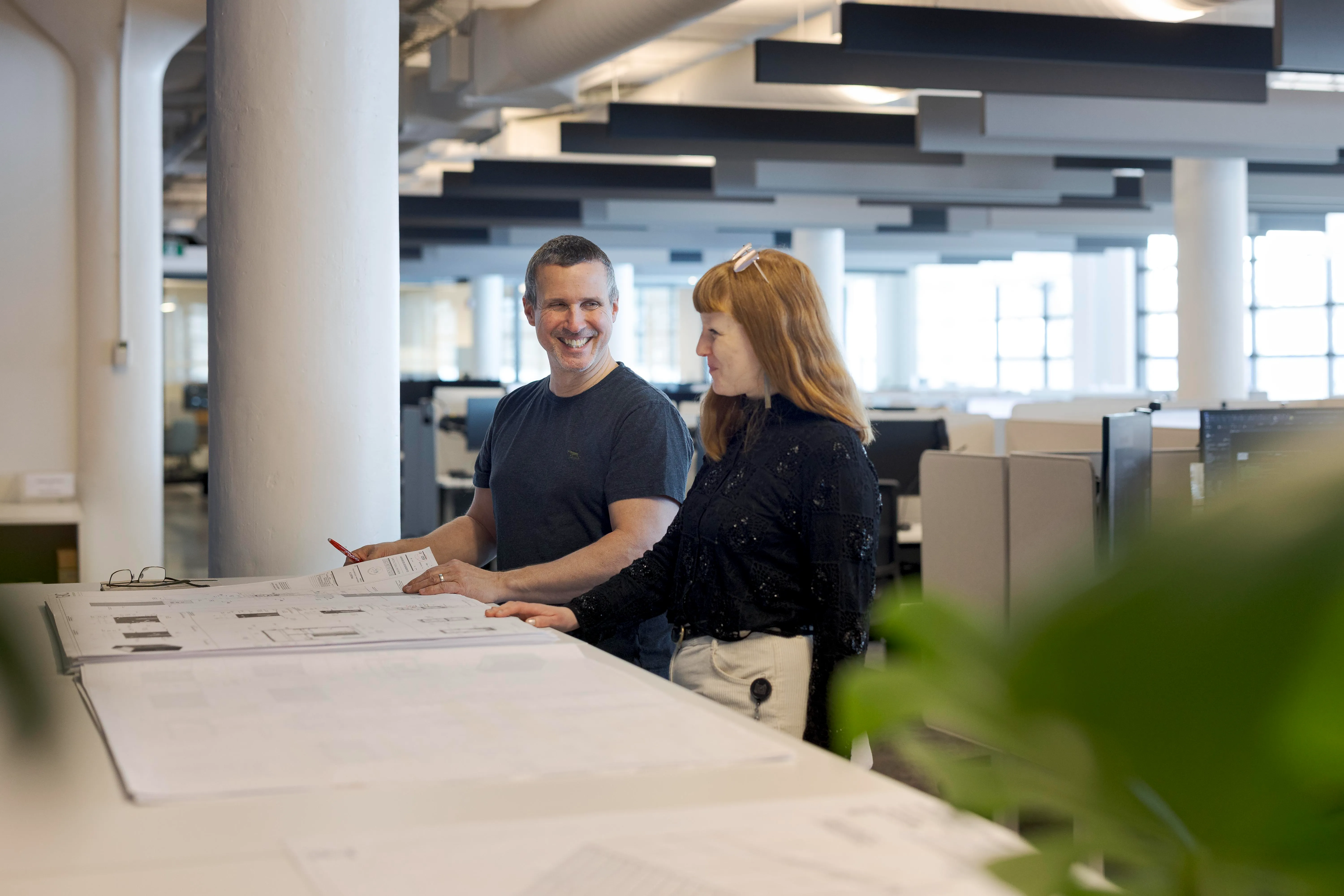
The move was a major success for team expansion. The new layout ensured that every employee retained a dedicated workstation while making room for about fifteen new team members—a growth milestone that would have been impossible in their old space. This smart setup has successfully supported the firm's goal of having the team work on-site about 80% of the time.
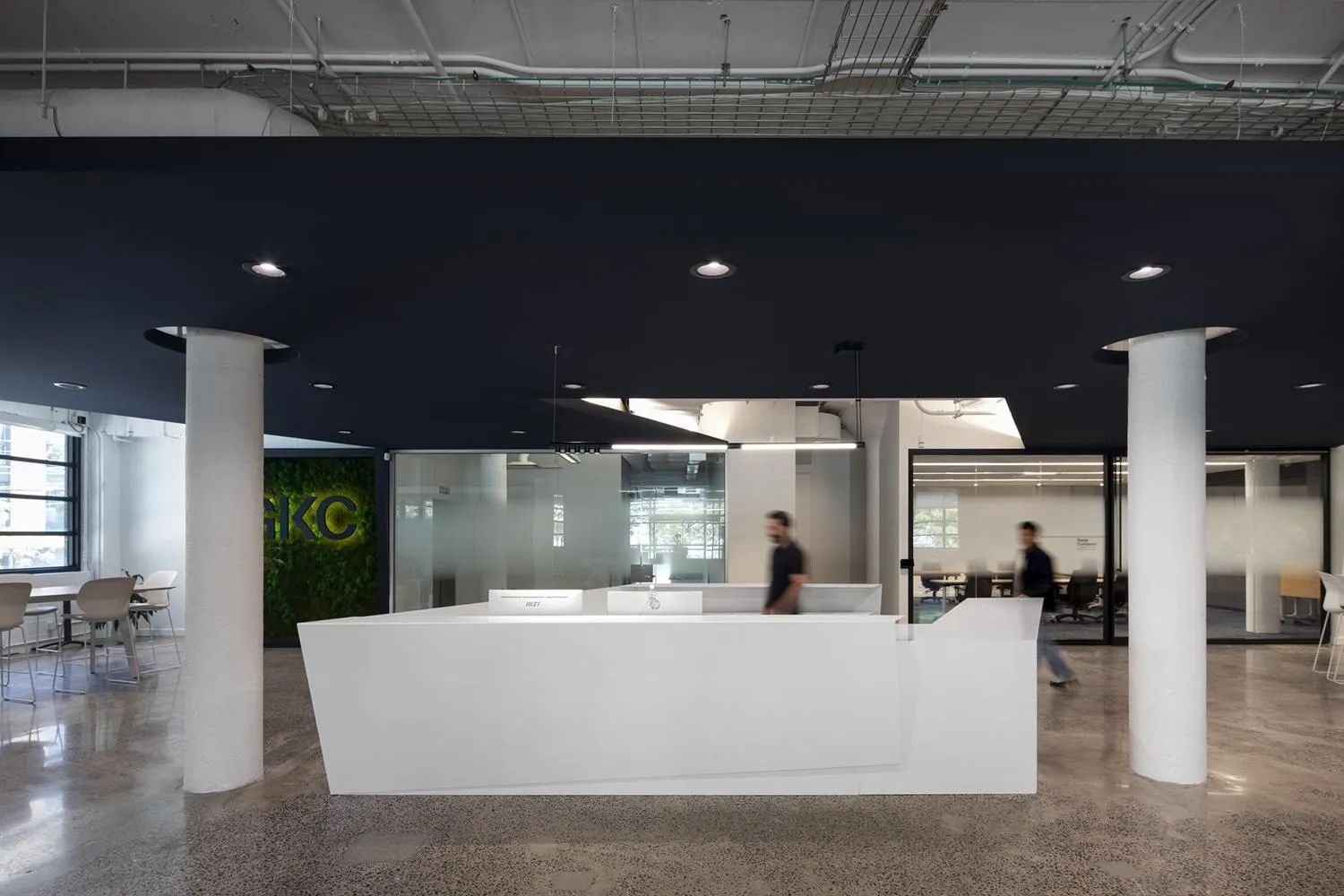
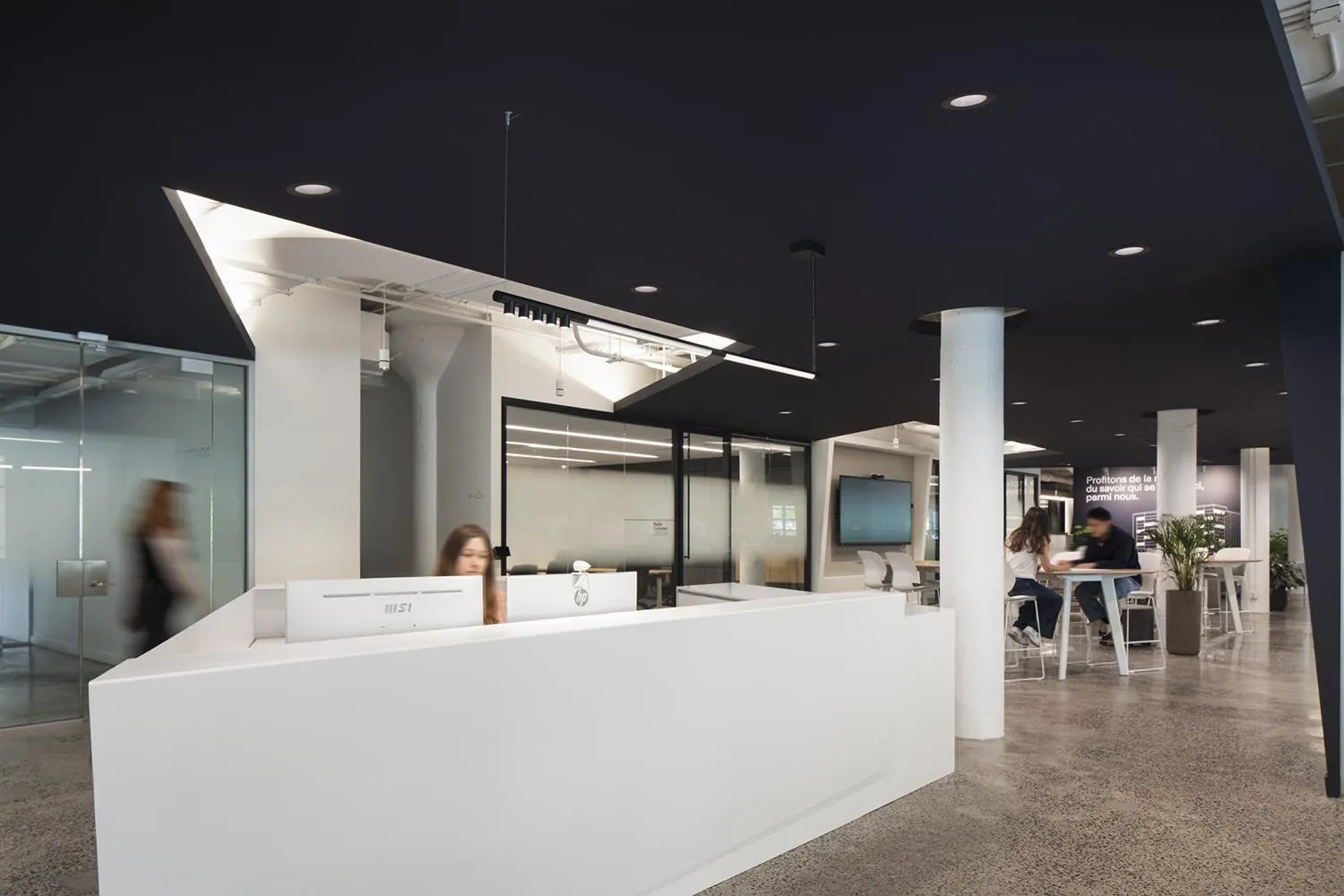
GKC Architecture’s Montreal Office: The Impact of Interior Design: Inside. Image of: Adrien Williams
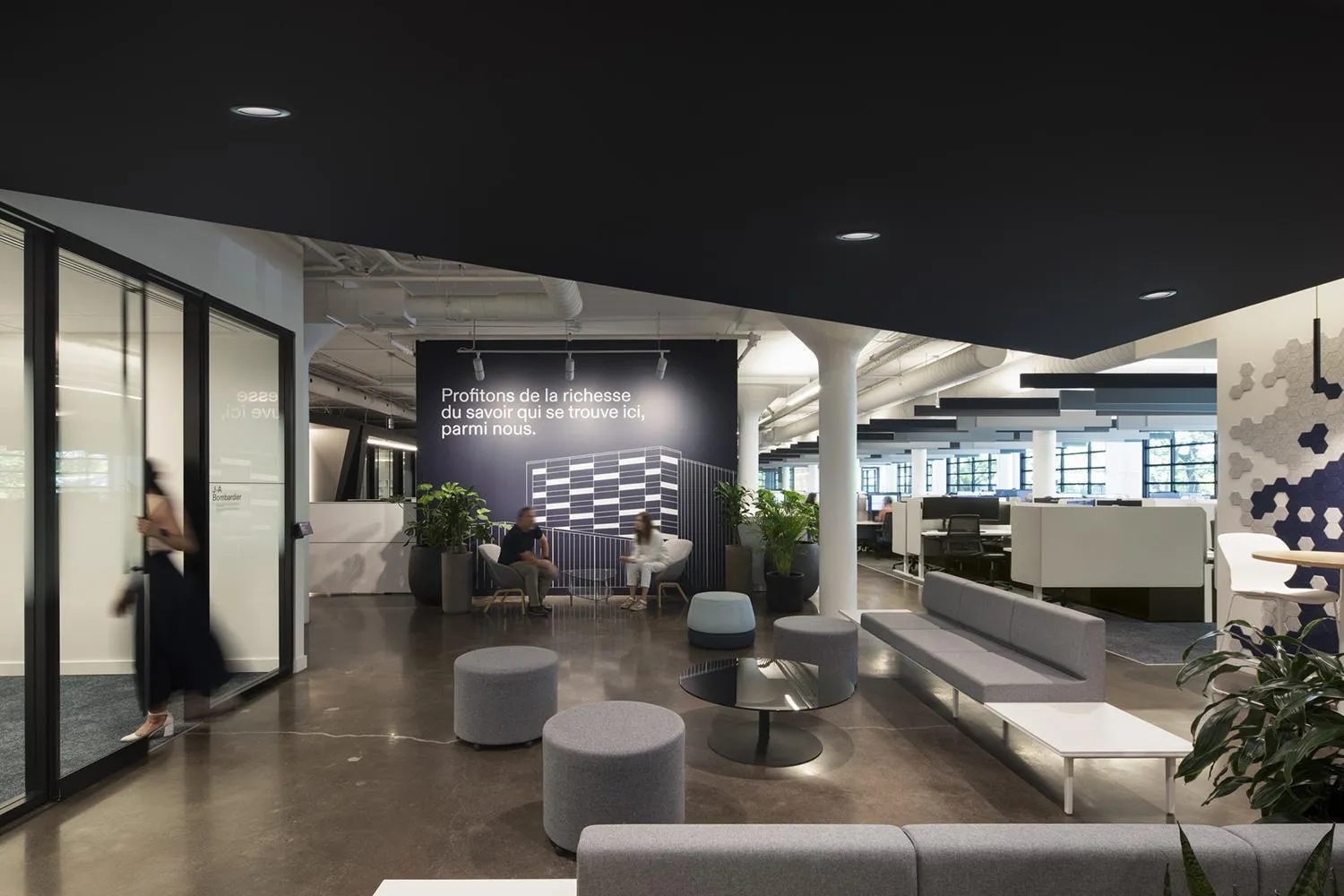
GKC Architecture’s Montreal Office: The Impact of Interior Design: Inside. Image of: Adrien Williams
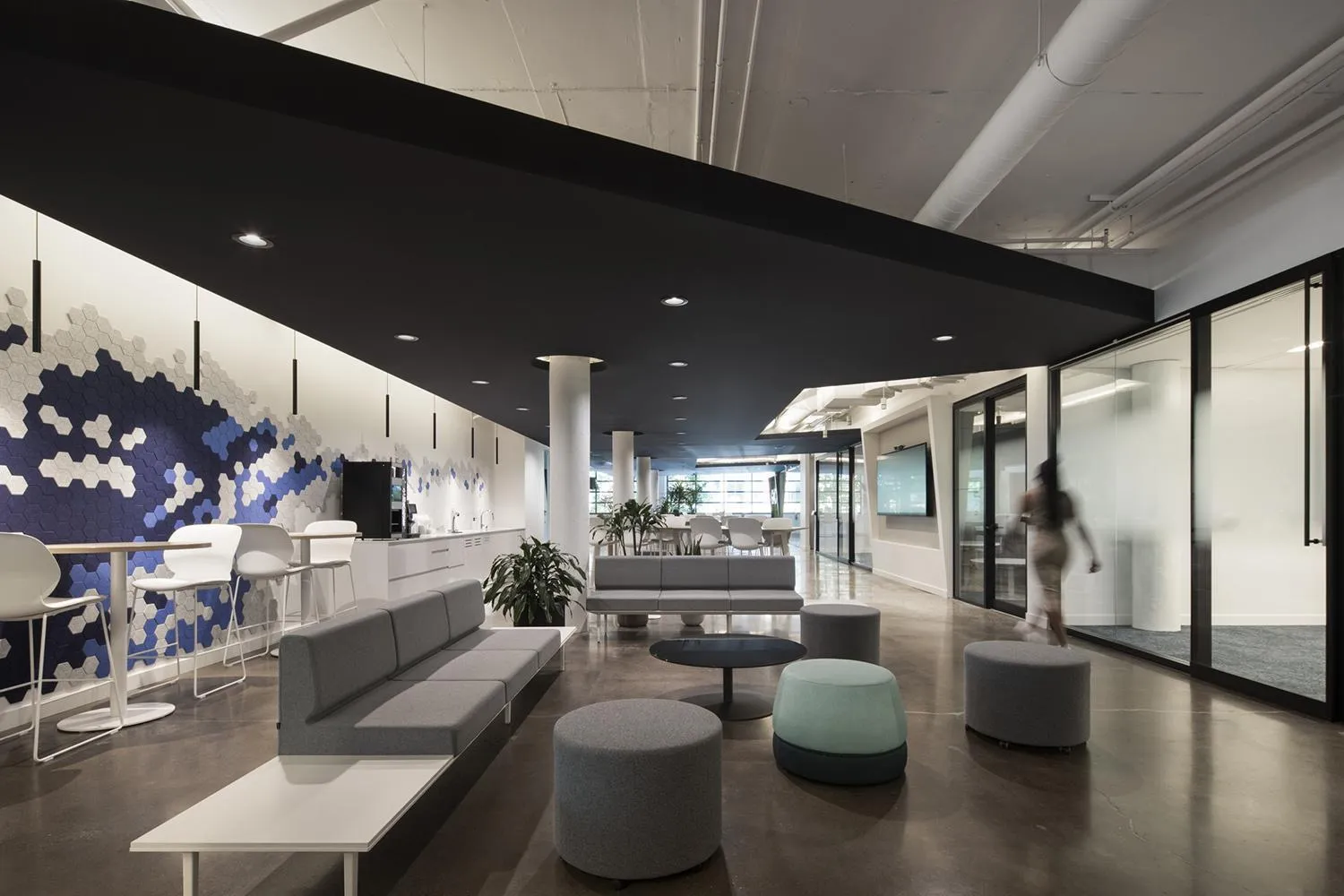
GKC Architecture’s Montreal Office: The Impact of Interior Design: Inside. Image of: Adrien Williams
A Space That Breathes
Located in a former industrial building that GKC actually converted for a client back in 2018, the redesign honours the building's original architecture while giving it a fresh, modern purpose.
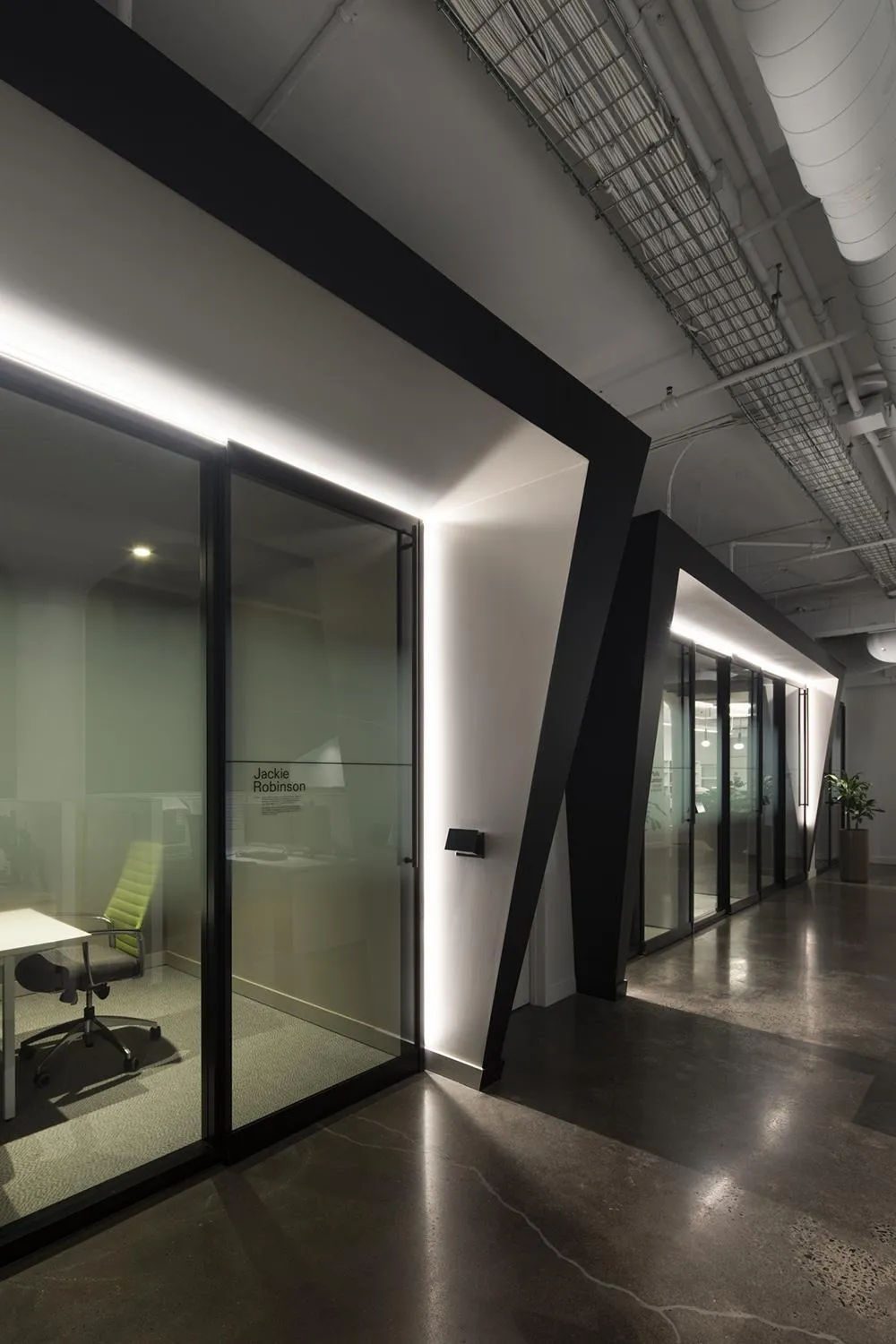
The aesthetic is confident and warm, featuring clean lines, angular forms, and a colour palette of dark blue and light grey to symbolize trust and adaptability. But beyond looking good, the space is built to feel good:
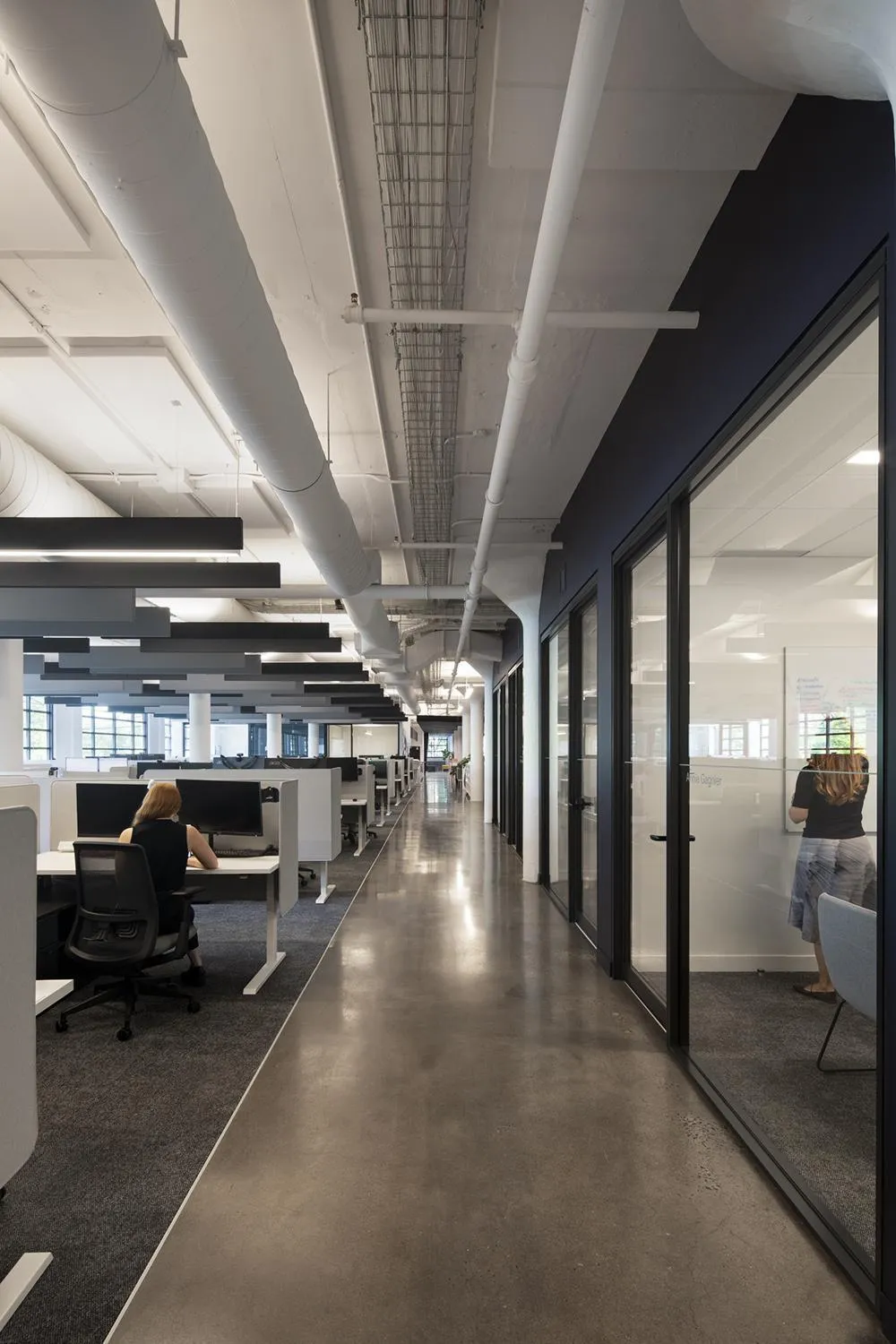
The Open Area: Wrapped in glass, the main work area maximizes natural light and gives employees long, open views.
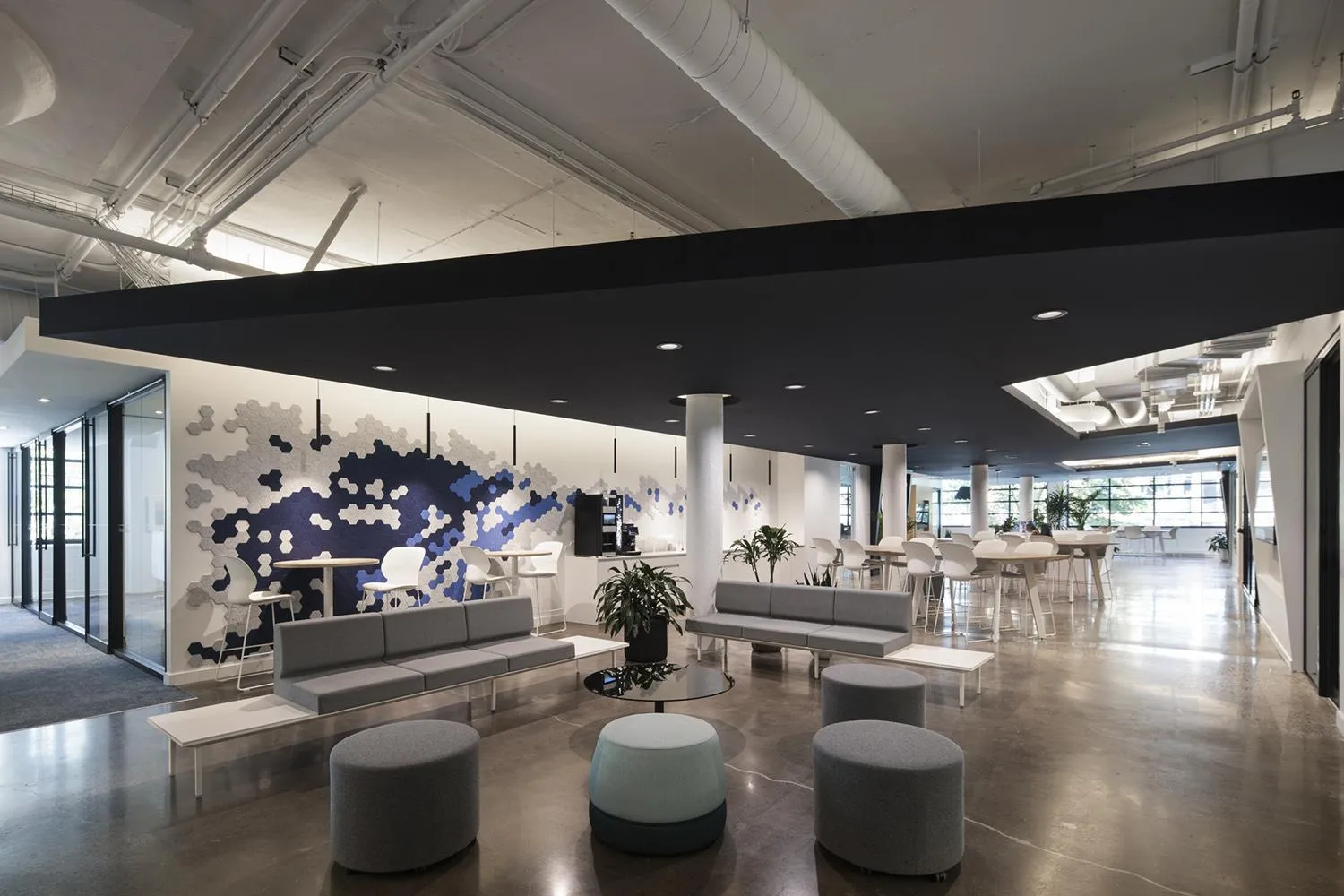
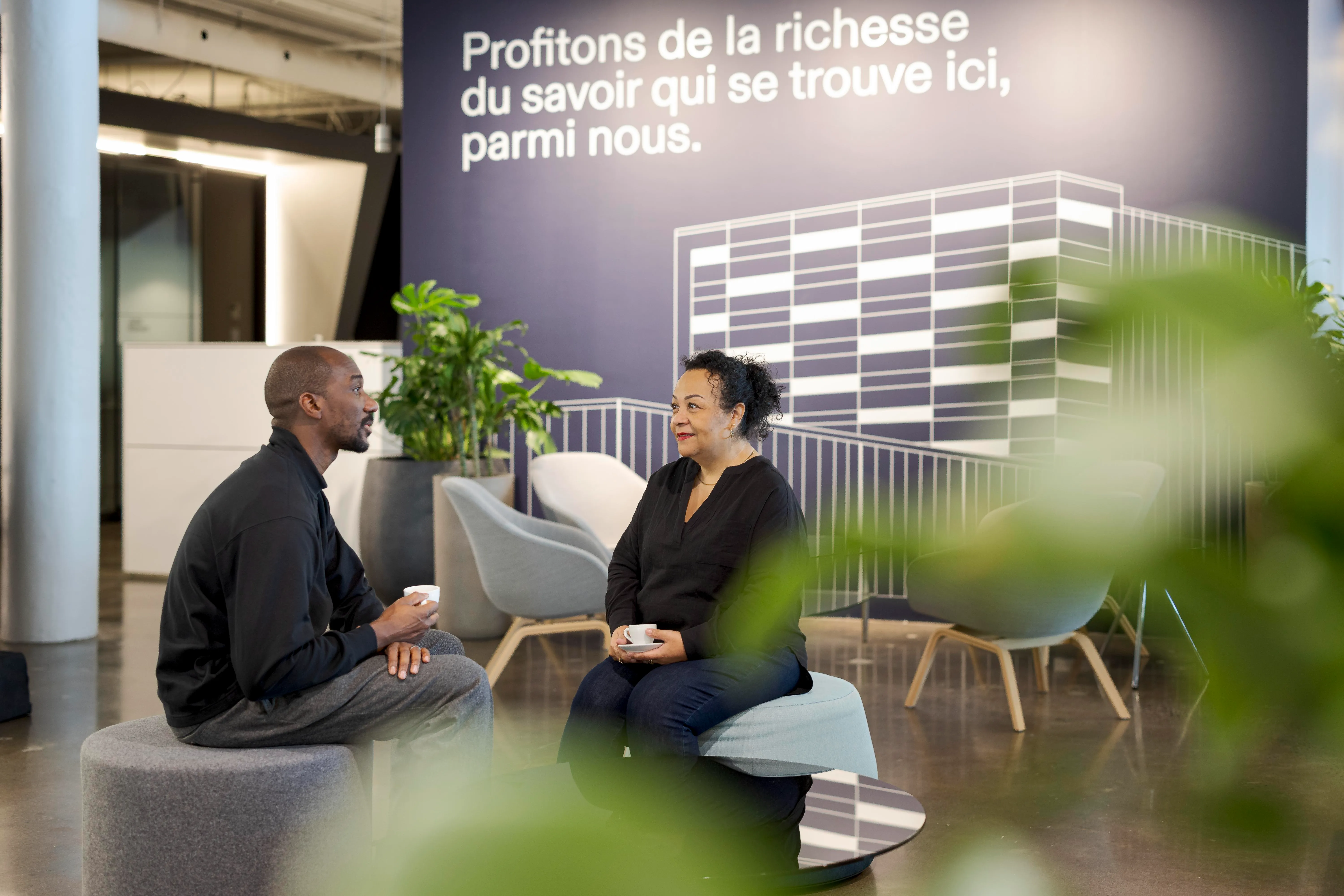
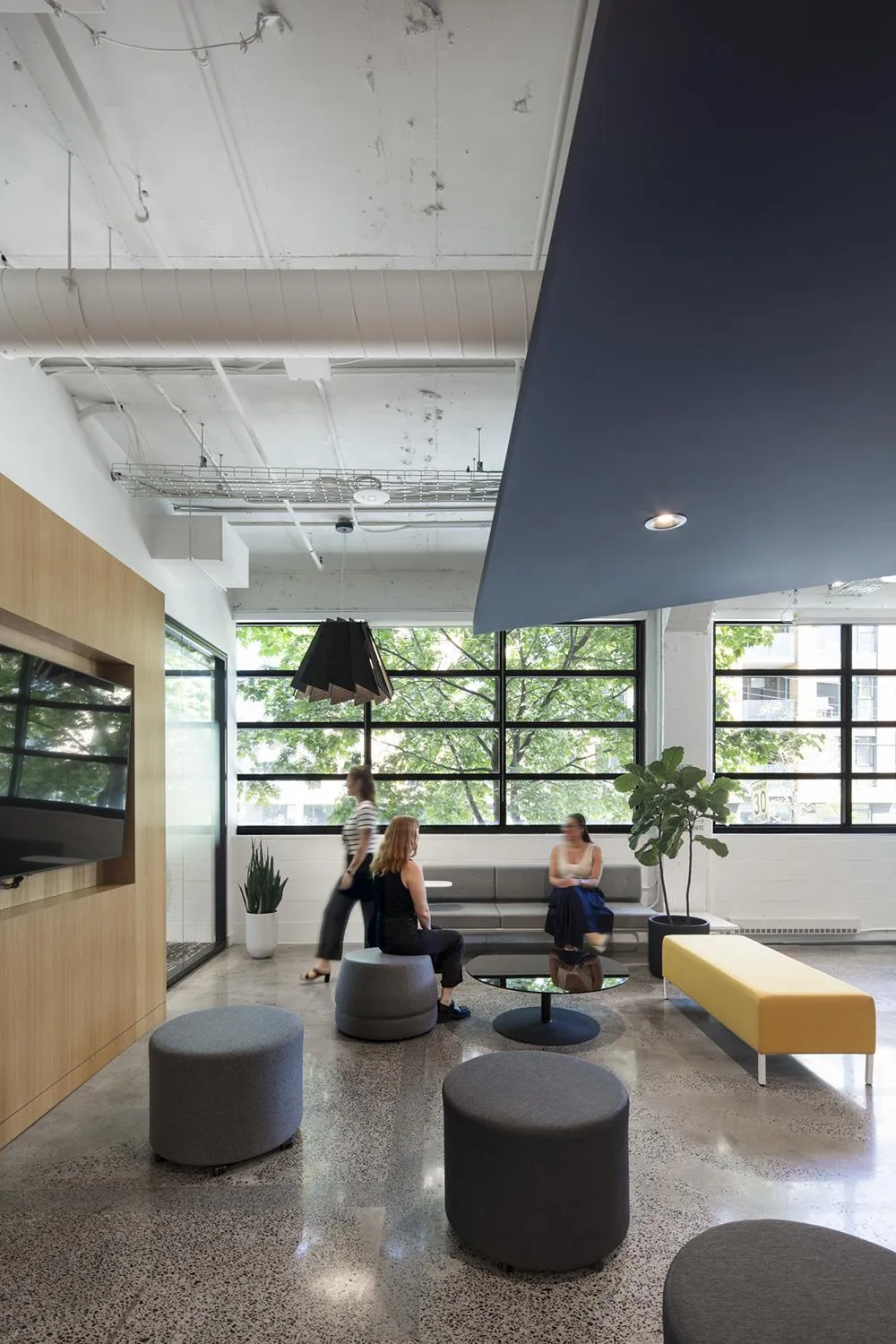
The HUB: A central gathering space designed for spontaneous chats and team activities.
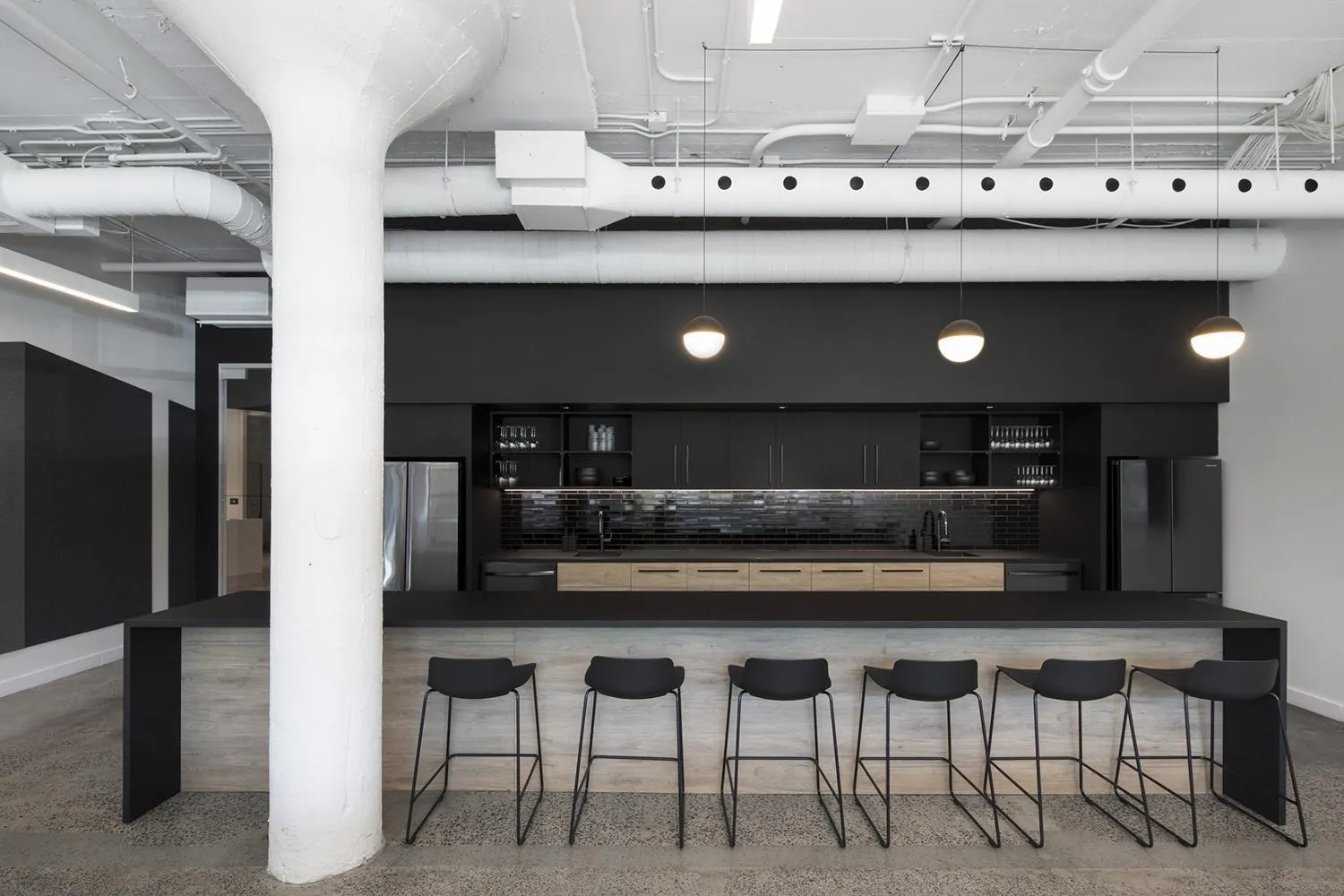
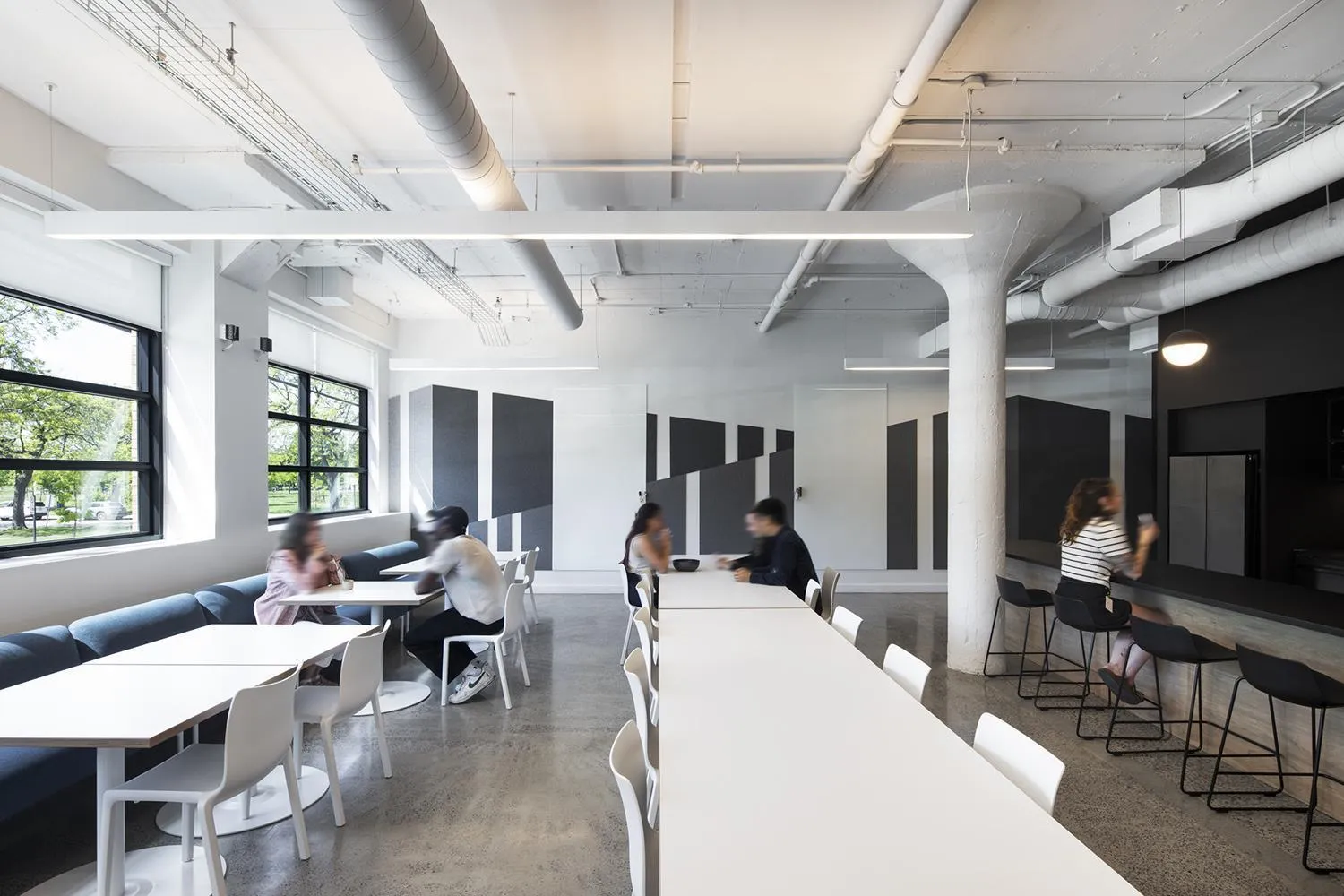
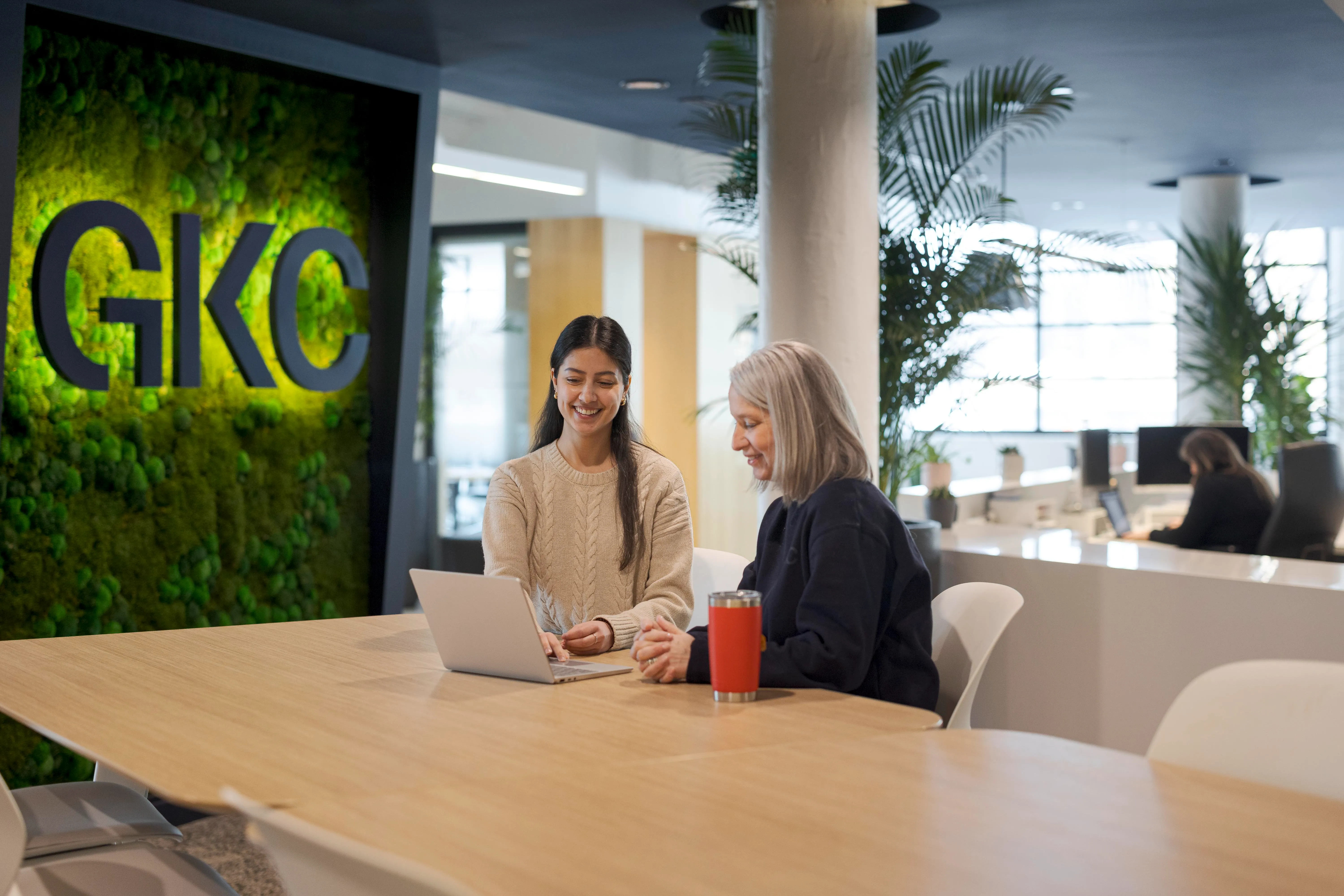
Nature and Comfort: Two striking green walls greet visitors at the entrance, creating a calm atmosphere. In the cafeteria, a large kitchen island adds a cozy, residential feel that invites people to hang out and connect.
Quiet Zones: To balance teamwork with well-being, the office features two individual quiet rooms where employees can recharge and find focus.
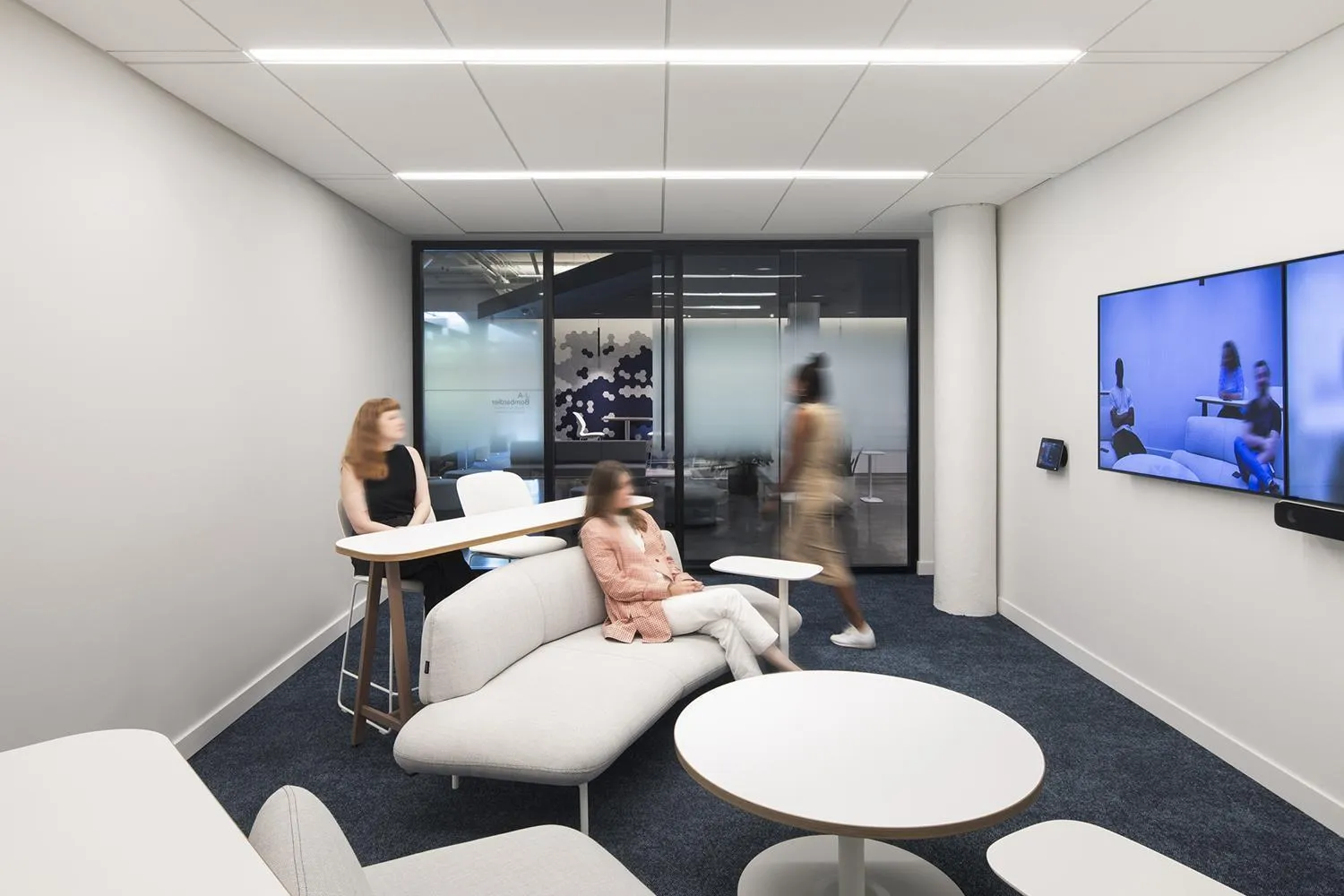
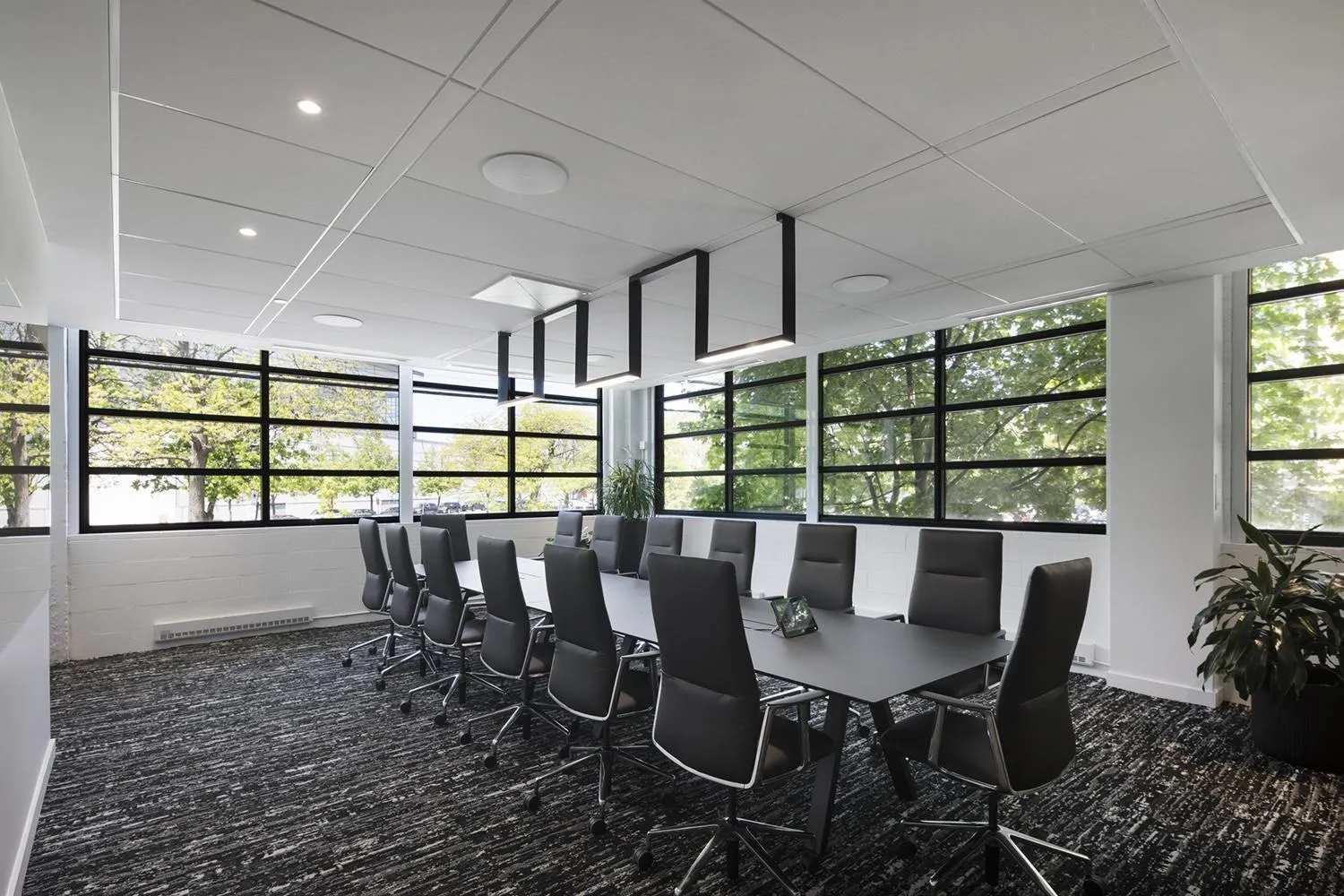
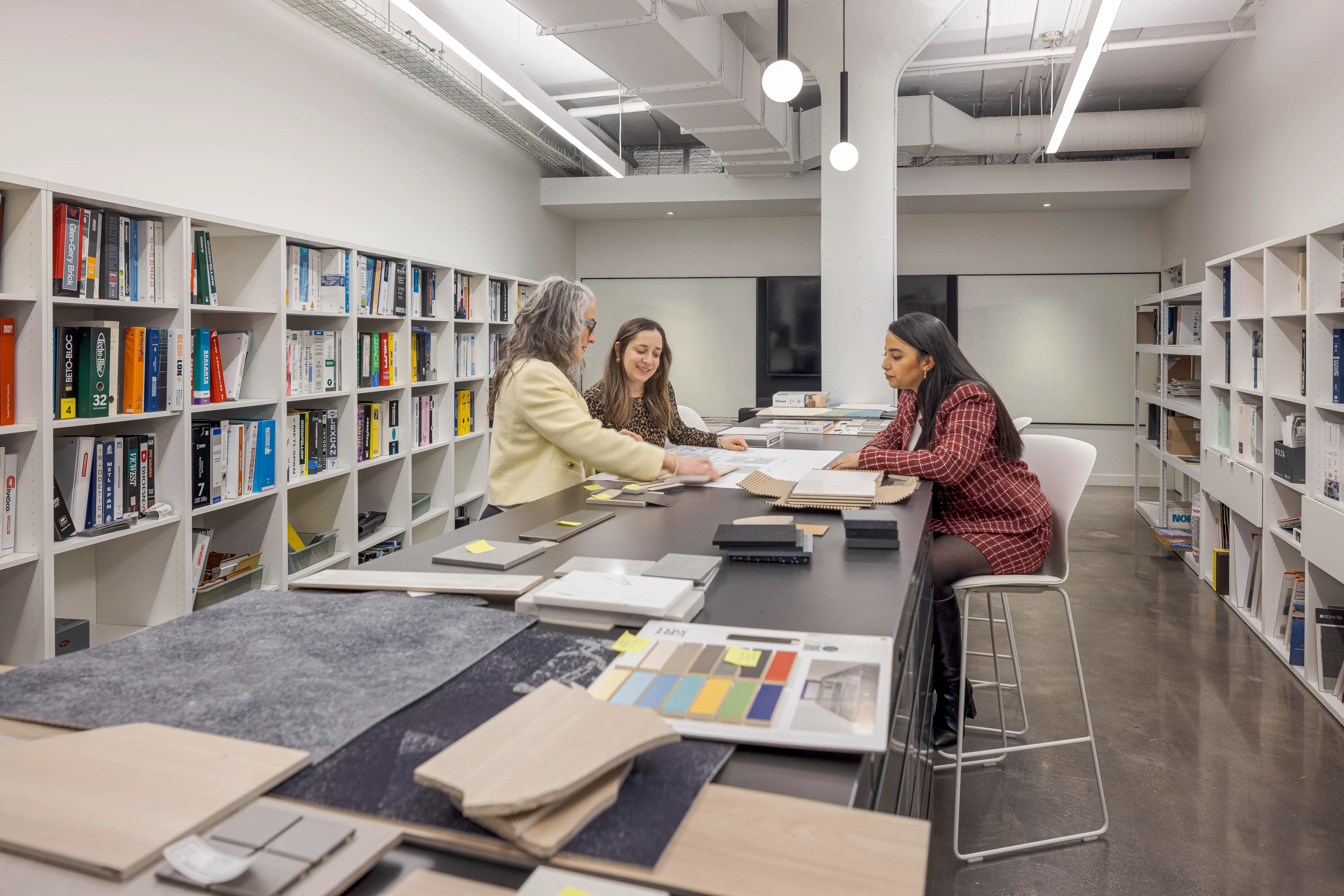
Thanks to a mix of open collaborative zones, enclosed private offices, and smart acoustics, the office supports everything from deep focus to hybrid meetings. In fact, having so many versatile rooms has directly led to a noticeable increase in internal training sessions and knowledge-sharing among the team.
GKC Architecture’s Montreal Office: The Impact of Interior Design: Inside. Image of: Adrien Williams
GKC Architecture’s Montreal Office: The Impact of Interior Design: Inside. Image of: Adrien Williams
GKC Architecture’s Montreal Office: The Impact of Interior Design: Inside. Image of: Adrien Williams
The Verdict from the Team
An office is only as good as how it works for the people inside it. A few months after moving in, GKC surveyed its employees, and the results were highly positive.
The new office scored an impressive 8.28 out of 10 in overall satisfaction. Employees gave exceptionally high marks for accessibility, the quality of collaborative areas, and how well the space supports hybrid work.
The survey also highlighted an interesting reality about workplace design: changing a space doesn't instantly change human habits. For example, using the dedicated focus rooms to escape the natural noise of an open-plan office proved to be less intuitive for the team than expected. It showed that good design is a long-term catalyst for changing behaviours, not an overnight fix.
“Beyond design intent, it is everyday use that truly validates a project. These offices were conceived as a living environment, capable of evolving with our team and supporting the way we work.” Fernando Lozano, CEO, and Managing Principal at GKC.
GKC Architecture’s Montreal Office: The Impact of Interior Design: Inside. Image of: Adrien Williams
GKC Architecture’s Montreal Office: The Impact of Interior Design: Inside. Image of: TARMAC
GKC Architecture’s Montreal Office: The Impact of Interior Design: Inside. Image of: Adrien Williams
GKC Architecture’s Montreal Office: The Impact of Interior Design: Inside. Image of: TARMAC
GKC Architecture’s Montreal Office: The Impact of Interior Design: Inside. Image of: TARMAC
GKC Architecture’s Montreal Office: The Impact of Interior Design: Inside. Image of: TARMAC
GKC Architecture’s Montreal Office: The Impact of Interior Design: Inside. Image of: TARMAC
GKC Architecture’s Montreal Office: The Impact of Interior Design: Inside. Image of: Adrien Williams
GKC Architecture’s Montreal Office: The Impact of Interior Design: Inside. Image of: TARMAC
GKC Architecture’s Montreal Office: The Impact of Interior Design: Inside. Image of: Adrien Williams
GKC Architecture’s Montreal Office: The Impact of Interior Design: Inside. Image of: Adrien Williams
GKC Architecture’s Montreal Office: The Impact of Interior Design: Inside. Image of: Adrien Williams
GKC Architecture & Design’s Montreal headquarters proves that a great workplace is thoughtful, adaptable, and grounded in real, everyday experience.
Aligning vision and a, GKC Architecture & Design has been a recognized leader in industrial, workplace, and commercial architecture for over 65 years. Renowned for its strategic vision and technical excellence, the firm creates inspiring and sustainable spaces that embody its clients' ambitions and culture.
With approximately 4 million square feet designed and built each year, GKC emphasizes collaboration, vision, and a thorough understanding of its clients' business objectives to ensure the functional, aesthetic, and financial success of each project.
During a prestigious tenure as the inaugural Designer-in-Residence at the Vignelli Center for Design Studies from 2023 to 2024, architect RZLBD, from Atelier RZLBD, was presented with a glowing challenge. Through an exclusive design workshop in partnership with the renowned Corning Museum of Glass, the assignment was clear yet demanding: ideate, design, and prototype a lampshade.
When the worlds of innovative material design and visionary architecture collide, the result is often extraordinary. Such is the case with the Ēclos® Maitake Table, a stunning collaborative piece by global surface leader Cosentino and the acclaimed Patkau Studio.
Just north of Toronto, perched on the edge of a wooded valley, sits Ravine House—a contemporary home that redefines what it means to live in harmony with nature. Rather than acting as a barrier against the outdoors or simply occupying a plot of land, this stunning residence acts as an immersive, beautiful mediator between comfortable domestic living and the natural landscape.
Designer Hsin Ting Chiu recognized this disconnect and developed an ingenious solution. Rather than spending millions of dollars building new software from scratch, Chiu reconfigured existing tools to create a highly practical, affordable, and visually stunning retail workflow.
Just a few steps away from the bustling Bell Centre, a fresh take on the classic French brasserie has opened its doors. The new Chez Lionel, located inside a landmark building at 1250 René-Lévesque Boulevard, brings a contemporary pulse to a timeless dining style.
On May 29th, as the sun began to set over the historic brick facades of Old Town Toronto, the streets took on a new, electric energy. The King East Design District (KEDD) Neighbourhood Hop—the highly anticipated annual event presented by DesignTO in collaboration with the Old Town Toronto BIA—was officially underway. For a few magic hours, the neighbourhood morphed into a sprawling, interactive playground for creativity and innovation.
Founded in 1912, the Quebec-based architecture firm NFOE has spent over a century building a reputation for thriving in the most demanding environments. Recently, the firm marked an exciting milestone by appointing four new partners: Erika Landry, Vanessa Godin, Roxane Fortier, and Marie-Eve Cyr.
When a compartmentalized single-family home in Montreal’s Plateau Mont-Royal needed a fresh start, local interior design firm Indee Design stepped in with a clear vision. The result is the Plateau Kyoto Residence, a striking home renovation that perfectly balances mid-century Montreal warmth with the calm beauty of Japanese minimalism.