From Classroom to Career: Navigating the Transition into Design
- Mar 9
- 5 min read
Updated: Mar 9
Written by: Ricia Bèze

After years of learning, designing, and building a creative identity, stepping into the professional world can feel both liberating and overwhelming. In this article, I share my personal experience as a recent interior design graduate navigating this transition, including the highs and lows, lessons learned, and practical steps I took to present myself to the industry through my portfolio.

The rewarding versus challenging transition into the "work world."
Graduating is one of the most important steps in a student's life. It marks the end of a long learning process and a series of challenges that finally become skills.
Looking back, we can see the evolution of ourselves, our abilities, and the confidence we built over the years, and that realization is deeply rewarding. For the first time, you have the freedom to choose the environment and projects that align with your values and aspirations. There is a real satisfaction in applying those skills to real projects with real clients and real impact.
The connections you build along the way with colleagues, mentors, and fellow creatives bring a new kind of energy and inspiration that school can't fully replicate. In many ways, the professional world offers what the university only promised: the chance to truly create.
Yet, the transition between these two worlds is as stimulating as it is destabilizing, because anything is possible now, and you must choose how to get involved and shape what comes next. This freedom, at first, can feel less like an open door and more like a blank page with no brief.
However, this journey is not without its challenges. First, there is the difficulty of finding a job, creating new connections in the field, and establishing yourself as a qualified professional. School had its pressures, but it also had its guardrails, deadlines set by others, feedback built into the process, and belonging handed to you by default. The professional world asks you to build all of that yourself, from scratch, while also trying to prove you belong. Now, nothing links us to this world as school does, and we must work to maintain these links and still have access to opportunities. We left a supportive and encouraging environment and suddenly found ourselves alone in more ambiguous territory. It is easy to feel discouraged in those early months, but every designer you admire once stood in that same uncertain place and kept going anyway, so you do.
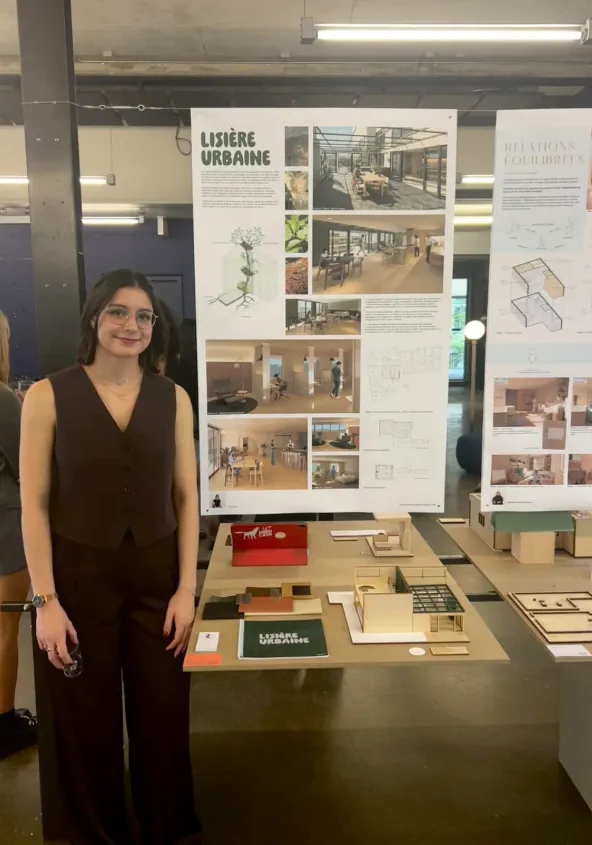
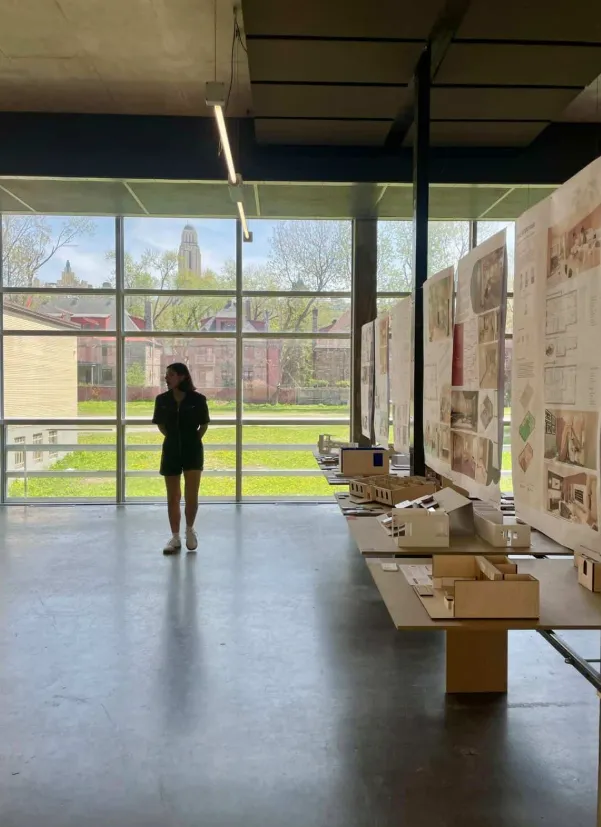
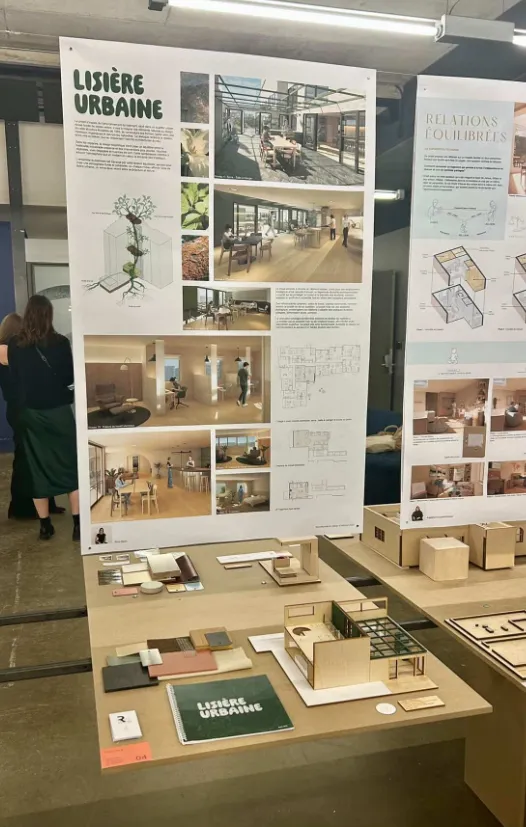
General reflections of a New Worker
As someone new to the working world, I have reflected on how junior employees are often overlooked or undervalued in the field. Job announcements always seek people with several years of experience, but as juniors, we should still apply and promote ourselves to companies.
You must have confidence in your abilities, learn how to promote yourself, and overcome imposter syndrome to make your mark. Junior designers bring something that no amount of experience can manufacture: a fresh perspective, shaped by the most current conversations in design, sustainability, and technology. That is not a consolation prize for lacking experience, but it is a genuine asset, and one worth owning.
I also realize how important connections and networking are, not just as a strategy, but as a mindset. Everyone you meet could become a coworker, a source of inspiration, or an unexpected guide. But networking is only meaningful if it comes with genuine openness: you have to accept that you still have a lot to learn, and that the reality of the design world will sometimes surprise you, in ways that school never prepared you for. That humility is not a weakness; it is what makes you someone people want to work with and mentor.
This sense of openness also extends to the field itself. Interior design remains one of the most underestimated design disciplines, despite its profound impact on how people feel, work, and live. The spaces we inhabit shape our well-being in ways that are both subtle and deeply significant, yet the profession still struggles for the recognition it deserves. As juniors, we have a role to play in changing that — not just by doing good work, but by talking about it, advocating for it, and helping each other get involved. When we support one another, we don't just build individual careers; we build the visibility and credibility of the field itself.
Juniors must be supportive and encouraged because they are the future, bringing their new vision to a field that is constantly evolving. We must get involved in any way we can. This also helps us create connections with mentors and more experienced people. We should attend networking events and participate in design competitions to showcase our values and demonstrate what we can contribute. It shouldn't be so hard to convince seniors that we are needed in the field. Yet, this remains one of the most persistent challenges for junior professionals today.
As a junior, it is also important to be intentional about the kind of designer you want to become. Defending your values and sensibilities, whether that means prioritizing sustainable design, universal accessibility, or human-centred spaces, is not idealism. It is a design position. The professional world will sometimes push back, ask you to compromise, or move too fast to stop and question. But the juniors who manage to hold onto their convictions while staying open and adaptable are the ones who end up shaping the field, not just working in it.
The importance and the impact of the portfolio
As a recent graduate, your portfolio is one of the most important things because it represents you in the professional world. It must represent you and distinguish you to convince people to work with you. It should show your personality, way of thinking, and abilities. What you learn in school and from online resources is a good basis for creating your portfolio because they provide inspiration and help you develop your own identity.
Personally, I prefer to organize my portfolio as a narrative tool rather than as a simple accumulation of projects. I selected projects that demonstrate my vision and technical abilities, and they illustrate my initial intentions for the projects, showcasing strong concepts and spatial composition. They also show my analytical abilities, my interpretive methods, and the importance of details in the final views and 3D modelling. In my opinion, the most impactful projects in my portfolio demonstrate strong thinking, a comprehensive understanding of the context (whether social, environmental, or architectural), and consistency between context and materialization.
The best advice would be to show your portfolio to your professors and others while you are making it, to get constructive comments and find out if it is clear enough, straightforward, and visually appealing. I think it can be interesting to take inspiration from the way companies present their projects on their websites.
So, here are some basic tips:
Seek Critique: Share your drafts with professors and peers to ensure your message is clear and visually appealing.
Study the Pros: Draw inspiration from how top design firms present projects on their websites.
Establish a Visual Identity: Follow a consistent graphic guideline throughout the document.
Be Concise: Summarize information and avoid text-heavy pages.
Lead with Strength: Place your most impactful work first; employers often make a decision within the first few pages.